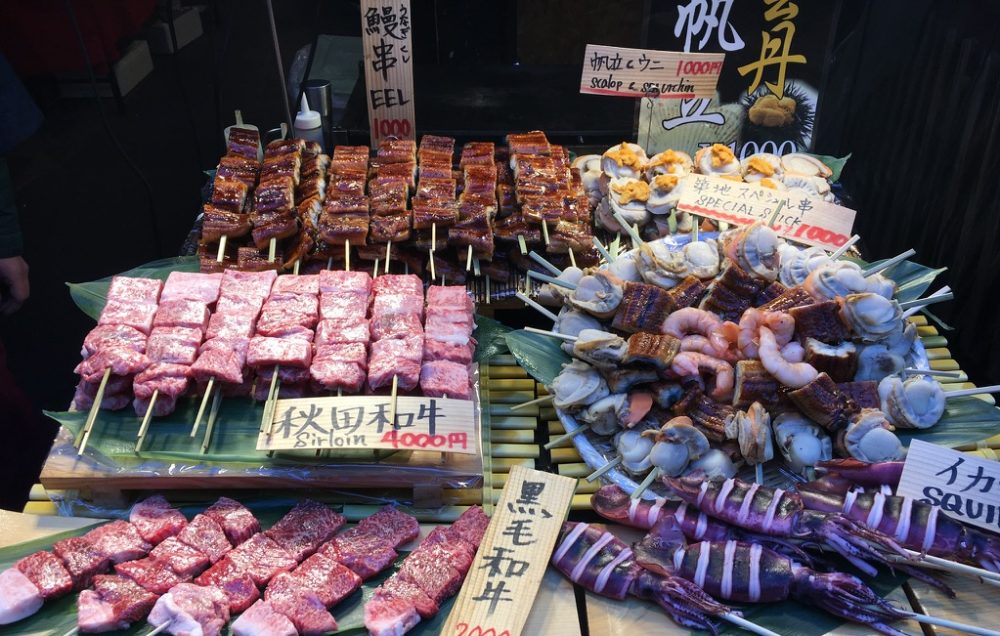
It was just before noon and the Adhan for Dhuhr echoed across Khan el-Khalili and neighbouring Al-Muizz Street as we got out of the cab. A first voice rose above the crowd, then another and another, the overlapping calls drifting between minarets and the medieval stone buildings. Around us, shopkeepers paused briefly, some completely stopped and bent to pray, tourists turned their heads to listen, and Cairo carried on as it has for centuries.
It was the perfect introduction to one of the world’s oldest markets.
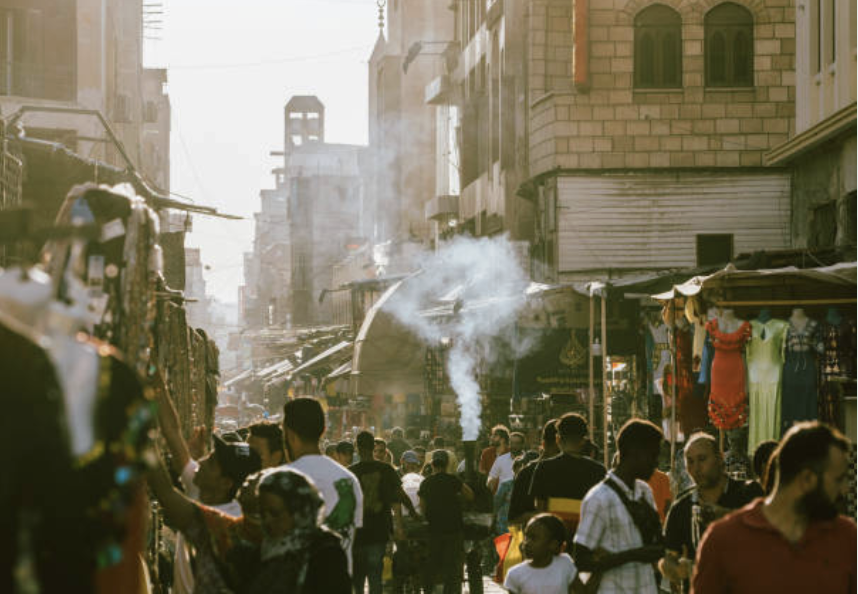
Founded in the fourteenth century, Khan el-Khalili has been a centre of trade for more than six hundred years. Merchants, pilgrims and travellers have wandered these narrow lanes for centuries, drawn by spices, textiles, jewellery, tea, perfumes and stories. It is described as a bazaar, but it can also be said a living maze.
My friend Safah led the way. Without her, and her Arabic, I suspect I would still be wandering around there today.
The streets twist and narrow unexpectedly, opening onto tiny courtyards before disappearing again into passages lined with brass lamps, embroidered fabrics, carved wooden boxes and shelves stacked with incense and spices.
The market engages every sense at once.
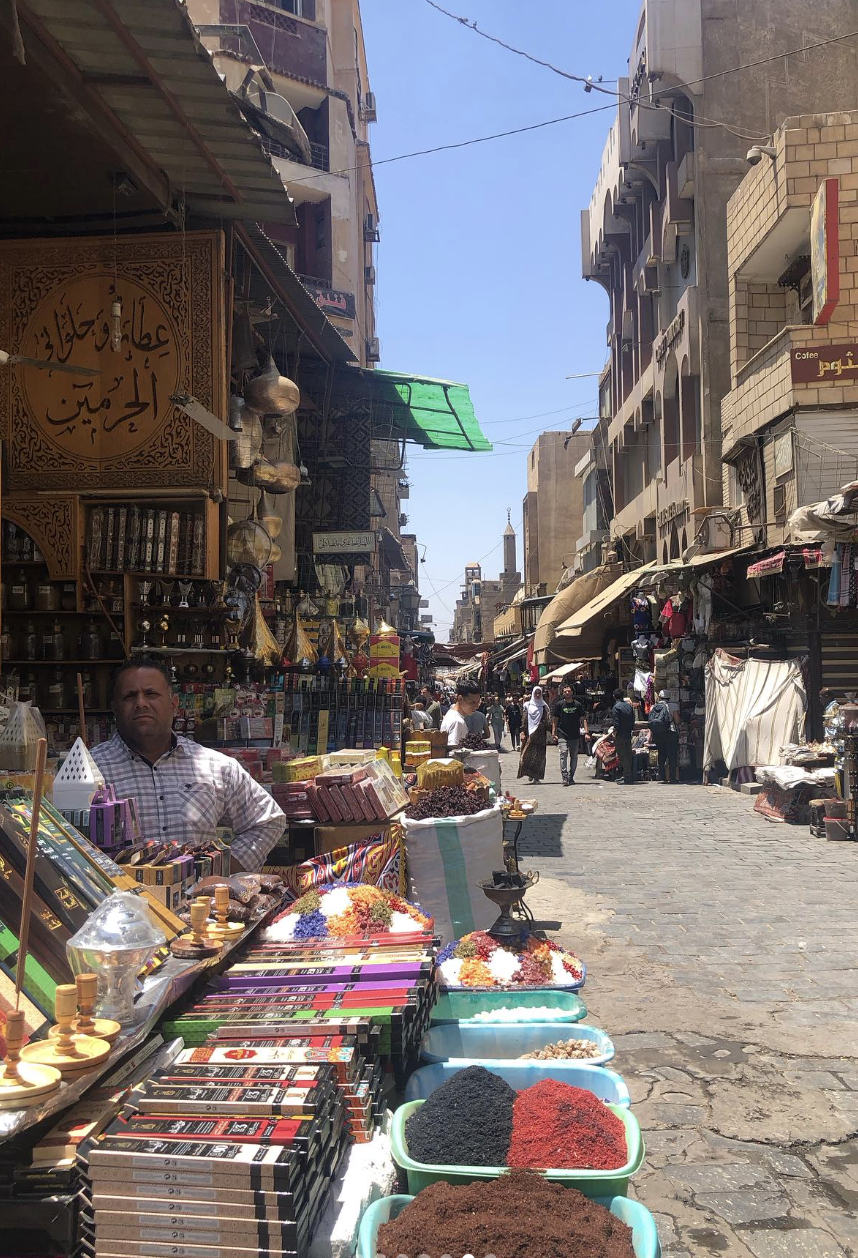
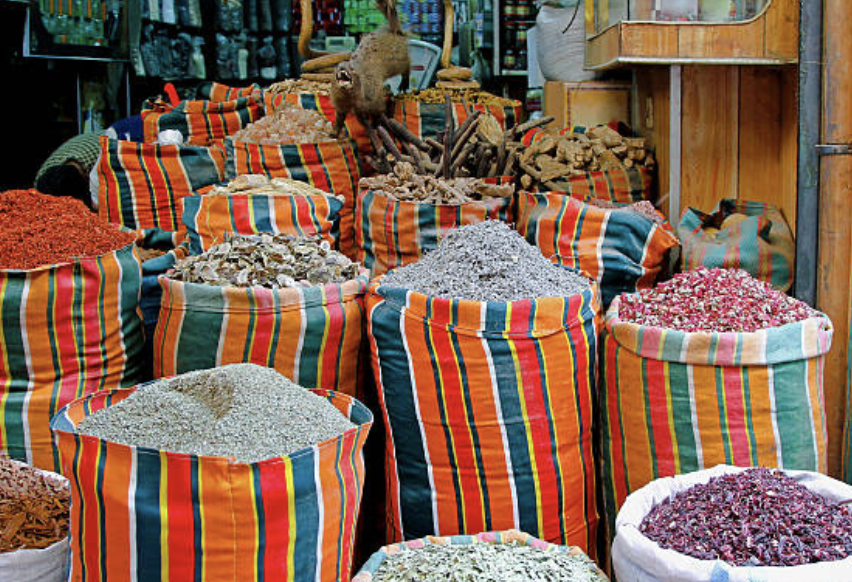
Spice sellers fill buckets and bags full of bright coloured spice both ground and whole. Perfume sellers display glass bottles filled with amber, jasmine and musk oils. The many lantern shops glow with coloured glass and intricate metalwork, casting fragments of light onto the cobblestones. Merchants bargaining loudly and enthusiastically.
Many visitors describe being harangued by vendors. Perhaps I was lucky. Perhaps travelling with someone who spoke Arabic changed the experience I found myself wandering without any real desire to buy anything. The market itself was enough. The pleasure was in observing, listening and getting lost.
Well, almost.
As a lifelong lover of incense, I left with sandalwood, musk, amber and a small bag of fragrant resin incense – frankincense tears, the golden nuggets that have perfumed homes, temples and markets across the region for centuries.
Eventually we found our way to El-Fishawy Café, Cairo’s oldest continuously operating coffee house. Established in 1773, it has welcomed merchants, writers, politicians and travellers for generations. Sitting amongst its mirrored walls. Safah with mint lemonade and me with a glass of karkadeh, Egypt’s deep ruby-red hibiscus tea, it was easy to imagine that little had changed over the centuries.
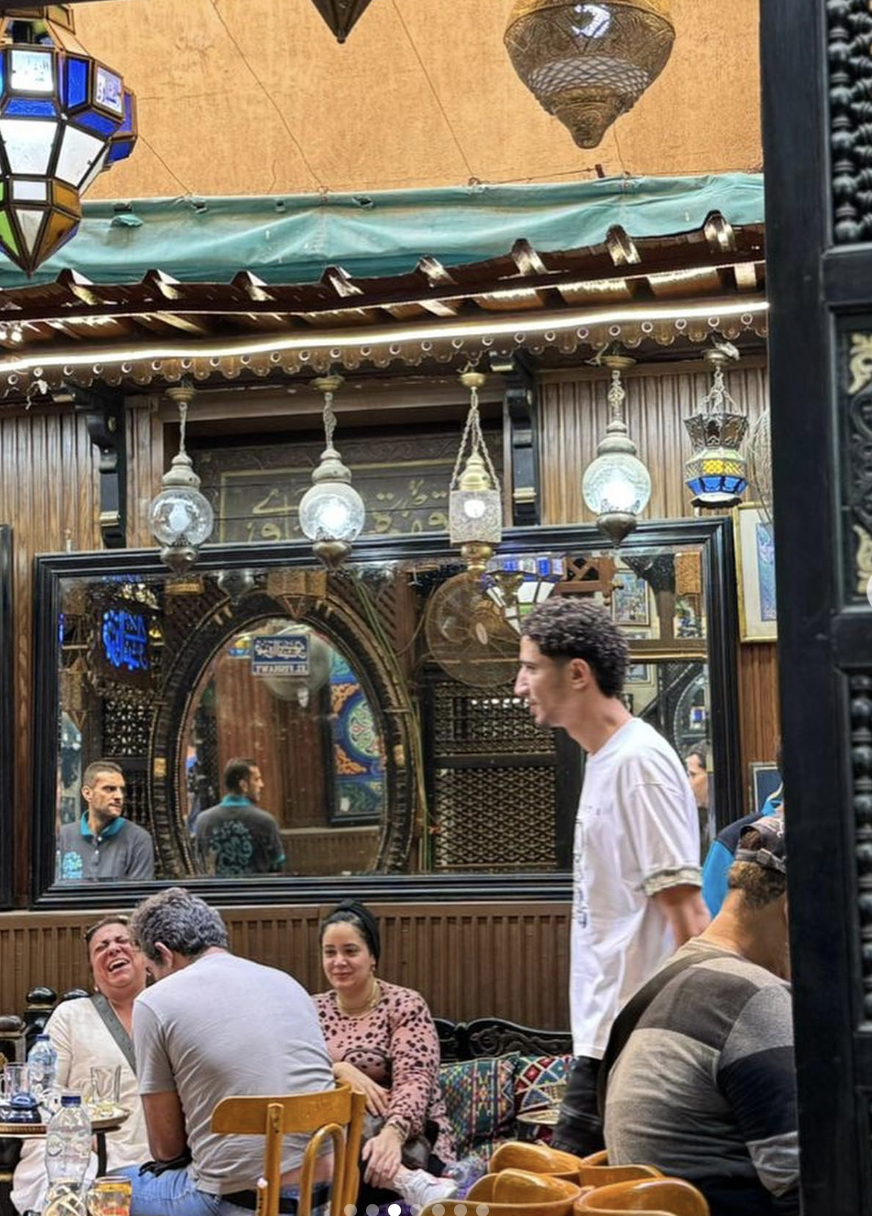
The tea itself was familiar. I grew up drinking hibiscus tea at home and its still a favourite, another reminder that food and flavour often connect places that appear worlds apart.
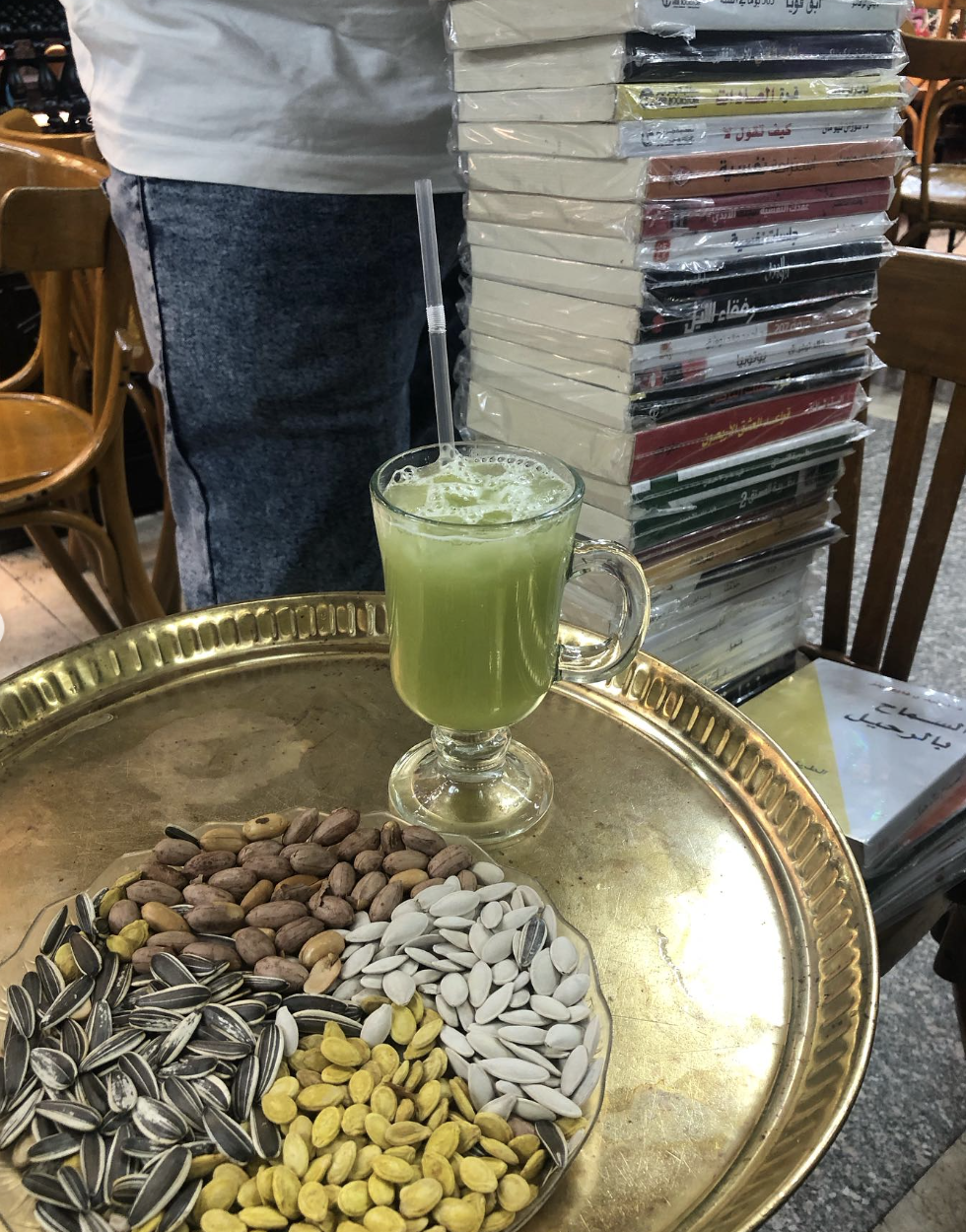
Alongside the tea came bowls of pistachios, and different seeds. Safah and I sat for a good while watching the world around us. Families passed by, old men smoked shisha, shopkeepers called to one another across the lane and tourists attempted to navigate the labyrinth.
At one point, a woman approached us offering henna tattoos. I politely declined, but Safah encouraged me to do it. “When in Cairo,” she laughed. Before long, she transformed my calf and foot into a canvas of intricate flowers, vines and patterns. By the time she finished, I was glad Safah had persuaded me. Like the tea, the incense and the market itself, it became part of the memory of that afternoon.
It struck me that markets like Khan el-Khalili survive because they offer something modern shopping centres cannot. They are not simply places of commerce. They are places to gather, gossip, negotiate, drink tea and watch life and history unfold.
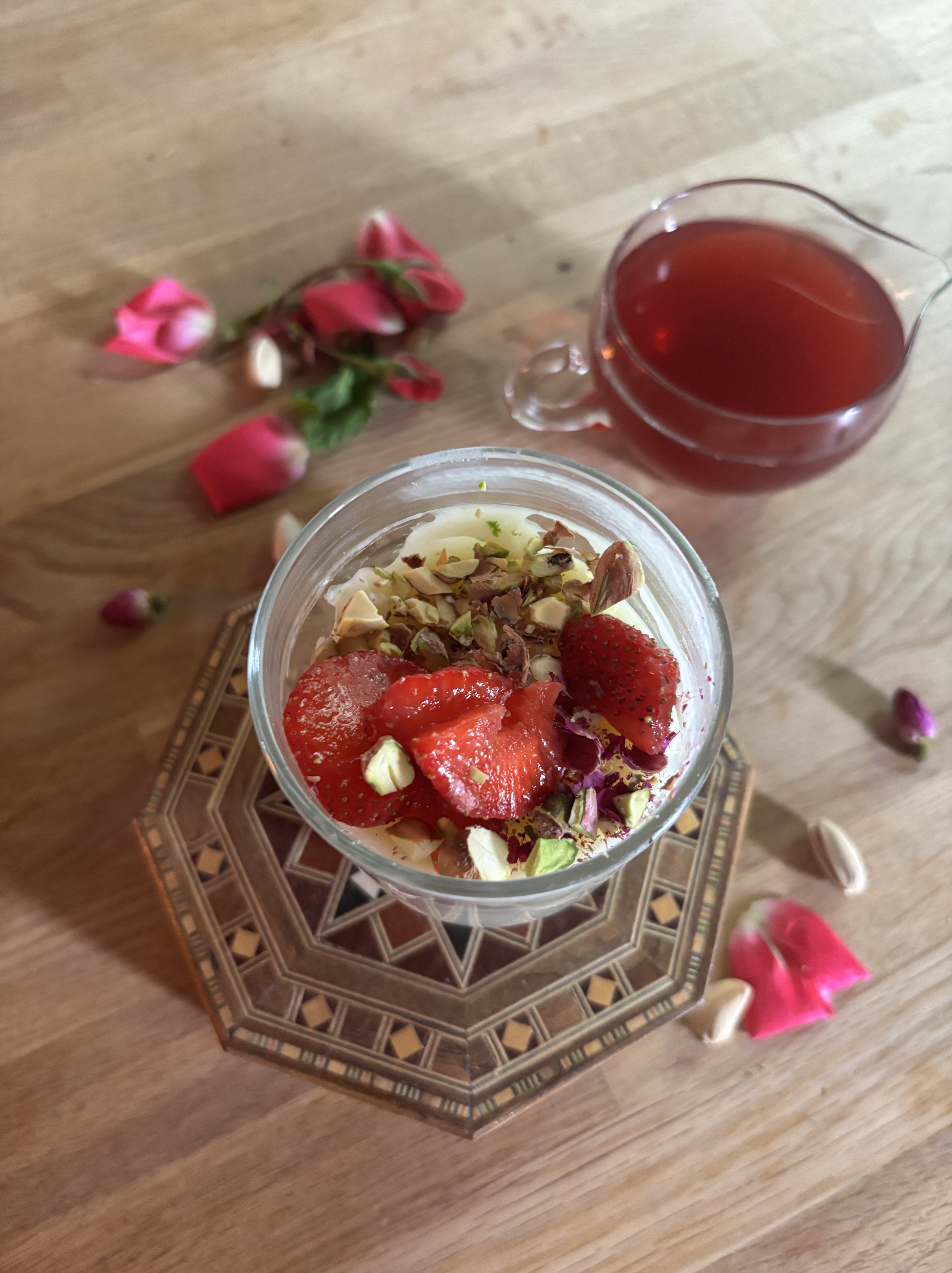
For this post, I have chosen a recipe inspired by that afternoon: mahalabia, a simple milk pudding scented with rose water and topped with pistachios.
Roses have been cultivated in Egypt since antiquity, appearing in the gardens of pharaohs and later finding their way into perfumes, ceremonies and culinary traditions. Their fragrance still perfumes the Middle East. Mahalabia captures that history perfectly. Made from milk, sugar and corn starch, it is simple yet elegant, delicately perfumed with rose water and scattered with pistachios. Some versions also include cardamom or saffron.
Sometimes the best thing to bring home from a market is not what you buy, but the smell and taste of it.
Mahalabia with Rosewater and Pistachios
This delicate milk pudding is scented with rosewater and topped with pistachios. It took me no more than 15 minutes to prepare, with the refrigerator doing the rest of the work. You can also switch the rosewater for orange blossom water and infuse the milk with saffron and a bit of cardamom. I added some macerated strawberries to mine.
Ingredients
Serves 4–6
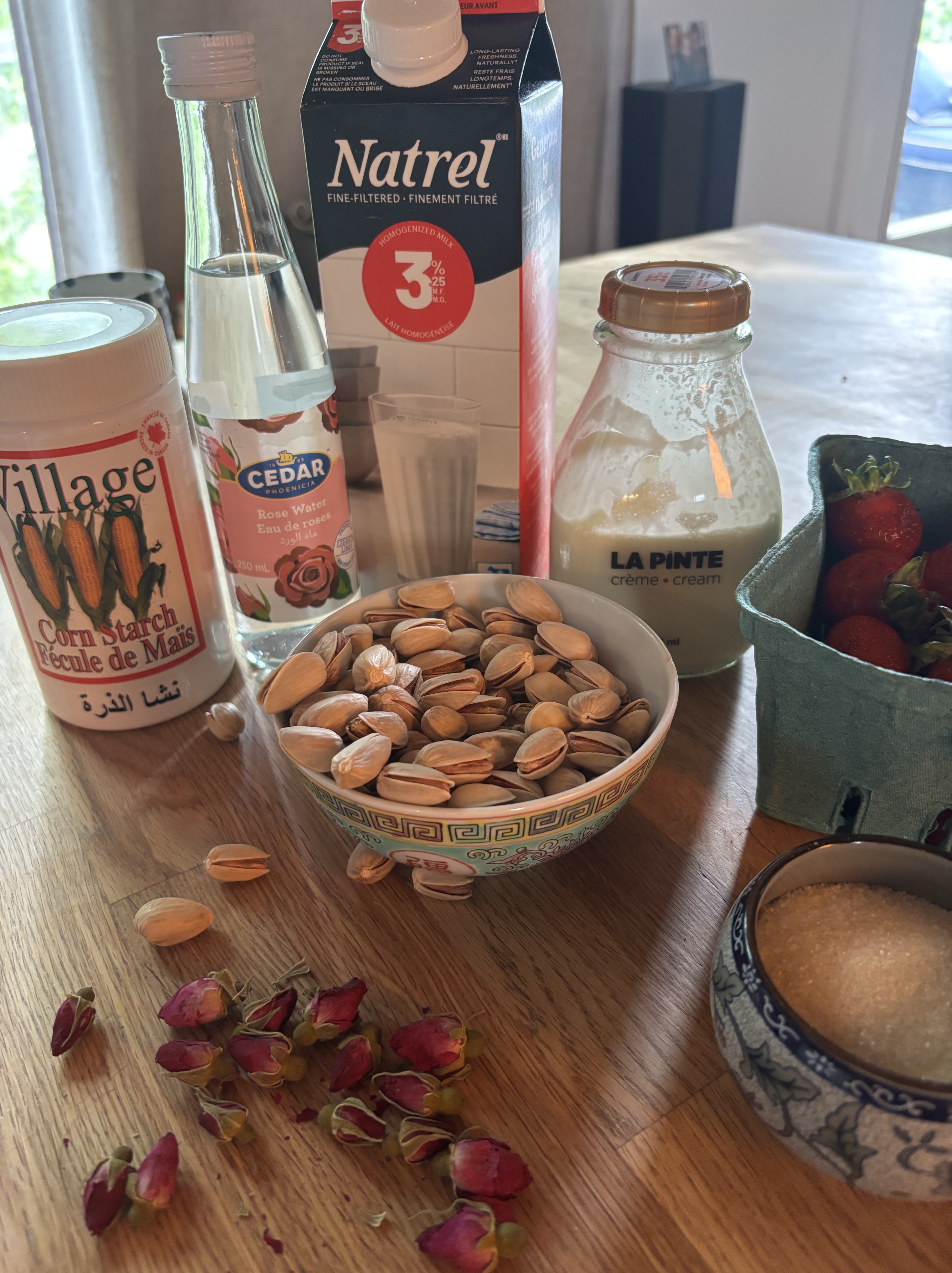
- 2 cups whole milk (you can also use rice milk or coconut milk or a mix)
- 1 cup cream
- 4 tablespoons cornstarch
- A third of a cup of cold water
- 4-6 tablespoons sugar
- 1 tablespoon rosewater
- 2 tablespoons crushed pistachios
- Dried rose petals, for garnish (optional)
Method
- In a small bowl, mix the cornstarch with a third of a cup of cold water until completely smooth.
- Pour the milk and cream into a saucepan and add the sugar. If using cardamom or saffron, add them now. Heat gently over medium heat until warm but not boiling.
- Stir the cornstarch mixture once more and slowly pour it into the warm milk, whisking continuously.
- Continue stirring for 5–8 minutes until the mixture thickens to the consistency of pouring custard.
- Remove from the heat and stir in the rosewater.
- Pour into individual serving glasses or small bowls and allow to cool slightly before refrigerating for at least two hours.
- Before serving, sprinkle generously with crushed pistachios and, if desired, a few dried rose petals.
- Add any macerated fruit.


This is a fantastic article! Your writing made me feel like I was right there in the heart of the Egyptian market. The vibrant energy you described is contagious. It actually makes me want to move and work in Egypt. Thanks!
Thank you for stopping by – me too, makes me want to return!
Lovely essay about an ancient market. We share our delight of markets and how they open eyes to their culture through food and scents. Now have to try your Mahalabia recipe!