The Last Train to Laos: Where One Love Ended and Another Began

Every relationship has a last journey.

Mine was an overnight train from Bangkok to Laos.

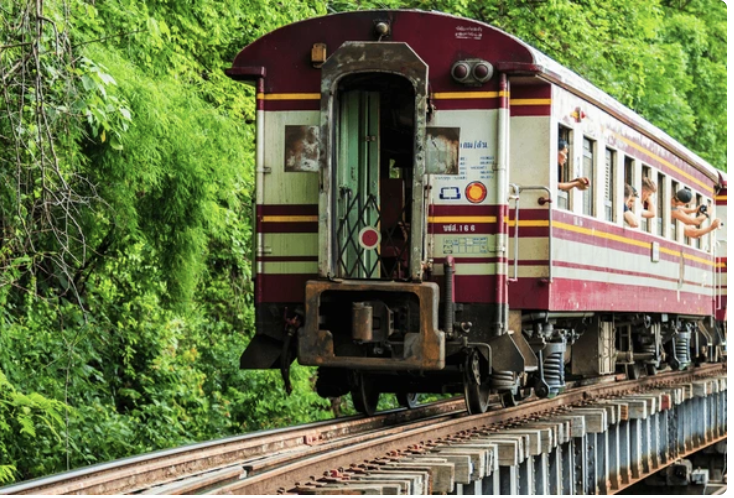
Twenty-five years ago, my boyfriend at the time and I climbed aboard the sleeper train from Bangkok to the Laotian border knowing it would be our last trip together. We were travelling to a friend’s wedding in Vientiane, but we had already decided that this was where our paths would separate. I would return to Australia; he would continue on elsewhere.
When you are young, it’s hard to imagine that the ending of one future might make room for another.

I didn’t know then that Laos would become the place that inspired me to leave Australia and build a life abroad.
What I do remember with absolute clarity is my first meal in Vientiane.

We checked into a faded French colonial guesthouse and wandered downstairs to a small open-air restaurant. In the middle of the dining area sat a large stone mortar and pestle. The woman behind it smiled as we sat on squat chairs around a low table and peered over, curious to see what she was making.

The smell had already taken over the space between us.

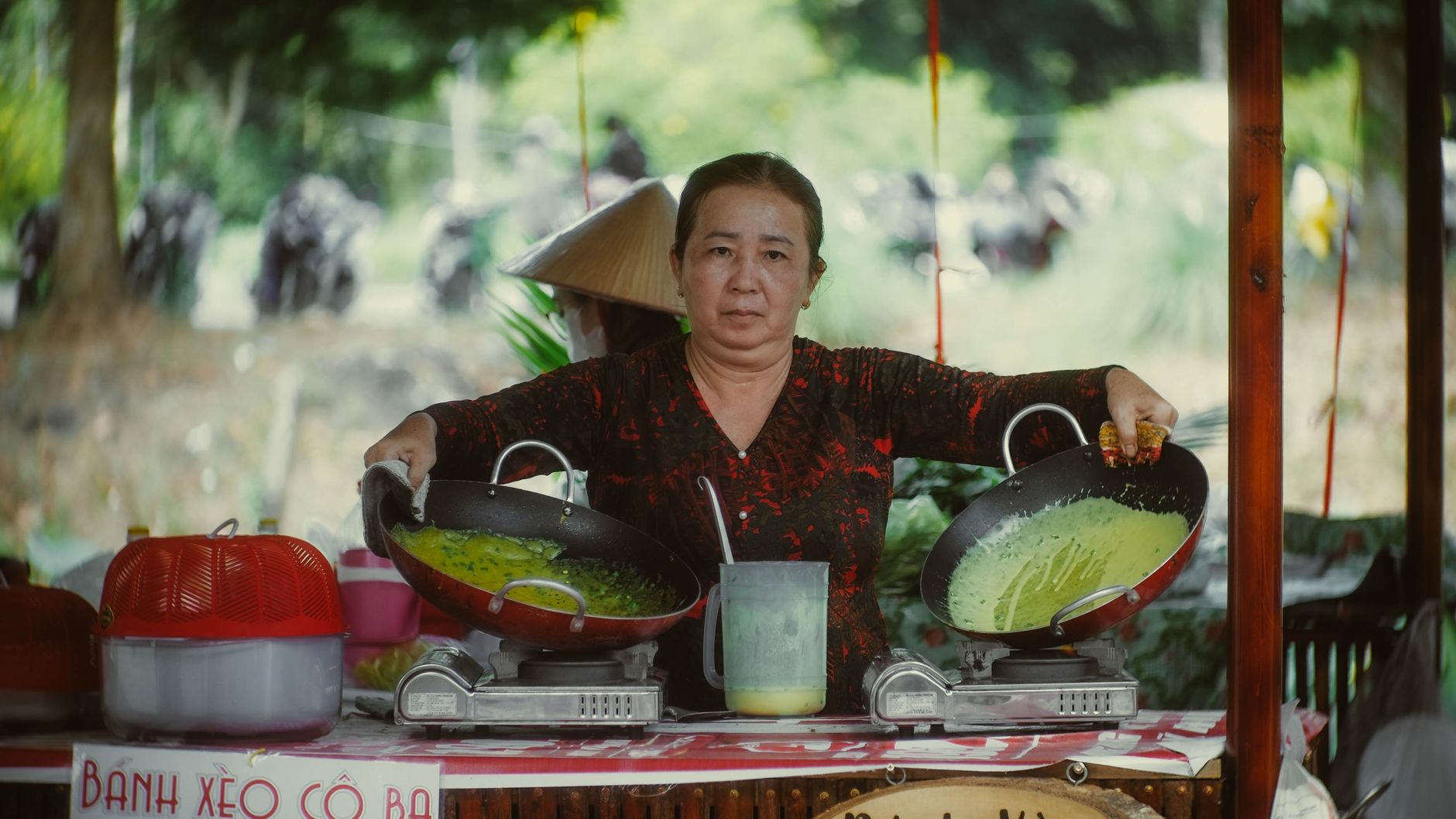
Bird’s-eye chillies landed in the mortar before a rhythmic pounding began. Purple shallots followed. She squeezed in fresh lime, added fish sauce and continued working the mixture with practised hands.

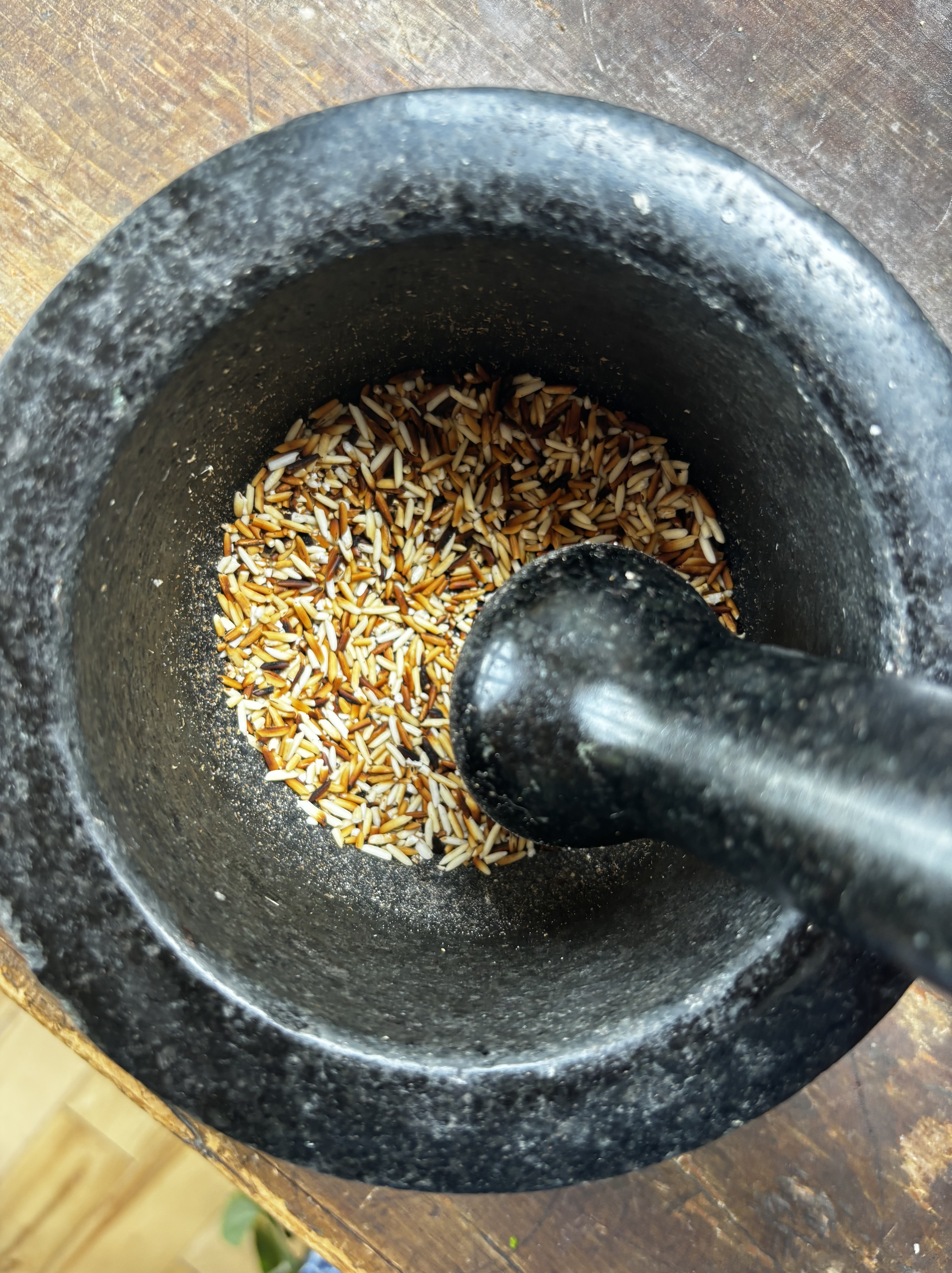
In a beaten wok, she roasted a handful of sticky rice until the grains turned golden brown, releasing a warm, nutty aroma. She tipped the rice into a smaller mortar and ground it into a coarse powder.

The wok went back on the heat, this time with a little water and then minced pork. Once cooked, she brought everything together, folding the pork through the toasted rice, coriander, mint and the sharp, fragrant mixture of chilli, lime and fish sauce.
She tasted a little.

Then added more of everything. This all took less than five minutes.

“What is it called?” I asked.

“Larb moo.”

I learnt the name that afternoon because I wanted to order it again the very next day.

I’d discovered what is often described as Laos’ national dish. The word “larb” is also a homophone for “good fortune” or “prosperity” in the Lao language.

Larb can be made with pork, chicken, duck or beef, but I still think that the heart of it isn’t the meat at all. It’s the toasted rice, fresh herbs and chilli, combination of fish sauce and lime, and the freshness that makes every mouthful come alive.

Talat Sao, Morning Market, Vientiane
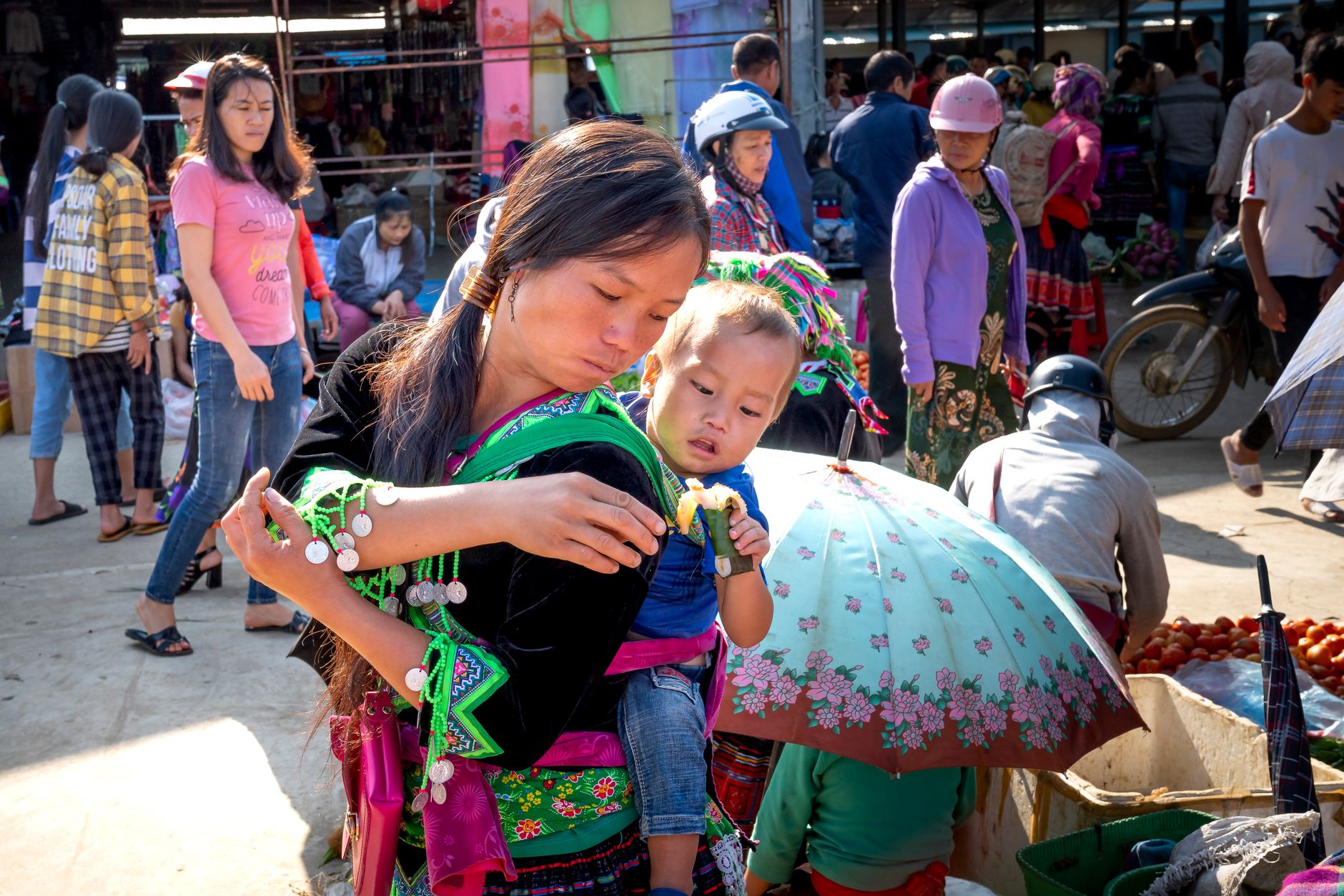
Photo by Quang Nguyen Vinh on Pexels.com

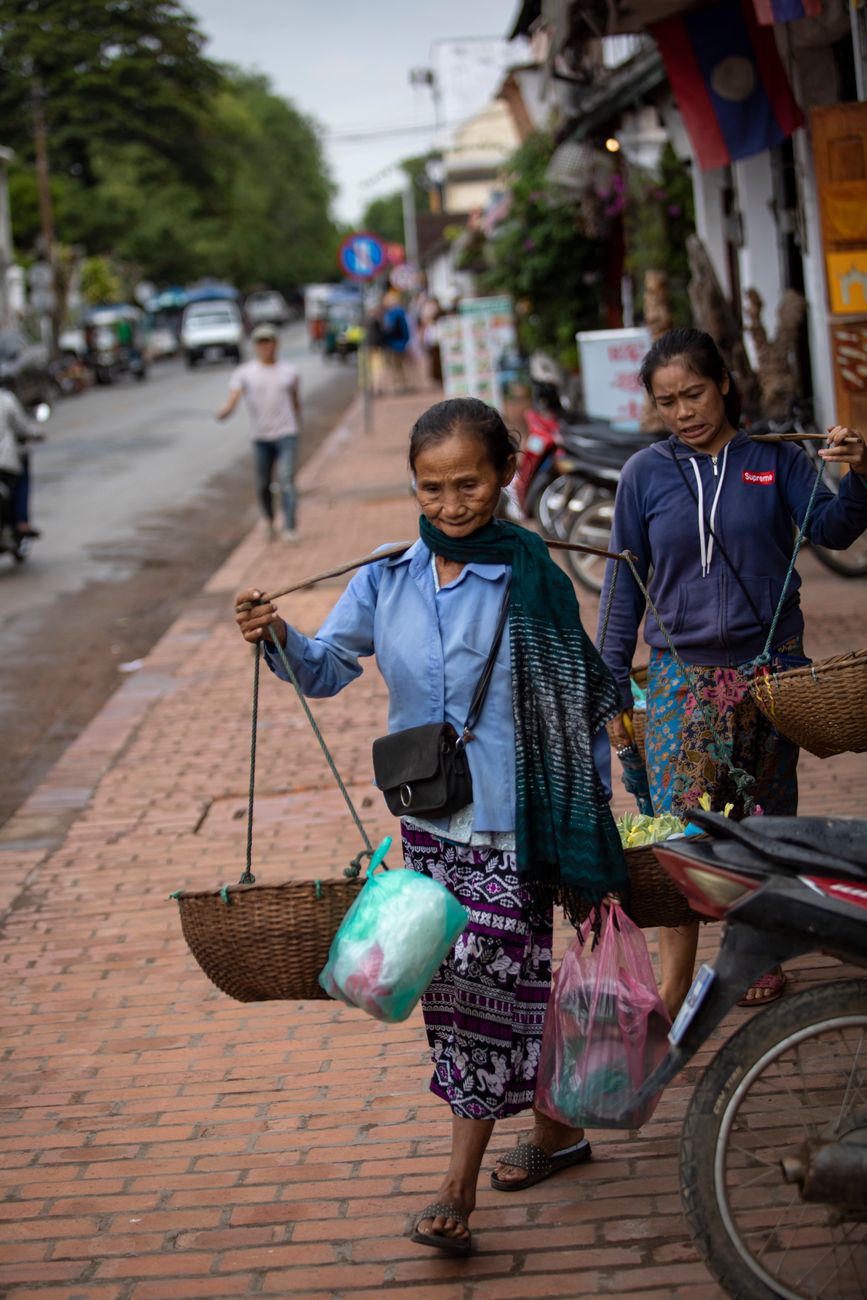
The next morning, I set off early for Talat Sao, Vientiane’s morning market. It was an assault on the senses in the very best way.

There were piles of chillies – tiny bird’s-eye chillies, long green ones, brilliant reds alongside garlic, shallots and limes, and mounds of mint, coriander, spring onion, lemongrass and greens I couldn’t yet name. Tropical fruit was stacked high in colourful pyramids. There were dried ingredients I couldn’t identify and drinks in bags, bottles and colours I’d never seen before.
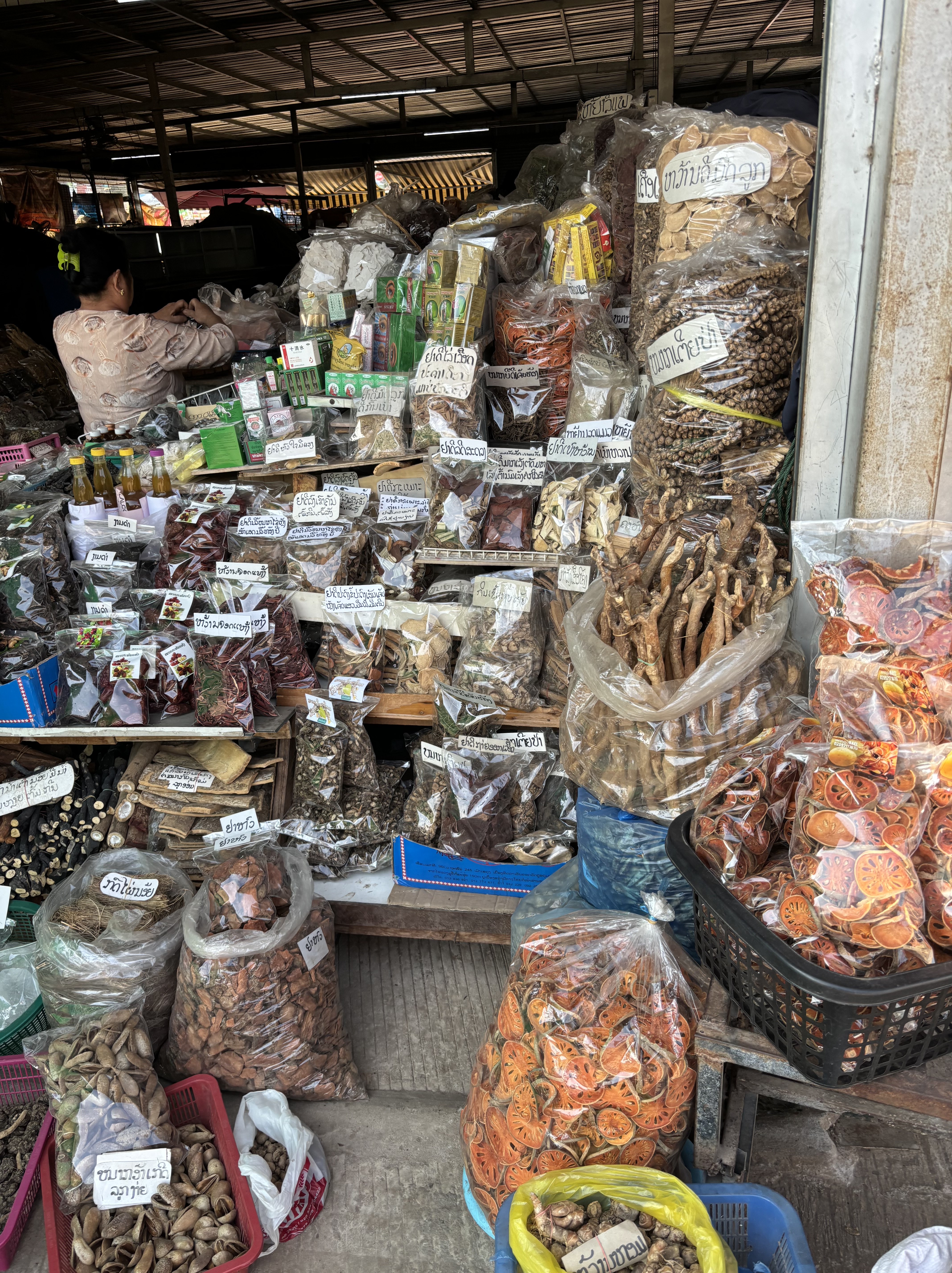
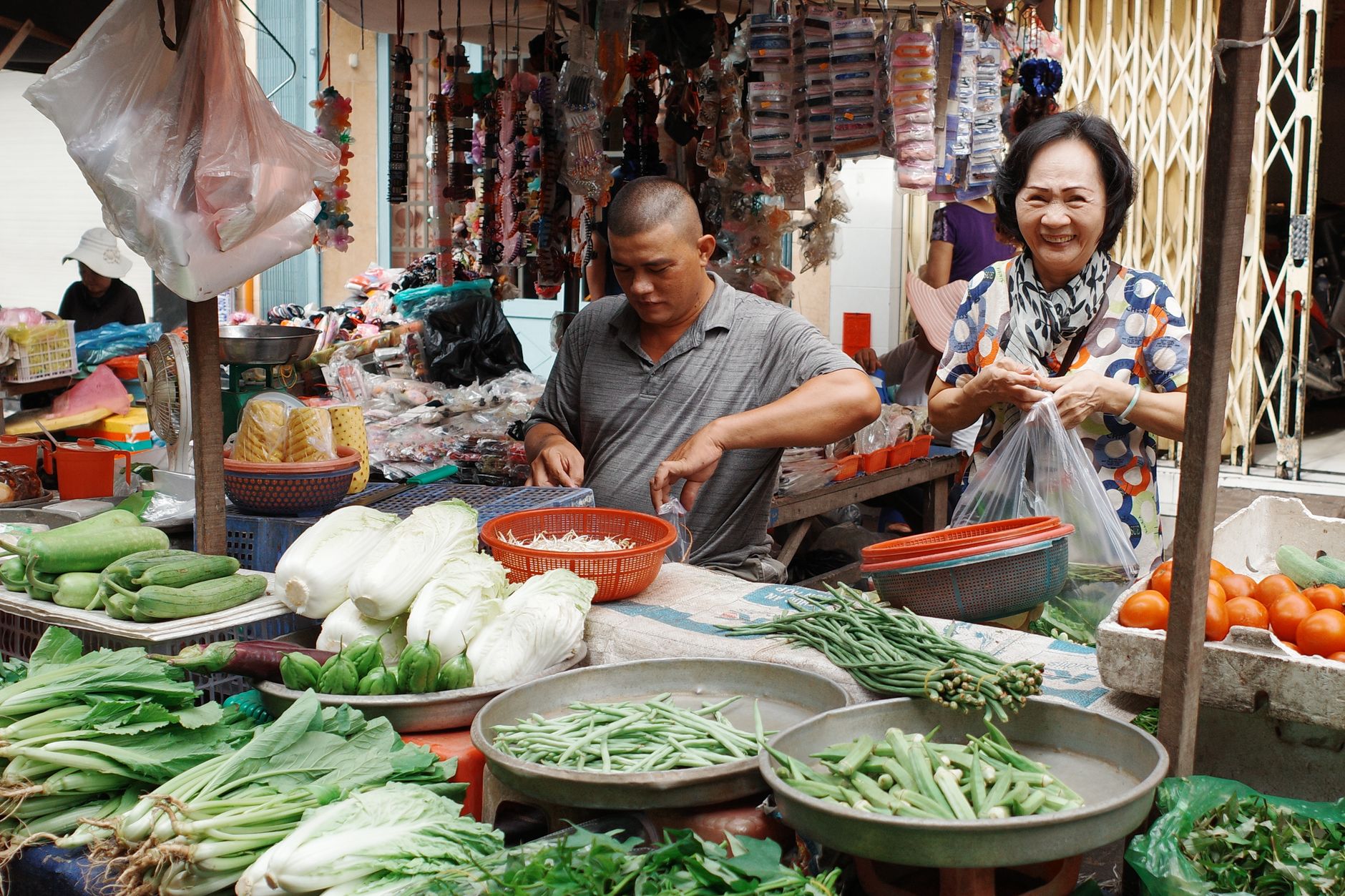
Long beans were bundled into great green coils and green papaya shredded into fine strands ready for tam mak hoong, the fiery papaya salad I also quickly came to love.

Everywhere someone seemed to be chopping, weighing, bagging, pouring or eating.

Slowly, I began to recognise larb in its component parts.
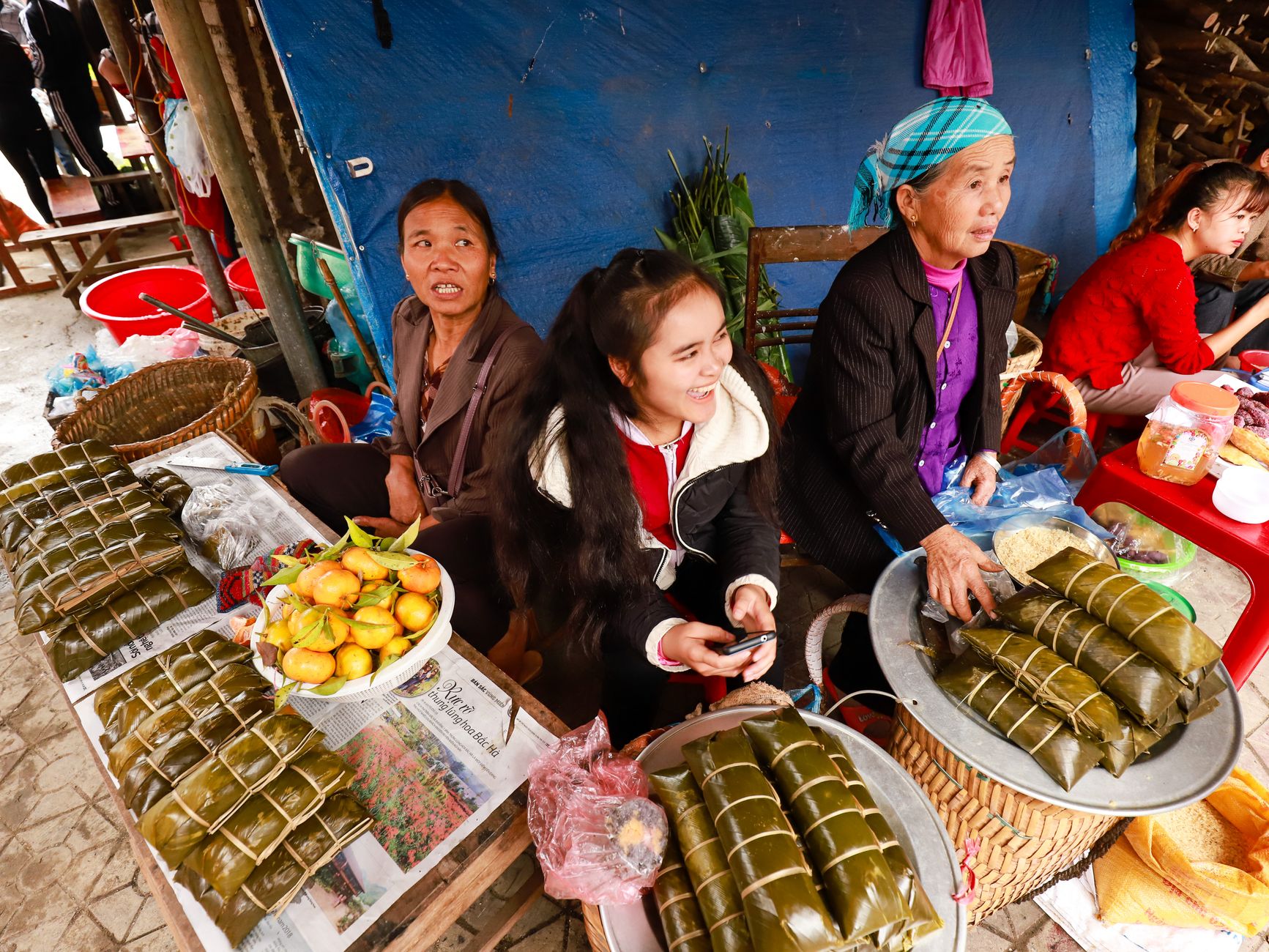
Photo by Son Hoa Nguyen on Pexels.com

One morning I returned with Ann, an American woman I’d met through the wedding party. We had bonded the night before over being the plus ones, drinking far too much of whatever was being poured, doing shots of snake wine and smoking an unreasonable number of cigarettes.

She had teamed up with the groom’s best mate, King Kong, a local Laotian Svengali who seemed to know where to find absolutely anything – good, bad and dodgy.

The next morning, rough around the edges, we dragged ourselves to Talat Sao in search of food and the missing pieces of our wedding outfits.

We found both.

We grabbed a table and ordered bowls of steaming hot and spicy noodles. Somewhere between the first mouthful and trying to reconstruct the night before, she leaned across the table towards me.

“You know what?”

“I’m not sure they like us Americans here.”

She had just come from travelling in Vietnam, and we both knew enough of the history of the region to understand what she meant.

Years later, we met again on Cape Cod, where she was living in Hyannis, neighbours with members of Jackie Kennedy’s family circle one of those peculiar coincidences that only became apparent much later.

Perhaps that was part of what captivated me about the trip. The groom was Australian, the bride Laotian, and many of their friends were English teachers who had made lives for themselves there. They were around my age, yet their everyday world crossed countries, languages and cultures with an ease I had not witnessed before.

For the first time, I began to wonder: could I live like this? Could I leave Australia and make a life somewhere else?

Among all those different nationalities, accents and backgrounds, I felt completely comfortable.

I didn’t yet know where that feeling would lead me.

Less than a year later, the life I had glimpsed in Vientiane had become my own. I left Australia and began building a life and career overseas.

Twenty-five years later, I was planning another trip to Southeast Asia with my son and extended family. I had some time before we met up and realised there was one journey I wanted to make again alone.

So, I boarded another overnight train from Bangkok to Vientiane.

This time, alone.

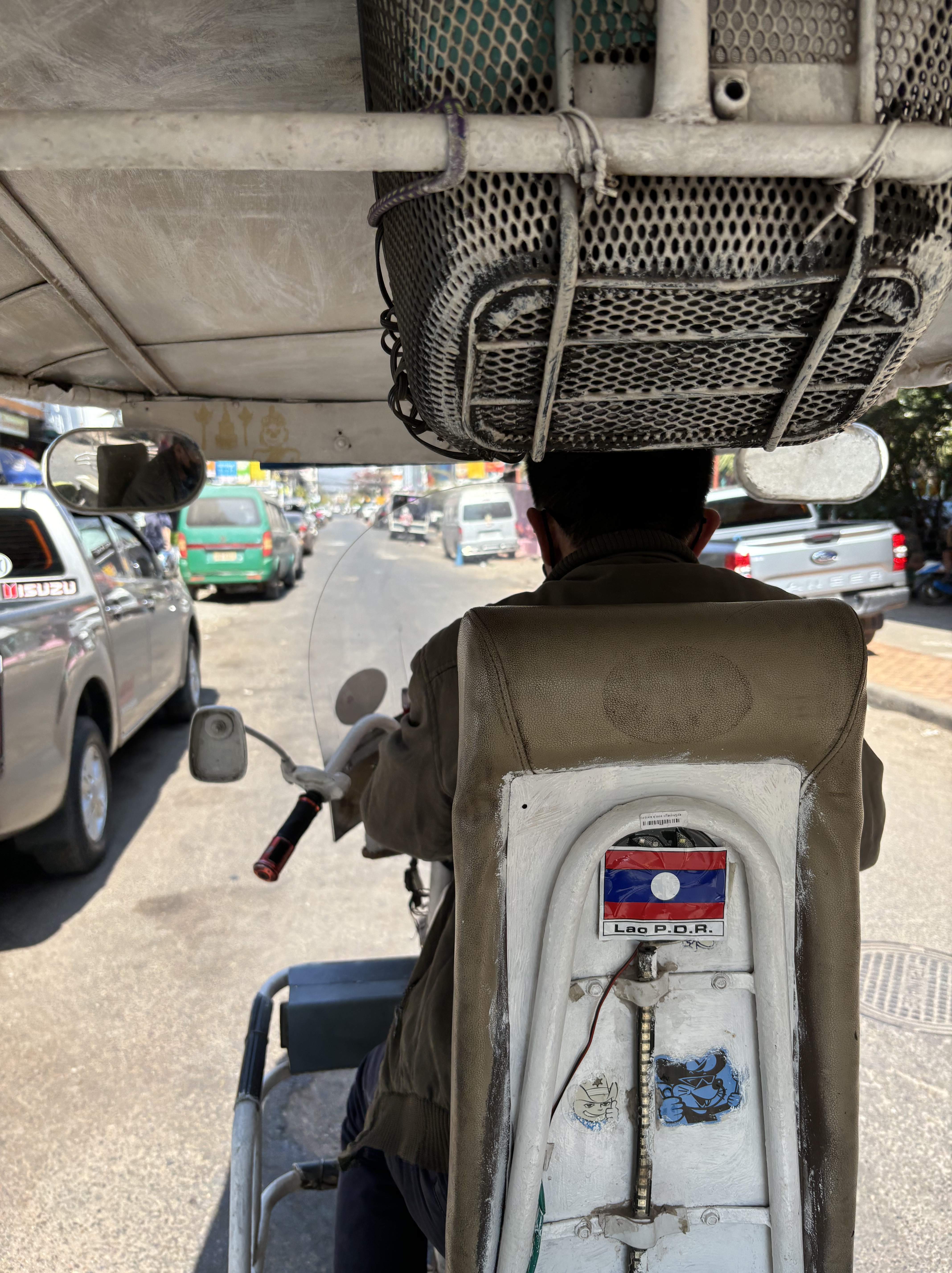
Just as before, I slept through most of the journey and remember very little of it. Arriving was another matter. The train was only the beginning: from there came a bus, then a tuk-tuk and finally a cab. Within the space of an hour, I’d managed four different forms of transport before reaching my hotel.
After checking in, I skipped the breakfast buffet and went straight back out in search of one thing.

A plate of larb.

I went back to Talat Sao too.
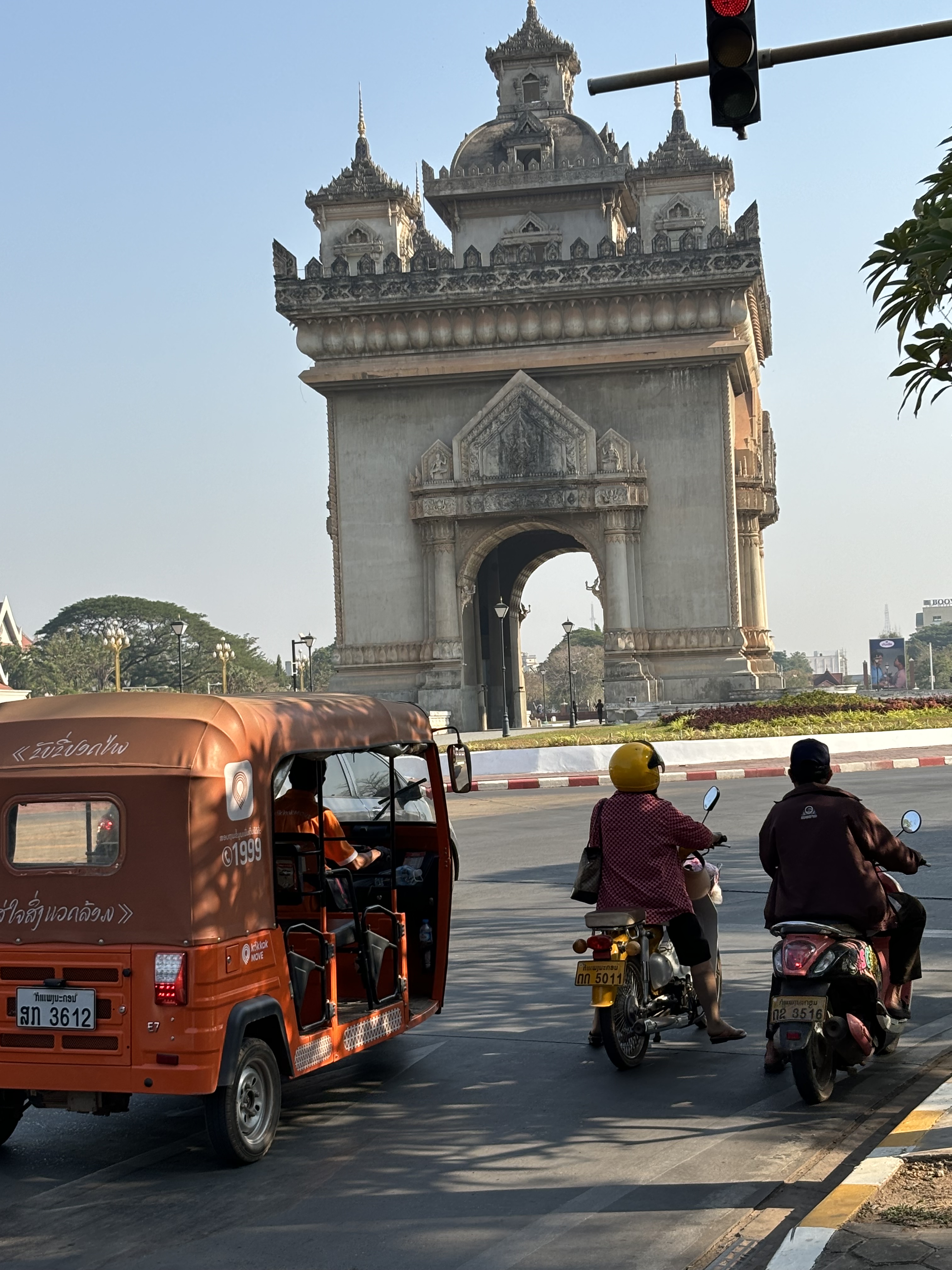
It was still there, but not quite the market I remembered. Much of Talat Sao is now a modern shopping complex, while the traditional fresh-food trading continues around the neighbouring Khuadin Market. Twenty-five years earlier, I had simply experienced it all as the morning market.

But among the stalls were still the chillies and limes, the long beans and green papaya, the herbs and familiar bags of slivered ginger.

A week later, my son arrived in Vientiane after finishing his first solo backpacking trip through Thailand.

“Forget the restaurants,” he said. “Let’s eat down by the river.”

I smiled.

Somewhere along the way, he’d become the sort of traveller I recognised.

As the sun disappeared behind the Mekong, the riverfront came alive. We passed the rows of stalls selling clothes, bags and souvenirs and kept going, following the smell of food.
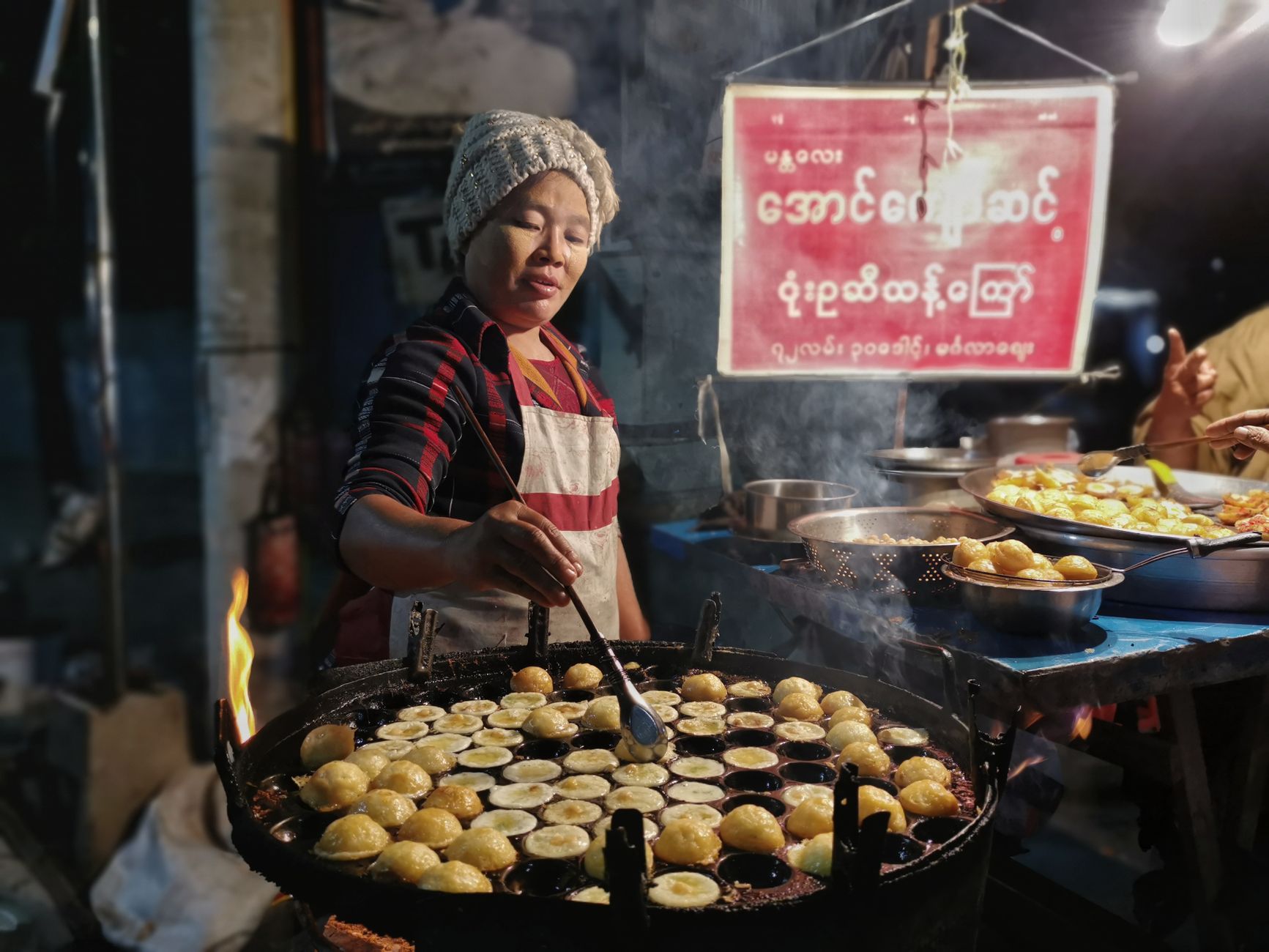
There was charcoal smoke in the evening air, fish cooking over grills, skewers of meat, sticky rice, noodles and plates of papaya salad. People crowded around small tables and plastic stools while vendors chopped herbs and worked over smoking grills.

Before I had the chance to order a drink, my son returned carrying two cold bottles of Beerlao.

We clinked them together.

Then came the larb, accompanied by small baskets of sticky rice and a fiery papaya salad topped with roasted peanuts.

Sitting beside the Mekong with my son, I realised that the greatest gift of that first journey to Laos wasn’t simply a lifelong love of one dish. It was a love of travel and a curiosity about how other people lived. Food became part of how I came to understand a place what people ate, how they cooked it and the markets where they bought the ingredients.
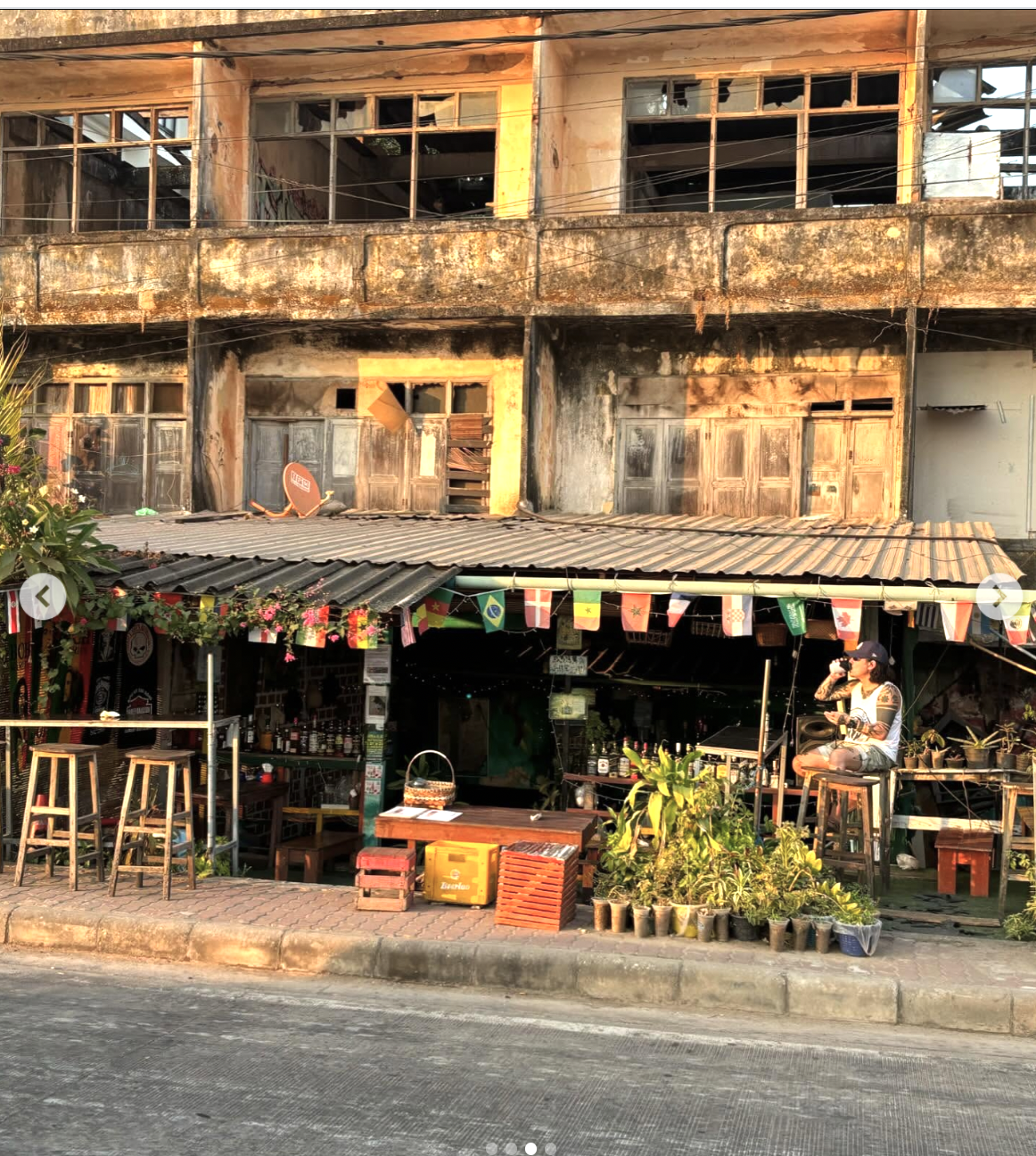
Now I was watching my son find his own way into the world.

Twenty-five years earlier, I thought that train to Laos marked the end of something.

Instead, it became the beginning of almost everything that followed.

Larb
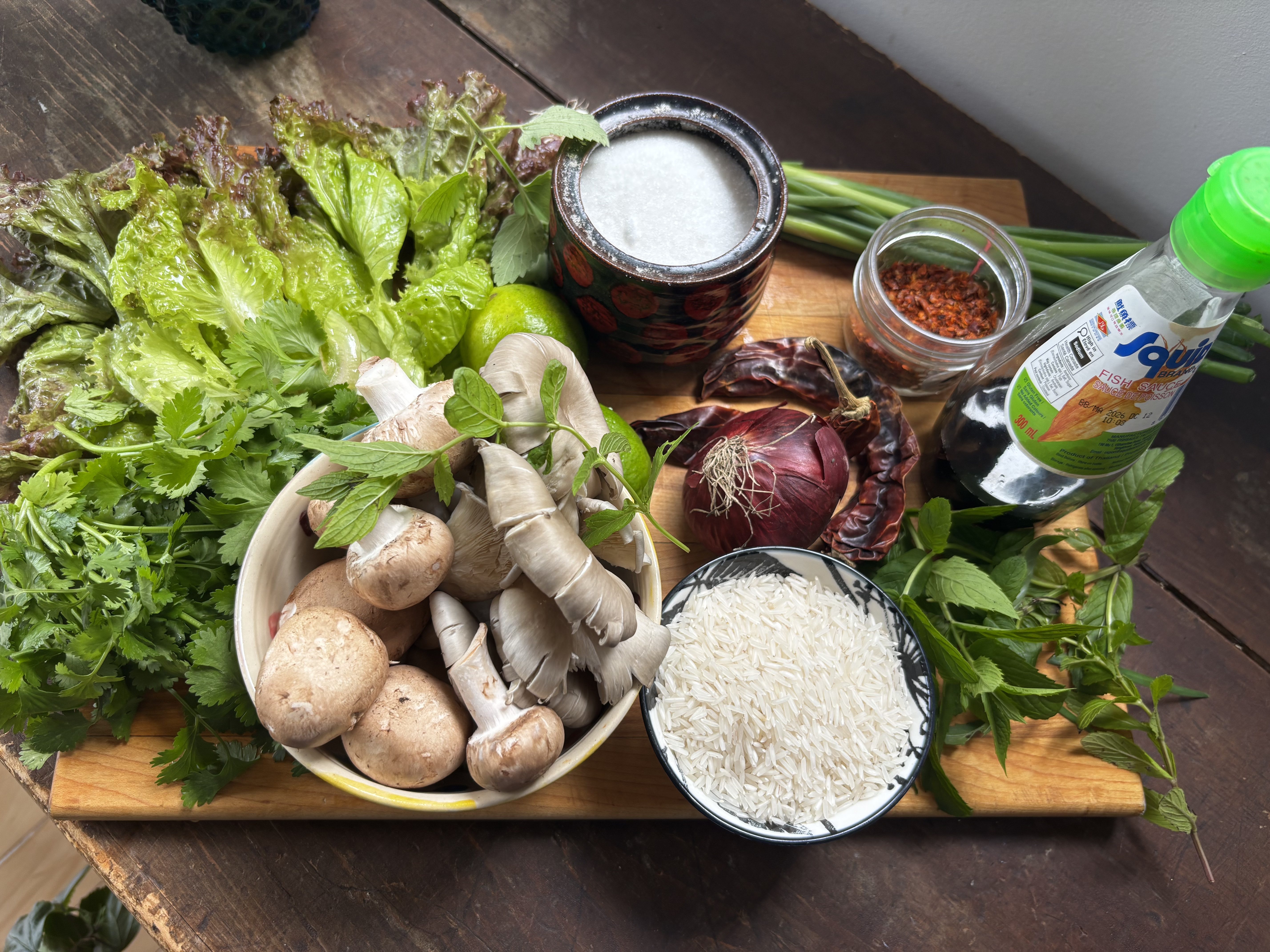
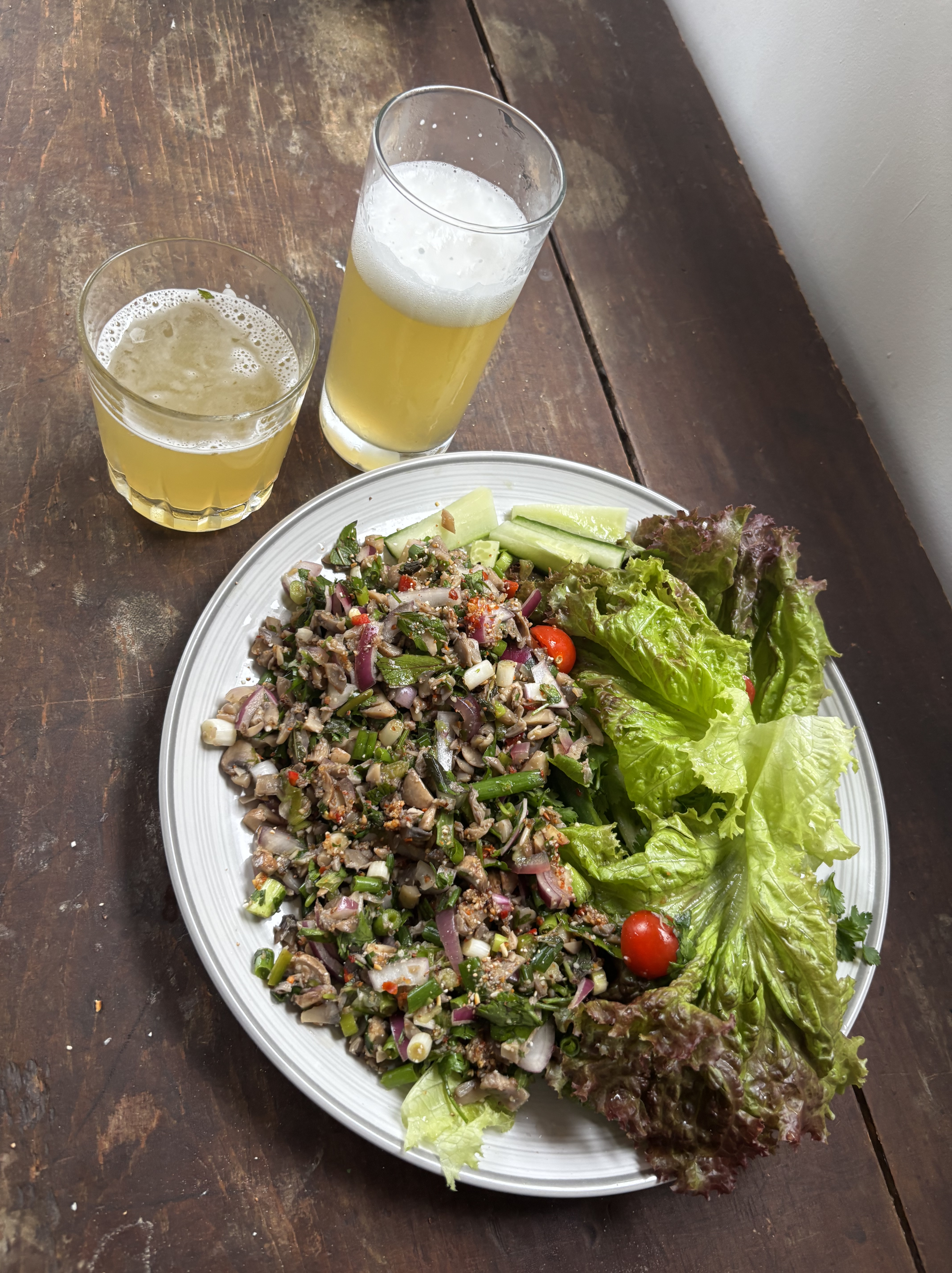
Over the years, I’ve made Larb countless times. Today I make it with mushrooms. Their earthy flavour works beautifully with the herbs and toasted rice, and it has become one of my favourite summer meals: fresh, vibrant and full of flavour. You can switch mushrooms for minced pork, chicken or even roast duck.

Prep: 15-20 minutes
Cook: 10 minutes
Serves: 2 generously

Ingredients

  • 250 g minced pork or chicken
  • 1½ tablespoons uncooked sticky or jasmine rice
  • 2 tablespoons fish sauce
  • Juice of 1-2 limes
  • 1-2 teaspoons chilli flakes, to taste (you can also add in some fresh chopped red chilli_
  • 2 purple shallots, finely sliced (or a red onion)
  • ¼ cup fresh mint leaves
  • A few handfuls of fresh coriander, roughly chopped
  • 1-2 spring onion, finely sliced
  • 2–3 sawtooth coriander leaves, chopped, if you can find them
  • Tiny pinch of sugar, optional

For a vegetarian/vegan version: Replace the pork with about 300 g of finely chopped mixed mushrooms. I use a combination of oyster, shiitake and ordinary brown mushrooms. The mix gives the larb much more flavour and texture than using just one variety. Replace the fish sauce with a vegetarian alternative.

Method

1. Make the toasted rice

Put the uncooked rice in a dry frying pan over medium heat. Toast on low heat for about 5 minutes, shaking the pan regularly, until the rice is golden and smells wonderfully nutty.

Grind with a mortar and pestle or spice grinder until you have a coarse powder. Don’t make it too fine – a little texture is part of what makes larb so good.

2. Cook the pork/chicken or mushrooms

For pork, add a splash of water to a hot pan, then add the mince. Break it up as it cooks until just cooked through.

For the vegetarian version, finely chop the mushrooms and cook them in a hot pan until softened and most of their excess moisture has evaporated.

3. Add the aromatics, spice

Take the pan off the heat. Add the sliced shallots, fish sauce, lime juice, chilli and toasted rice powder. Mix well. You can also take it completely off the heat and put the mixture in a big bowl and mix it all in there.

4. Add the herbs

Let the mixture cool slightly before adding the mint, coriander and spring onion. Add the sawtooth coriander if you’re using it.

Taste. Add more lime if it needs brightness, fish sauce if it needs salt or more chilli if you want some fire.

5. Serve

Serve warm or at room temperature with sticky rice and fresh vegetables such as cucumber, cabbage and long beans. You can also spoon the larb into crisp lettuce cups if you don’t want rice.

An ice-cold bevvie is a must.

If You Go: Talat Sao, Vientiane

Where: Lane Xang Avenue, near the junction with Khou Vieng Road in central Vientiane. The Central Bus Station is beside the market area.

Opening hours: Generally open daily from around 7:00am until late afternoon. Hours vary between the traditional market stalls and the newer Talat Sao shopping complex, so go early if you want more of the morning-market atmosphere.

For food lovers: Explore the wider Talat Sao area, including nearby Khuadin Market (Talat Khua Din), the traditional fresh-food market where you’ll find vegetables, herbs, chillies, meat and other ingredients used in Lao cooking.

Tip: Go in the morning. Talat Sao may mean “Morning Market”, but these days the wider complex stays open well into the afternoon.

Photography: Writers own. Additional images courtesy of Pexels.
The Perfume of Khan el-Khalili, Cairo, Egypt

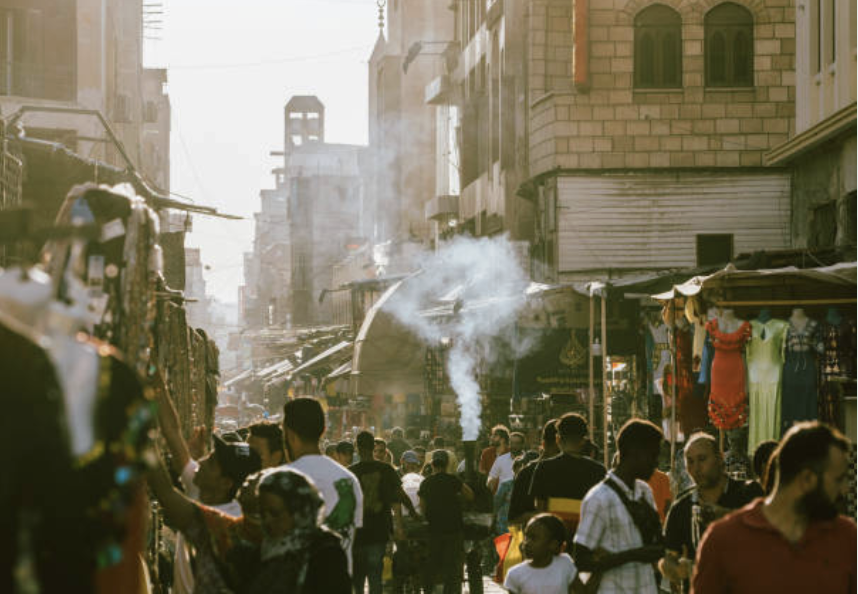
It was just before noon and the Adhan for Dhuhr echoed across Khan el-Khalili and neighbouring Al-Muizz Street as we got out of the cab. A first voice rose above the crowd, then another and another, the overlapping calls drifting between minarets and the medieval stone buildings. Around us, shopkeepers paused briefly, some completely stopped and bent to pray, tourists turned their heads to listen, and Cairo carried on as it has for centuries.

It was the perfect introduction to one of the world’s oldest markets.

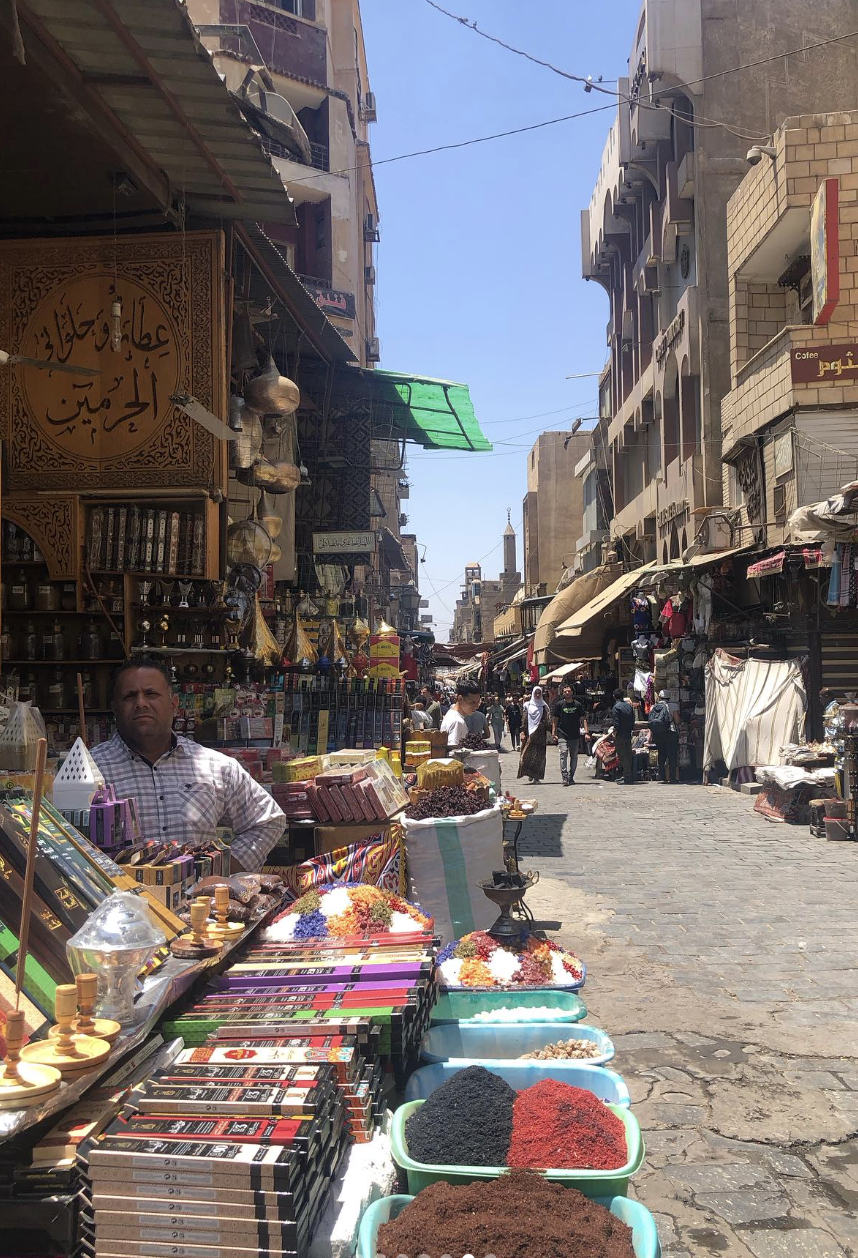
Founded in the fourteenth century, Khan el-Khalili has been a centre of trade for more than six hundred years. Merchants, pilgrims and travellers have wandered these narrow lanes for centuries, drawn by spices, textiles, jewellery, tea, perfumes and stories. It is described as a bazaar, but it can also be said a living maze.

My friend Safah led the way. Without her, and her Arabic, I suspect I would still be wandering around there today.

The streets twist and narrow unexpectedly, opening onto tiny courtyards before disappearing again into passages lined with brass lamps, embroidered fabrics, carved wooden boxes and shelves stacked with incense and spices.

The market engages every sense at once.

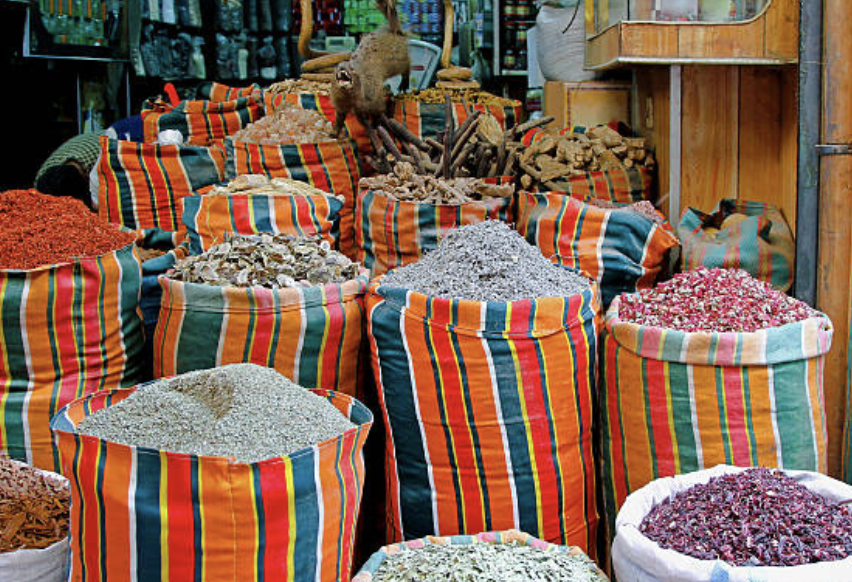
Spice sellers fill buckets and bags full of bright coloured spice both ground and whole. Perfume sellers display glass bottles filled with amber, jasmine and musk oils. The many lantern shops glow with coloured glass and intricate metalwork, casting fragments of light onto the cobblestones. Merchants bargaining loudly and enthusiastically.

Many visitors describe being harangued by vendors. Perhaps I was lucky. Perhaps travelling with someone who spoke Arabic changed the experience I found myself wandering without any real desire to buy anything. The market itself was enough. The pleasure was in observing, listening and getting lost.

Well, almost.

As a lifelong lover of incense, I left with sandalwood, musk, amber and a small bag of fragrant resin incense – frankincense tears, the golden nuggets that have perfumed homes, temples and markets across the region for centuries.

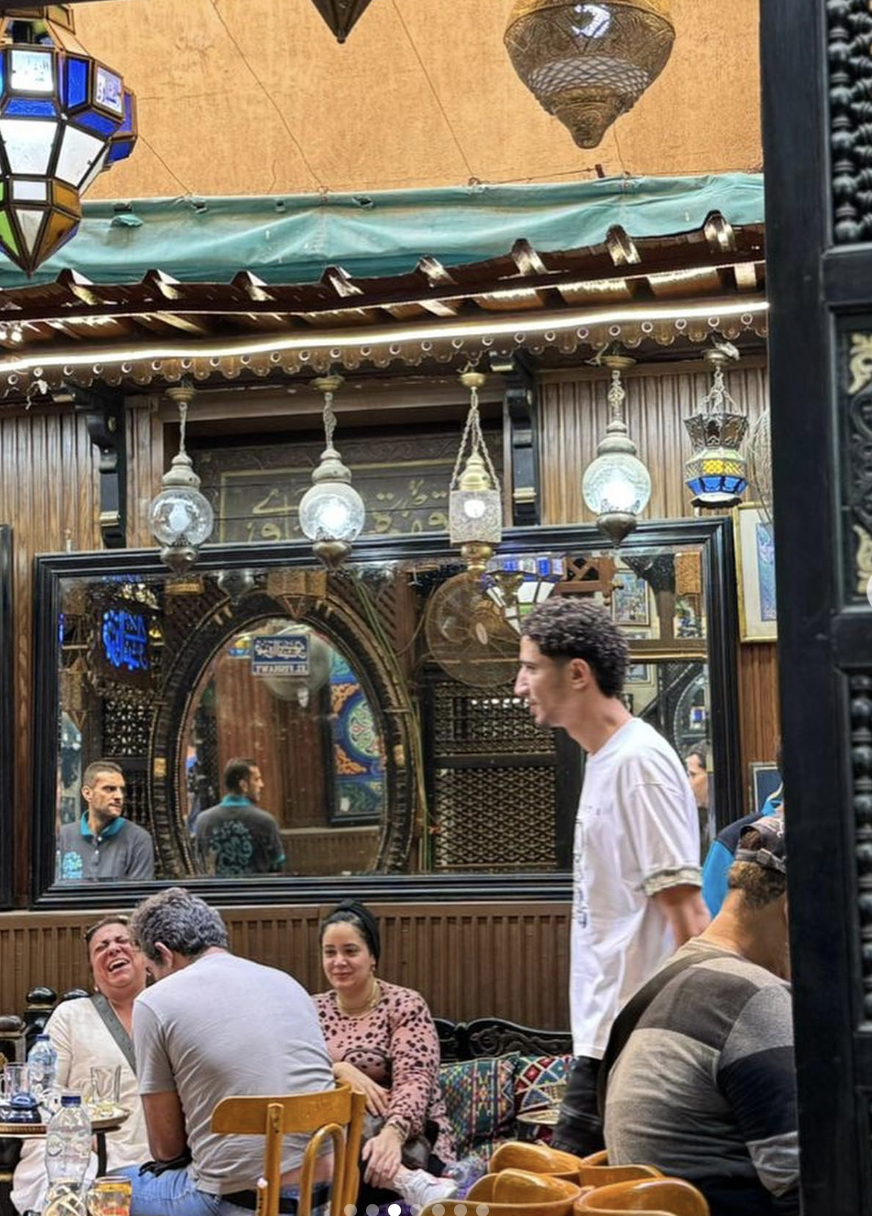
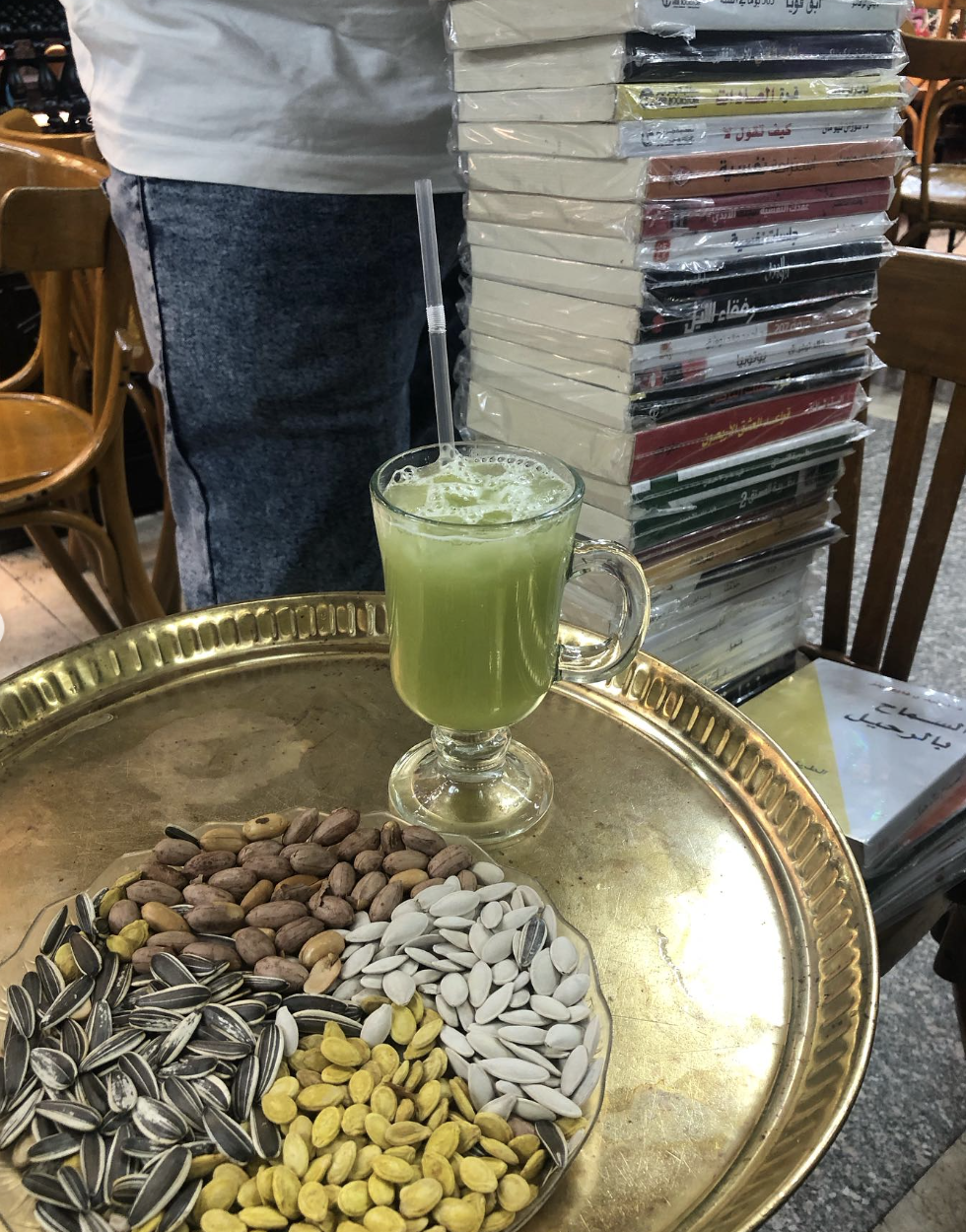
Eventually we found our way to El-Fishawy Café, Cairo’s oldest continuously operating coffee house. Established in 1773, it has welcomed merchants, writers, politicians and travellers for generations. Sitting amongst its mirrored walls. Safah with mint lemonade and me with a glass of karkadeh, Egypt’s deep ruby-red hibiscus tea, it was easy to imagine that little had changed over the centuries.

The tea itself was familiar. I grew up drinking hibiscus tea at home and its still a favourite, another reminder that food and flavour often connect places that appear worlds apart.

Alongside the tea came bowls of pistachios, and different seeds. Safah and I sat for a good while watching the world around us. Families passed by, old men smoked shisha, shopkeepers called to one another across the lane and tourists attempted to navigate the labyrinth.

At one point, a woman approached us offering henna tattoos. I politely declined, but Safah encouraged me to do it. “When in Cairo,” she laughed. Before long, she transformed my calf and foot into a canvas of intricate flowers, vines and patterns. By the time she finished, I was glad Safah had persuaded me. Like the tea, the incense and the market itself, it became part of the memory of that afternoon.

It struck me that markets like Khan el-Khalili survive because they offer something modern shopping centres cannot. They are not simply places of commerce. They are places to gather, gossip, negotiate, drink tea and watch life and history unfold.

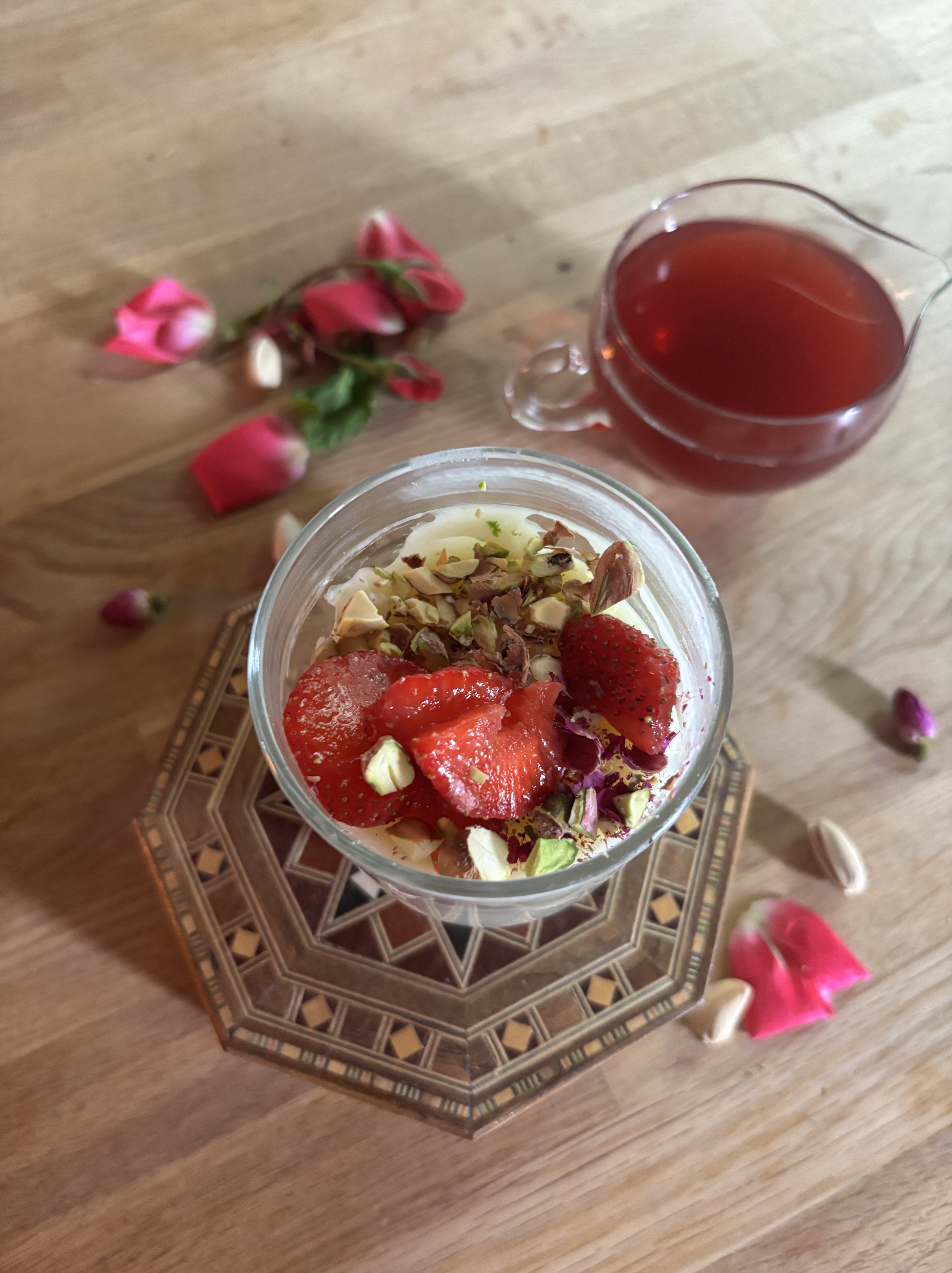
For this post, I have chosen a recipe inspired by that afternoon: mahalabia, a simple milk pudding scented with rose water and topped with pistachios.

Roses have been cultivated in Egypt since antiquity, appearing in the gardens of pharaohs and later finding their way into perfumes, ceremonies and culinary traditions. Their fragrance still perfumes the Middle East. Mahalabia captures that history perfectly. Made from milk, sugar and corn starch, it is simple yet elegant, delicately perfumed with rose water and scattered with pistachios. Some versions also include cardamom or saffron.

Sometimes the best thing to bring home from a market is not what you buy, but the smell and taste of it.

Mahalabia with Rosewater and Pistachios

This delicate milk pudding is scented with rosewater and topped with pistachios. It took me no more than 15 minutes to prepare, with the refrigerator doing the rest of the work. You can also switch the rosewater for orange blossom water and infuse the milk with saffron and a bit of cardamom. I added some macerated strawberries to mine.

Ingredients

Serves 4–6

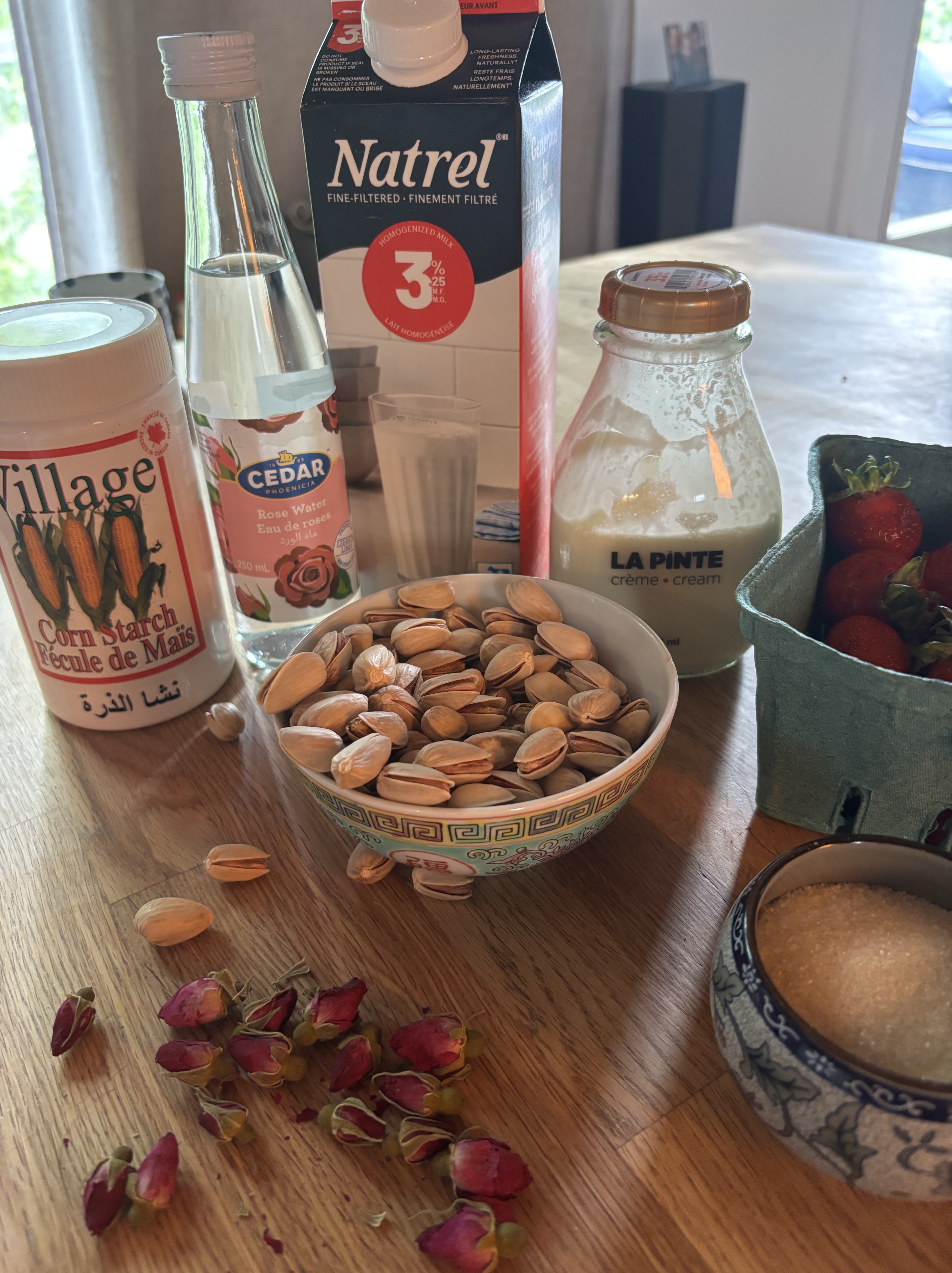
  • 2 cups whole milk (you can also use rice milk or coconut milk or a mix)
  • 1 cup cream
  • 4 tablespoons cornstarch
  • A third of a cup of cold water
  • 4-6 tablespoons sugar
  • 1 tablespoon rosewater
  • 2 tablespoons crushed pistachios
  • Dried rose petals, for garnish (optional)

Method

  1. In a small bowl, mix the cornstarch with a third of a cup of cold water until completely smooth.
  2. Pour the milk and cream into a saucepan and add the sugar. If using cardamom or saffron, add them now. Heat gently over medium heat until warm but not boiling.
  3. Stir the cornstarch mixture once more and slowly pour it into the warm milk, whisking continuously.
  4. Continue stirring for 5–8 minutes until the mixture thickens to the consistency of pouring custard.
  5. Remove from the heat and stir in the rosewater.
  6. Pour into individual serving glasses or small bowls and allow to cool slightly before refrigerating for at least two hours.
  7. Before serving, sprinkle generously with crushed pistachios and, if desired, a few dried rose petals.
  8. Add any macerated fruit.

Finding My Way Back Through Rome’s Markets

For years, this blog sat quietly in a forgotten corner of the internet.

It wasn’t because I stopped traveling. Quite the opposite. My work and personal life carried me across countries and continents at a pace that left little room for reflection. There were stories everywhere, yet somewhere along the way, I stopped writing them down.

Now, as my life shifts again, I have found myself revisiting old photographs. Again and again, my thoughts drift back to the months I spent living in Rome. Not to the Colosseum or the Vatican. Instead, my mind returns to two distinct markets. One taught me about Italy; the other reminded me of the wider world. And between them, they helped a foreign city feel like home.

Hera picked me up from Fiumicino Airport.

We had worked together years earlier in Montreal. Now living in Rome, we had seen each other the year before after not crossing paths for over a decade. Neither of us expected that we would soon be living in the same city.

Then one day, I sent her a message: “Guess what? I’m moving to Rome.”

For the second time in our lives, we found ourselves sharing a city.

This is what happens, I think, when you spend much of your life away from the place you were born. Those of us who leave our homelands somehow pick up quickly where we left of. We build friendships across continents, lose sight of each other for years, and then unexpectedly reappear in the same place at the same time, sometimes finding more of a community in our transplanted lives than where we permanently reside.

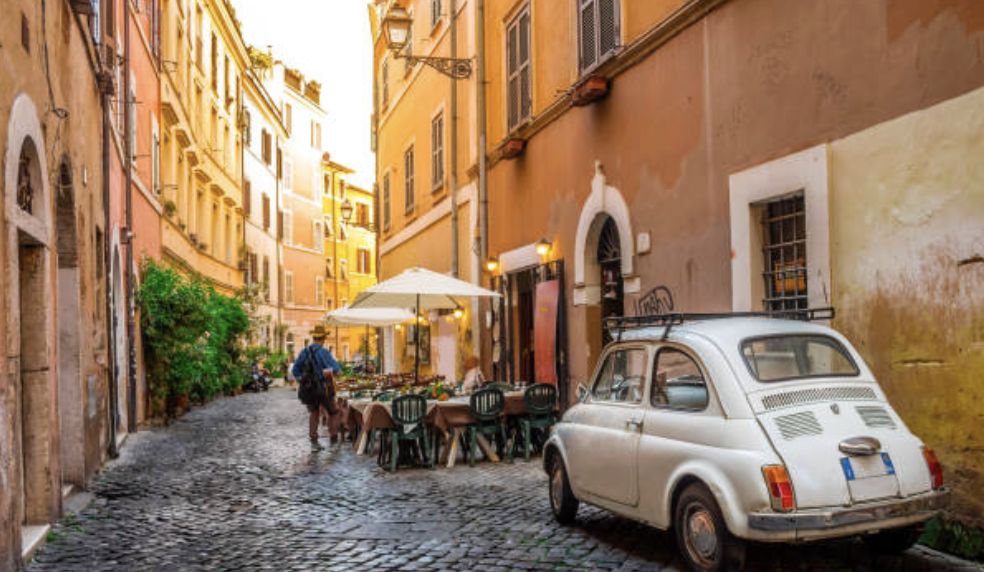
My new home was in Testaccio, Rome.

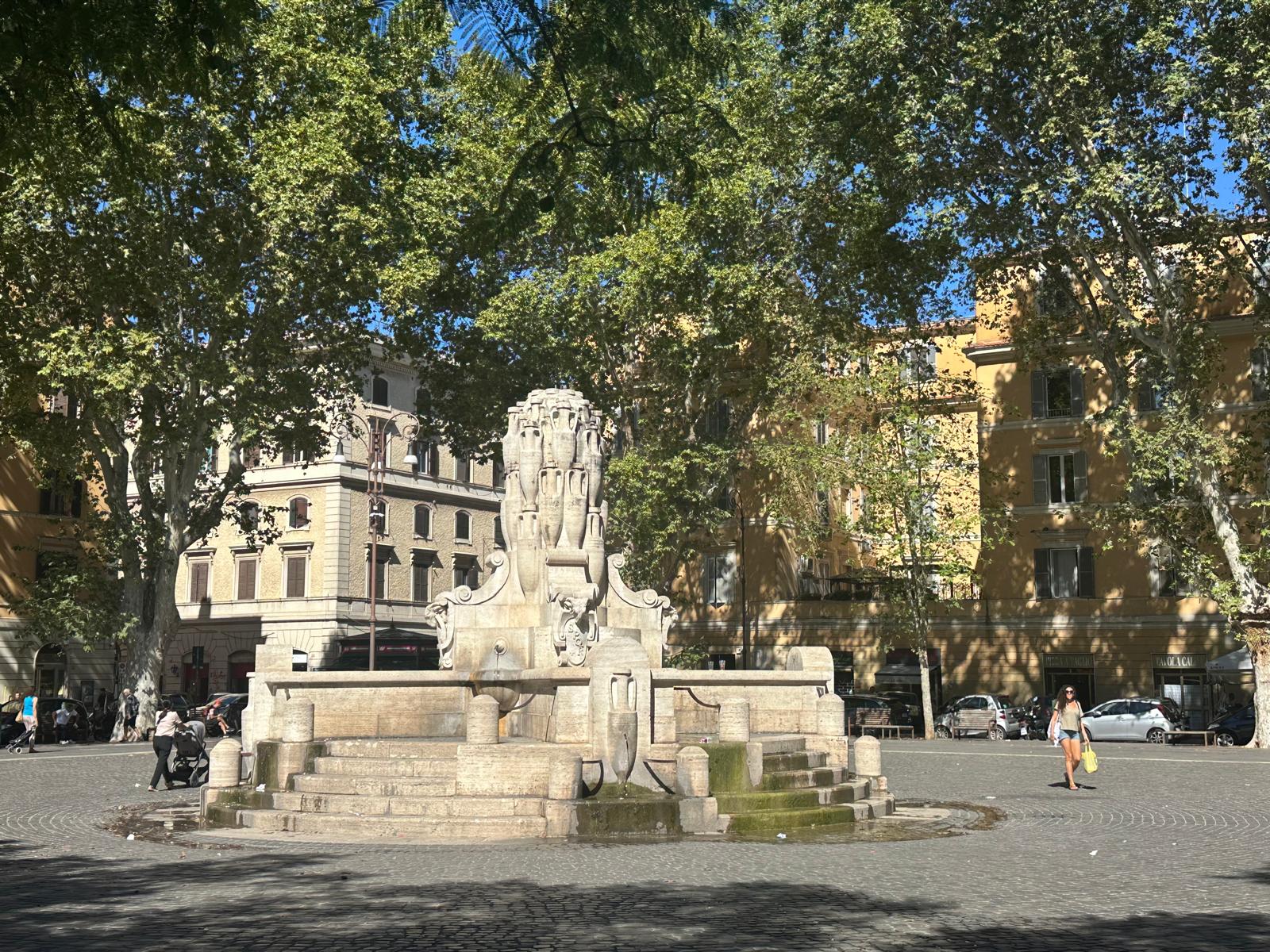
Testaccio is vibrant working neighbourhood just across the Tiber and best known for Monte Testaccio, a hill built from millions of discarded clay amphorae that once carried olive oil throughout the Roman Empire. Yet what captivated me was not its ancient history, but its daily life.

Every evening around five o’clock, the neighbourhood came alive. People of all ages gathered in the square. Teenagers lingered over gelato. Elderly locals sat on benches with their pet dogs exchanging news. Friends and colleagues met up to share pizza, spritz and conversation. It felt like the very embodiment of la dolce vita.

At the heart of it all sat Mercato Testaccio.

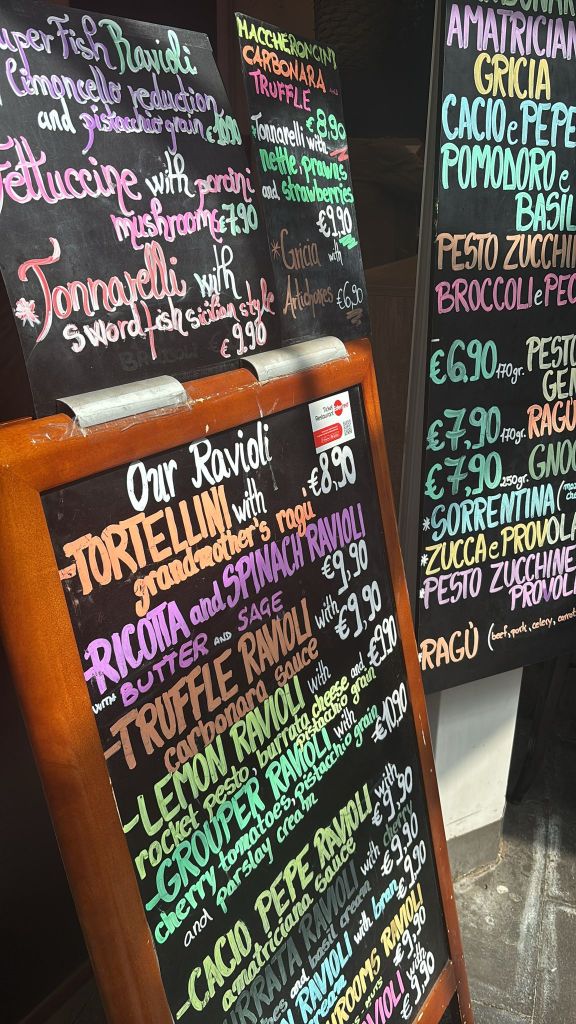
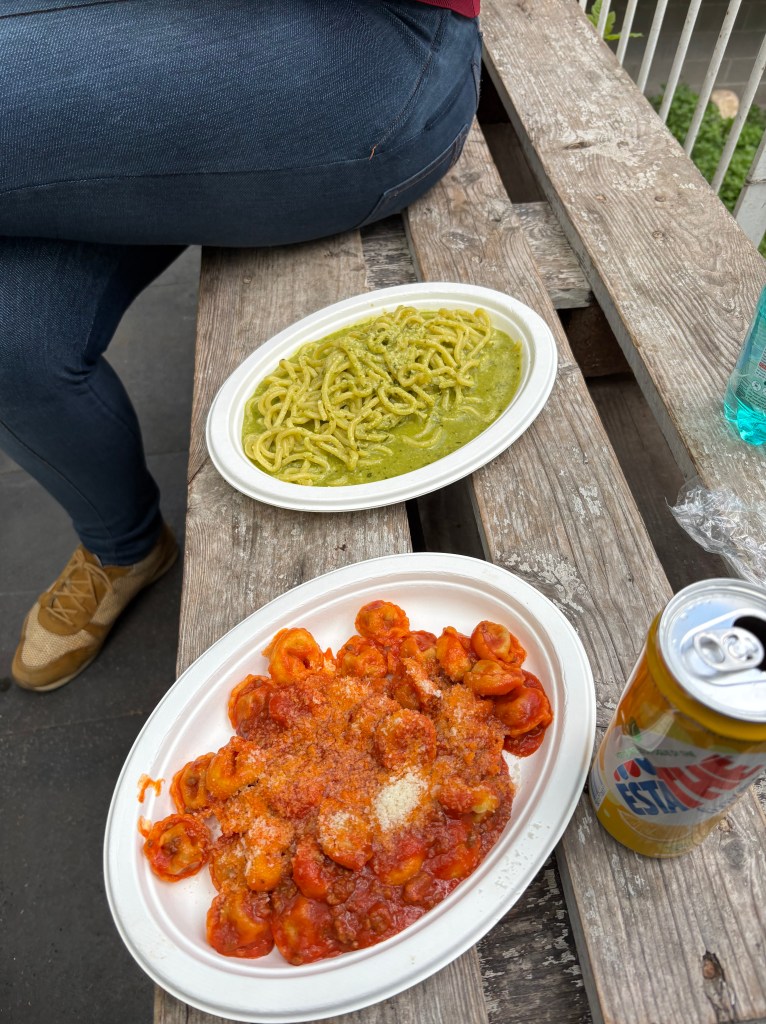
On that first day, Hera insisted she take me there so I could familiarize myself with the area. We bought fresh, handmade pasta and sat together in the market square to eat. Before leaving, she insisted I stock my empty kitchen with the essentials: so I chose burrata, prosciutto, good bread, olives, tomatoes, and peaches.

That evening, alone in my apartment, I unpacked my groceries and sat on the floor to eat. I sent a message back to my girfriend’s in Australia, sharing how I felt like the character Julia Roberts played in Eat Pray Love on her very first night – sitting alone on the floor of her apartment, nervous but excited, eating her first meal in the country. The irony was so similar to the choices I had made. My family was thousands of kilometres away, but somehow the market, the food, and an old friend had already made Rome feel a little less foreign.

Every Friday, I worked from home and would take an hour for lunch to wander through the market’s aisles, comparing notes with colleagues who also lived in the neighbourhood. We debated who made the best pizza al taglio, where to find the freshest mortadella, which stall served the best pasta, and where to linger over a leisurely lunch. The market quickly became part of the rhythm of my week and my introduction to everyday Roman life. Like everywhere I have lived, I soon got to know many of the store owners, they would suggest things to try, pop something extra in your bag, and when I had no small change, they would wave a hand and say, prossima volta, next time.

As much as I embraced Roman life, I had grown up in Australia and had resided in Montreal, Canada for many years – two of the world’s most multicultural countries. I was accustomed to markets and supermarket aisles lined with ingredients from every corner of the globe, and neighbourhoods where dozens of cuisines coexisted side by side.

Italy is fiercely proud of its food culture, and rightly so. Yet after a few weeks, I found myself craving spice, exotic vegetables, and the flavours of places far beyond the Mediterranean.

When I wanted Italy, I went to Testaccio. But when I wanted the world, I went to Mercato Esquilino.

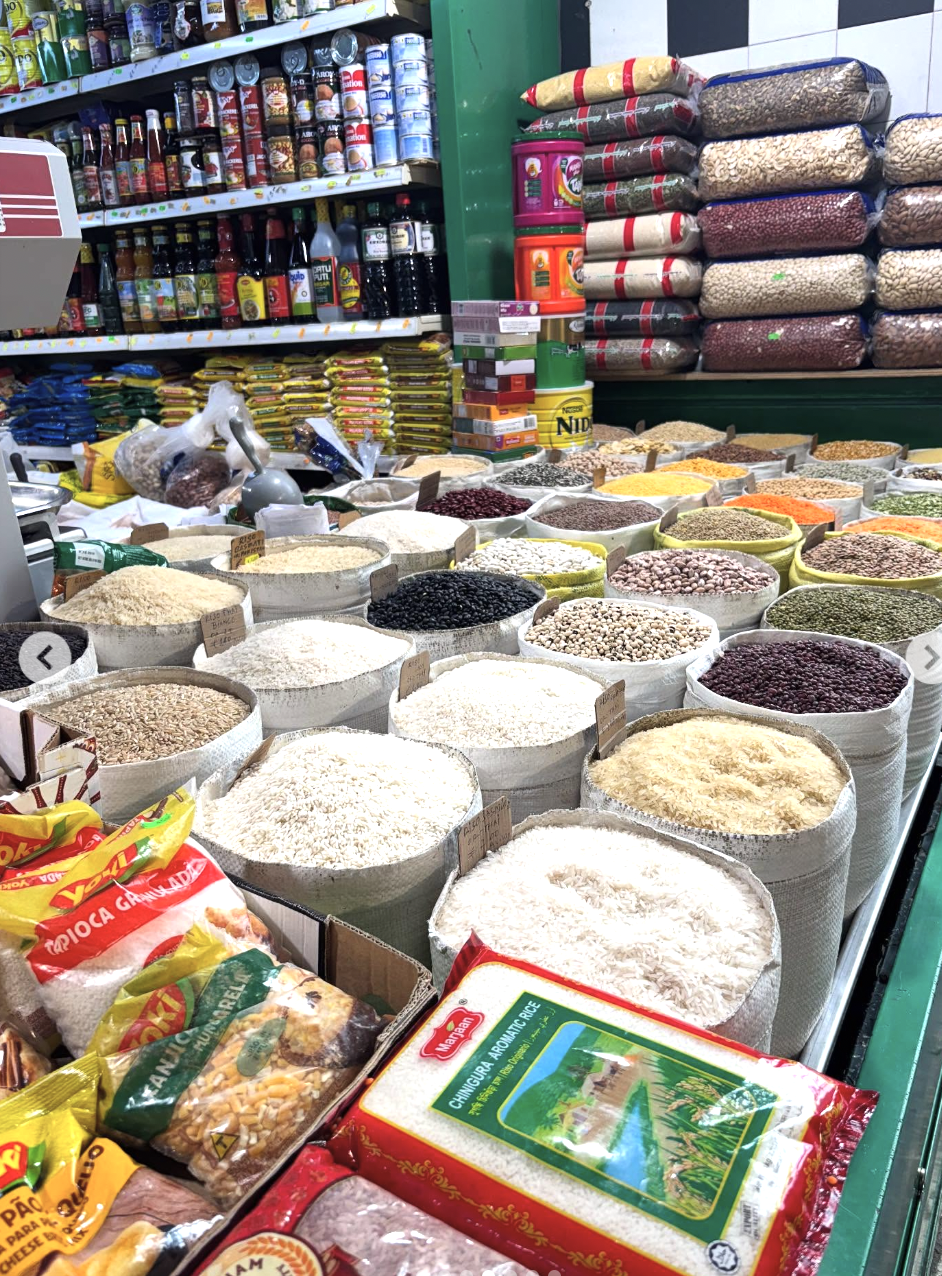
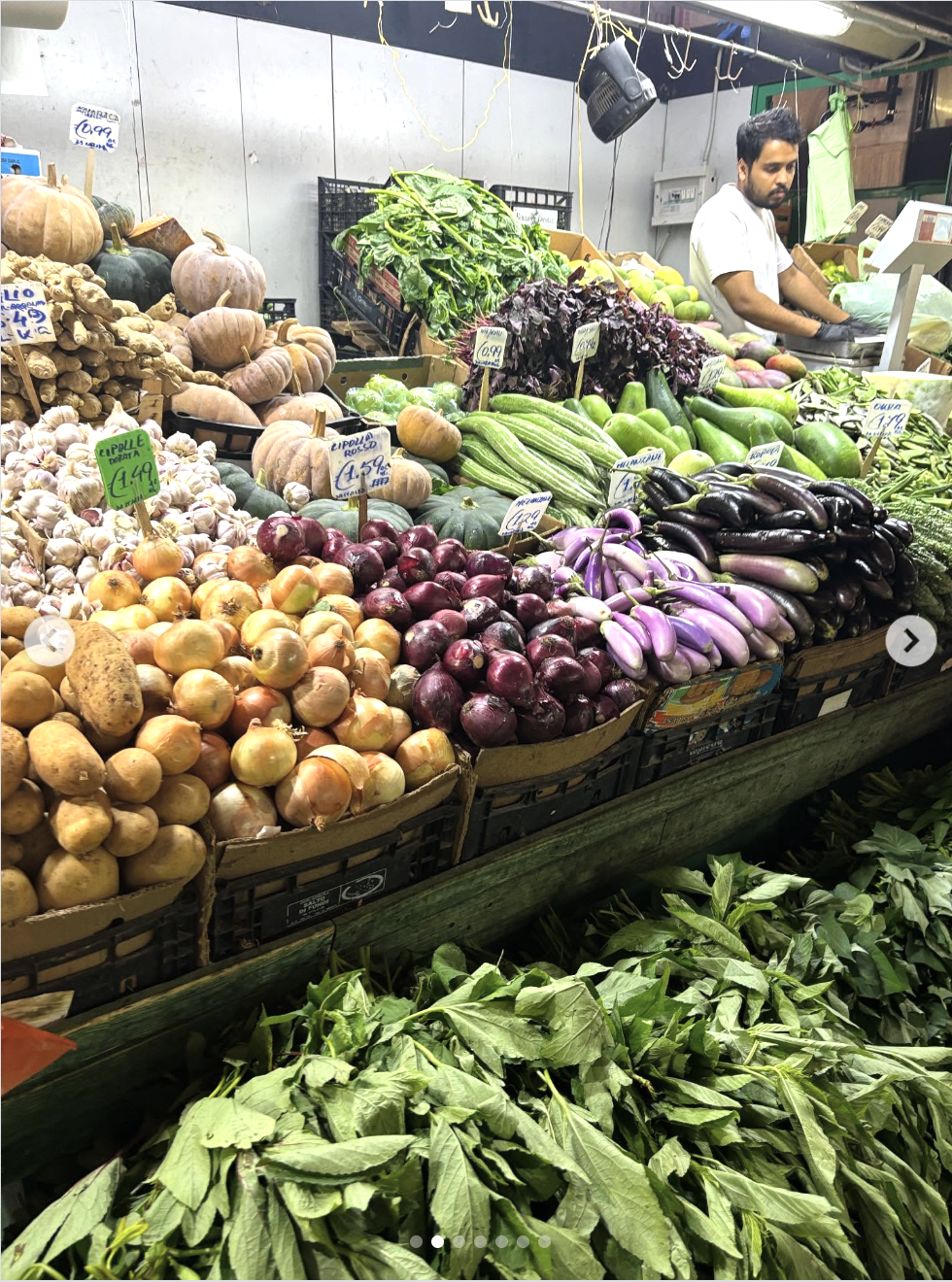
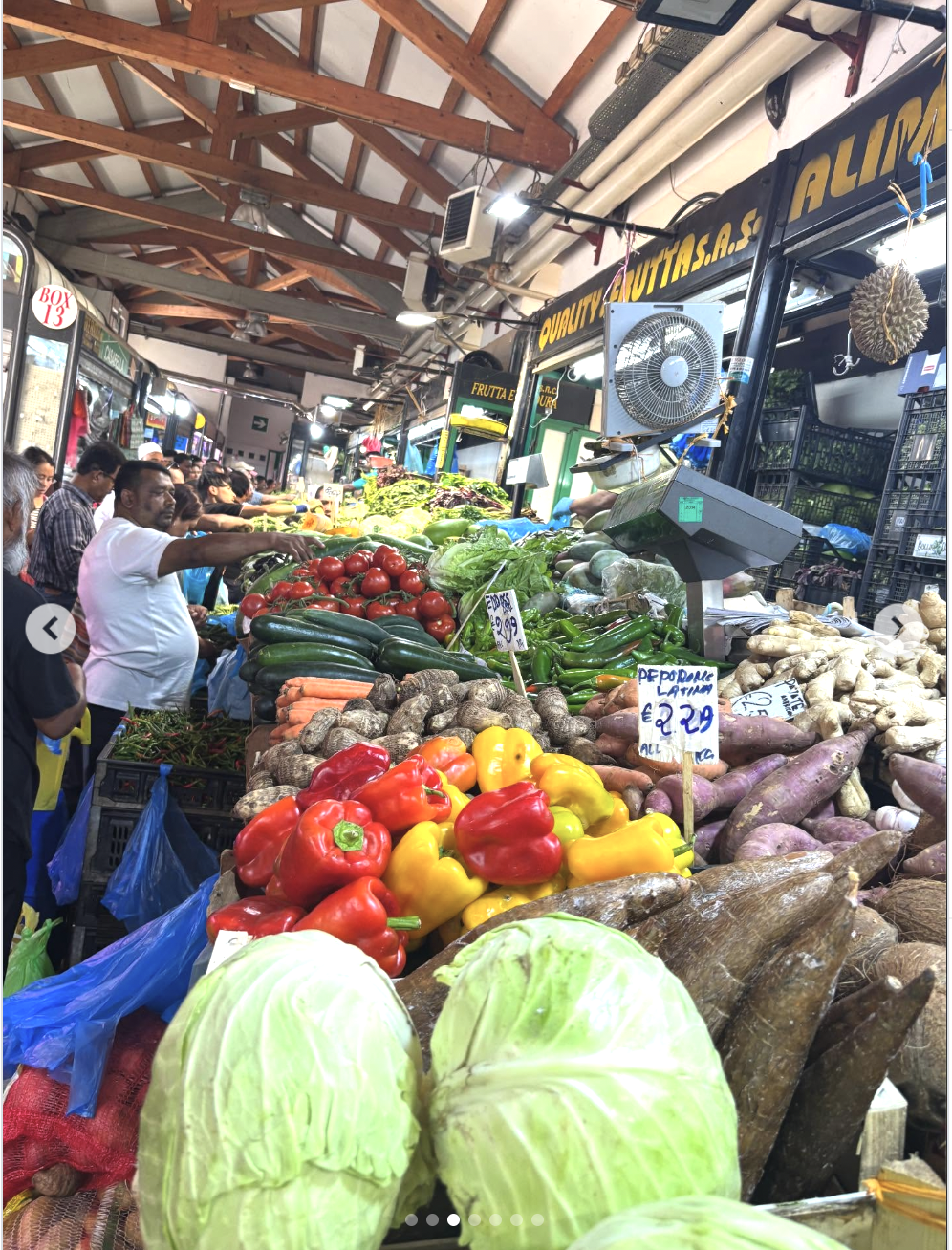
Located just beyond Termini Station, Rome’s main transport hub, Mercato Esquilino felt like a different city altogether. The polished familiarity of Testaccio gave way to something more chaotic, more multilingual, and more global. Here I could find daikon (my favourite vegetable) – alongside Asian greens, chilies from across continents, spices I recognized from years of travel, and ingredients that reminded me of homes both real and temporary.

Mercato Esquilino is not the Rome that appears on postcards. It was something altogether different: a reminder that modern Rome, like so many great cities, has been shaped by people, ingredients, and influences arriving from elsewhere.

The first thing you noticed was the noise. Vendors called out to customers. Conversations unfolded in dozens of languages.

One afternoon, my family called from Australia while I was shopping.

“Where are you?” they asked.

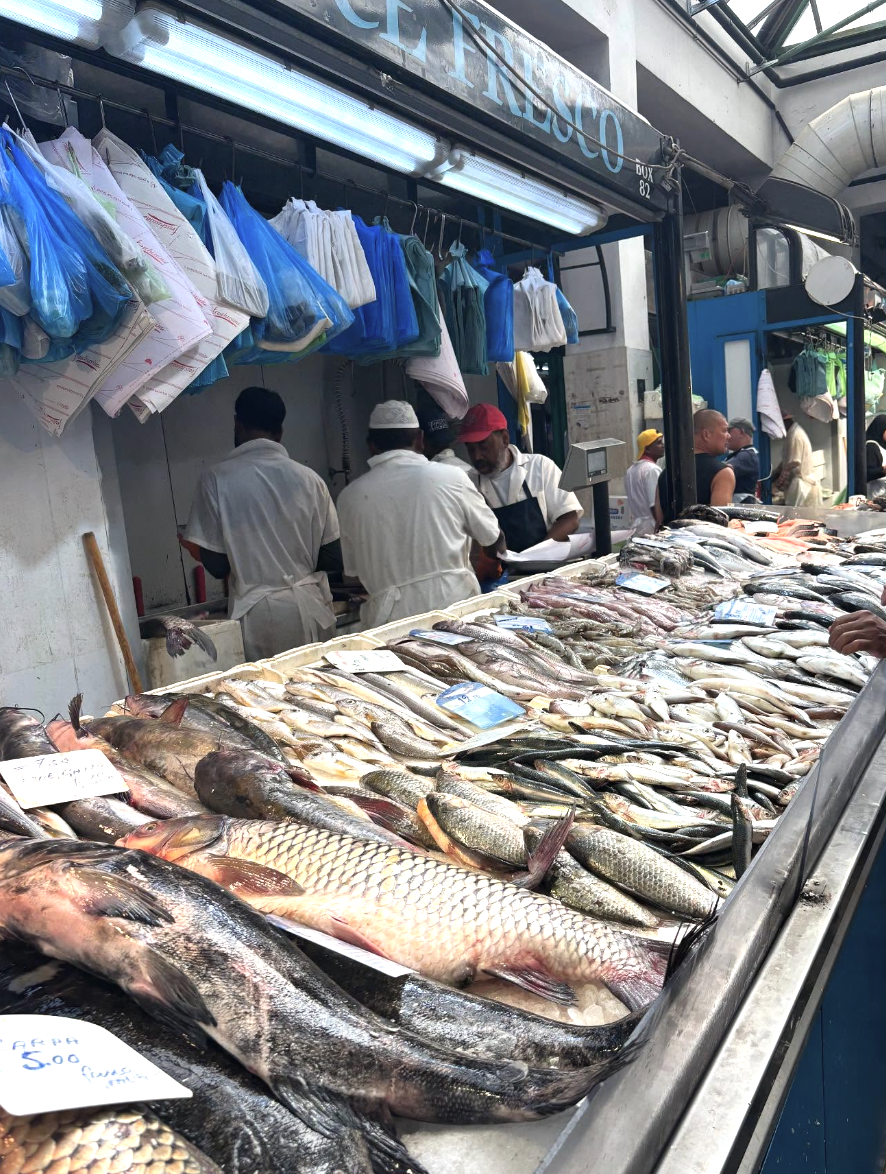
I turned the phone camera on so they could see: the shouting vendors, the bustle, the rows and rows of whole fish on ice. It was the sound of a market that felt almost unchanged from another era. For a moment, they were transported there with me.

I rarely arrived with a strict shopping list. More often, I came searching for ingredients that I was missing, craving. The Bangladeshi shopkeepers soon began to recognize me.

“How do you know this stuff?” one asked, laughing as I filled a basket with ingredients that most of their Italian customers ignored.

Today, as summer begins to arrive in Canada, I find myself thinking about those Friday afternoons in Rome. About Testaccio and Esquilino. About old friends who somehow find each other again in distant cities. About market vendors who knew exactly what I was looking for before I asked, and the simple pleasure of wandering home with a bag full of ingredients and no particular plan.

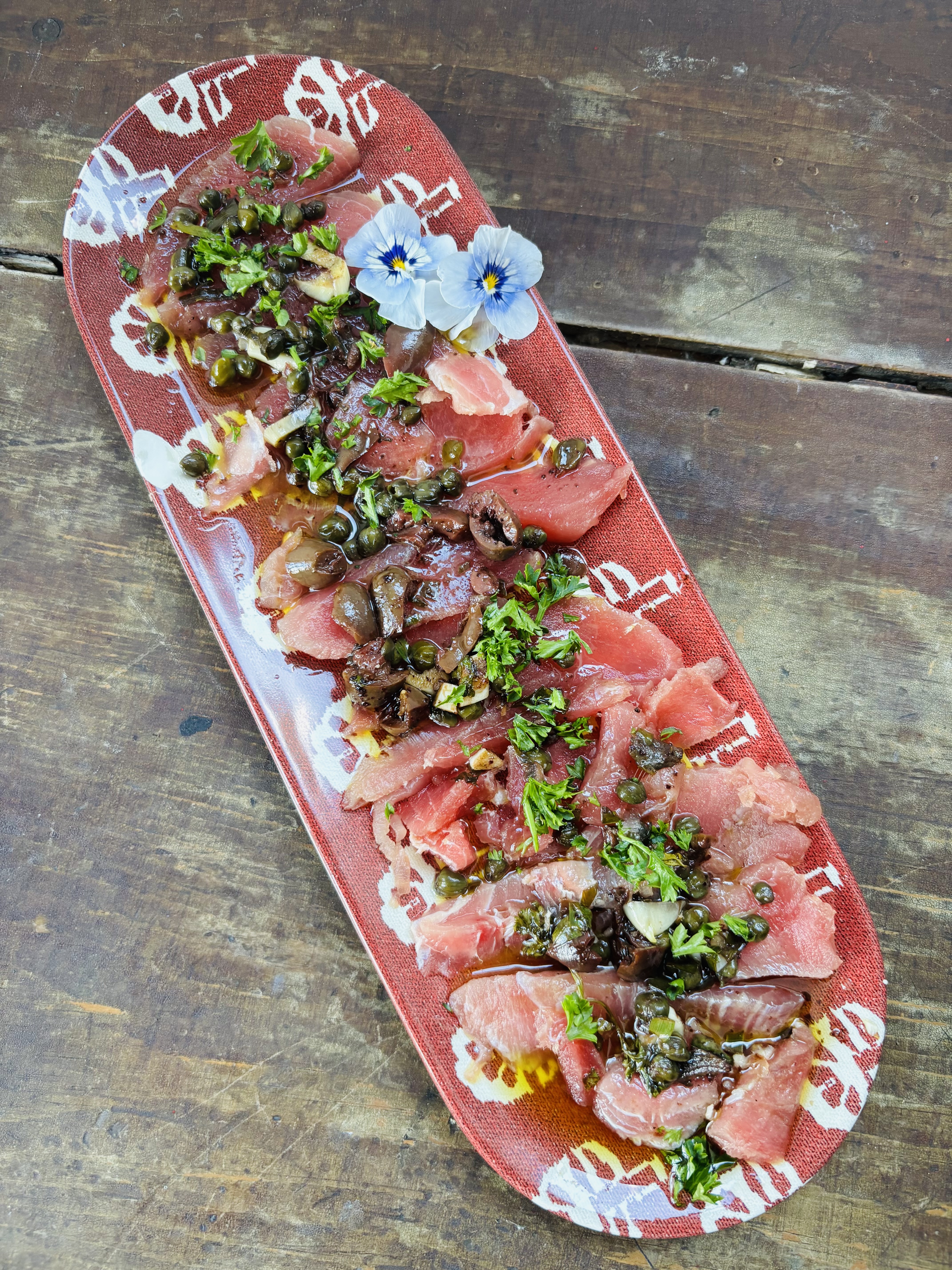
I’ve been back in Canada for a while, but some tastes just follow you home. Case in point: tuna carpaccio. I originally stole this recipe from Gennaro Contaldo, who famously mentored a young Jamie Oliver years ago – and it became a staple of my time in Rome. Although I’ve made it for years, it has a renewed focus for me lately thanks to two game-changers: amazing fresh, salt-brined capers from the market, and the addition of sumac. Fresh tuna, good olive oil, balsamic, sautéed garlic, and fresh herbs are your must haves.

So as I sign off today, and hopefully not for as long as last time – I’ll leave you with this small reminder that sometimes the best souvenirs aren’t things at all, but flavours, friendships, and the places that brought them together.

Tuna Carpaccio

Ingredients: A steak of sushi-grade tuna, handful of olives and another of capers, or either-or. About half a cup of olive oil, some splashes of balsamic, a few cloves of garlic smashed (do not finely chop) and some herbs of your fancy, some sumac.

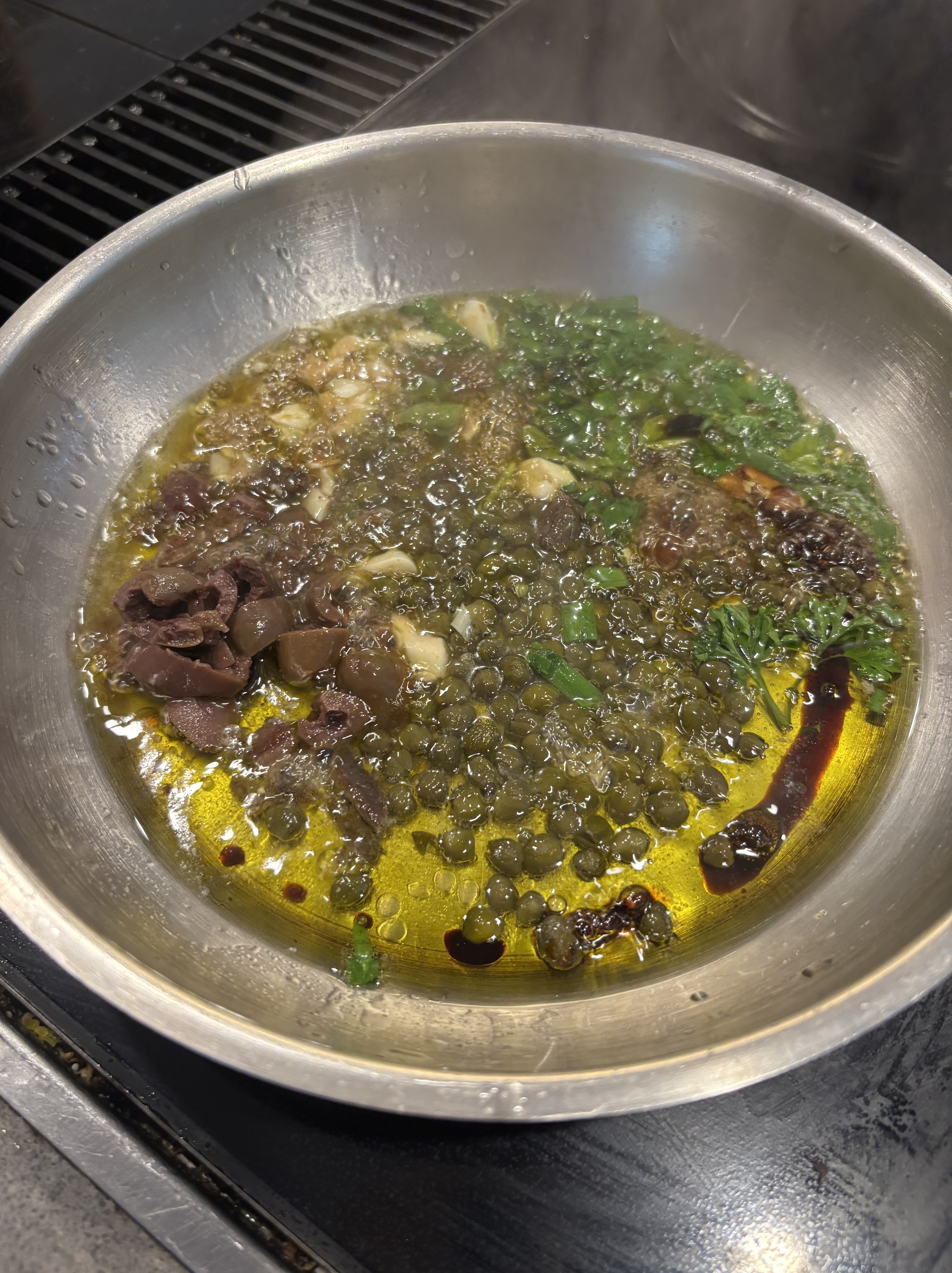
How to: In a small pan, gently heat up some garlic, capers, olives and half of your herbs. Add a few splashes of balsamic vinegar. Heat on low for about five minutes, stirring. You do not want your garlic crispy.

To slice tuna for carpaccio, freeze the fish for about 15 minutes so it is firm and easy to handle. Do not keep the fish in the fridge if you are not using immediately, it must be kept frozen. Use a razor-sharp knife to cut paper-thin, translucent slices across the grain using one smooth pulling motion. If you want the pieces even thinner, place plastic wrap over the slices and gently flatten them with the back of a spoon. Arrange the tuna on a plate (chilled preferable), and then spoon your mixture over it, garnish and sprinkle with more sumac or a few chilli flakes.

Bon Appetito.