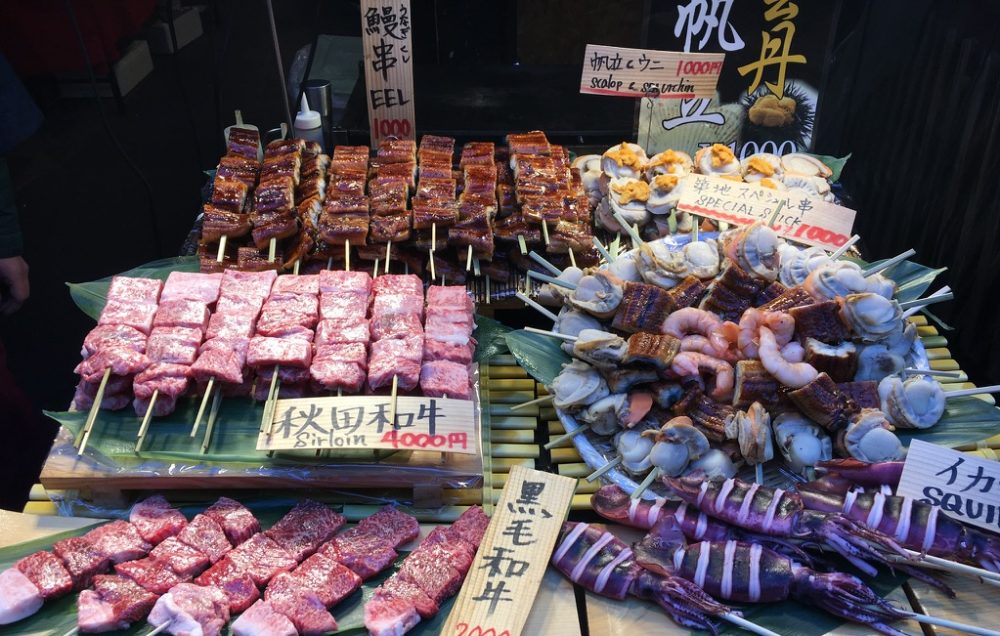
Every relationship has a last journey.
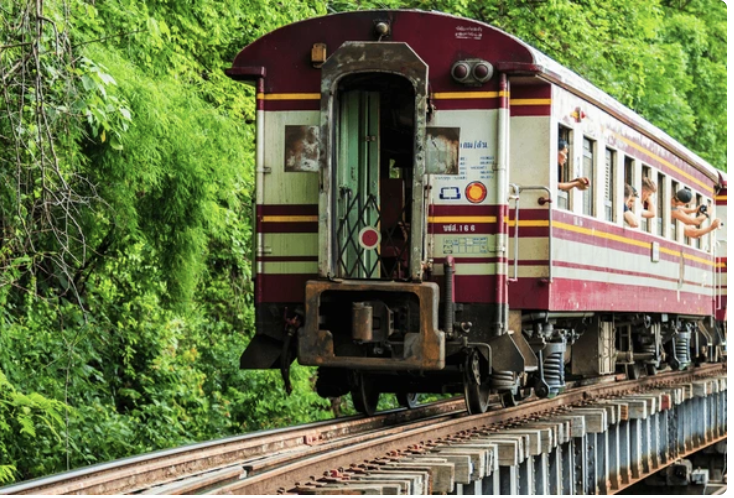
Mine was an overnight train from Bangkok to Laos.
Twenty-five years ago, my boyfriend at the time and I climbed aboard the sleeper train from Bangkok to the Laotian border knowing it would be our last trip together. We were travelling to a friend’s wedding in Vientiane, but we had already decided that this was where our paths would separate. I would return to Australia; he would continue on elsewhere.
When you are young, it’s hard to imagine that the ending of one future might make room for another.
I didn’t know then that Laos would become the place that inspired me to leave Australia and build a life abroad.
What I do remember with absolute clarity is my first meal in Vientiane.
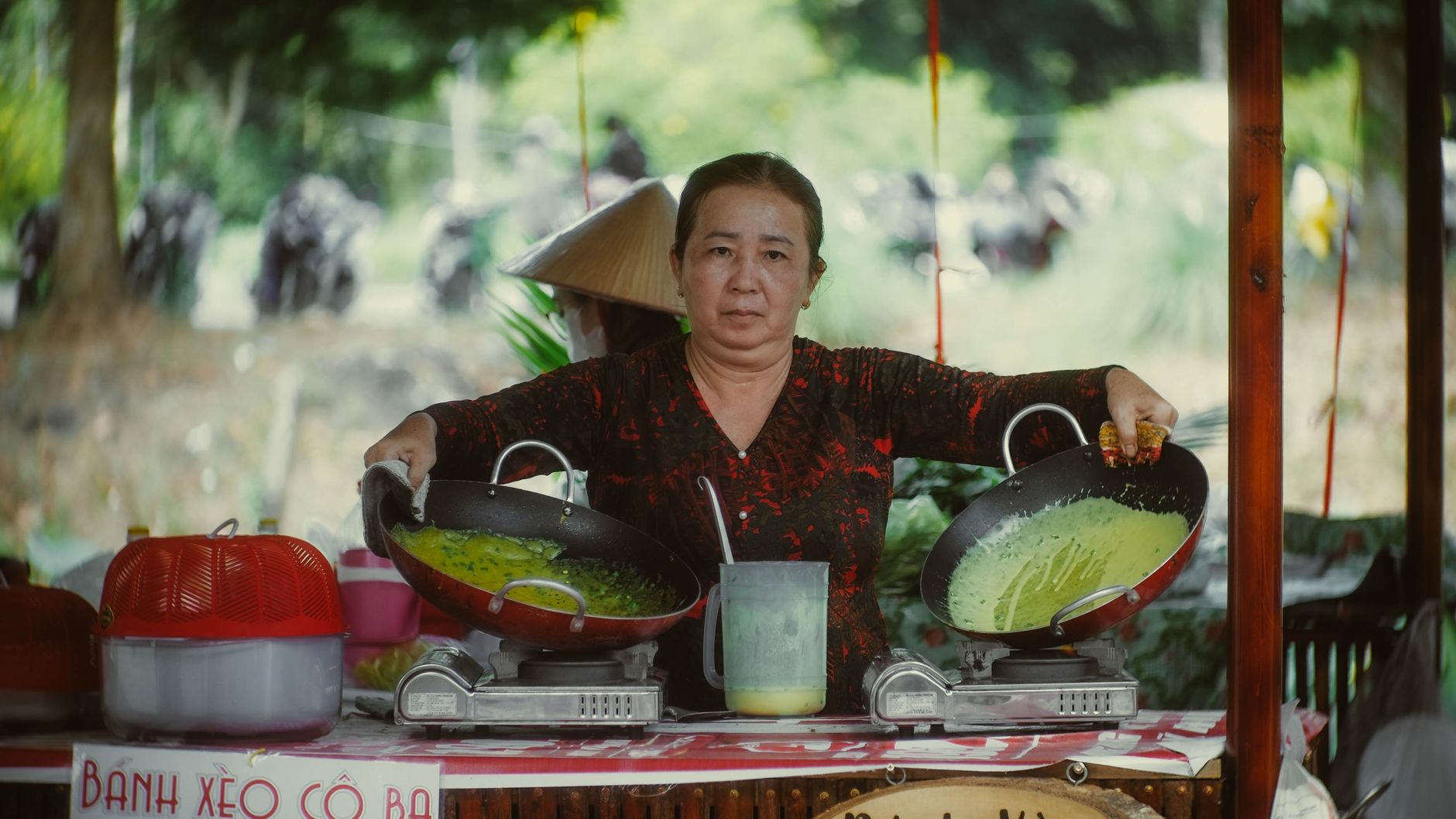
We checked into a faded French colonial guesthouse and wandered downstairs to a small open-air restaurant. In the middle of the dining area sat a large stone mortar and pestle. The woman behind it smiled as we sat on squat chairs around a low table and peered over, curious to see what she was making.
The smell had already taken over the space between us.
Bird’s-eye chillies landed in the mortar before a rhythmic pounding began. Purple shallots followed. She squeezed in fresh lime, added fish sauce and continued working the mixture with practised hands.
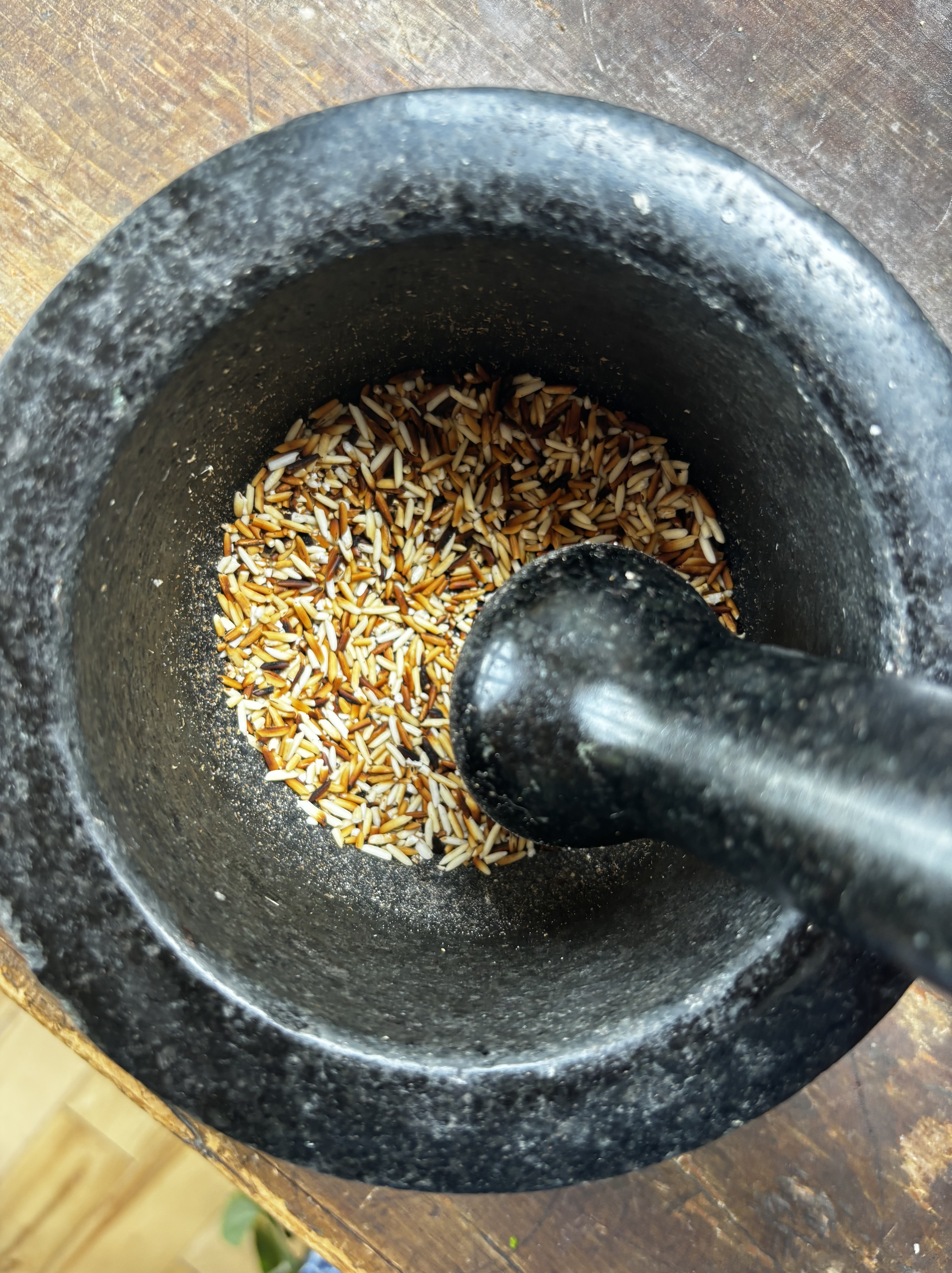
In a beaten wok, she roasted a handful of sticky rice until the grains turned golden brown, releasing a warm, nutty aroma. She tipped the rice into a smaller mortar and ground it into a coarse powder.
The wok went back on the heat, this time with a little water and then minced pork. Once cooked, she brought everything together, folding the pork through the toasted rice, coriander, mint and the sharp, fragrant mixture of chilli, lime and fish sauce.
She tasted a little.
Then added more of everything. This all took less than five minutes.
“What is it called?” I asked.
“Larb moo.”
I learnt the name that afternoon because I wanted to order it again the very next day.
I’d discovered what is often described as Laos’ national dish. The word “larb” is also a homophone for “good fortune” or “prosperity” in the Lao language.
Larb can be made with pork, chicken, duck or beef, but I still think that the heart of it isn’t the meat at all. It’s the toasted rice, fresh herbs and chilli, combination of fish sauce and lime, and the freshness that makes every mouthful come alive.
Talat Sao, Morning Market, Vientiane
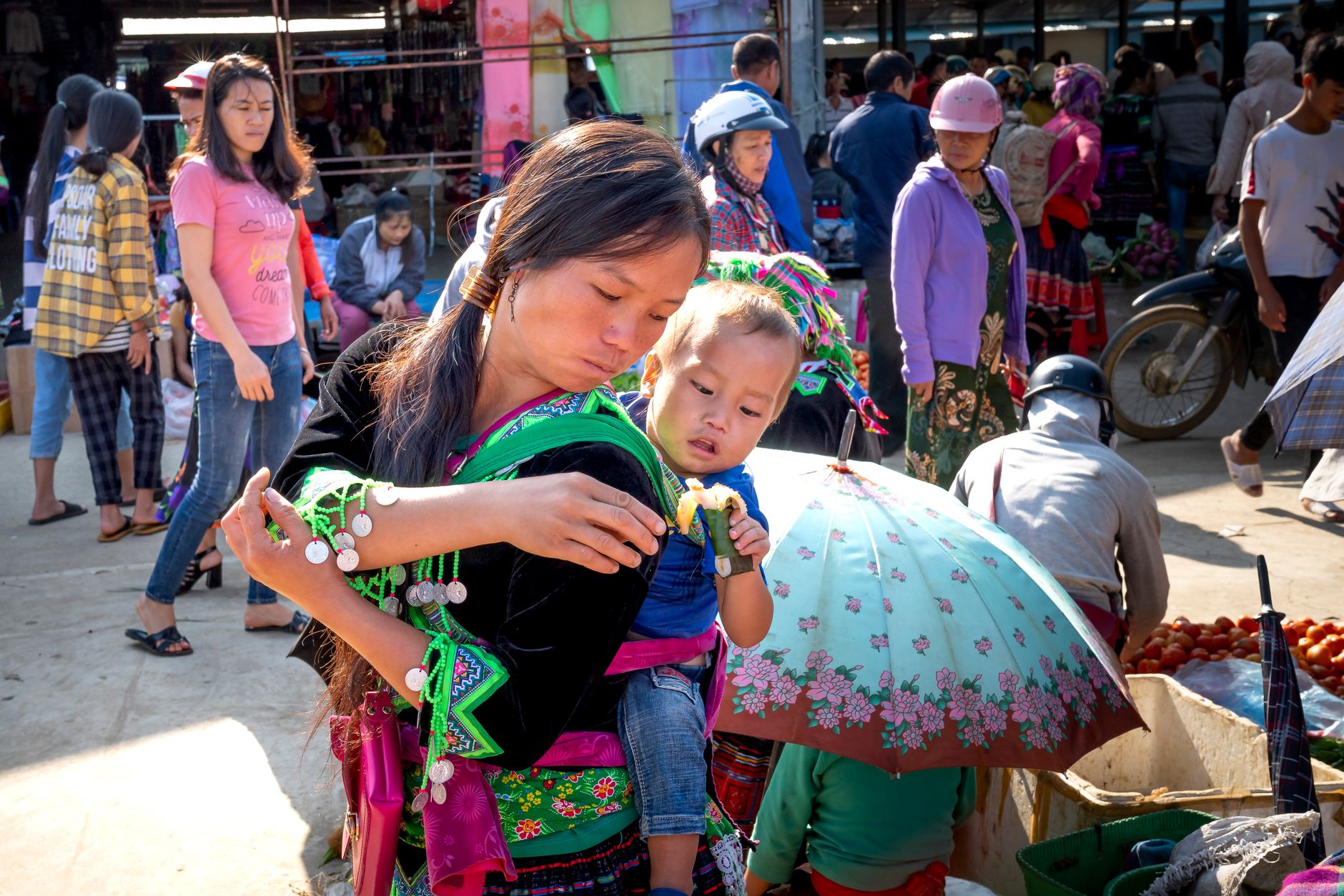
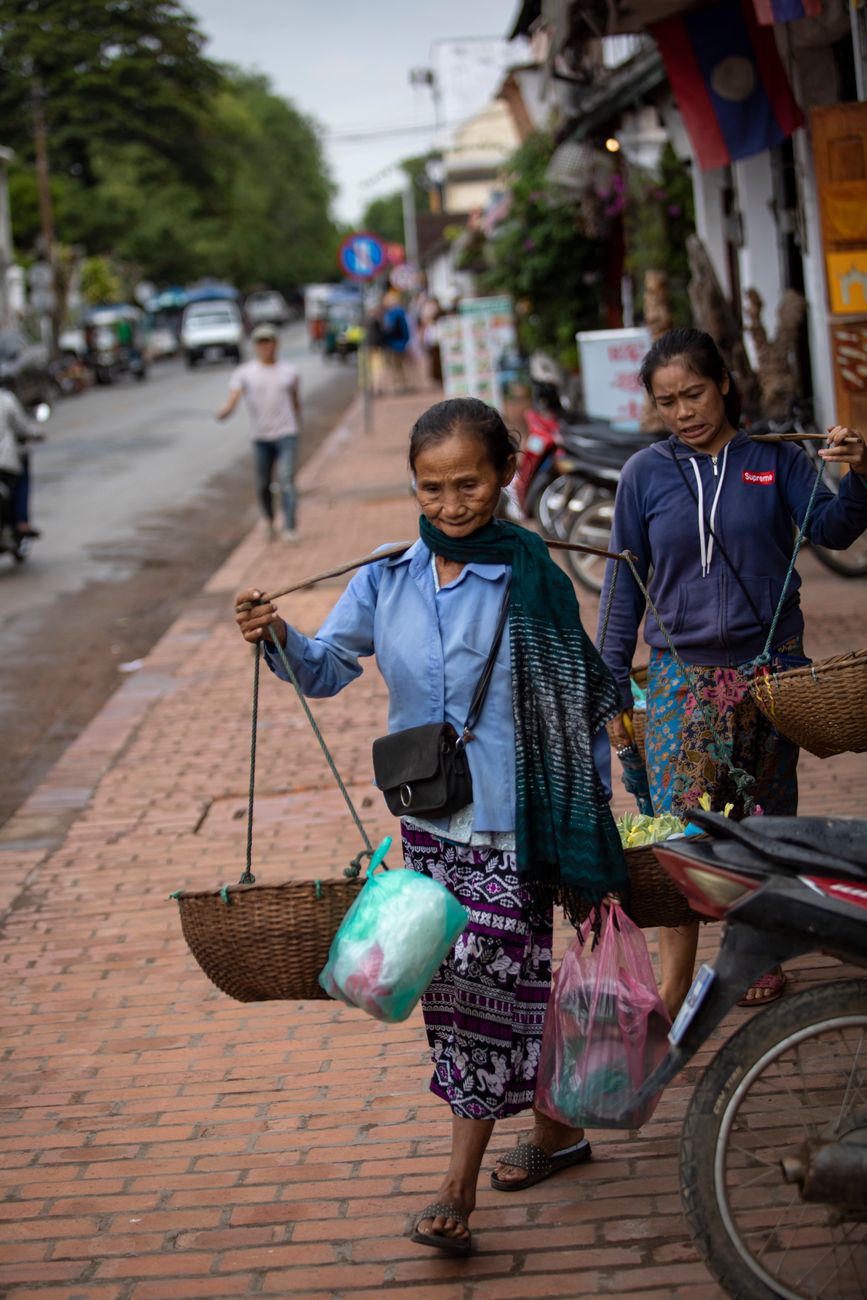
The next morning, I set off early for Talat Sao, Vientiane’s morning market. It was an assault on the senses in the very best way.
There were piles of chillies – tiny bird’s-eye chillies, long green ones, brilliant reds alongside garlic, shallots and limes, and mounds of mint, coriander, spring onion, lemongrass and greens I couldn’t yet name. Tropical fruit was stacked high in colourful pyramids. There were dried ingredients I couldn’t identify and drinks in bags, bottles and colours I’d never seen before.
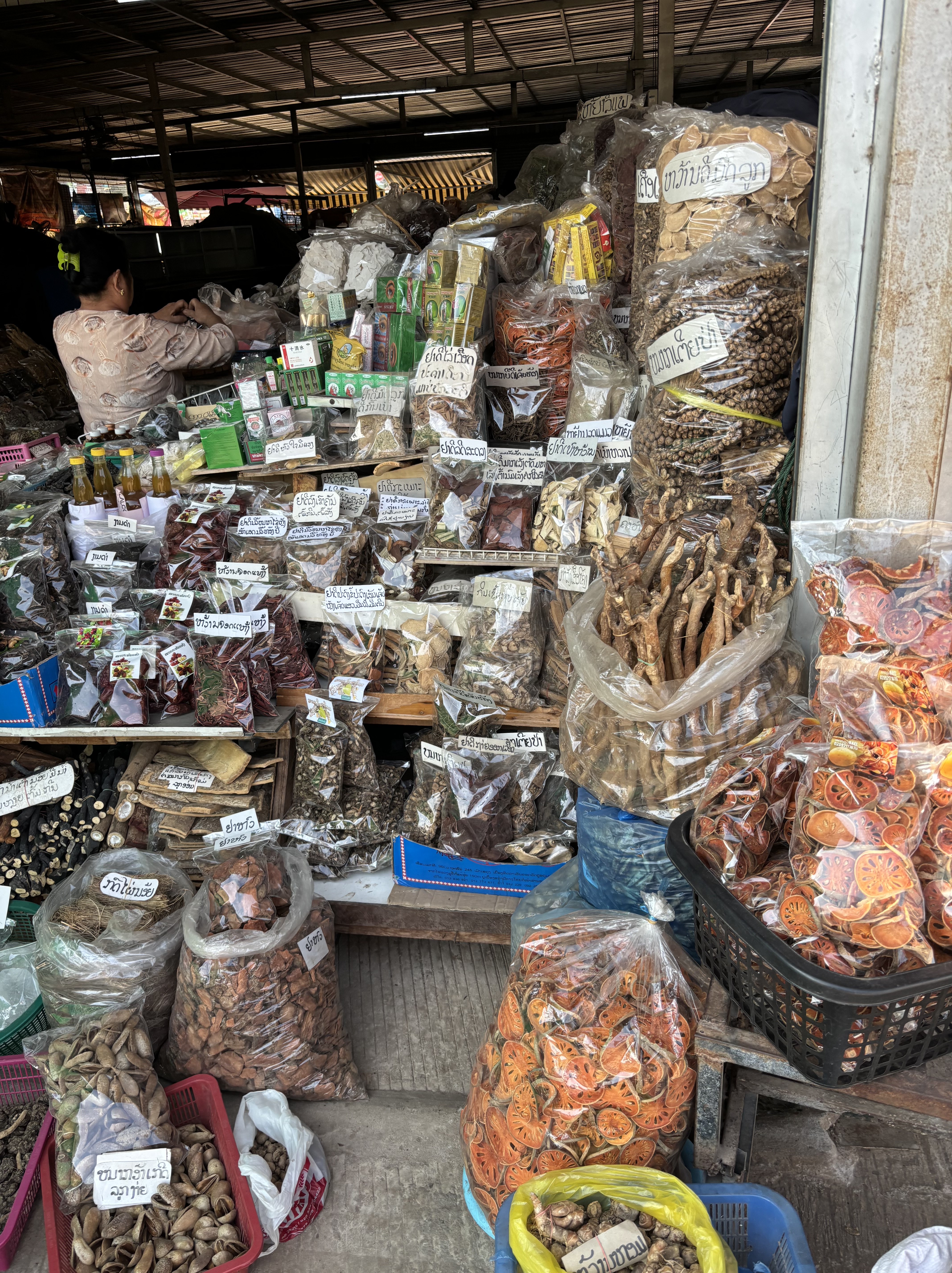
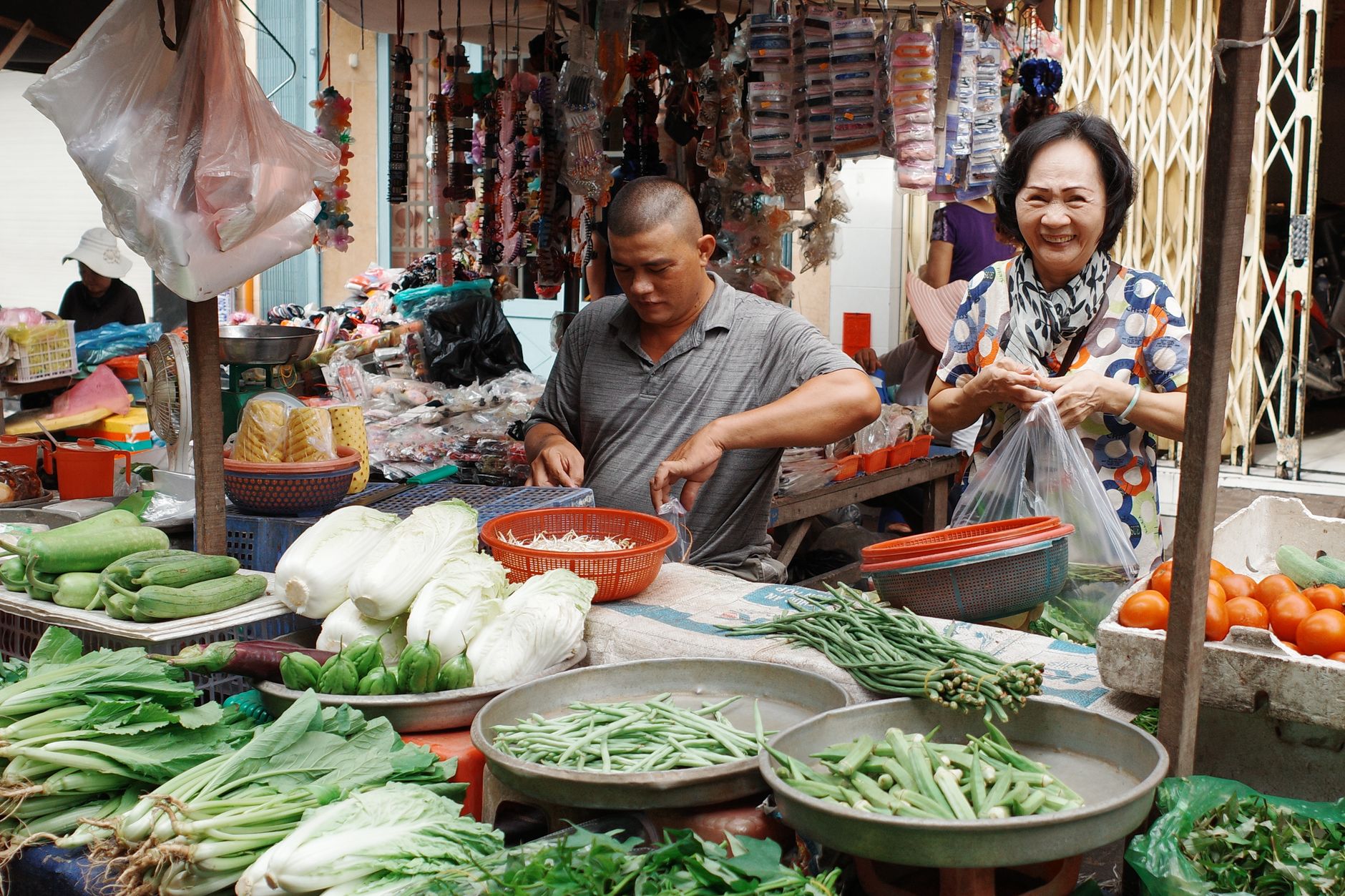
Long beans were bundled into great green coils and green papaya shredded into fine strands ready for tam mak hoong, the fiery papaya salad I also quickly came to love.
Everywhere someone seemed to be chopping, weighing, bagging, pouring or eating.
Slowly, I began to recognise larb in its component parts.
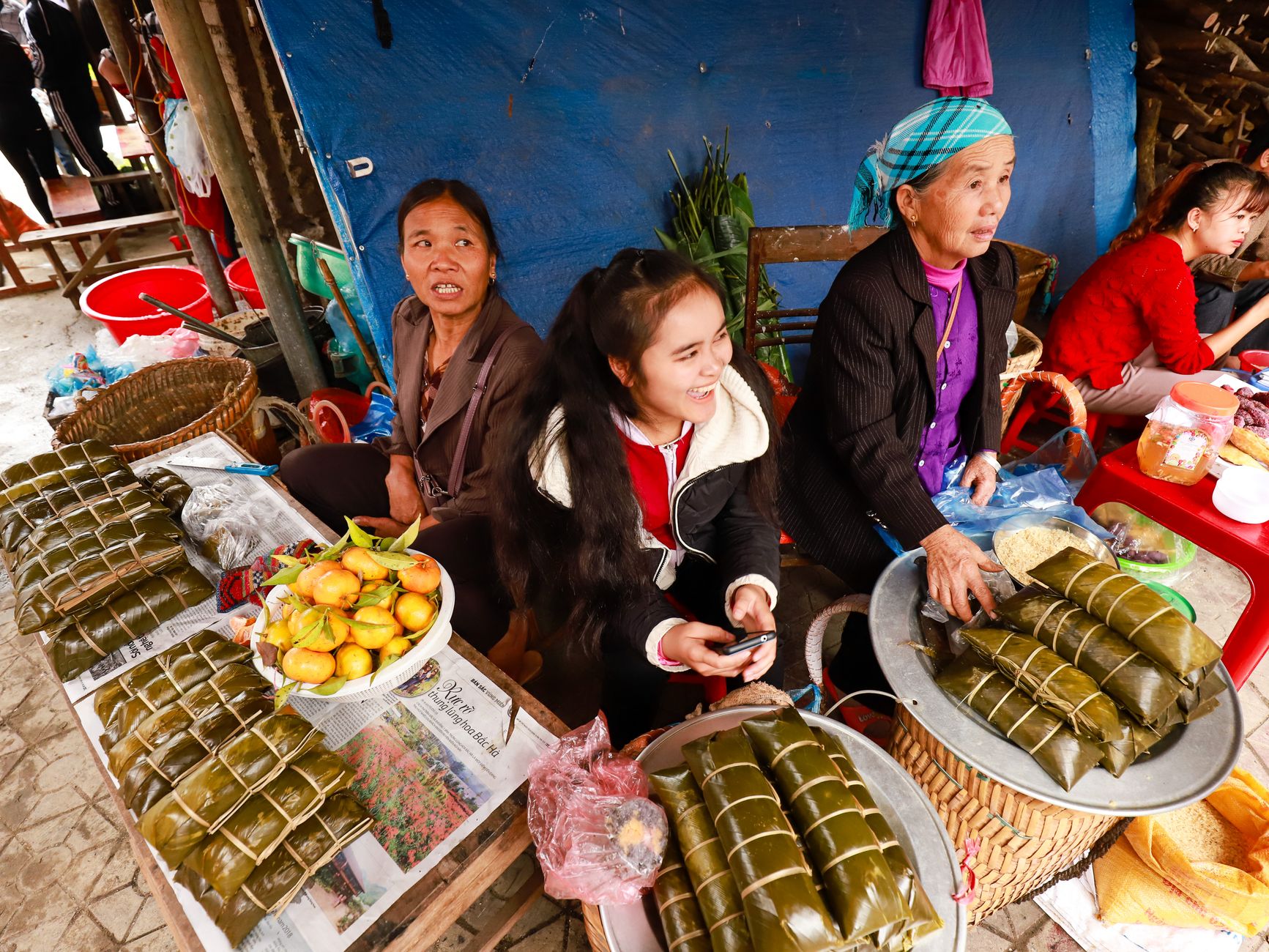
One morning I returned with Ann, an American woman I’d met through the wedding party. We had bonded the night before over being the plus ones, drinking far too much of whatever was being poured, doing shots of snake wine and smoking an unreasonable number of cigarettes.
She had teamed up with the groom’s best mate, King Kong, a local Laotian Svengali who seemed to know where to find absolutely anything – good, bad and dodgy.
The next morning, rough around the edges, we dragged ourselves to Talat Sao in search of food and the missing pieces of our wedding outfits.
We found both.
We grabbed a table and ordered bowls of steaming hot and spicy noodles. Somewhere between the first mouthful and trying to reconstruct the night before, she leaned across the table towards me.
“You know what?”
“I’m not sure they like us Americans here.”

She had just come from travelling in Vietnam, and we both knew enough of the history of the region to understand what she meant.
Years later, we met again on Cape Cod, where she was living in Hyannis, neighbours with members of Jackie Kennedy’s family circle one of those peculiar coincidences that only became apparent much later.
Perhaps that was part of what captivated me about the trip. The groom was Australian, the bride Laotian, and many of their friends were English teachers who had made lives for themselves there. They were around my age, yet their everyday world crossed countries, languages and cultures with an ease I had not witnessed before.
For the first time, I began to wonder: could I live like this? Could I leave Australia and make a life somewhere else?
Among all those different nationalities, accents and backgrounds, I felt completely comfortable.
I didn’t yet know where that feeling would lead me.
Less than a year later, the life I had glimpsed in Vientiane had become my own. I left Australia and began building a life and career overseas.
Twenty-five years later, I was planning another trip to Southeast Asia with my son and extended family. I had some time before we met up and realised there was one journey I wanted to make again alone.
So, I boarded another overnight train from Bangkok to Vientiane.
This time, alone.
Just as before, I slept through most of the journey and remember very little of it. Arriving was another matter. The train was only the beginning: from there came a bus, then a tuk-tuk and finally a cab. Within the space of an hour, I’d managed four different forms of transport before reaching my hotel.
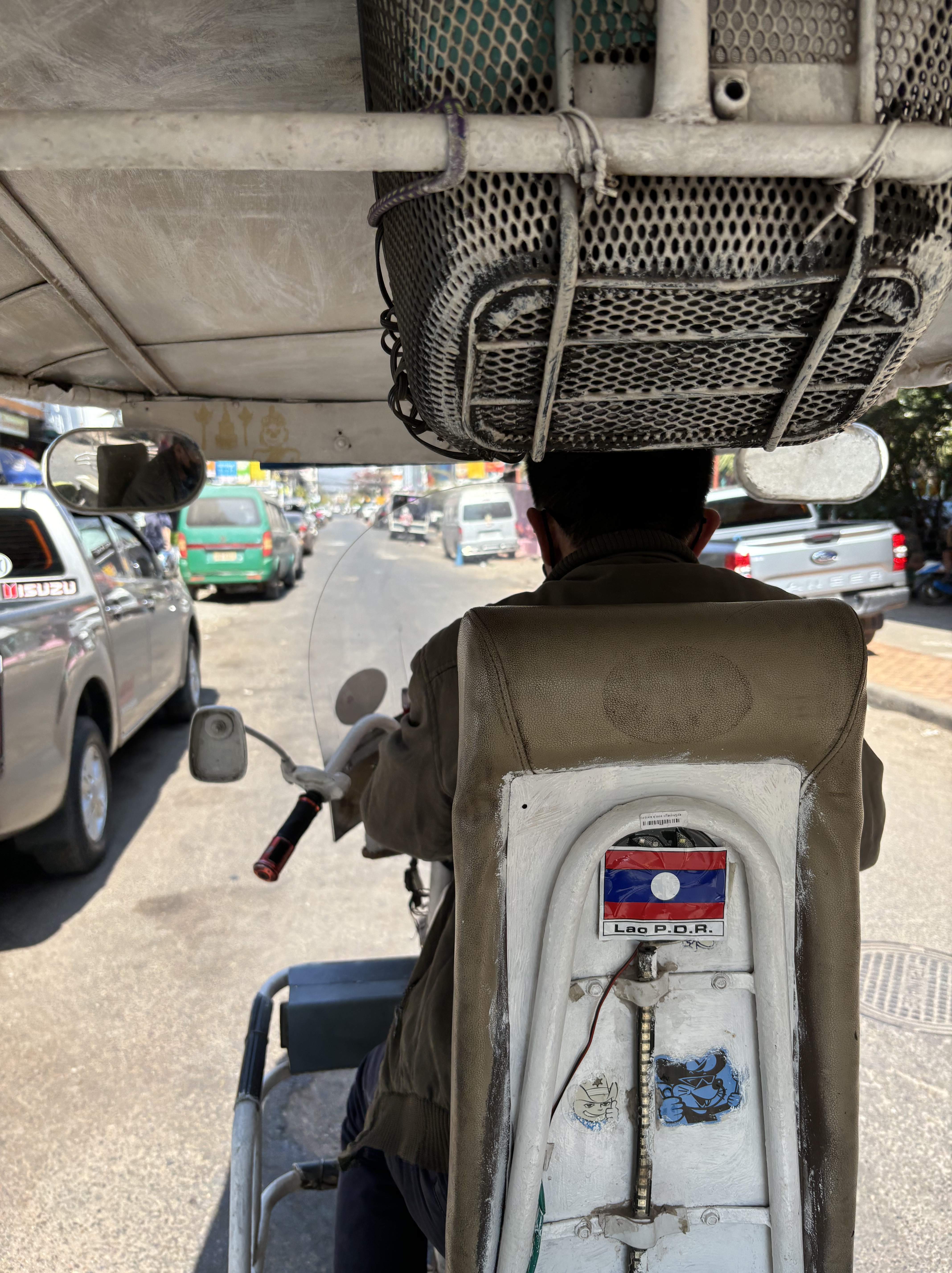
After checking in, I skipped the breakfast buffet and went straight back out in search of one thing.
A plate of larb.
I went back to Talat Sao too.
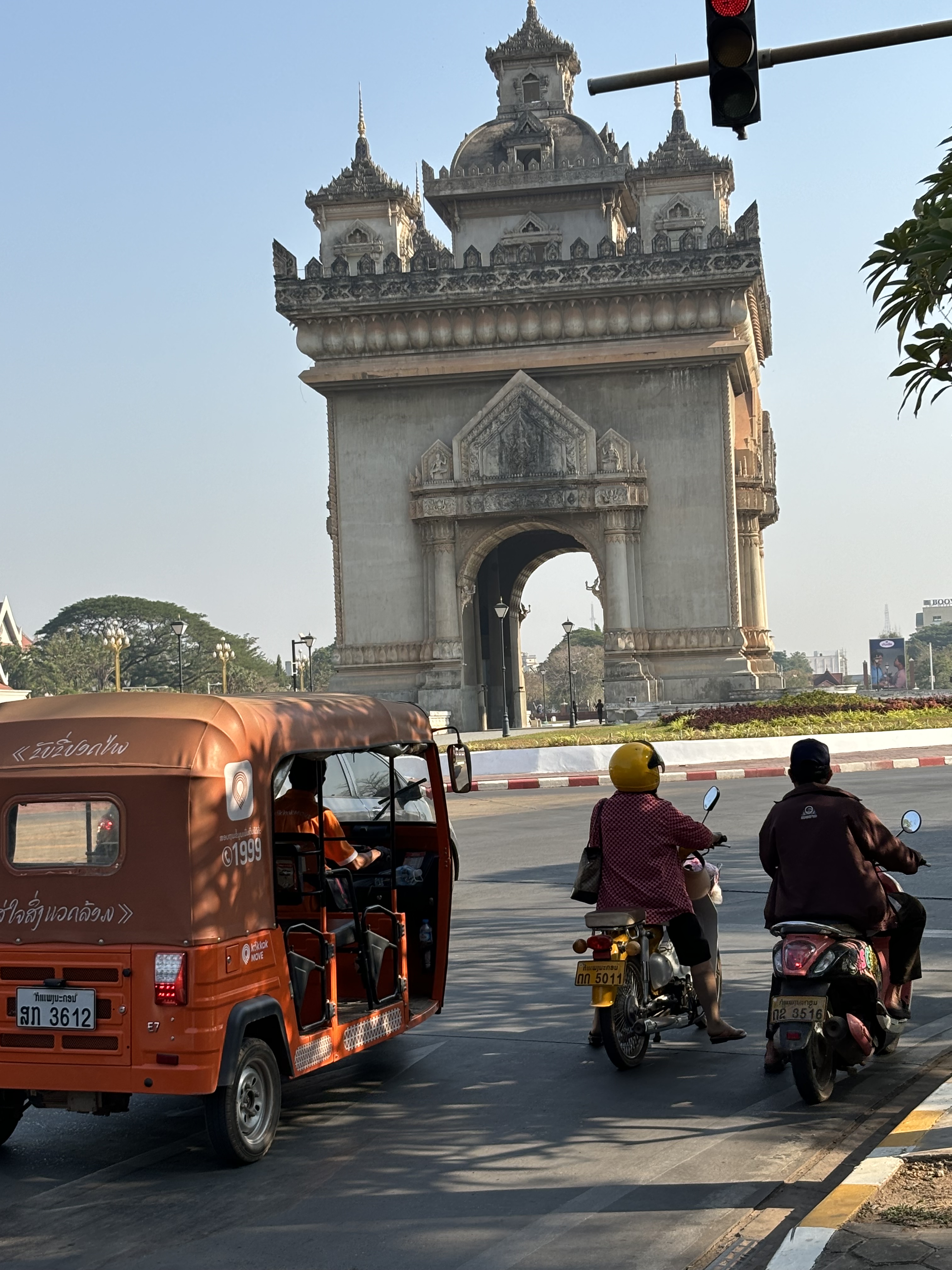
It was still there, but not quite the market I remembered. Much of Talat Sao is now a modern shopping complex, while the traditional fresh-food trading continues around the neighbouring Khuadin Market. Twenty-five years earlier, I had simply experienced it all as the morning market.
But among the stalls were still the chillies and limes, the long beans and green papaya, the herbs and familiar bags of slivered ginger.
A week later, my son arrived in Vientiane after finishing his first solo backpacking trip through Thailand.
“Forget the restaurants,” he said. “Let’s eat down by the river.”
I smiled.
Somewhere along the way, he’d become the sort of traveller I recognised.
As the sun disappeared behind the Mekong, the riverfront came alive. We passed the rows of stalls selling clothes, bags and souvenirs and kept going, following the smell of food.
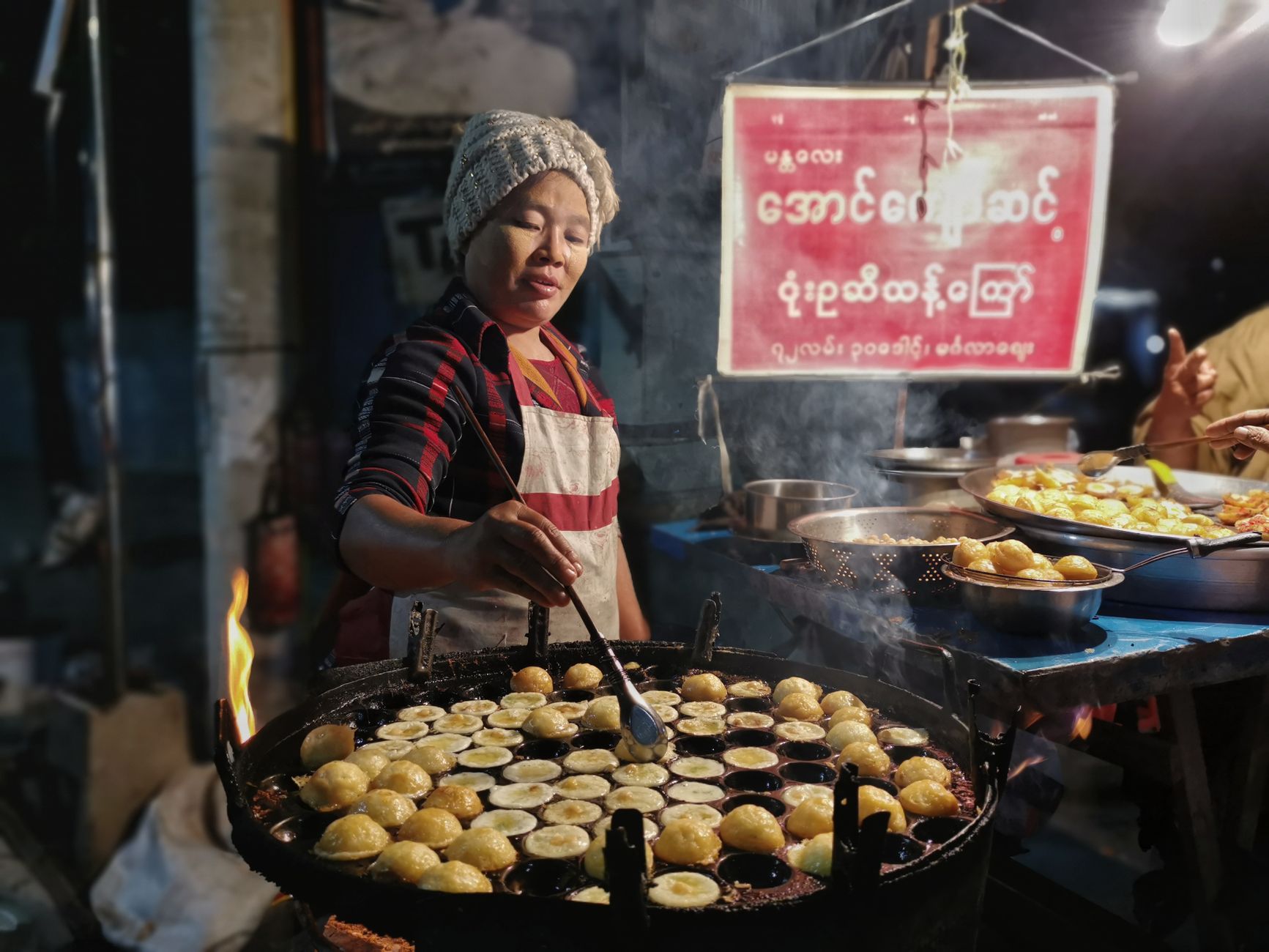
There was charcoal smoke in the evening air, fish cooking over grills, skewers of meat, sticky rice, noodles and plates of papaya salad. People crowded around small tables and plastic stools while vendors chopped herbs and worked over smoking grills.
Before I had the chance to order a drink, my son returned carrying two cold bottles of Beerlao.
We clinked them together.
Then came the larb, accompanied by small baskets of sticky rice and a fiery papaya salad topped with roasted peanuts.
Sitting beside the Mekong with my son, I realised that the greatest gift of that first journey to Laos wasn’t simply a lifelong love of one dish. It was a love of travel and a curiosity about how other people lived. Food became part of how I came to understand a place what people ate, how they cooked it and the markets where they bought the ingredients.
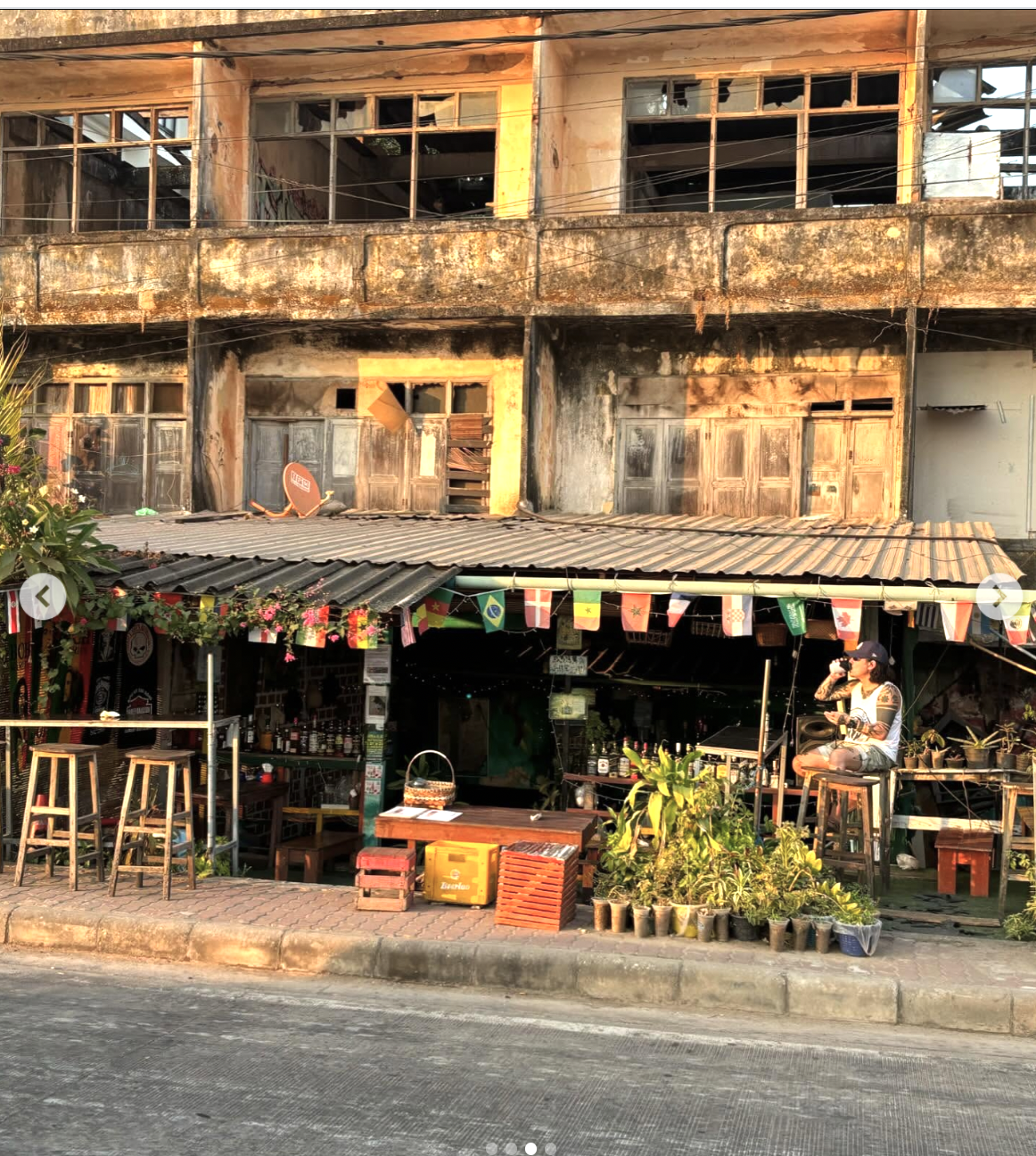
Now I was watching my son find his own way into the world.
Twenty-five years earlier, I thought that train to Laos marked the end of something.
Instead, it became the beginning of almost everything that followed.
Larb
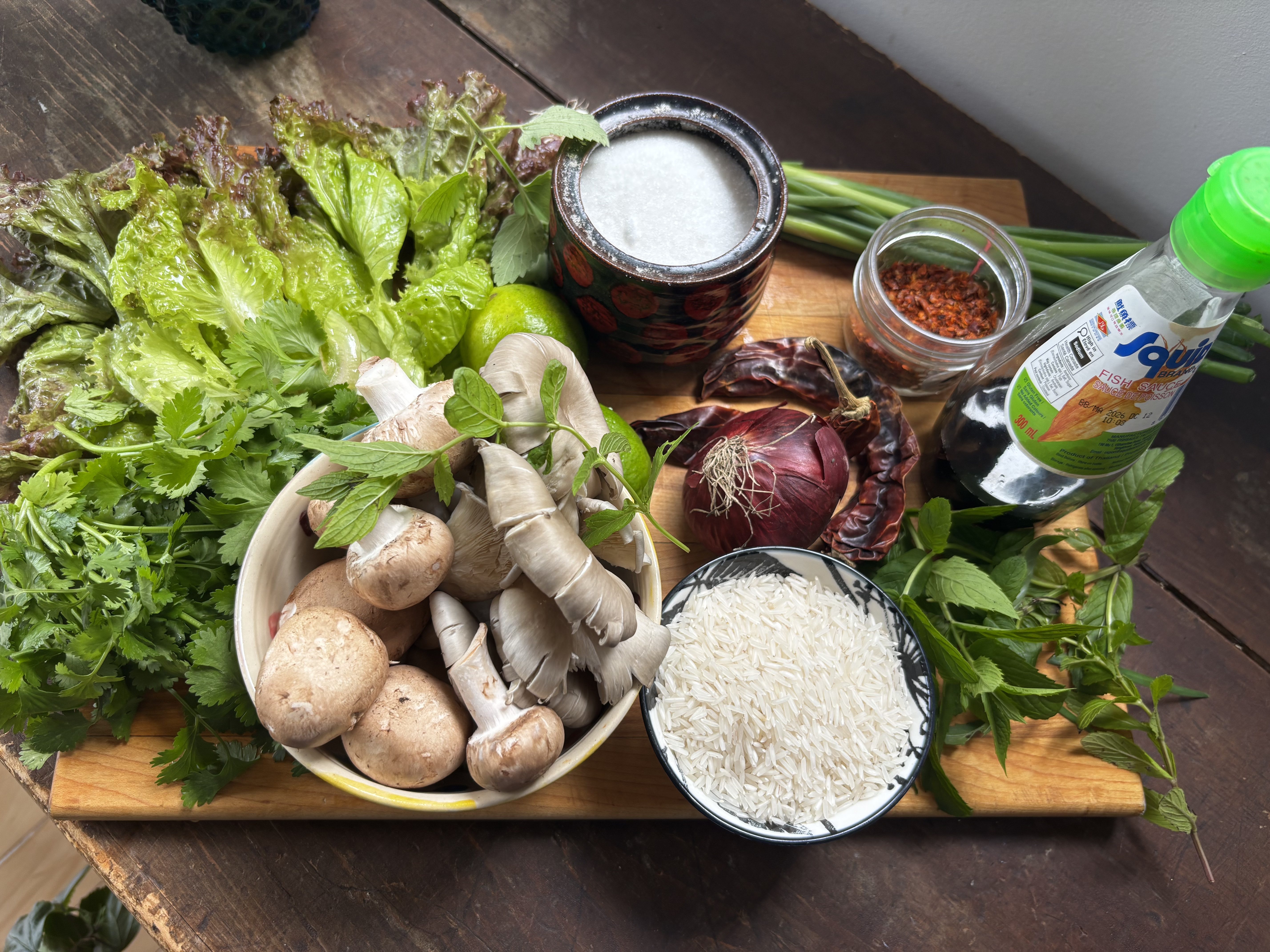
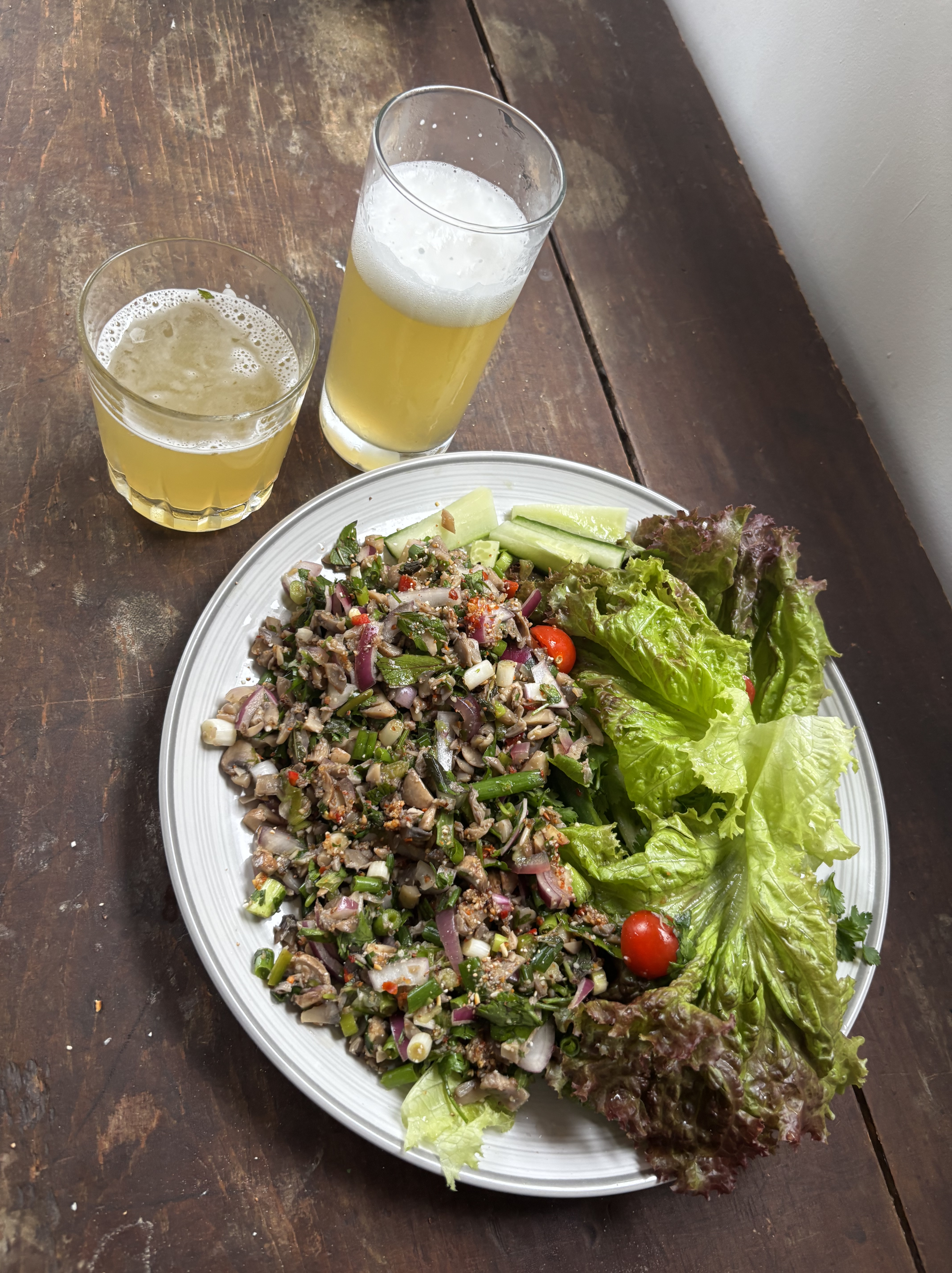
Over the years, I’ve made Larb countless times. Today I make it with mushrooms. Their earthy flavour works beautifully with the herbs and toasted rice, and it has become one of my favourite summer meals: fresh, vibrant and full of flavour. You can switch mushrooms for minced pork, chicken or even roast duck.
Prep: 15-20 minutes
Cook: 10 minutes
Serves: 2 generously
Ingredients
- 250 g minced pork or chicken
- 1½ tablespoons uncooked sticky or jasmine rice
- 2 tablespoons fish sauce
- Juice of 1-2 limes
- 1-2 teaspoons chilli flakes, to taste (you can also add in some fresh chopped red chilli_
- 2 purple shallots, finely sliced (or a red onion)
- ¼ cup fresh mint leaves
- A few handfuls of fresh coriander, roughly chopped
- 1-2 spring onion, finely sliced
- 2–3 sawtooth coriander leaves, chopped, if you can find them
- Tiny pinch of sugar, optional
For a vegetarian/vegan version: Replace the pork with about 300 g of finely chopped mixed mushrooms. I use a combination of oyster, shiitake and ordinary brown mushrooms. The mix gives the larb much more flavour and texture than using just one variety. Replace the fish sauce with a vegetarian alternative.
Method
1. Make the toasted rice
Put the uncooked rice in a dry frying pan over medium heat. Toast on low heat for about 5 minutes, shaking the pan regularly, until the rice is golden and smells wonderfully nutty.
Grind with a mortar and pestle or spice grinder until you have a coarse powder. Don’t make it too fine – a little texture is part of what makes larb so good.
2. Cook the pork/chicken or mushrooms
For pork, add a splash of water to a hot pan, then add the mince. Break it up as it cooks until just cooked through.
For the vegetarian version, finely chop the mushrooms and cook them in a hot pan until softened and most of their excess moisture has evaporated.
3. Add the aromatics, spice
Take the pan off the heat. Add the sliced shallots, fish sauce, lime juice, chilli and toasted rice powder. Mix well. You can also take it completely off the heat and put the mixture in a big bowl and mix it all in there.
4. Add the herbs
Let the mixture cool slightly before adding the mint, coriander and spring onion. Add the sawtooth coriander if you’re using it.
Taste. Add more lime if it needs brightness, fish sauce if it needs salt or more chilli if you want some fire.
5. Serve
Serve warm or at room temperature with sticky rice and fresh vegetables such as cucumber, cabbage and long beans. You can also spoon the larb into crisp lettuce cups if you don’t want rice.
An ice-cold bevvie is a must.
If You Go: Talat Sao, Vientiane
Where: Lane Xang Avenue, near the junction with Khou Vieng Road in central Vientiane. The Central Bus Station is beside the market area.
Opening hours: Generally open daily from around 7:00am until late afternoon. Hours vary between the traditional market stalls and the newer Talat Sao shopping complex, so go early if you want more of the morning-market atmosphere.
For food lovers: Explore the wider Talat Sao area, including nearby Khuadin Market (Talat Khua Din), the traditional fresh-food market where you’ll find vegetables, herbs, chillies, meat and other ingredients used in Lao cooking.
Tip: Go in the morning. Talat Sao may mean “Morning Market”, but these days the wider complex stays open well into the afternoon.
Photography: Writers own. Additional images courtesy of Pexels.


I love this and I love Larb🥰 Arriving in Cambodia it’s the first thing I did a cooking class making larb
🤩 love this- I too have a long term love affair with laarb!
Thank you for sharing such a moving story! I also have wonderful memories of the food in Laos. I was there in 2005… time flies… Would love to go there again!
This brings me back to sleepy but wonderful Vientiane. I want to hear what happens next when you leave Australia.