About mira goes to market

When I was seven, my parents took my Australian-born brother and I for a holiday to visit their native former Yugoslavia. On a visit to my mother's village near Sarajevo, I experienced what is now one of my most treasured memories. In the town's night market, gypsies called us over to their wagons for a tea-cup reading. Scarf clad babbas sold us piping hot gibanica or cheese pie, whilst at the same pinching my cheeks and flirting with my good looking father. I was entranced. What was this magical place? Could I come back again? Have we got one of these back home? Now years later and working as a humanitarian aid worker, I have travelled and continue to travel the world, yet no matter what country I may visit, I make it a point to stop in the town's market. To me, the market is more than just a place to sell food, it's the heartbeat of the city, a virtual story of the town's history, culture and state of development. A market can quickly tell you what is going on. I'm sharing my stories from markets near and far. Enjoy.

The Last Train to Laos: Where One Love Ended and Another Began

Every relationship has a last journey.

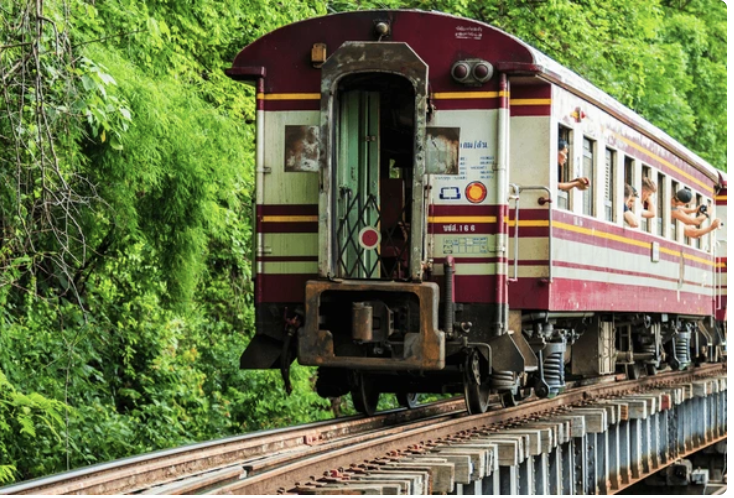
Mine was an overnight train from Bangkok to Laos.

Twenty-five years ago, my boyfriend at the time and I climbed aboard the sleeper train from Bangkok to the Laotian border knowing it would be our last trip together. We were travelling to a friend’s wedding in Vientiane, but we had already decided that this was where our paths would separate. I would return to Australia; he would continue on elsewhere.
When you are young, it’s hard to imagine that the ending of one future might make room for another.

I didn’t know then that Laos would become the place that inspired me to leave Australia and build a life abroad.
What I do remember with absolute clarity is my first meal in Vientiane.

We checked into a faded French colonial guesthouse and wandered downstairs to a small open-air restaurant. In the middle of the dining area sat a large stone mortar and pestle. The woman behind it smiled as we sat on squat chairs around a low table and peered over, curious to see what she was making.

The smell had already taken over the space between us.

Bird’s-eye chillies landed in the mortar before a rhythmic pounding began. Purple shallots followed. She squeezed in fresh lime, added fish sauce and continued working the mixture with practised hands.

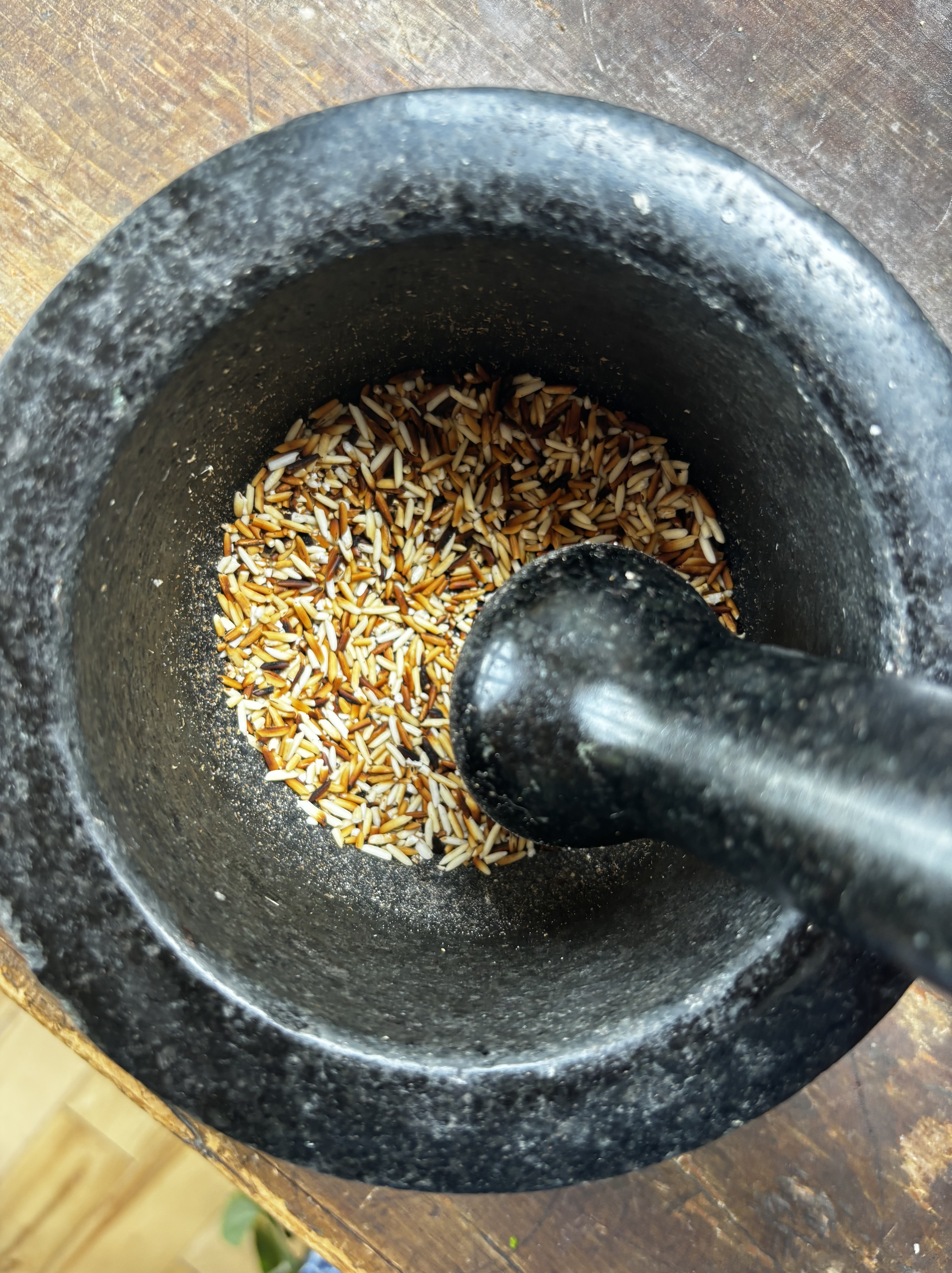
In a beaten wok, she roasted a handful of sticky rice until the grains turned golden brown, releasing a warm, nutty aroma. She tipped the rice into a smaller mortar and ground it into a coarse powder.

The wok went back on the heat, this time with a little water and then minced pork. Once cooked, she brought everything together, folding the pork through the toasted rice, coriander, mint and the sharp, fragrant mixture of chilli, lime and fish sauce.
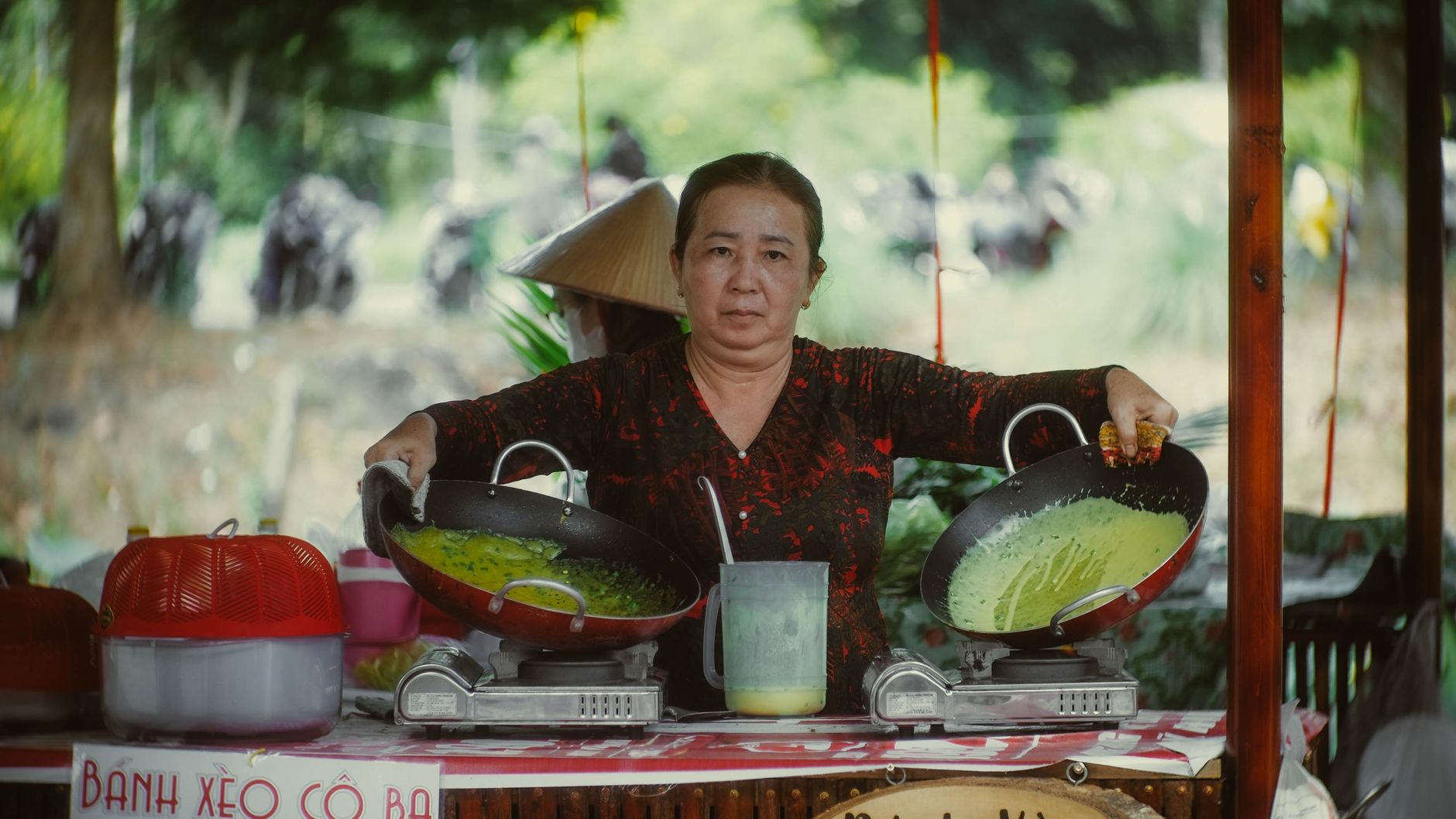
She tasted a little.

Then added more of everything. This all took less than five minutes.

“What is it called?” I asked.

“Larb moo.”

I learnt the name that afternoon because I wanted to order it again the very next day.

I’d discovered what is often described as Laos’ national dish. The word “larb” is also a homophone for “good fortune” or “prosperity” in the Lao language.

Larb can be made with pork, chicken, duck or beef, but I still think that the heart of it isn’t the meat at all. It’s the toasted rice, fresh herbs and chilli, combination of fish sauce and lime, and the freshness that makes every mouthful come alive.

Talat Sao, Morning Market, Vientiane
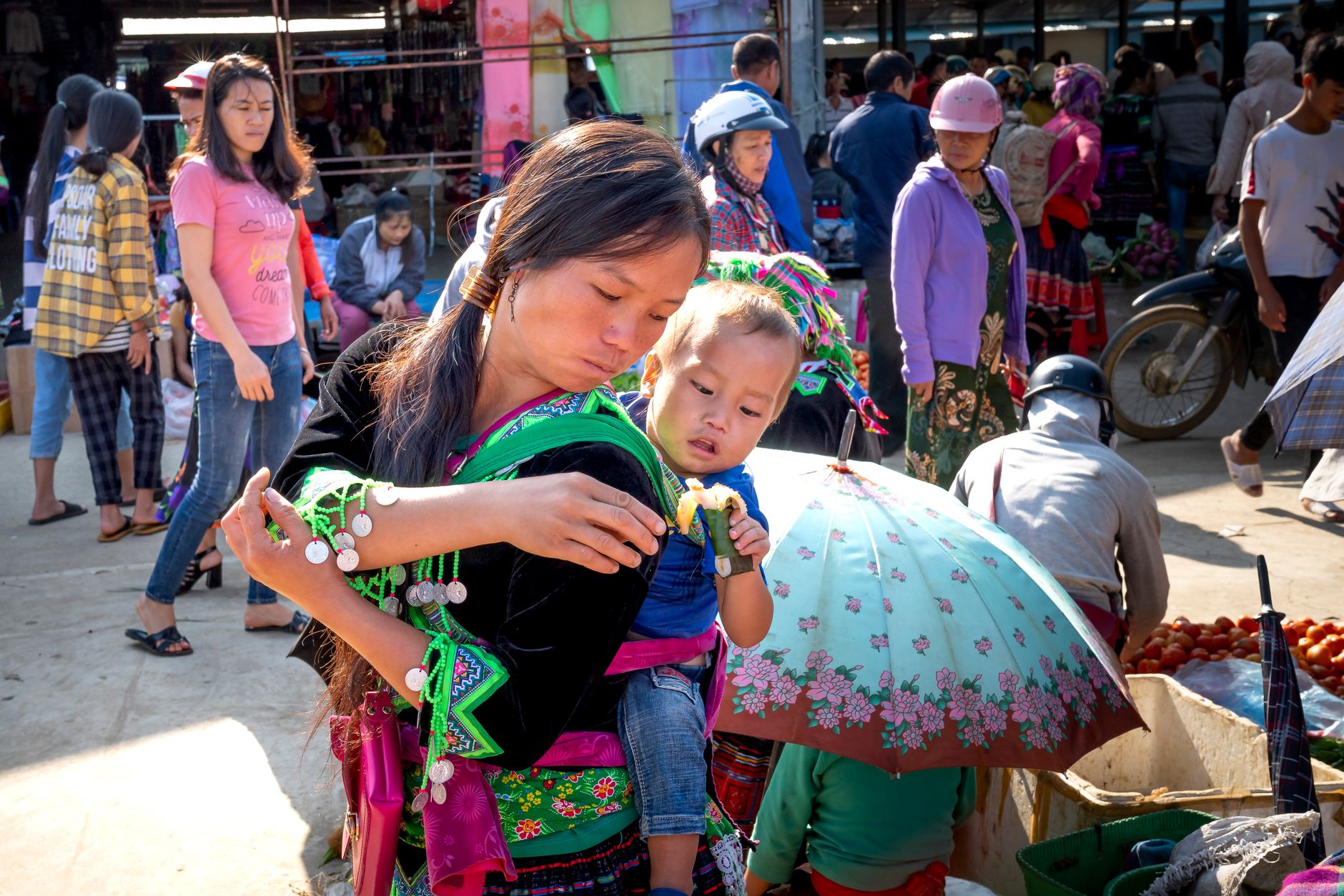
Photo by Quang Nguyen Vinh on Pexels.com

The next morning, I set off early for Talat Sao, Vientiane’s morning market. It was an assault on the senses in the very best way.

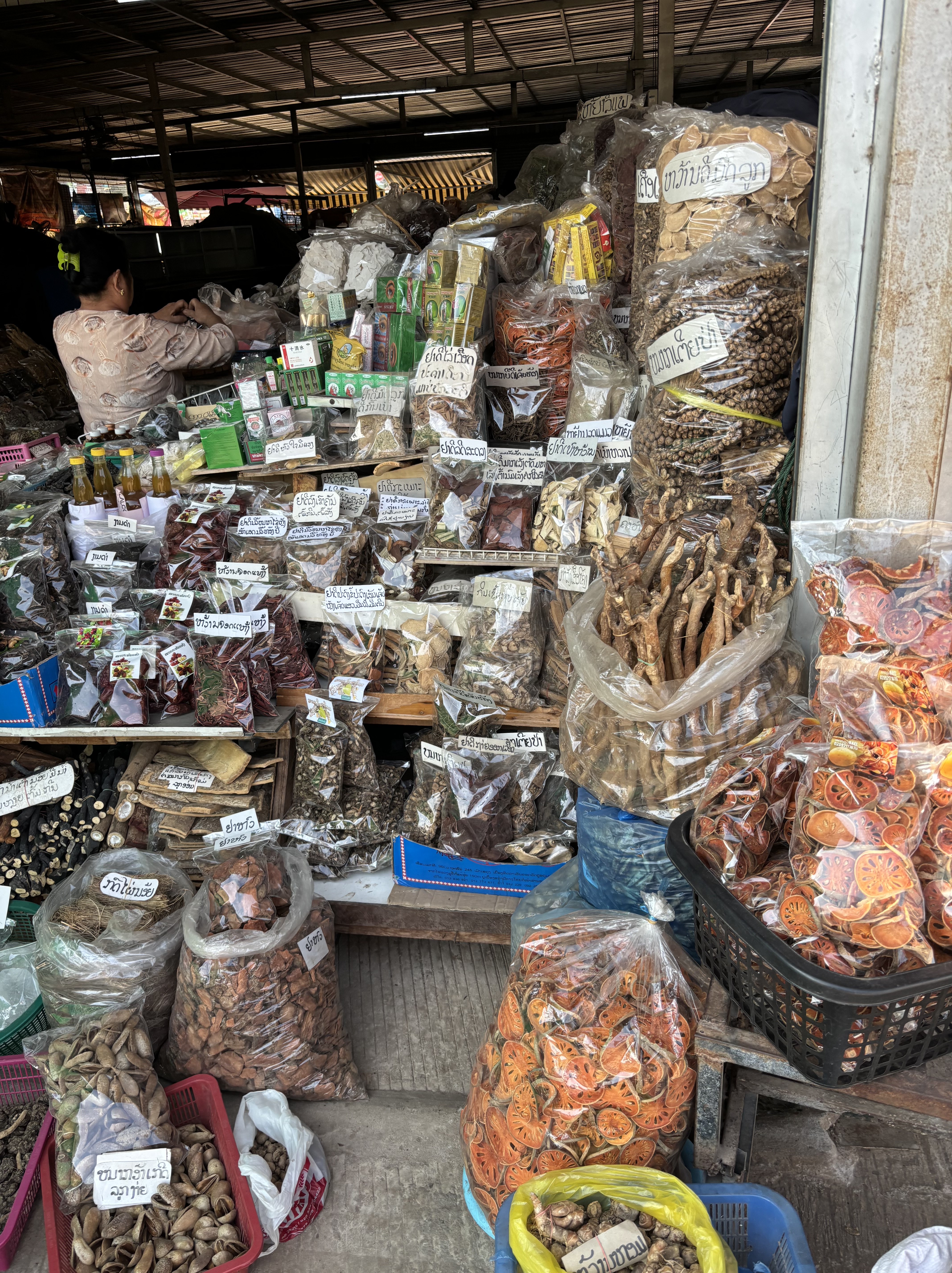
There were piles of chillies – tiny bird’s-eye chillies, long green ones, brilliant reds alongside garlic, shallots and limes, and mounds of mint, coriander, spring onion, lemongrass and greens I couldn’t yet name. Tropical fruit was stacked high in colourful pyramids. There were dried ingredients I couldn’t identify and drinks in bags, bottles and colours I’d never seen before.
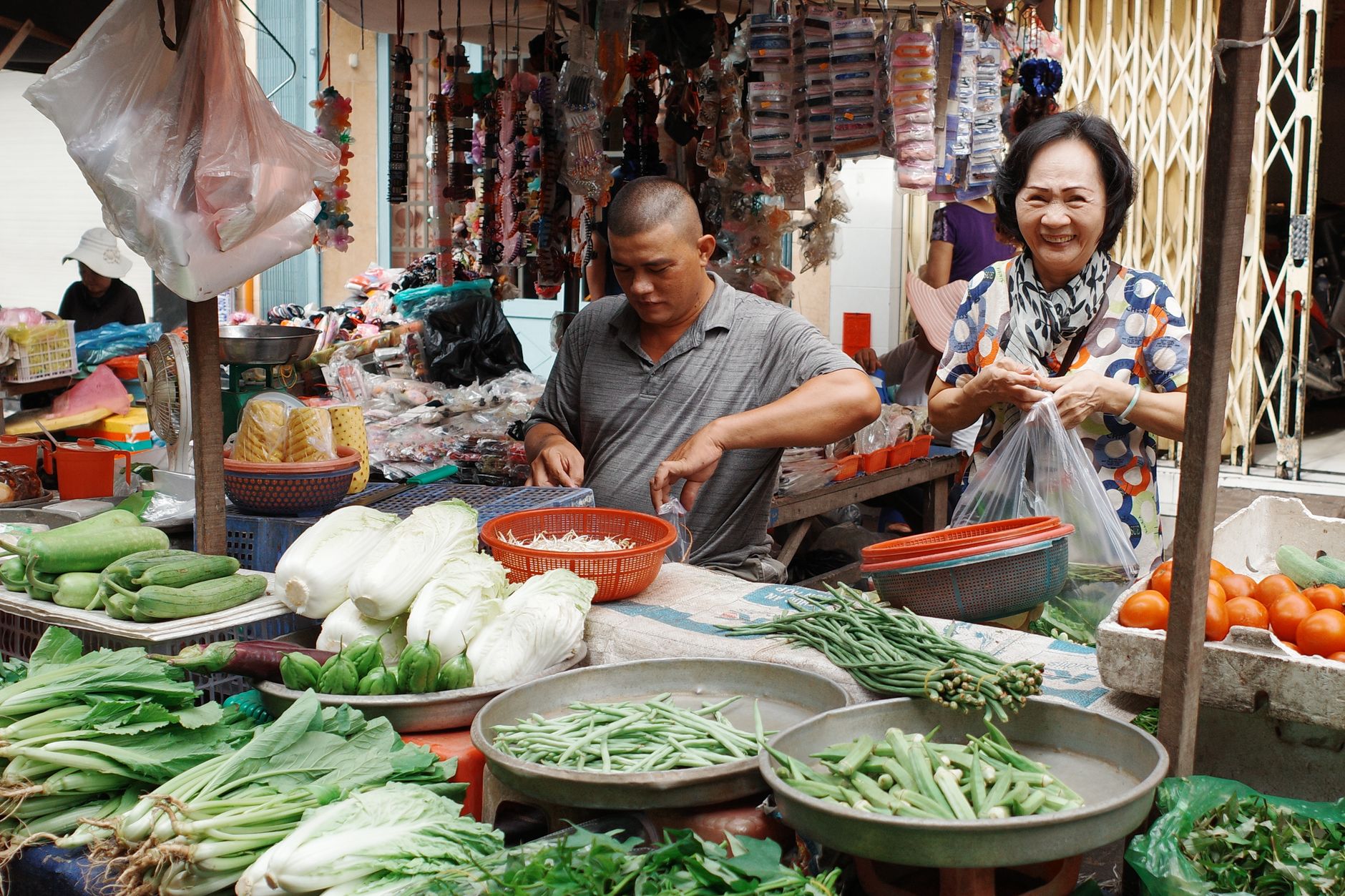
Long beans were bundled into great green coils and green papaya shredded into fine strands ready for tam mak hoong, the fiery papaya salad I also quickly came to love.

Everywhere someone seemed to be chopping, weighing, bagging, pouring or eating.

Slowly, I began to recognise larb in its component parts.
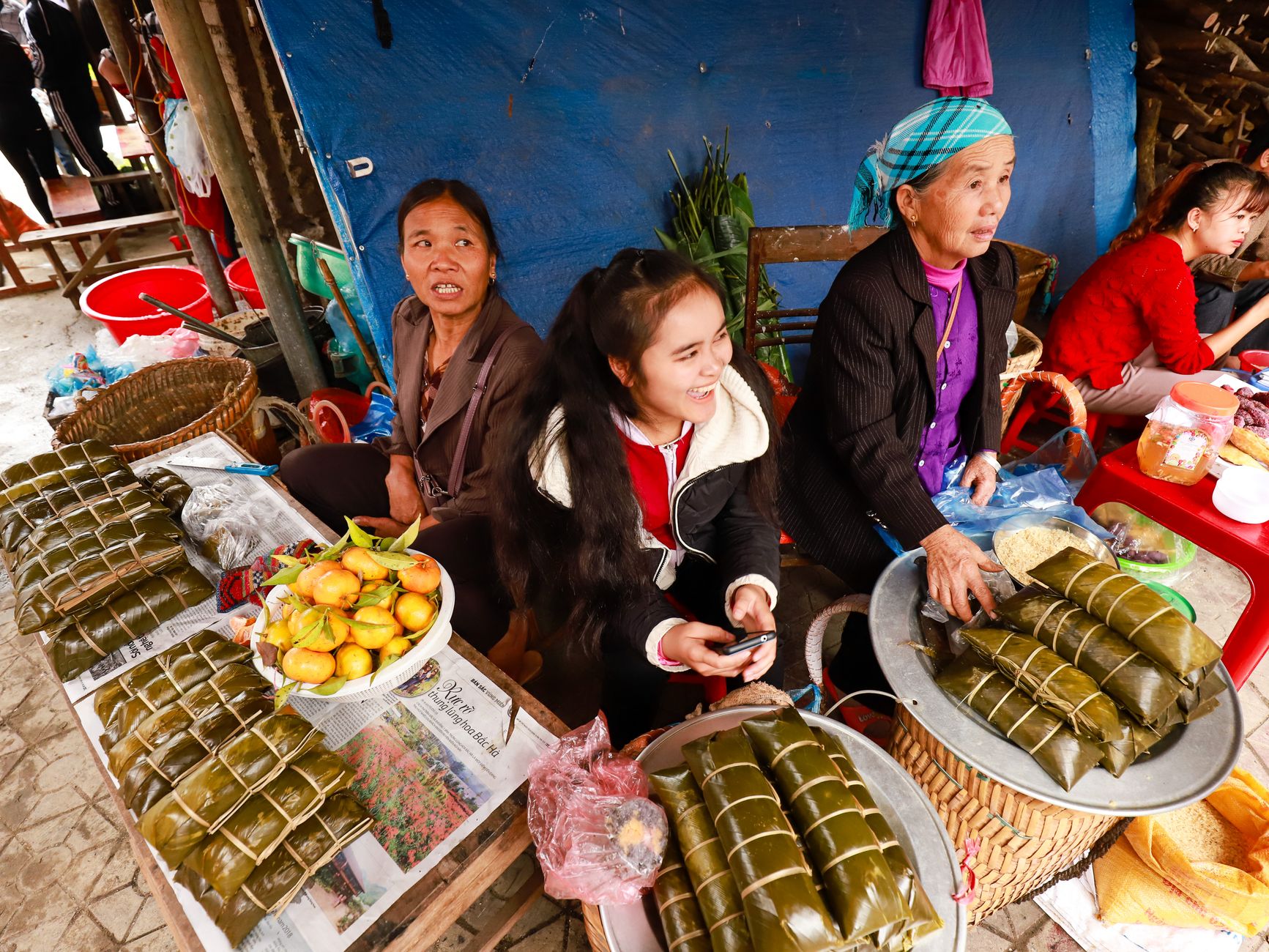
Photo by Son Hoa Nguyen on Pexels.com

One morning I returned with Ann, an American woman I’d met through the wedding party. We had bonded the night before over being the plus ones, drinking far too much of whatever was being poured, doing shots of snake wine and smoking an unreasonable number of cigarettes.

She had teamed up with the groom’s best mate, King Kong, a local Laotian Svengali who seemed to know where to find absolutely anything – good, bad and dodgy.

The next morning, rough around the edges, we dragged ourselves to Talat Sao in search of food and the missing pieces of our wedding outfits.

We found both.

We grabbed a table and ordered bowls of steaming hot and spicy noodles. Somewhere between the first mouthful and trying to reconstruct the night before, she leaned across the table towards me.

“You know what?”

“I’m not sure they like us Americans here.”

She had just come from travelling in Vietnam, and we both knew enough of the history of the region to understand what she meant.

Years later, we met again on Cape Cod, where she was living in Hyannis, neighbours with members of Jackie Kennedy’s family circle one of those peculiar coincidences that only became apparent much later.

Perhaps that was part of what captivated me about the trip. The groom was Australian, the bride Laotian, and many of their friends were English teachers who had made lives for themselves there. They were around my age, yet their everyday world crossed countries, languages and cultures with an ease I had not witnessed before.

For the first time, I began to wonder: could I live like this? Could I leave Australia and make a life somewhere else?

Among all those different nationalities, accents and backgrounds, I felt completely comfortable.

I didn’t yet know where that feeling would lead me.

Less than a year later, the life I had glimpsed in Vientiane had become my own. I left Australia and began building a life and career overseas.

Twenty-five years later, I was planning another trip to Southeast Asia with my son and extended family. I had some time before we met up and realised there was one journey I wanted to make again alone.

So, I boarded another overnight train from Bangkok to Vientiane.

This time, alone.

Just as before, I slept through most of the journey and remember very little of it. Arriving was another matter. The train was only the beginning: from there came a bus, then a tuk-tuk and finally a cab. Within the space of an hour, I’d managed four different forms of transport before reaching my hotel.
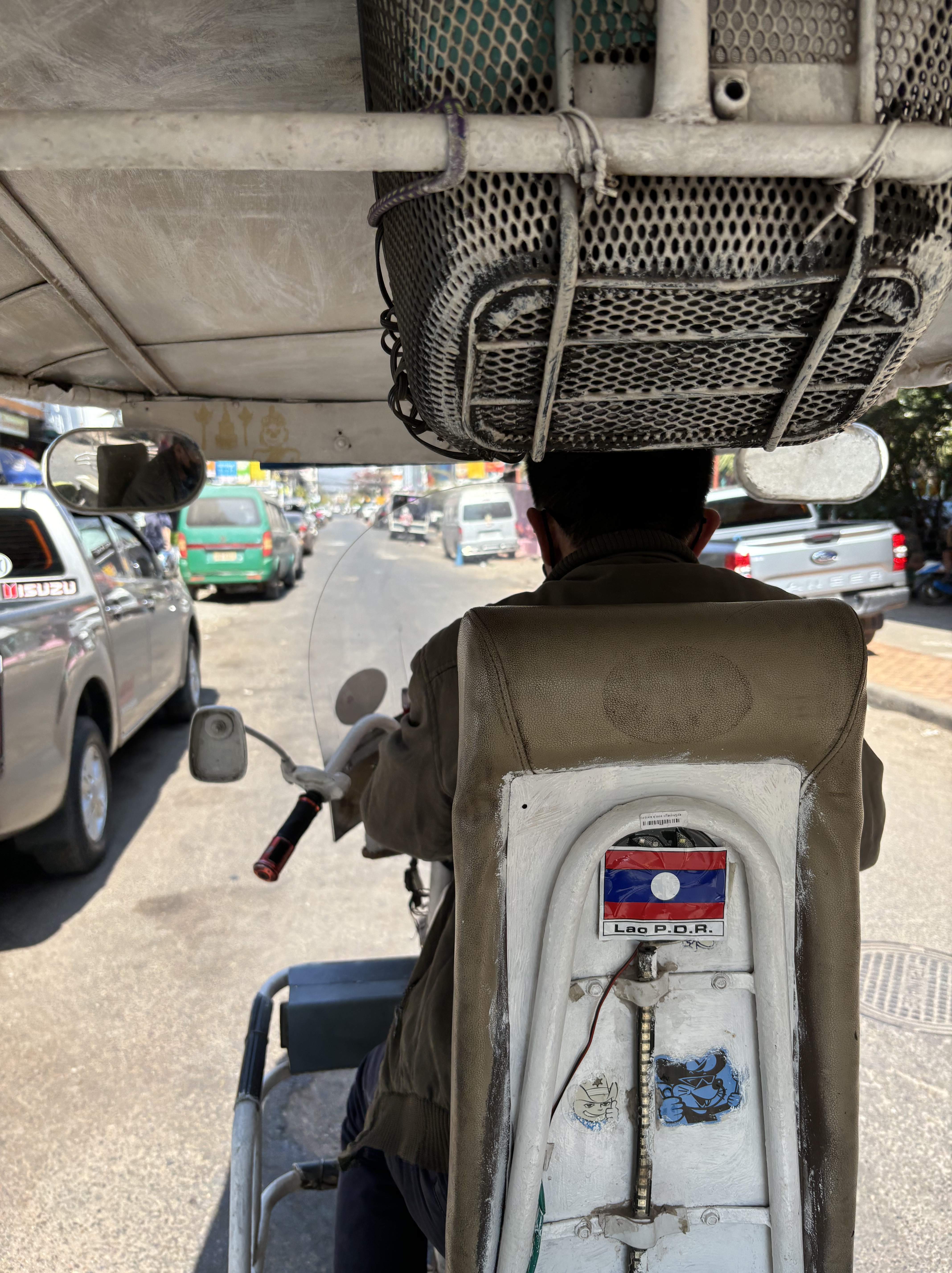
After checking in, I skipped the breakfast buffet and went straight back out in search of one thing.

A plate of larb.

I went back to Talat Sao too.
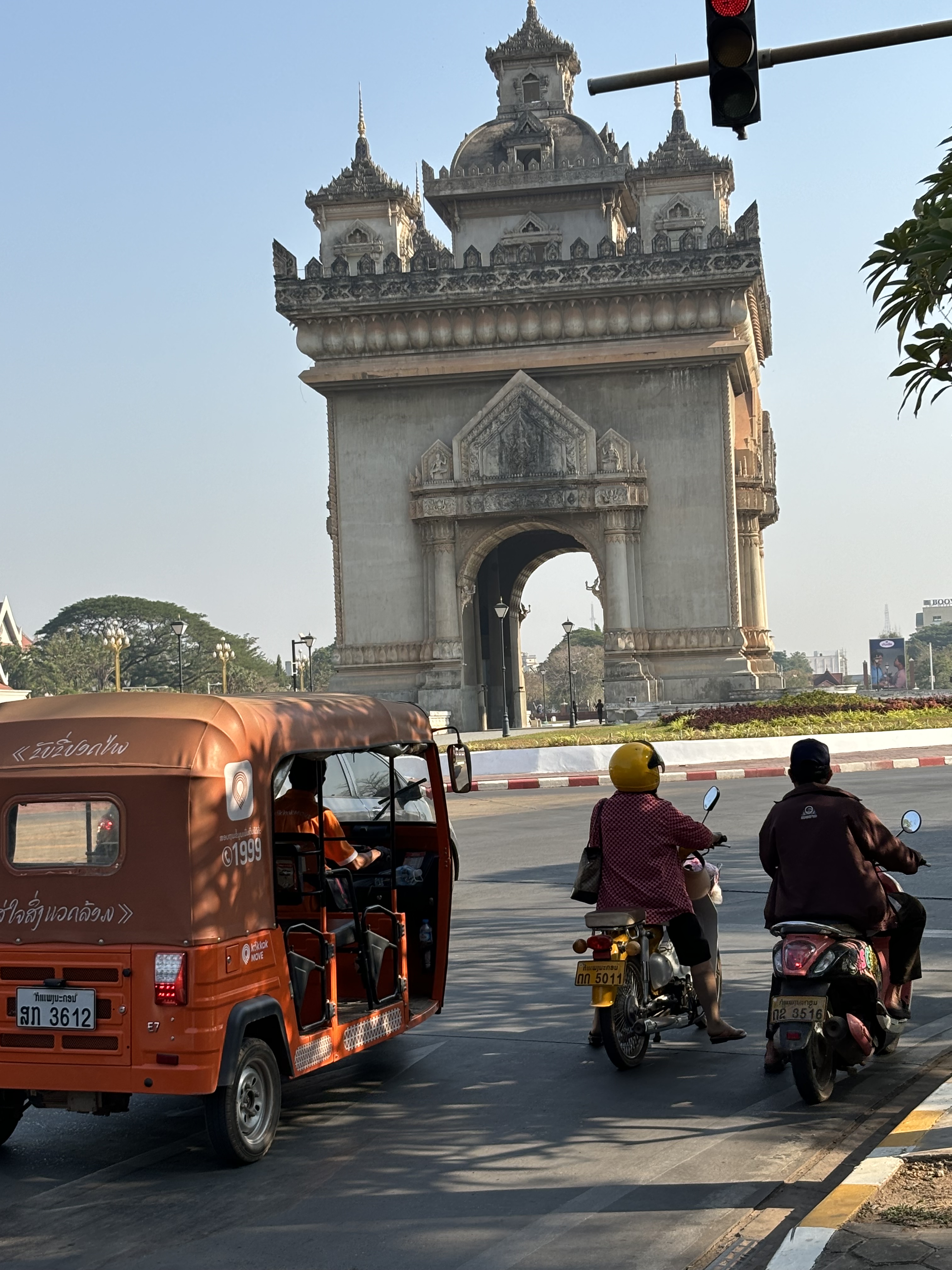
It was still there, but not quite the market I remembered. Much of Talat Sao is now a modern shopping complex, while the traditional fresh-food trading continues around the neighbouring Khuadin Market. Twenty-five years earlier, I had simply experienced it all as the morning market.

But among the stalls were still the chillies and limes, the long beans and green papaya, the herbs and familiar bags of slivered ginger.

A week later, my son arrived in Vientiane after finishing his first solo backpacking trip through Thailand.

“Forget the restaurants,” he said. “Let’s eat down by the river.”

I smiled.

Somewhere along the way, he’d become the sort of traveller I recognised.

As the sun disappeared behind the Mekong, the riverfront came alive. We passed the rows of stalls selling clothes, bags and souvenirs and kept going, following the smell of food.
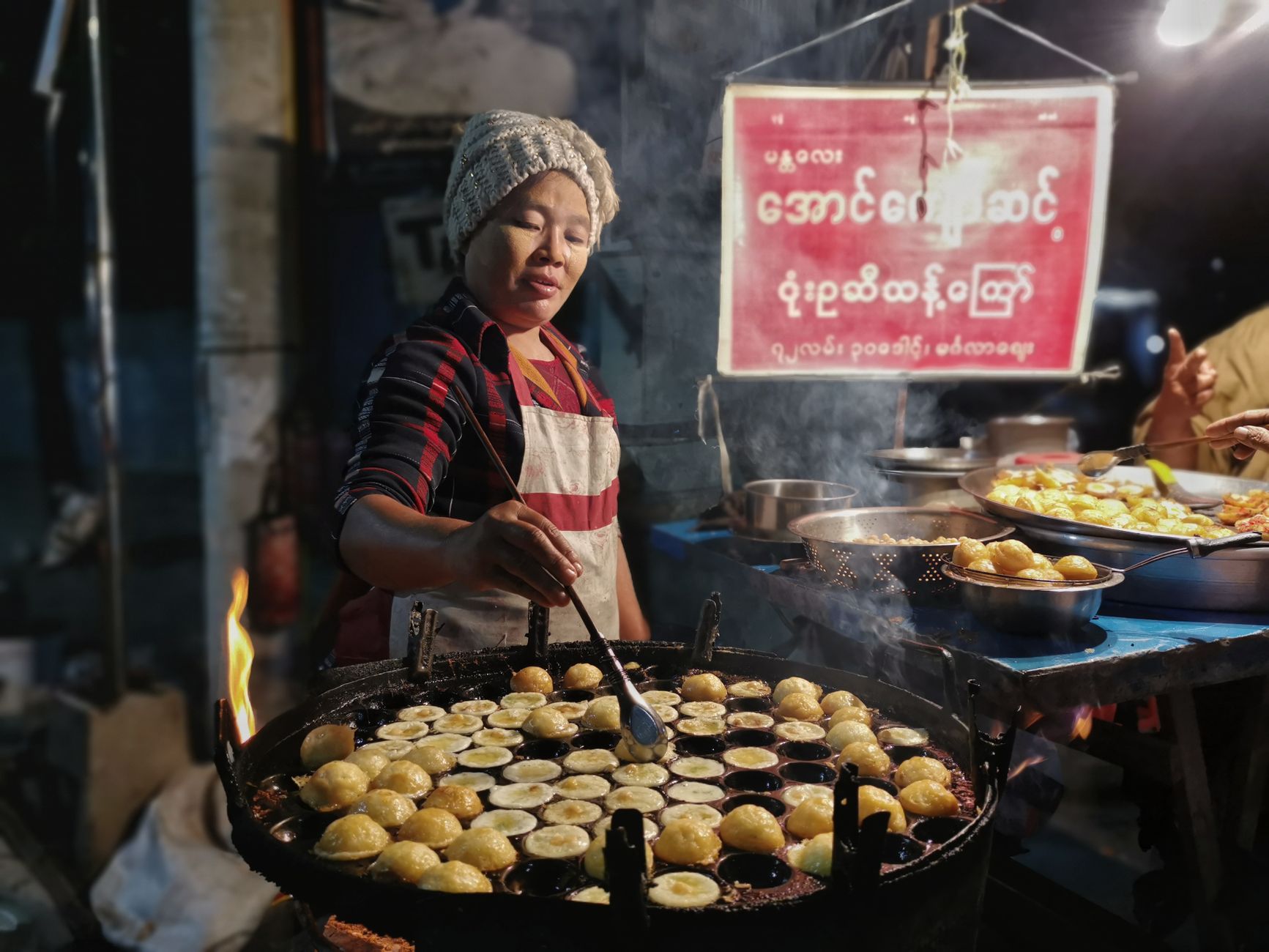
There was charcoal smoke in the evening air, fish cooking over grills, skewers of meat, sticky rice, noodles and plates of papaya salad. People crowded around small tables and plastic stools while vendors chopped herbs and worked over smoking grills.

Before I had the chance to order a drink, my son returned carrying two cold bottles of Beerlao.

We clinked them together.

Then came the larb, accompanied by small baskets of sticky rice and a fiery papaya salad topped with roasted peanuts.

Sitting beside the Mekong with my son, I realised that the greatest gift of that first journey to Laos wasn’t simply a lifelong love of one dish. It was a love of travel and a curiosity about how other people lived. Food became part of how I came to understand a place what people ate, how they cooked it and the markets where they bought the ingredients.
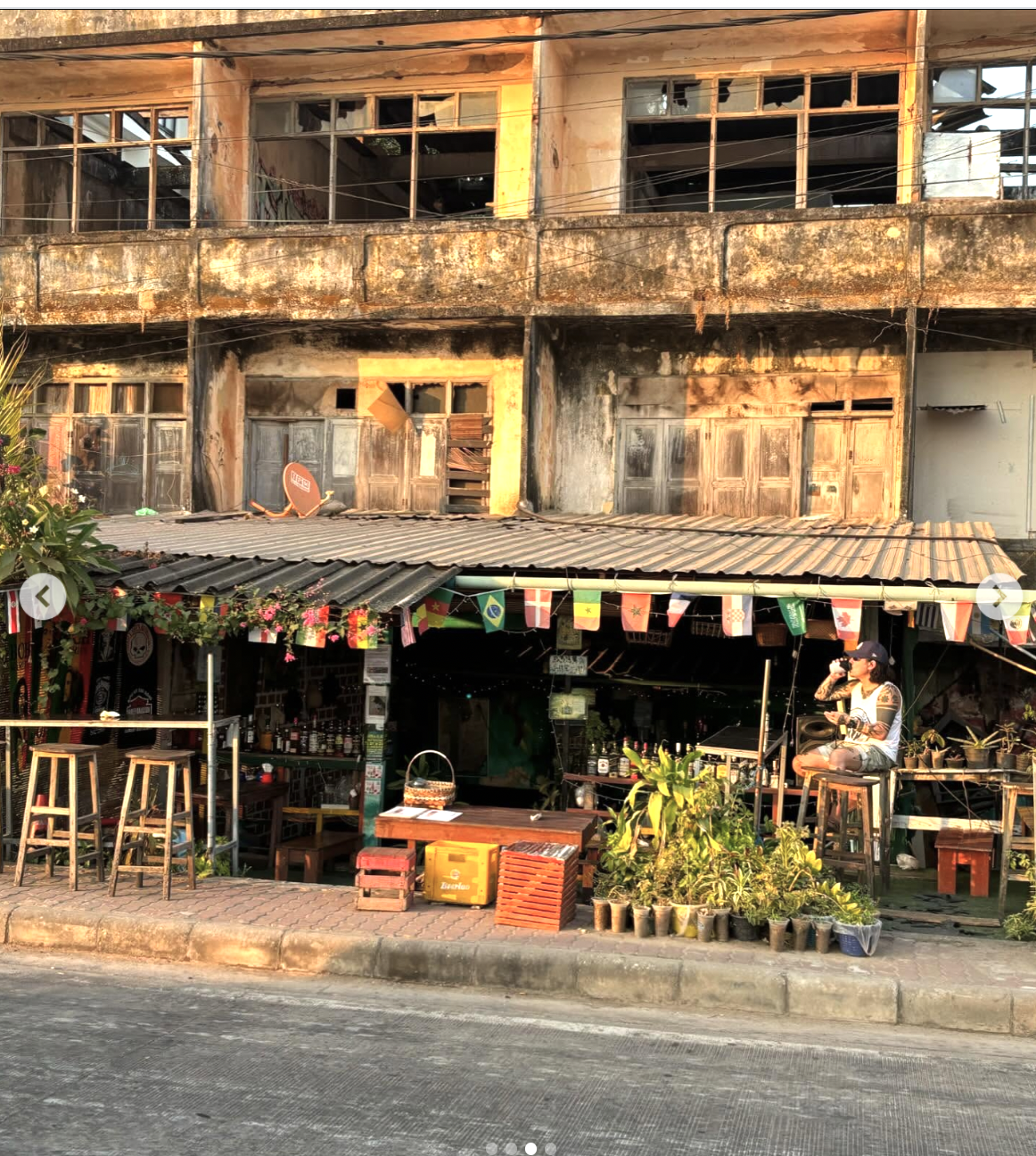
Now I was watching my son find his own way into the world.

Twenty-five years earlier, I thought that train to Laos marked the end of something.

Instead, it became the beginning of almost everything that followed.

Larb
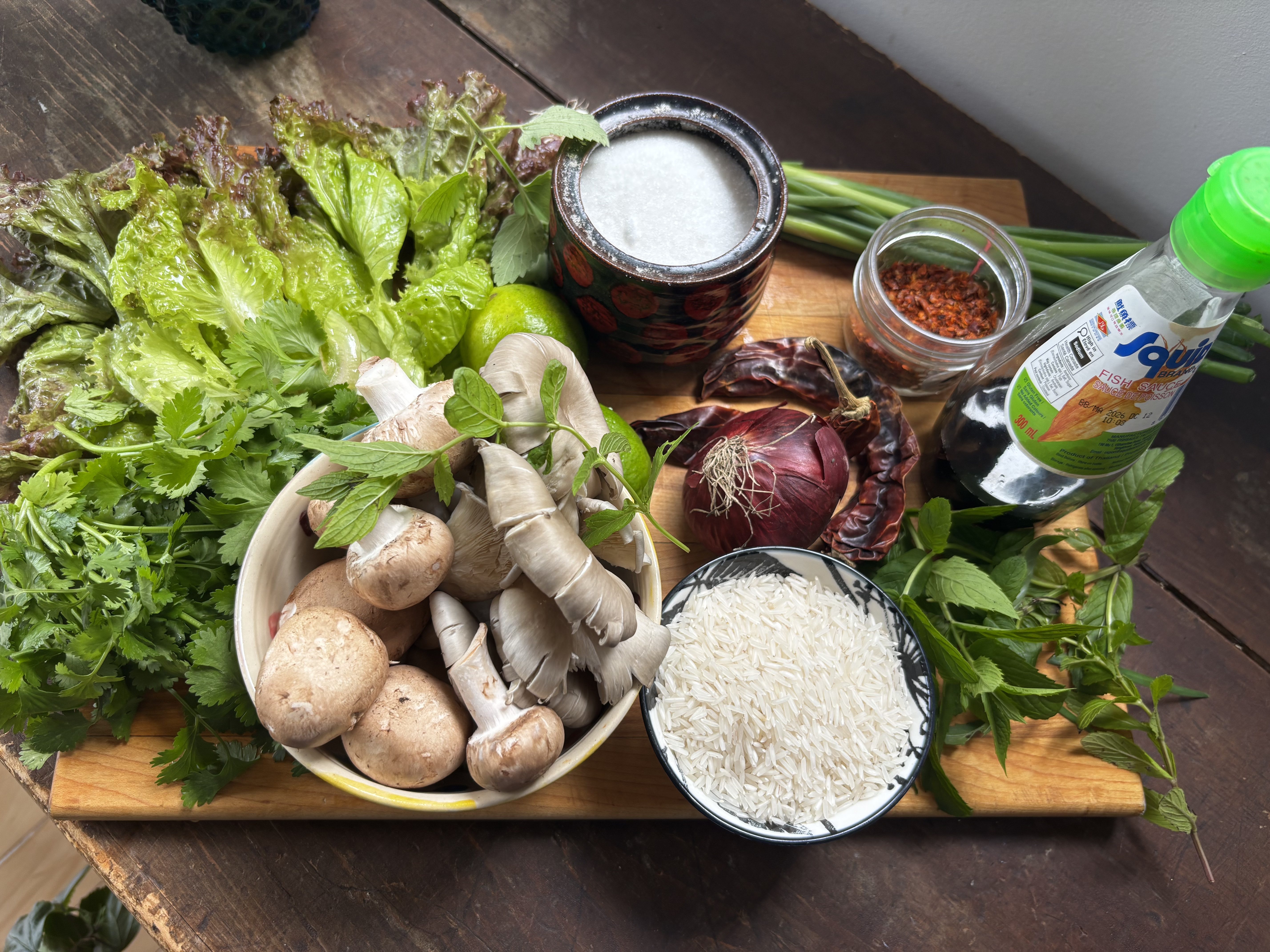
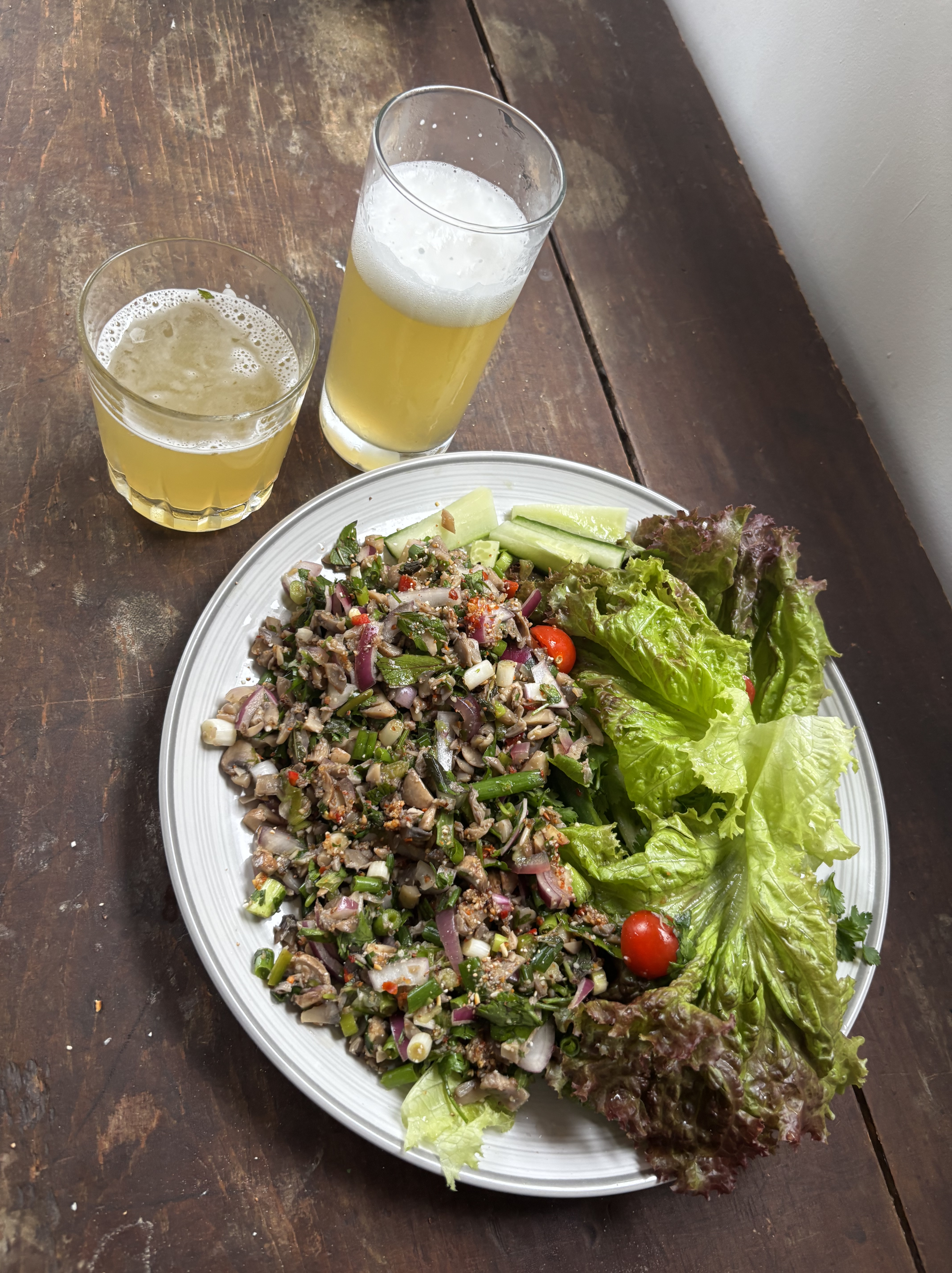
Over the years, I’ve made Larb countless times. Today I make it with mushrooms. Their earthy flavour works beautifully with the herbs and toasted rice, and it has become one of my favourite summer meals: fresh, vibrant and full of flavour. You can switch mushrooms for minced pork, chicken or even roast duck.

Prep: 15-20 minutes
Cook: 10 minutes
Serves: 2 generously

Ingredients

  • 250 g minced pork or chicken
  • 1½ tablespoons uncooked sticky or jasmine rice
  • 2 tablespoons fish sauce
  • Juice of 1-2 limes
  • 1-2 teaspoons chilli flakes, to taste (you can also add in some fresh chopped red chilli_
  • 2 purple shallots, finely sliced (or a red onion)
  • ¼ cup fresh mint leaves
  • A few handfuls of fresh coriander, roughly chopped
  • 1-2 spring onion, finely sliced
  • 2–3 sawtooth coriander leaves, chopped, if you can find them
  • Tiny pinch of sugar, optional

For a vegetarian/vegan version: Replace the pork with about 300 g of finely chopped mixed mushrooms. I use a combination of oyster, shiitake and ordinary brown mushrooms. The mix gives the larb much more flavour and texture than using just one variety. Replace the fish sauce with a vegetarian alternative.

Method

1. Make the toasted rice

Put the uncooked rice in a dry frying pan over medium heat. Toast on low heat for about 5 minutes, shaking the pan regularly, until the rice is golden and smells wonderfully nutty.

Grind with a mortar and pestle or spice grinder until you have a coarse powder. Don’t make it too fine – a little texture is part of what makes larb so good.

2. Cook the pork/chicken or mushrooms

For pork, add a splash of water to a hot pan, then add the mince. Break it up as it cooks until just cooked through.

For the vegetarian version, finely chop the mushrooms and cook them in a hot pan until softened and most of their excess moisture has evaporated.

3. Add the aromatics, spice

Take the pan off the heat. Add the sliced shallots, fish sauce, lime juice, chilli and toasted rice powder. Mix well. You can also take it completely off the heat and put the mixture in a big bowl and mix it all in there.

4. Add the herbs

Let the mixture cool slightly before adding the mint, coriander and spring onion. Add the sawtooth coriander if you’re using it.

Taste. Add more lime if it needs brightness, fish sauce if it needs salt or more chilli if you want some fire.

5. Serve

Serve warm or at room temperature with sticky rice and fresh vegetables such as cucumber, cabbage and long beans. You can also spoon the larb into crisp lettuce cups if you don’t want rice.

An ice-cold bevvie is a must.

If You Go: Talat Sao, Vientiane

Where: Lane Xang Avenue, near the junction with Khou Vieng Road in central Vientiane. The Central Bus Station is beside the market area.

Opening hours: Generally open daily from around 7:00am until late afternoon. Hours vary between the traditional market stalls and the newer Talat Sao shopping complex, so go early if you want more of the morning-market atmosphere.

For food lovers: Explore the wider Talat Sao area, including nearby Khuadin Market (Talat Khua Din), the traditional fresh-food market where you’ll find vegetables, herbs, chillies, meat and other ingredients used in Lao cooking.

Tip: Go in the morning. Talat Sao may mean “Morning Market”, but these days the wider complex stays open well into the afternoon.

Photography: Writers own. Additional images courtesy of Pexels.
The Perfume of Khan el-Khalili, Cairo, Egypt

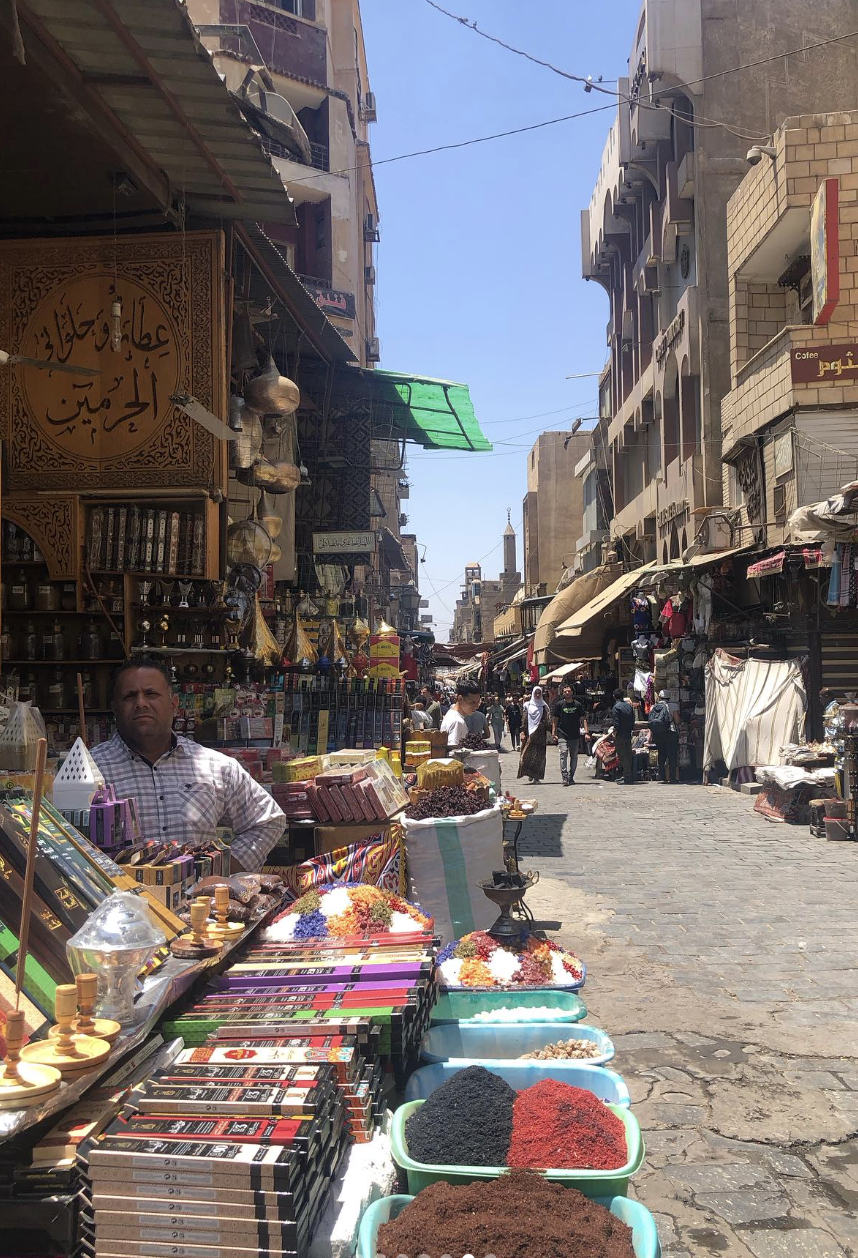
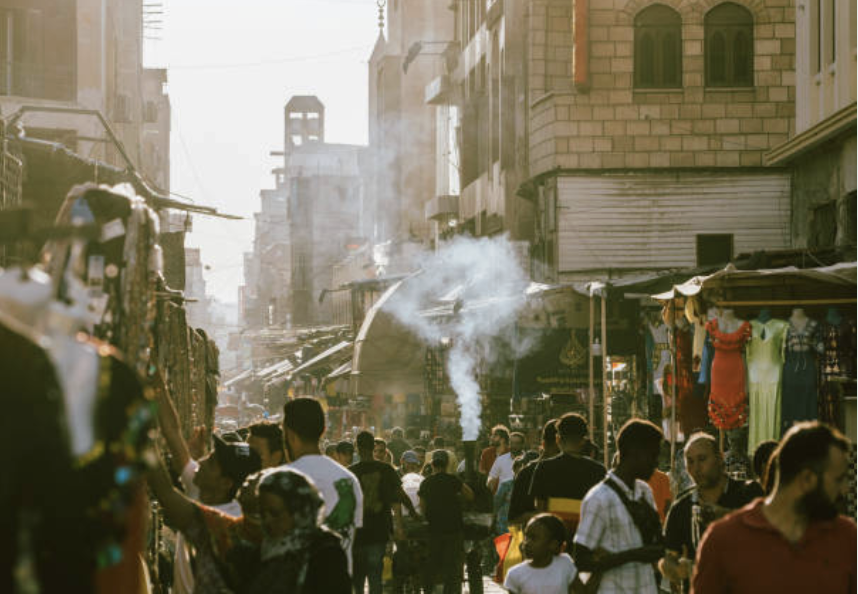
It was just before noon and the Adhan for Dhuhr echoed across Khan el-Khalili and neighbouring Al-Muizz Street as we got out of the cab. A first voice rose above the crowd, then another and another, the overlapping calls drifting between minarets and the medieval stone buildings. Around us, shopkeepers paused briefly, some completely stopped and bent to pray, tourists turned their heads to listen, and Cairo carried on as it has for centuries.

It was the perfect introduction to one of the world’s oldest markets.

Founded in the fourteenth century, Khan el-Khalili has been a centre of trade for more than six hundred years. Merchants, pilgrims and travellers have wandered these narrow lanes for centuries, drawn by spices, textiles, jewellery, tea, perfumes and stories. It is described as a bazaar, but it can also be said a living maze.

My friend Safah led the way. Without her, and her Arabic, I suspect I would still be wandering around there today.

The streets twist and narrow unexpectedly, opening onto tiny courtyards before disappearing again into passages lined with brass lamps, embroidered fabrics, carved wooden boxes and shelves stacked with incense and spices.

The market engages every sense at once.

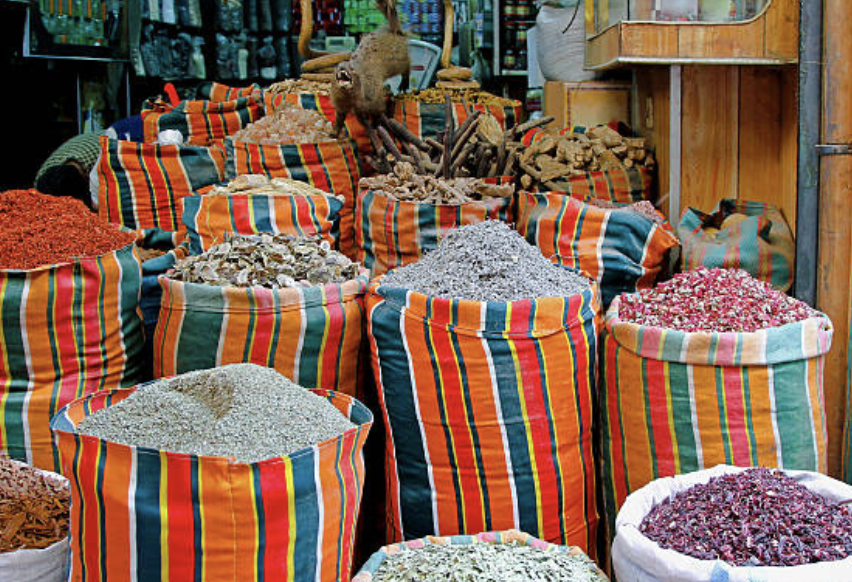
Spice sellers fill buckets and bags full of bright coloured spice both ground and whole. Perfume sellers display glass bottles filled with amber, jasmine and musk oils. The many lantern shops glow with coloured glass and intricate metalwork, casting fragments of light onto the cobblestones. Merchants bargaining loudly and enthusiastically.
Many visitors describe being harangued by vendors. Perhaps I was lucky. Perhaps travelling with someone who spoke Arabic changed the experience I found myself wandering without any real desire to buy anything. The market itself was enough. The pleasure was in observing, listening and getting lost.

Well, almost.

As a lifelong lover of incense, I left with sandalwood, musk, amber and a small bag of fragrant resin incense – frankincense tears, the golden nuggets that have perfumed homes, temples and markets across the region for centuries.

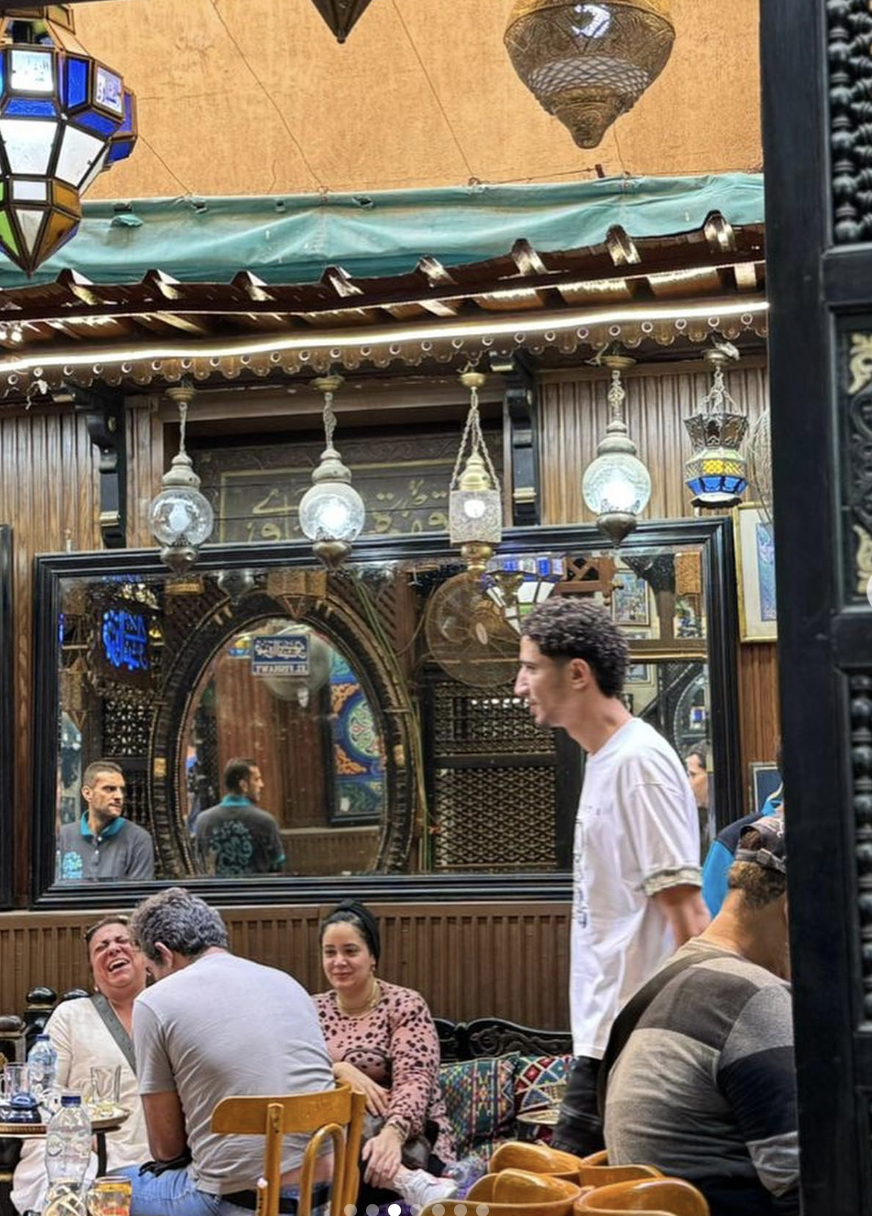
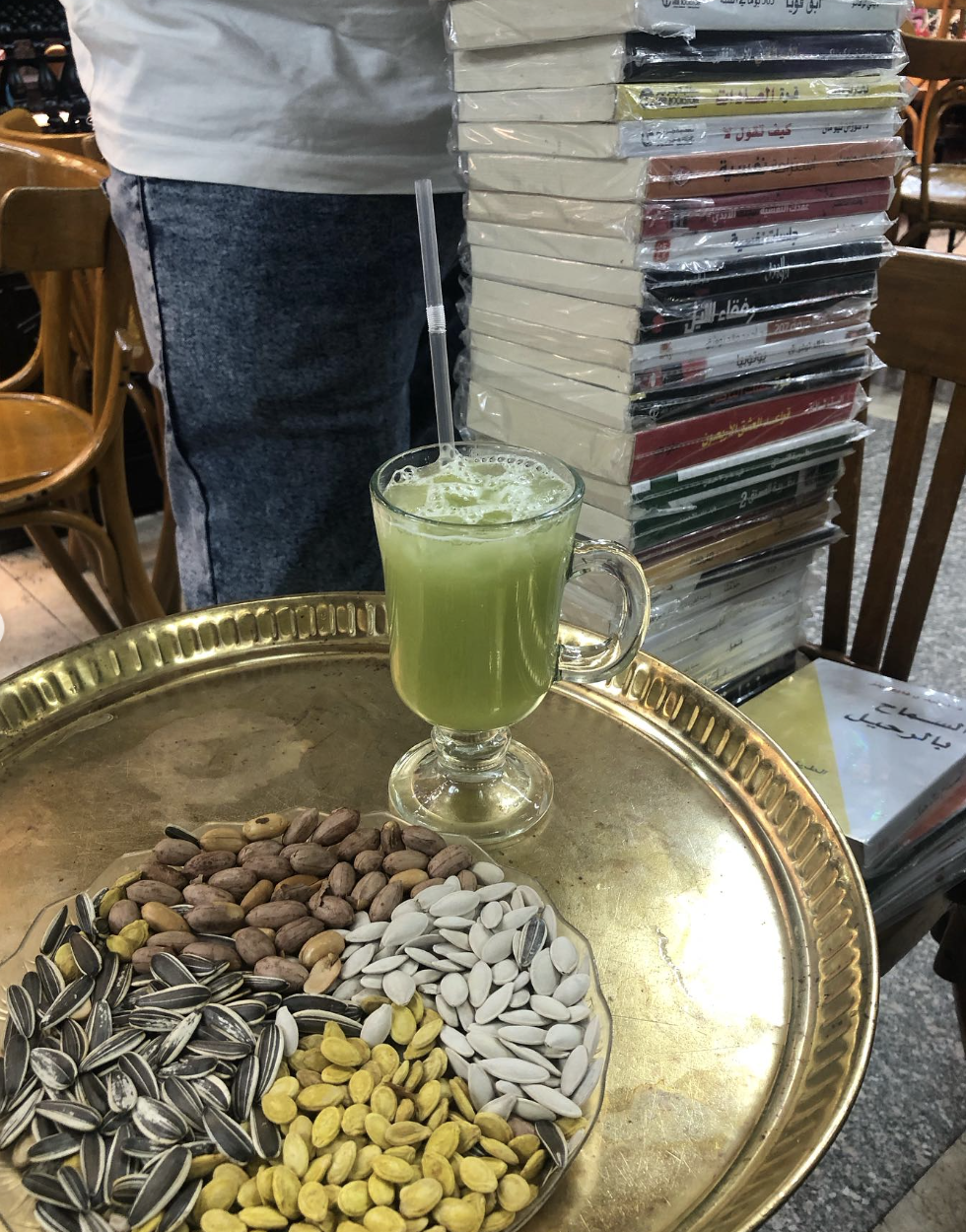
Eventually we found our way to El-Fishawy Café, Cairo’s oldest continuously operating coffee house. Established in 1773, it has welcomed merchants, writers, politicians and travellers for generations. Sitting amongst its mirrored walls. Safah with mint lemonade and me with a glass of karkadeh, Egypt’s deep ruby-red hibiscus tea, it was easy to imagine that little had changed over the centuries.

The tea itself was familiar. I grew up drinking hibiscus tea at home and its still a favourite, another reminder that food and flavour often connect places that appear worlds apart.

Alongside the tea came bowls of pistachios, and different seeds. Safah and I sat for a good while watching the world around us. Families passed by, old men smoked shisha, shopkeepers called to one another across the lane and tourists attempted to navigate the labyrinth.

At one point, a woman approached us offering henna tattoos. I politely declined, but Safah encouraged me to do it. “When in Cairo,” she laughed. Before long, she transformed my calf and foot into a canvas of intricate flowers, vines and patterns. By the time she finished, I was glad Safah had persuaded me. Like the tea, the incense and the market itself, it became part of the memory of that afternoon.

It struck me that markets like Khan el-Khalili survive because they offer something modern shopping centres cannot. They are not simply places of commerce. They are places to gather, gossip, negotiate, drink tea and watch life and history unfold.

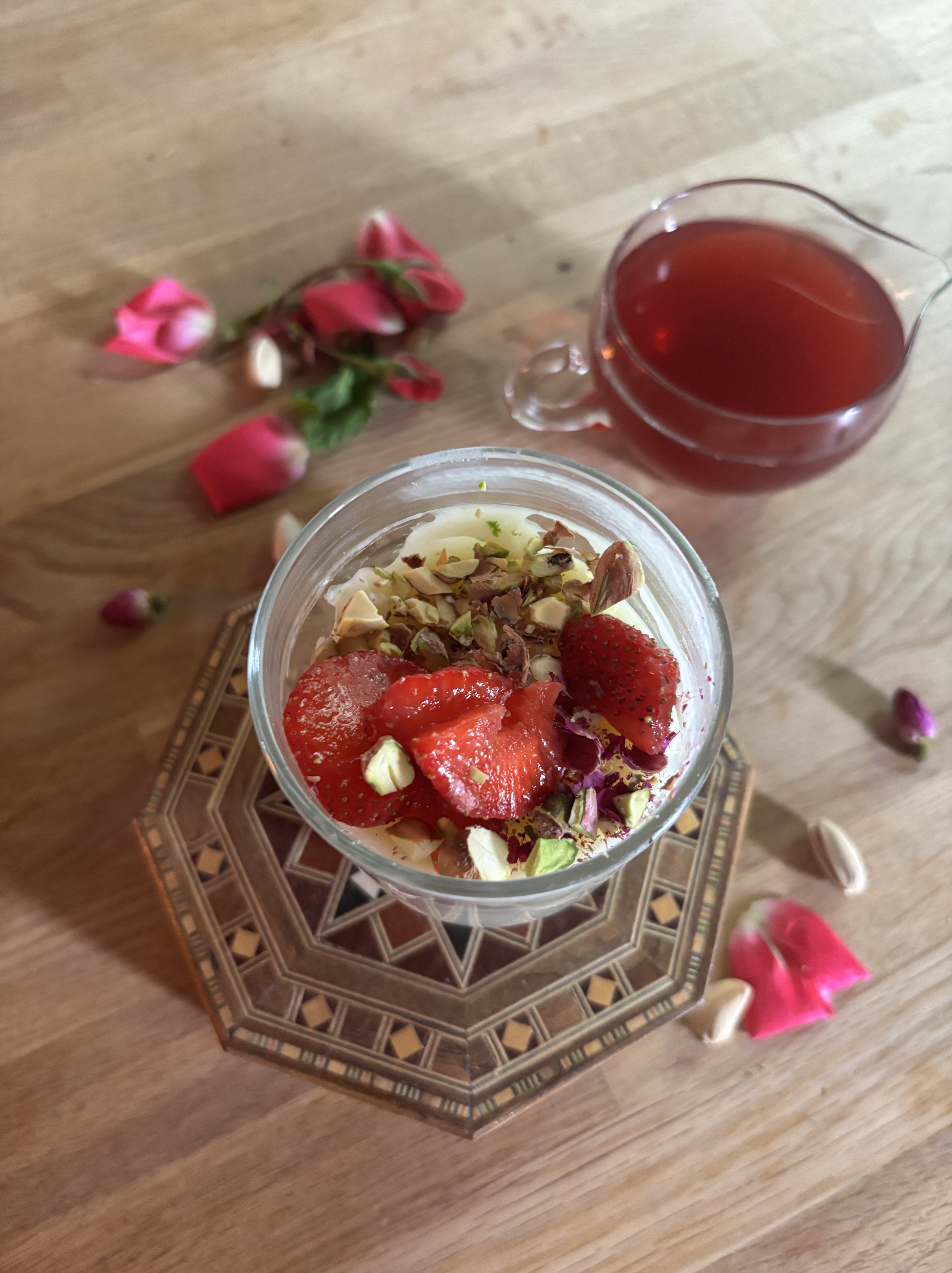
For this post, I have chosen a recipe inspired by that afternoon: mahalabia, a simple milk pudding scented with rose water and topped with pistachios.

Roses have been cultivated in Egypt since antiquity, appearing in the gardens of pharaohs and later finding their way into perfumes, ceremonies and culinary traditions. Their fragrance still perfumes the Middle East. Mahalabia captures that history perfectly. Made from milk, sugar and corn starch, it is simple yet elegant, delicately perfumed with rose water and scattered with pistachios. Some versions also include cardamom or saffron.

Sometimes the best thing to bring home from a market is not what you buy, but the smell and taste of it.

Mahalabia with Rosewater and Pistachios

This delicate milk pudding is scented with rosewater and topped with pistachios. It took me no more than 15 minutes to prepare, with the refrigerator doing the rest of the work. You can also switch the rosewater for orange blossom water and infuse the milk with saffron and a bit of cardamom. I added some macerated strawberries to mine.

Ingredients

Serves 4–6

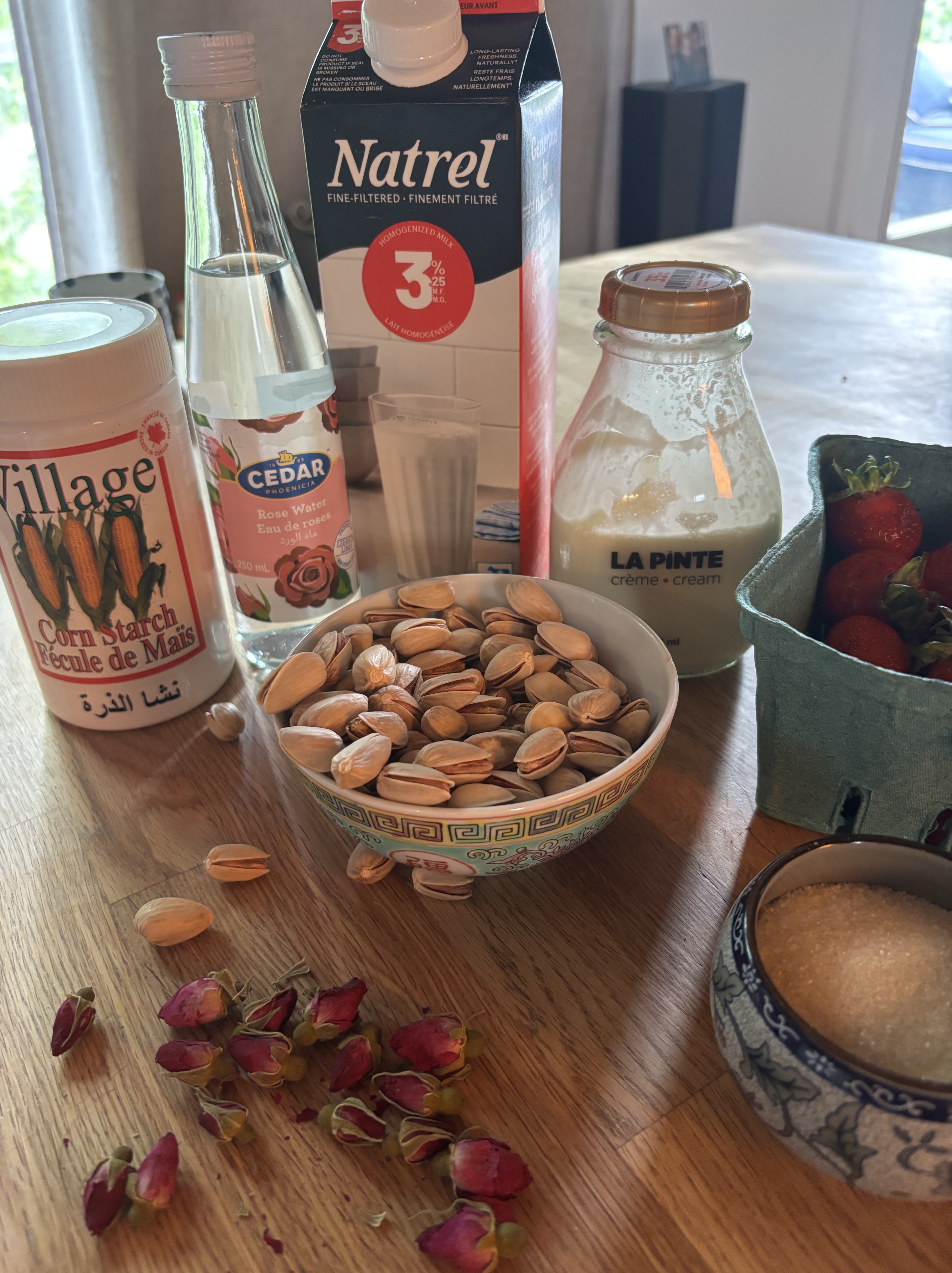
  • 2 cups whole milk (you can also use rice milk or coconut milk or a mix)
  • 1 cup cream
  • 4 tablespoons cornstarch
  • A third of a cup of cold water
  • 4-6 tablespoons sugar
  • 1 tablespoon rosewater
  • 2 tablespoons crushed pistachios
  • Dried rose petals, for garnish (optional)

Method

  1. In a small bowl, mix the cornstarch with a third of a cup of cold water until completely smooth.
  2. Pour the milk and cream into a saucepan and add the sugar. If using cardamom or saffron, add them now. Heat gently over medium heat until warm but not boiling.
  3. Stir the cornstarch mixture once more and slowly pour it into the warm milk, whisking continuously.
  4. Continue stirring for 5–8 minutes until the mixture thickens to the consistency of pouring custard.
  5. Remove from the heat and stir in the rosewater.
  6. Pour into individual serving glasses or small bowls and allow to cool slightly before refrigerating for at least two hours.
  7. Before serving, sprinkle generously with crushed pistachios and, if desired, a few dried rose petals.
  8. Add any macerated fruit.

Finding My Way Back Through Rome’s Markets

For years, this blog sat quietly in a forgotten corner of the internet.

It wasn’t because I stopped traveling. Quite the opposite. My work and personal life carried me across countries and continents at a pace that left little room for reflection. There were stories everywhere, yet somewhere along the way, I stopped writing them down.

Now, as my life shifts again, I have found myself revisiting old photographs. Again and again, my thoughts drift back to the months I spent living in Rome. Not to the Colosseum or the Vatican. Instead, my mind returns to two distinct markets. One taught me about Italy; the other reminded me of the wider world. And between them, they helped a foreign city feel like home.

Hera picked me up from Fiumicino Airport.

We had worked together years earlier in Montreal. Now living in Rome, we had seen each other the year before after not crossing paths for over a decade. Neither of us expected that we would soon be living in the same city.

Then one day, I sent her a message: “Guess what? I’m moving to Rome.”

For the second time in our lives, we found ourselves sharing a city.

This is what happens, I think, when you spend much of your life away from the place you were born. Those of us who leave our homelands somehow pick up quickly where we left of. We build friendships across continents, lose sight of each other for years, and then unexpectedly reappear in the same place at the same time, sometimes finding more of a community in our transplanted lives than where we permanently reside.

My new home was in Testaccio, Rome.

Testaccio is vibrant working neighbourhood just across the Tiber and best known for Monte Testaccio, a hill built from millions of discarded clay amphorae that once carried olive oil throughout the Roman Empire. Yet what captivated me was not its ancient history, but its daily life.

Every evening around five o’clock, the neighbourhood came alive. People of all ages gathered in the square. Teenagers lingered over gelato. Elderly locals sat on benches with their pet dogs exchanging news. Friends and colleagues met up to share pizza, spritz and conversation. It felt like the very embodiment of la dolce vita.

At the heart of it all sat Mercato Testaccio.

On that first day, Hera insisted she take me there so I could familiarize myself with the area. We bought fresh, handmade pasta and sat together in the market square to eat. Before leaving, she insisted I stock my empty kitchen with the essentials: so I chose burrata, prosciutto, good bread, olives, tomatoes, and peaches.

That evening, alone in my apartment, I unpacked my groceries and sat on the floor to eat. I sent a message back to my girfriend’s in Australia, sharing how I felt like the character Julia Roberts played in Eat Pray Love on her very first night – sitting alone on the floor of her apartment, nervous but excited, eating her first meal in the country. The irony was so similar to the choices I had made. My family was thousands of kilometres away, but somehow the market, the food, and an old friend had already made Rome feel a little less foreign.

Every Friday, I worked from home and would take an hour for lunch to wander through the market’s aisles, comparing notes with colleagues who also lived in the neighbourhood. We debated who made the best pizza al taglio, where to find the freshest mortadella, which stall served the best pasta, and where to linger over a leisurely lunch. The market quickly became part of the rhythm of my week and my introduction to everyday Roman life. Like everywhere I have lived, I soon got to know many of the store owners, they would suggest things to try, pop something extra in your bag, and when I had no small change, they would wave a hand and say, prossima volta, next time.

As much as I embraced Roman life, I had grown up in Australia and had resided in Montreal, Canada for many years – two of the world’s most multicultural countries. I was accustomed to markets and supermarket aisles lined with ingredients from every corner of the globe, and neighbourhoods where dozens of cuisines coexisted side by side.

Italy is fiercely proud of its food culture, and rightly so. Yet after a few weeks, I found myself craving spice, exotic vegetables, and the flavours of places far beyond the Mediterranean.

When I wanted Italy, I went to Testaccio. But when I wanted the world, I went to Mercato Esquilino.

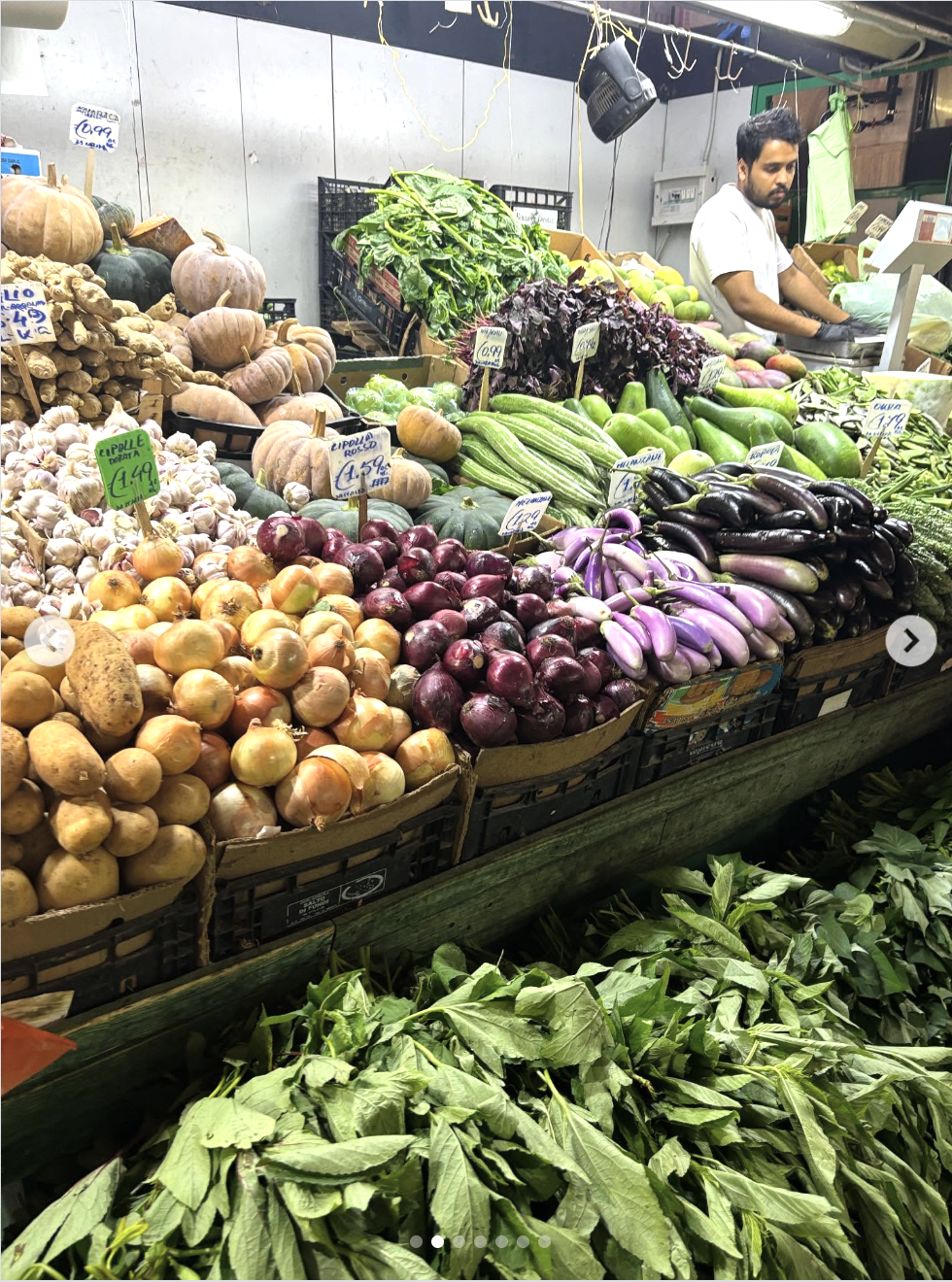
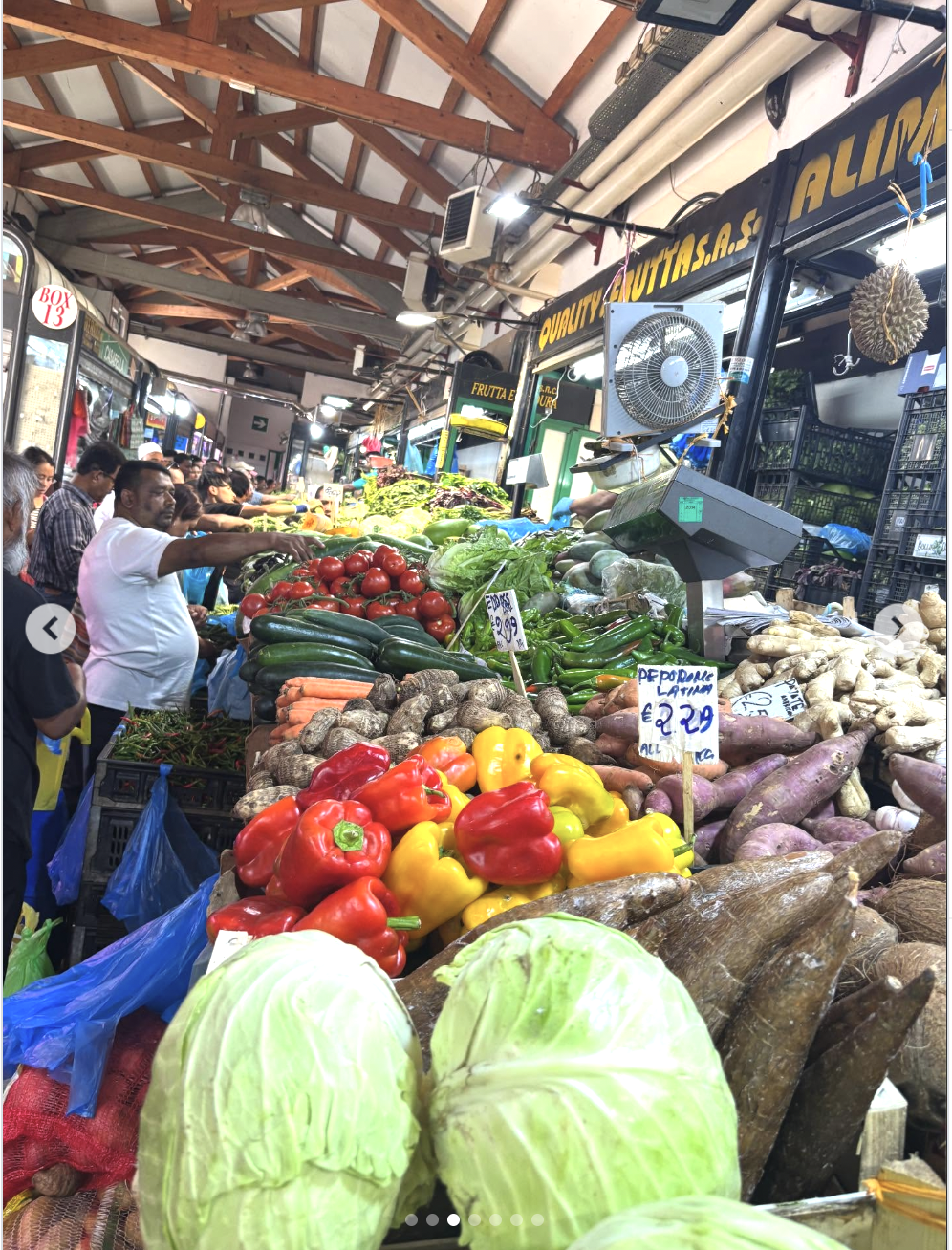
Located just beyond Termini Station, Rome’s main transport hub, Mercato Esquilino felt like a different city altogether. The polished familiarity of Testaccio gave way to something more chaotic, more multilingual, and more global. Here I could find daikon (my favourite vegetable) – alongside Asian greens, chilies from across continents, spices I recognized from years of travel, and ingredients that reminded me of homes both real and temporary.

Mercato Esquilino is not the Rome that appears on postcards. It was something altogether different: a reminder that modern Rome, like so many great cities, has been shaped by people, ingredients, and influences arriving from elsewhere.

The first thing you noticed was the noise. Vendors called out to customers. Conversations unfolded in dozens of languages.

One afternoon, my family called from Australia while I was shopping.

“Where are you?” they asked.

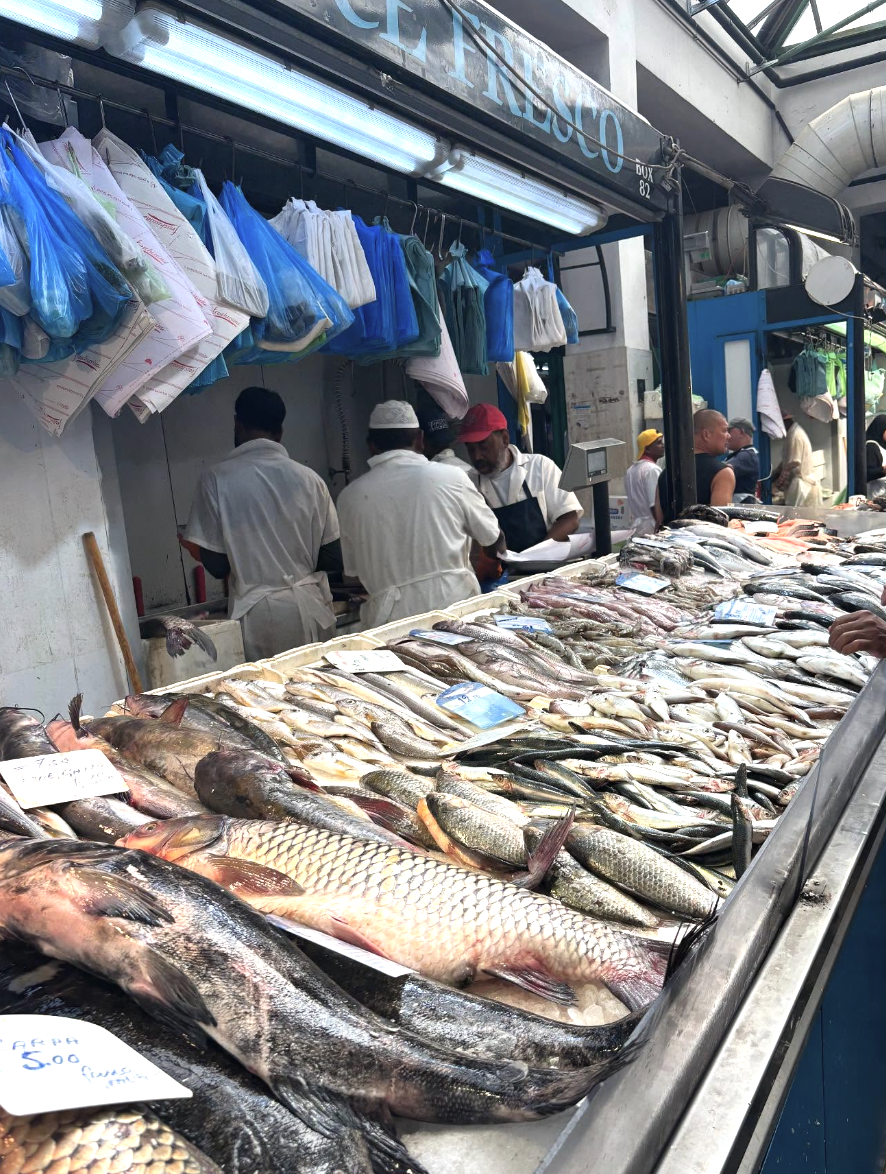
I turned the phone camera on so they could see: the shouting vendors, the bustle, the rows and rows of whole fish on ice. It was the sound of a market that felt almost unchanged from another era. For a moment, they were transported there with me.

I rarely arrived with a strict shopping list. More often, I came searching for ingredients that I was missing, craving. The Bangladeshi shopkeepers soon began to recognize me.

“How do you know this stuff?” one asked, laughing as I filled a basket with ingredients that most of their Italian customers ignored.

Today, as summer begins to arrive in Canada, I find myself thinking about those Friday afternoons in Rome. About Testaccio and Esquilino. About old friends who somehow find each other again in distant cities. About market vendors who knew exactly what I was looking for before I asked, and the simple pleasure of wandering home with a bag full of ingredients and no particular plan.

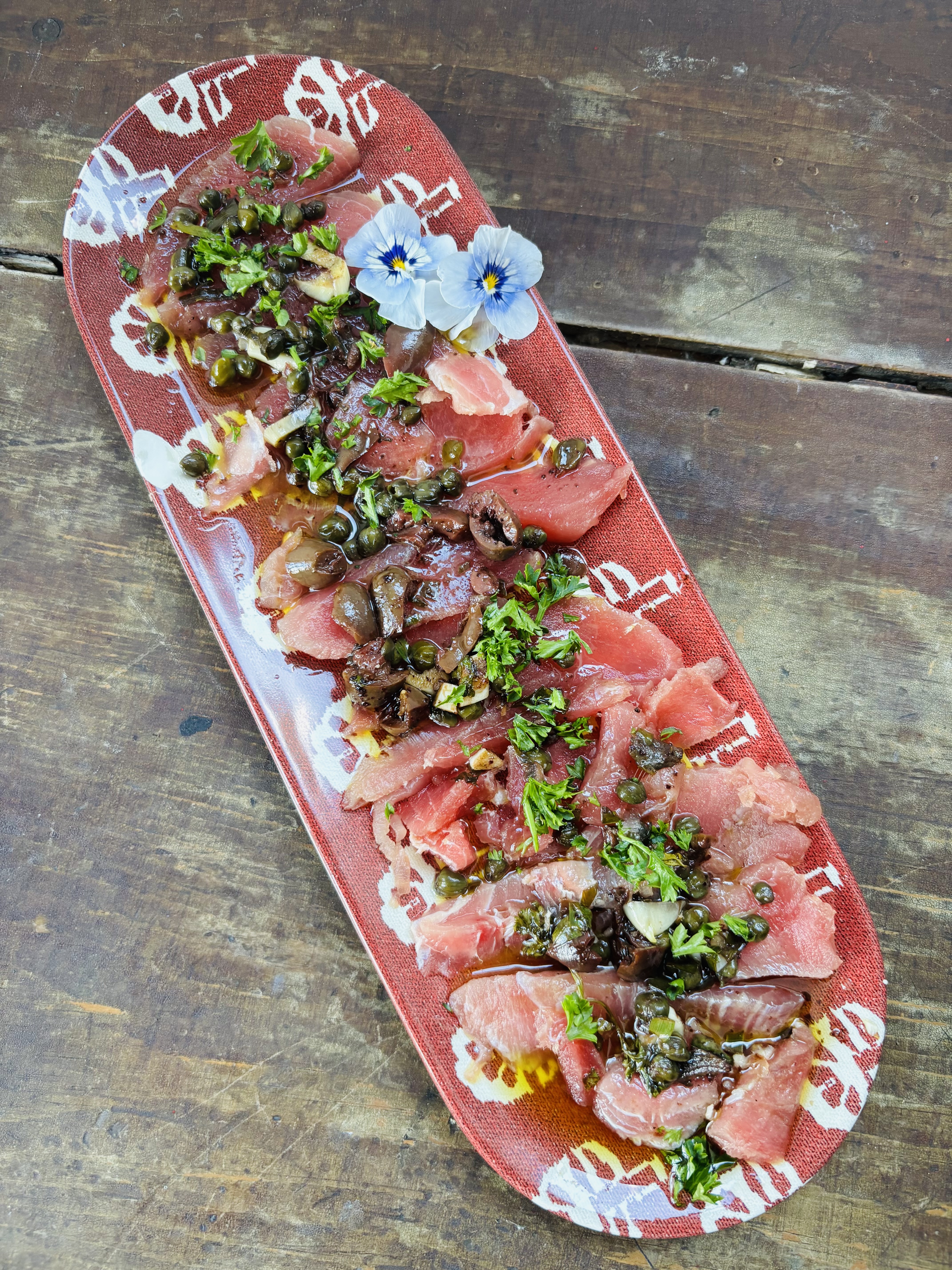
I’ve been back in Canada for a while, but some tastes just follow you home. Case in point: tuna carpaccio. I originally stole this recipe from Gennaro Contaldo, who famously mentored a young Jamie Oliver years ago – and it became a staple of my time in Rome. Although I’ve made it for years, it has a renewed focus for me lately thanks to two game-changers: amazing fresh, salt-brined capers from the market, and the addition of sumac. Fresh tuna, good olive oil, balsamic, sautéed garlic, and fresh herbs are your must haves.

So as I sign off today, and hopefully not for as long as last time – I’ll leave you with this small reminder that sometimes the best souvenirs aren’t things at all, but flavours, friendships, and the places that brought them together.

Tuna Carpaccio

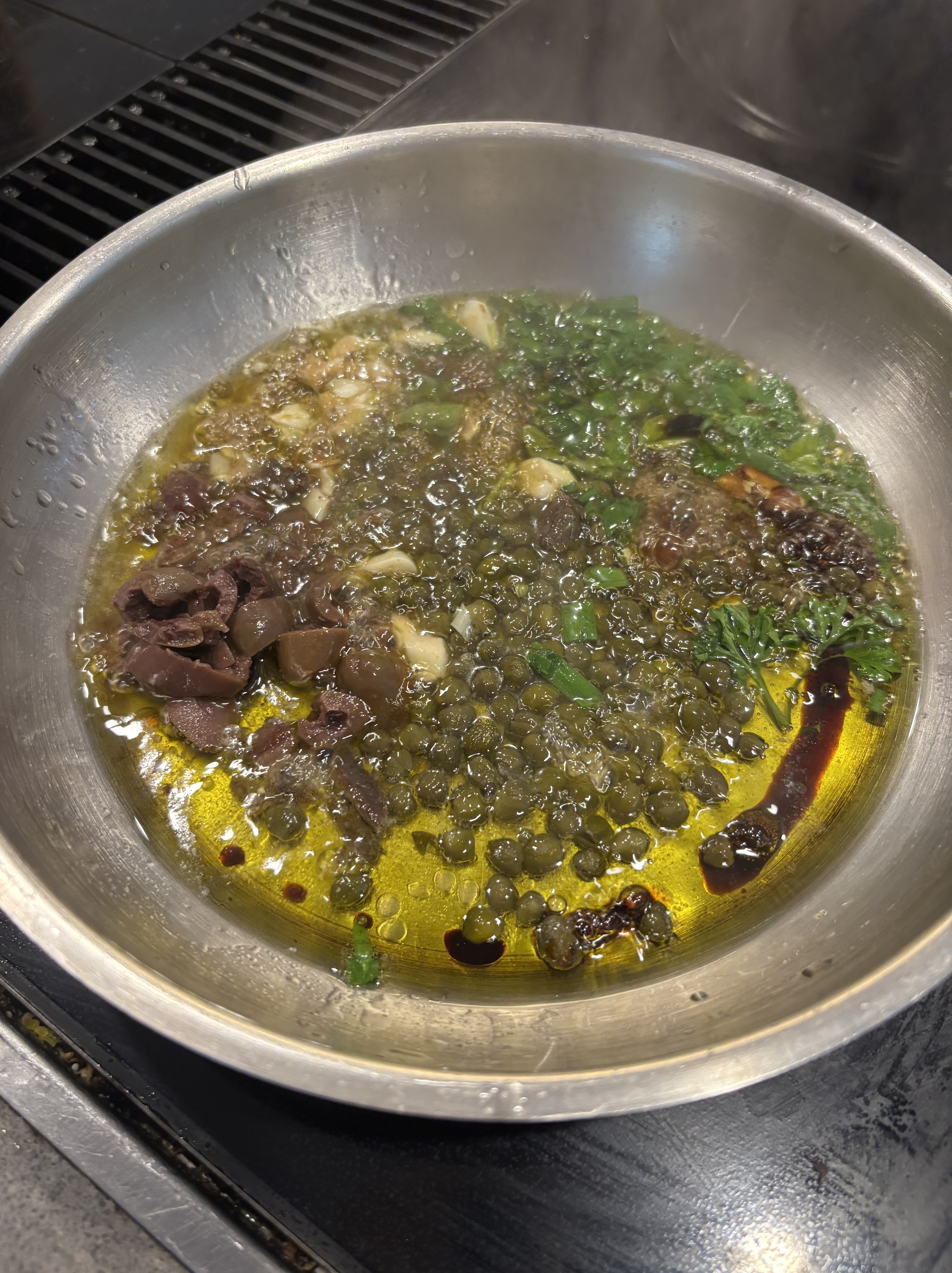
Ingredients: A steak of sushi-grade tuna, handful of olives and another of capers, or either-or. About half a cup of olive oil, some splashes of balsamic, a few cloves of garlic smashed (do not finely chop) and some herbs of your fancy, some sumac.

How to: In a small pan, gently heat up some garlic, capers, olives and half of your herbs. Add a few splashes of balsamic vinegar. Heat on low for about five minutes, stirring. You do not want your garlic crispy.

To slice tuna for carpaccio, freeze the fish for about 15 minutes so it is firm and easy to handle. Do not keep the fish in the fridge if you are not using immediately, it must be kept frozen. Use a razor-sharp knife to cut paper-thin, translucent slices across the grain using one smooth pulling motion. If you want the pieces even thinner, place plastic wrap over the slices and gently flatten them with the back of a spoon. Arrange the tuna on a plate (chilled preferable), and then spoon your mixture over it, garnish and sprinkle with more sumac or a few chilli flakes.

Bon Appetito.

The boy who lived in the market, Chad, Africa

The boy who lived in the market, Chad, Africa

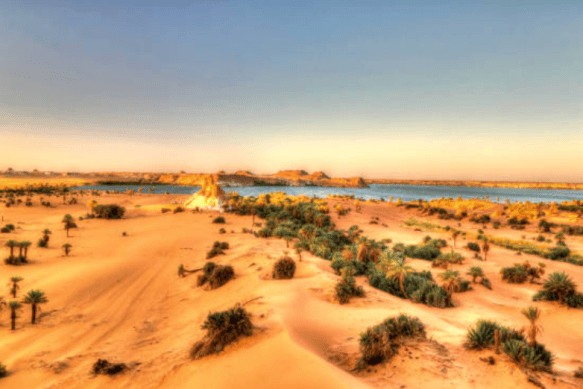
Recently, I had the opportunity to work in Chad for a humanitarian assignment. Chad is a landlocked country situated in the Sahelian region of Africa, to which the average traveller probably wouldn’t deign visiting.

Burdened down by years of conflict, the last few years have been easier to Chad, with it now being one of the most peaceful countries in the region.

From the capital of N’djamena I flew to the far south-east of the country, which is greener, lusher than the dry north.  It was also here that several humanitarian agencies have set themselves up and are working mostly in the camps where they receive the influx of refugees arriving from neighboring Central Africa Republic (CAR). The majority of them providing life-saving food security, nutrition or water interventions, as well some providing health and education services.

I visited one of these camps in the district of Maro, where the immediate future of these people remains as unsure as the 10.4 million other refugees around the world (UNHCR, 2012) with some 28% presently living in Africa.

After the camp, a colleague and I ventured into Maro’s small town. It was the late afternoon, so we had missed the market.  Along the way, we bumped into some Chadian colleagues who were visiting friends that owned a small store along the main road.

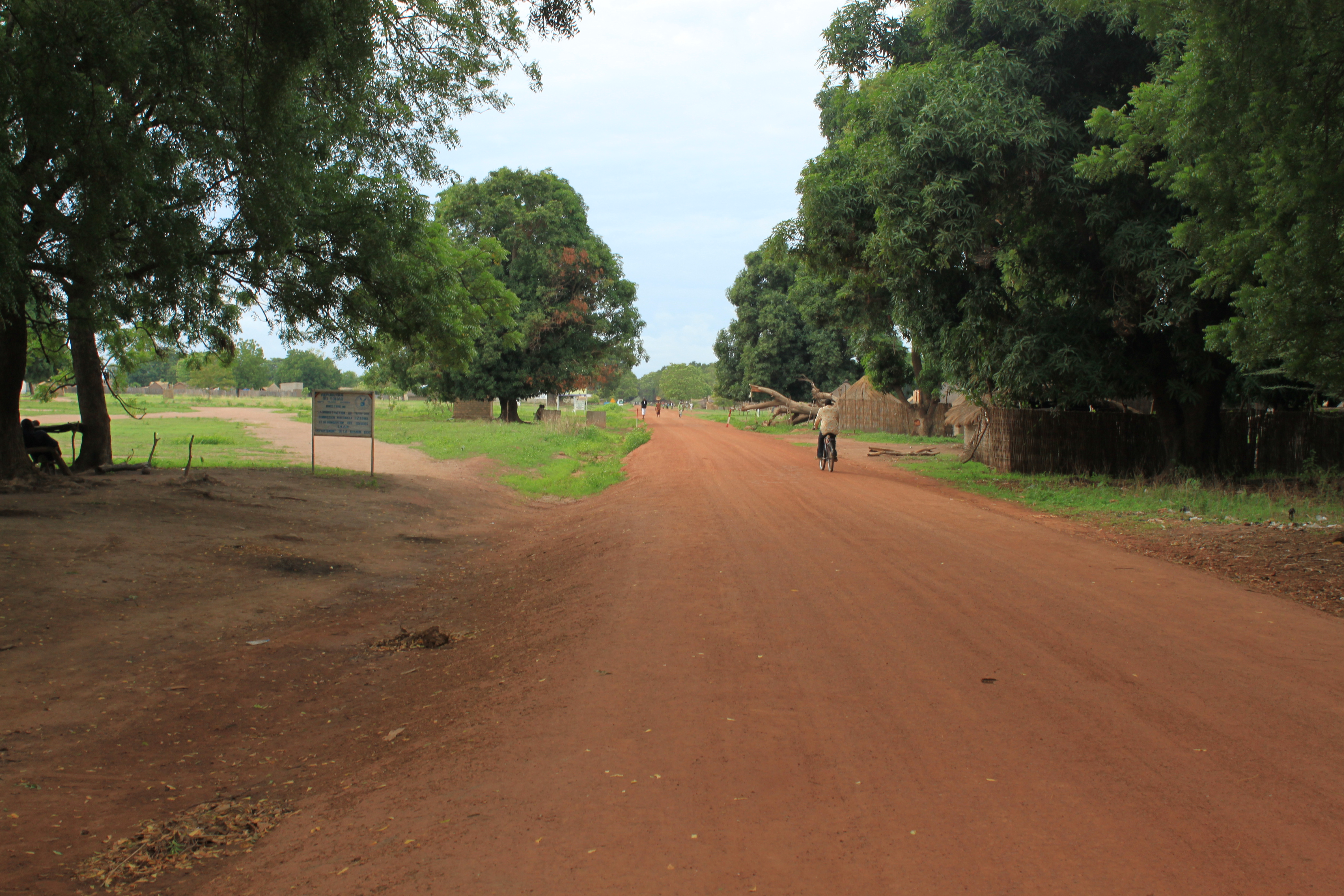
The long road reached its red-dirt arms as far as the eye could see.

“Where does this road lead to?” asked my Canadian colleague.

road

“The Central African Border is an hour away.”

“This is the road that the refugees take to reach this part of Chad,” they explained.

We spoke for a moment how we could well imagine them arriving by foot, tired, hungry, hoping to find safety, a small place which they could somehow call “home”.

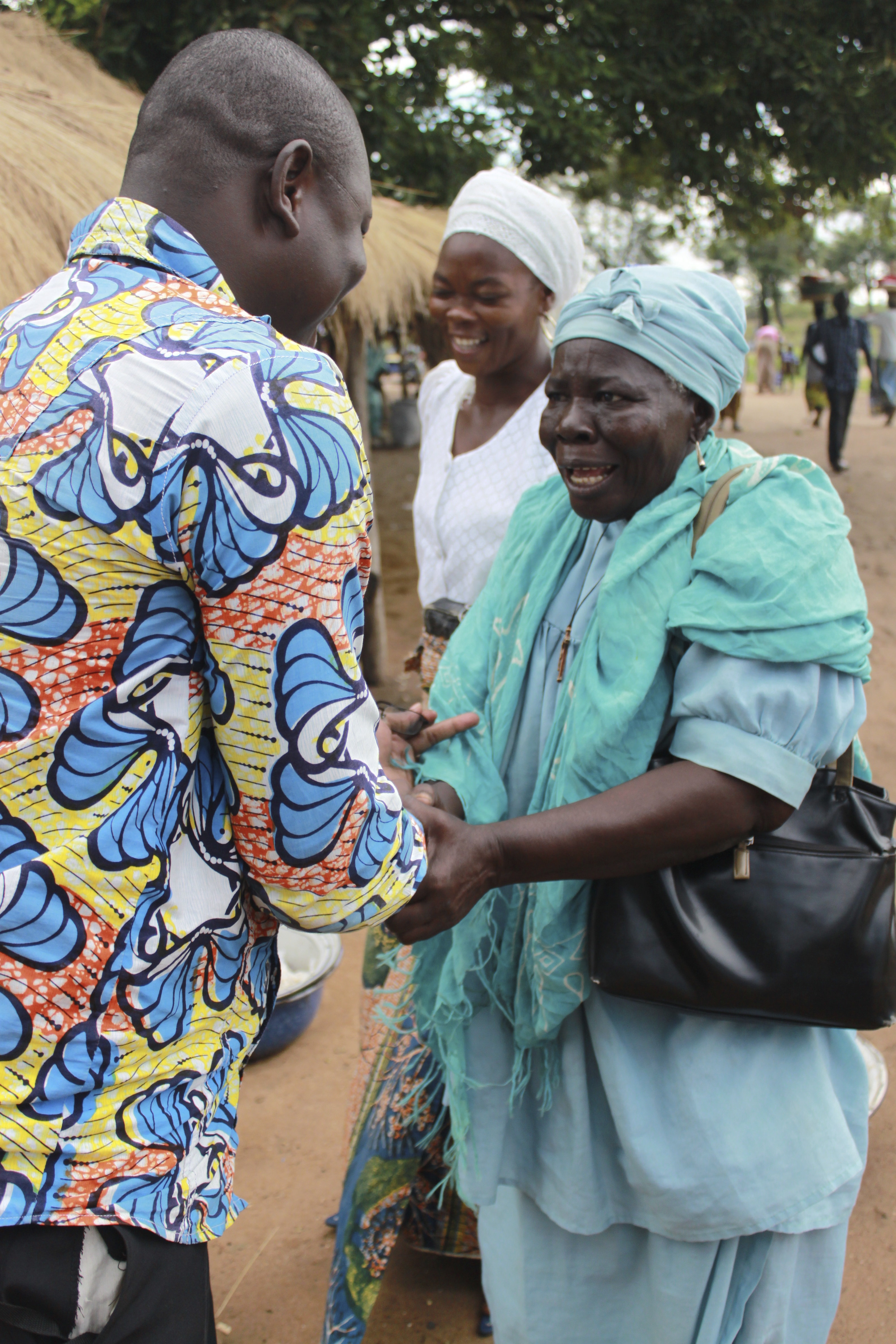
I visited three markets in Chad. One was a few hours drive away from Maro in a town called Sahr. It was Sunday, and the Christians had just returned from church, and were stopping to get lunch staples. We stayed only a little while as a convoy was to expected to escort us to the next town, yet it was a joyful moment when one of the team travelling with us ended up bumping into an Aunt who he hadn’t seen in years.

aunt

From there, we drove some 7 hours west to Gore. My days were packed and intense, yet I had an hour to spare after my last day to take a little walk to the Town Square and market with two colleagues.

Unfortunately, the vendors were packing up for the day, and the market was bereft of both content and customers. While I find markets the most vibrant of places, this one was dark and ominous – a gang of street kids ran past and began taunting us. Not getting what they wanted, they took off again. Turning to leave, I noticed a crumpled heap on the market floor, which I first thought was a bundle of old blankets.  I looked closer, and two eyes flashed up at me. It was a child, a boy of around 8 or 9, his face had the glazed look of those who have been so beaten down and harassed by life, that they acquire a strange sort of stillness, a type of inner equanimity that protects them no matter what happens next.

As my colleagues turned to leave, I couldn’t. What could I do? Offer him a home? A bed for the night? I had neither of those at my disposal.  Should have I given him some money. Probably, yet as aid workers, we are dissuaded from this.

The image haunted me on the way back to base, and the next day I asked a colleague about the plight of orphans in the area.  There was a group of Nuns who helped out street children, but there is little being done with the kids like the one I saw at the market.

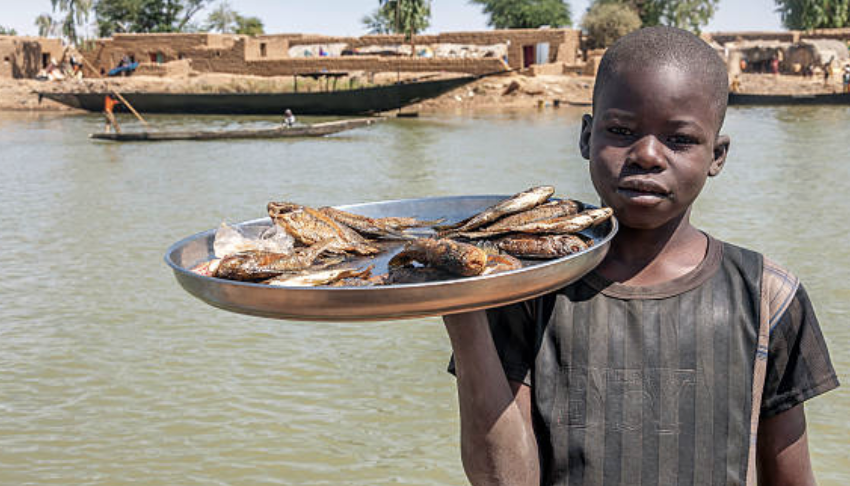
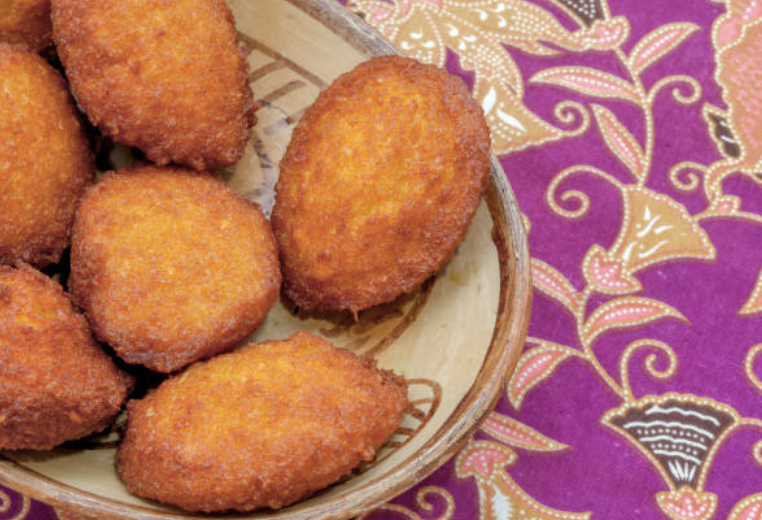
I have often thought of the boy since coming home, and am guessing that he probably worked at the market, as the vendor nearest to which he had set up bed for the night seemed to know him. Perhaps he ran errands for him? Perhaps he sold the fried millet balls that there were ubiquitous along Chad’s streets and markets.

IMG_4030 (1)

I thought back to the street kids and other orphans I had met along my travels – including Sarat who delivered me my newspaper each morning in Phnom Penh, and Hoa, the jasmine seller whose shared dwelling had been burned down and had come up to my restaurant dinner table and showed me the images on the front page of the same paper.

UNICEF estimates that the number of orphaned children has risen by more than 50 per cent in sub-Saharan Africa over recent years, where an estimated 12 million children ages 0–17 have also lost one or both parents to AIDS.

Orphans and other vulnerable children are at higher risk of missing out on schooling, or living in households that can’t ensure food security. They are also prone to suffer from anxiety, depression and are at a higher risk of several diseases. Whilst other family members, or even the community takes in many orphans, there are others, probably like the boy I saw who has nobody to go.

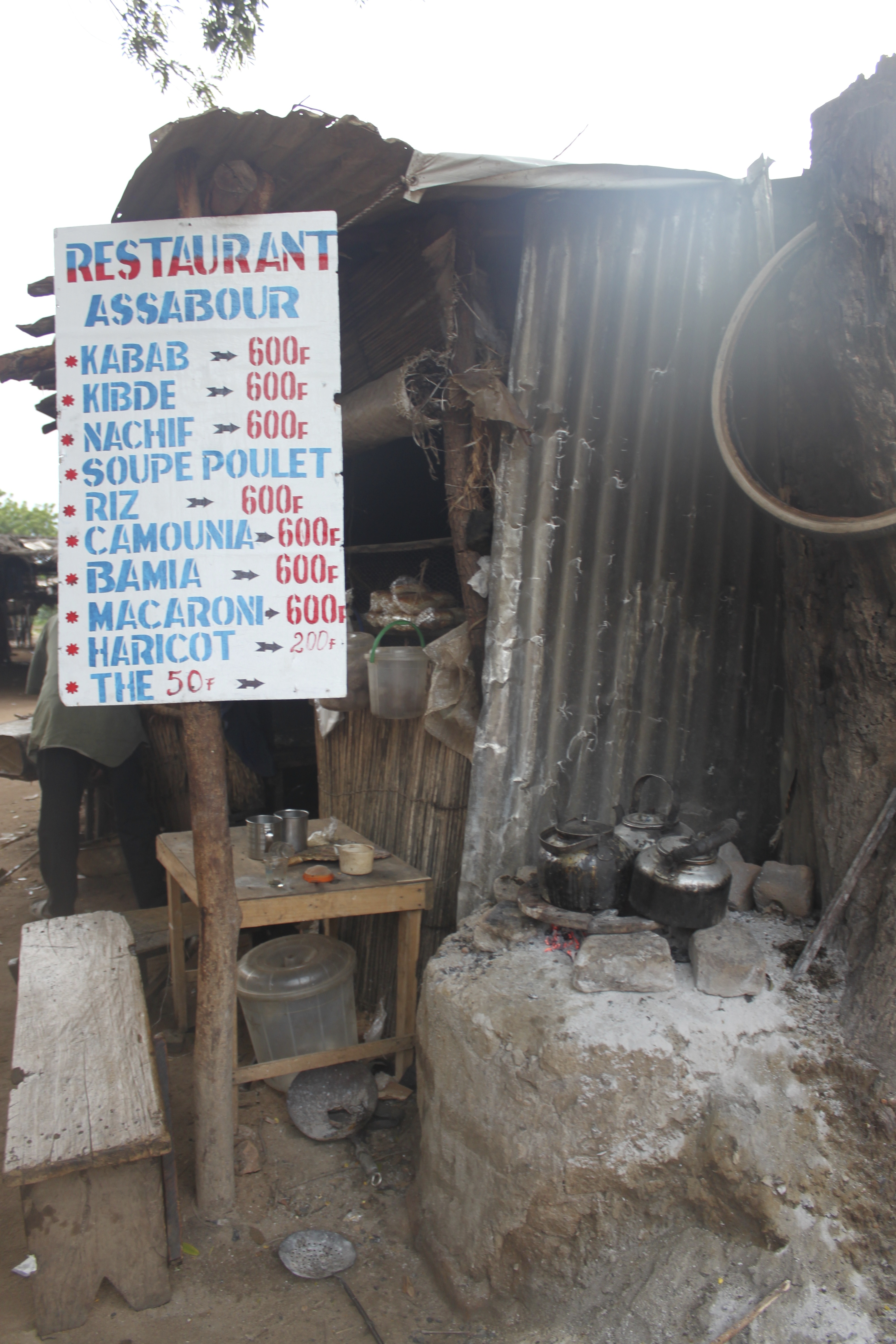
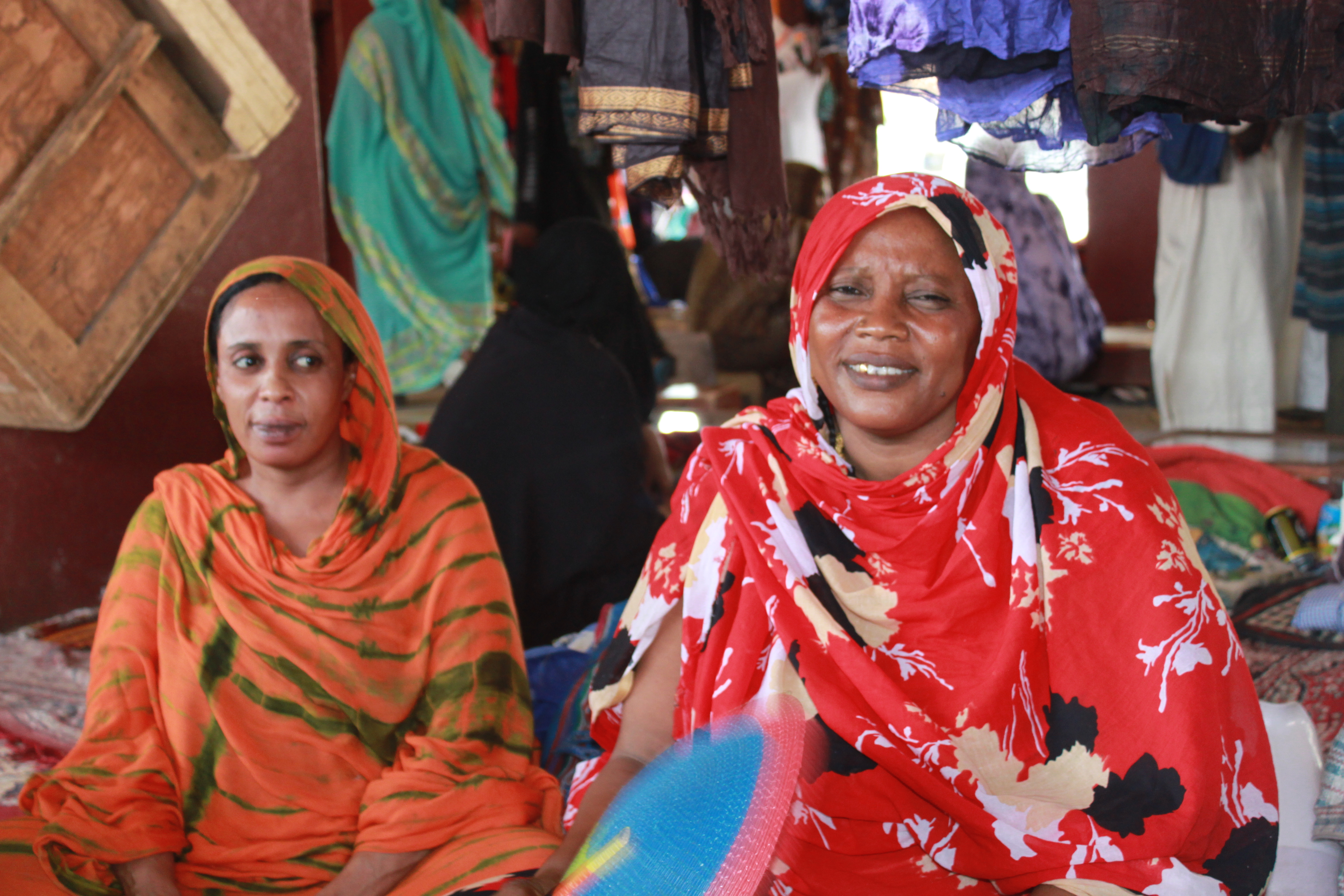
The day before leaving, I visited the Marché Central in N’djamena. It was a giant, colorful and claustrophobic place. Bedouins had brought in giant baskets of tempting dates, all sorts of meat was being sold in the stifling Chadian heat, and a continual broadcast of hundreds of car engines that were left running in the middle of the market deafened out any other noise.  Taking photographs is dissuaded in N’djamena, yet a group of Muslin women selling saffron, other spices and perfumed oils invited me to sit with them before allowing me to take their photo.  Speaking to them, I discovered that many of the market vendors were not Chadian at all, but from Congo, CAR, Guinea, even Darfur.  I wondered whether their own parents had made the long journey over from their homelands with them, or how many had started off their young lives like the little boy I had seen.

IMG_4043

As Summer ends in Canada, and my own eight year old boy goes back to school this week, I reflect on his life and think how the most stressful thing he has to worry about is who to play with on a day-to-day basis, or how to avoid eating his vegetables.  I find myself increasingly grateful that I am able to provide his little self with everything he needs.  I then send a prayer, a thought of hope all the way to Chad hoping that somehow the boy in the market will receive it.  It’s the least I can do.

Millet croquettes

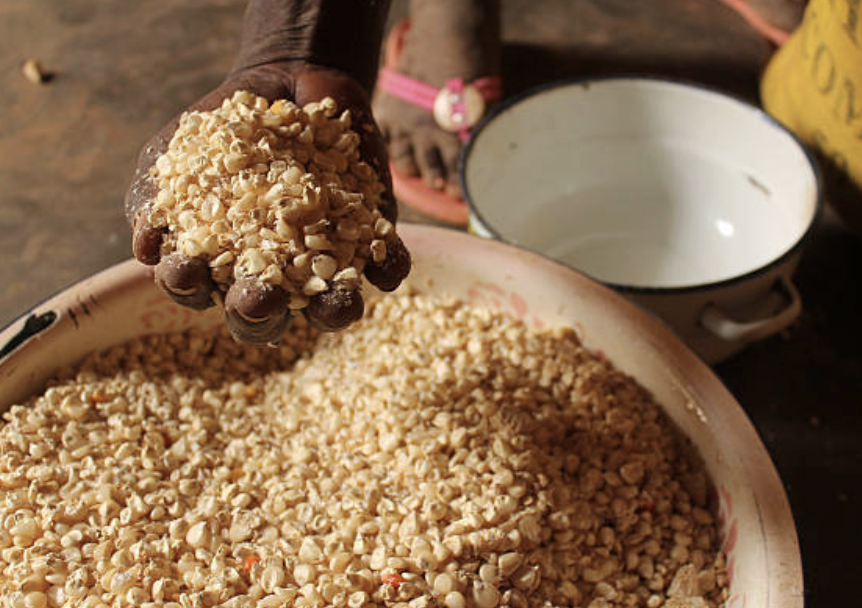
Fried millet balls are a typical Chadian street food, which are served with different dipping sauces. Millet being a staple grain in the Chadian diet, these are my own version with onion and ginger.  You can also add fresh herbs or other spices to the mix.  I served mine with a little peanut sauce, but they are just as good eaten alone.

Ingredients:

A cup of cooked millet

One onion

A knob of ginger

½ cup of flour (any type of flour works well here, I used chickpea flour as it fries nicely)

An egg

½ cup water

½ teaspoon paprika

Salt, pepper for taste

Oil or ghee for frying

Method:

Cook up the millet as per pack instructions. In a large bowl mix all the ingredients into a thick paste. Adjust the mixture with more or less flour until you get the right consistency. Form into bite-sized balls and then fry until golden brown on each side. Serve immediately.

Cukes for a Dollar

Why Adelaide Central Market Is Still the City’s Best Table

Travel writing styl

“Cukes for a dollar, five bags left.” “Lamb chops, perfect for the barbie tonight, 10 for $10 bucks, get ‘em while you can!”

It’s ten to three on a Saturday afternoon and the market vendors are auctioning off their food, bellowing out prices at the tops of their lungs. It’s the middle of summer and the market won’t be open again until Tuesday, and they need to sell off what won’t last until then. Some of them get poetic, most joke around, but they’re always charming.

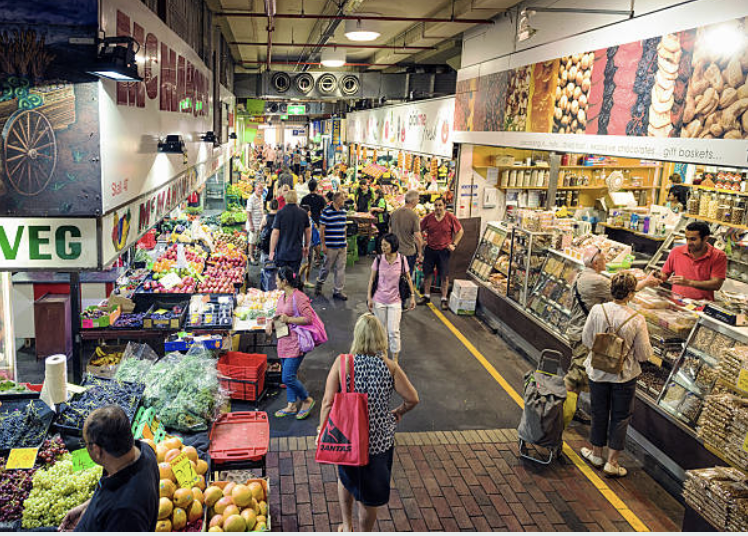
Growing up in Adelaide, I had never thought that this didn’t happen at other markets, yet every time I go back to the Adelaide Central Market, I realize that I haven’t seen this done much outside of Australia, and I miss it. It’s becoming rarer as society becomes more apologetic and careful. This auctioning off of food isn’t actually an Australian tradition. Back in the Mediterranean Middle Ages, subsistence farmers and fishermen would bring their surplus produce to the town to be able to pay their taxes, buy productive assets, send kids to school.  They would then stay just long enough to be able to sell what they had on hand, and back home they’d then go.   If something didn’t sell, they’d then reduce their prices at the end of the market day.  As I get in my last spoils, the Greek fishmongers are selling off their barramundi, the Italians their juicy-red cherry tomatoes; it’s as if their ancestral ghosts are here with them today, whispering the best prices in their eager ears.   

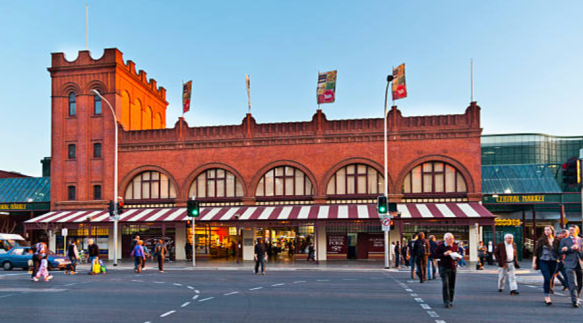
Just like in days gone by, when bazaars were established along trade routes, the Adelaide Central Market, known as “the heart of Adelaide”, is located in the middle of the city, attracting vendors from all over South Australia. Adelaide is also known for being one of the world’s best laid out cities, which makes the market easily accessible to its inhabitants whether they’re from the North, South, East or West of town.

I first visited the market as a little girl growing up in suburban Adelaide. Back then in the seventies, if you were an European immigrant family like us, you had to make a small effort to get your goat cheese, prosciutto, and olives; so families like us, would seek out treasure troves like the Adelaide Central Market, as well as small specialty stores they then called, ‘Continental’ stores.

Back in those days, I was teased for my strange smelling lunch box, yet today, Australian cuisine, is in my own humble opinion, some of the world’s best, merging Asian, European and Middle Eastern flavours.

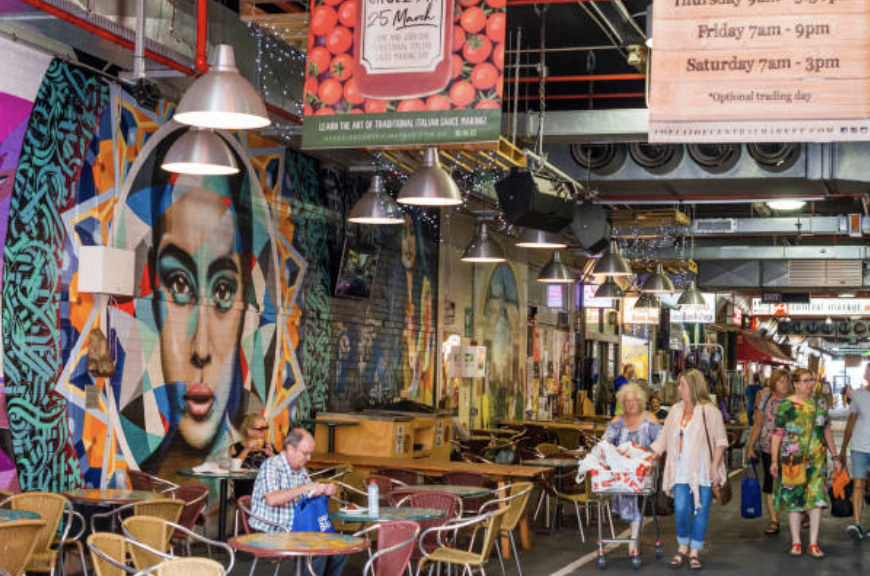
So it’s no surprise that I have always felt at home in this place; at home with the late afternoon food auctioneers, more comfortable sitting on a chair in the middle of the market than in some swank, inner-city café.  That’s the other thing about the market, much like the bazaars of the past, the market is chock full of rustic little cafes and restaurants.  Old timers who have been coming to this market for decades meet up with friends for a cappuccino, a glass of vino, sharing their space now with hipsters, discerning foodies and us die-hard market lovers.

The market also remains affordable, when I first moved out of home, and having to live on an entry-level public servants income, I would walk over from the government office I was working at, and walk back with bags laden with Turkish pide, dips, cheeses, sour dough bread, that season’s honey from the Honey and Soap shoppe (which is still there and still has the town’s best variety of natural soaps). I still remember the little yellow buckets of Kalamata olives from the Olive Tree, that I paid a friendly five dollars.

Probably instinctively knowing then that I would not stay in Adelaide forever, I would gravitate towards the Adelaide Central as if it was some type of home away from home, and now, whenever I go back, it still feels like a visiting a favorite old friend.

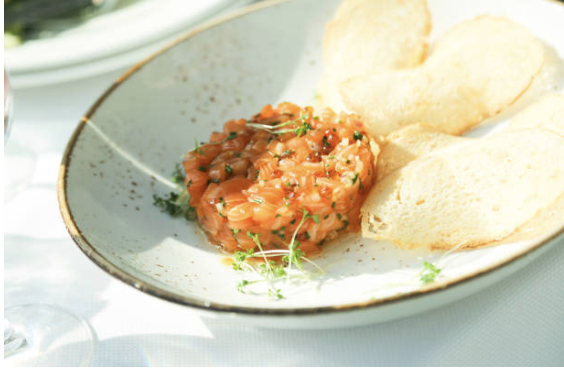
Salmon or Tuna tartare          

For this blog, I chose a recipe my niece had made when we went to the market a few months ago, which I also hope plays homage to the habits of market vendors of yesteryear, as well making use of the fabulous fish available in South Australia.  In the early days of the market or bazaar, not having the comforts of refrigeration, vendors would need to find innovative means in storing and preserving food. By adding spice and lemon juice to fish, it causes the proteins in the seafood to become denatured, as if being cooked. When buying your fish, make sure to let your fishmonger know it’s for tartare, or ask for sushi-grade fish, which is the freshest. (If I have time, I tend to freeze my fish first, which makes it easier to cut). Serve with prawn crackers or toasted baguette.

Ingredients:

  • 1 lb sushi-grade Tuna or Salmon
  • 2 tablespoons extra-Virgin olive oil (or sesame oil)
  • 2 tablespoons of capers finely chopped
  • 1 finely chopped shallot or 2 finely chopped green onions
  • 1/2 tsp red pepper flakes, or 1 small chilli pepper, chopped finely (seeds removed)
  • Juice of 2 lemons or 2 limes
  • Salt and freshly ground black pepper to season, taste
  • A smidgen of wasabi paste or a little horseradish for extra kick

Method :

Chop the fish into very small pieces. Place in a large bowl and mix in the rest of the ingredientss. Add salt and pepper to taste. If you want the mixture to really absorb the ingredients, place in the fridge for an hour.

Garnish with more lemon or lime wedges and some slices of avocado. (If serving for a special ocassion, cut out a square piece of nori roll paper, put a round cookie cutter on the nori, fill the mould with the tartare, lift off mould to leave a perfect size of tartare).  Enjoy et Bon Appétit!

Nostalgia noodles, the markets of Burma by guest blogger Tihana.

Aside

NOSTALGIA NOODLES by Guest Blogger, Tihana

I met Tihana about seven years ago in a writing class.  She wrote about ghosts from the Orient and characters who practiced Kung Fu and supped on shark soup. When her latest travel adventure took her to Burma, a country at the top of my future travel list, I made her promise to blog for me.  Nostalgia Noodles takes us on a hungry train ride from Mandalay through breathtaking hills and valleys and on to Hsipaw, North East of Mandalay.   The train built by the British was designed to improve trade to this Northern State, once under British rule.  All on board!

I had been on the train since 4 am that day and had only had a boiled egg and a piece of white bread for breakfast.  There hadn’t been very much to buy at the Mandalay train station asides from some packets of wet tissues and water bottles with broken seals.Image

 The train journey to Hsipaw was supposed to take about 11 or 12 hours, more or less, rather more than less, actually, because trains in Burma are notoriously unreliable.

I had bought an Upper Class ticket, thinking that perhaps tea would be served, or some sweets, or even lunch. It wasn’t the case though, and the only notable advantage of paying 8 USD instead of 4 USD for the Ordinary Class was the access to cushioned seats.

The other passengers in the carriage were mostly foreigners. A friendly Australian traveler shared a mandarin orange with me. Her husband was commenting about the terribly sweet instant coffee they serve in Burma, the only type one seems to find there. From the window, I was looking at the hills and fields, chicken running around shacks, children running around cats and dogs, all bathed in the yellow light of the January sun. The scenery was enchanting. However, I was getting hungry and was slowly chewing the acidic little mandarin, hoping for a proper meal soon.

IMG_2407

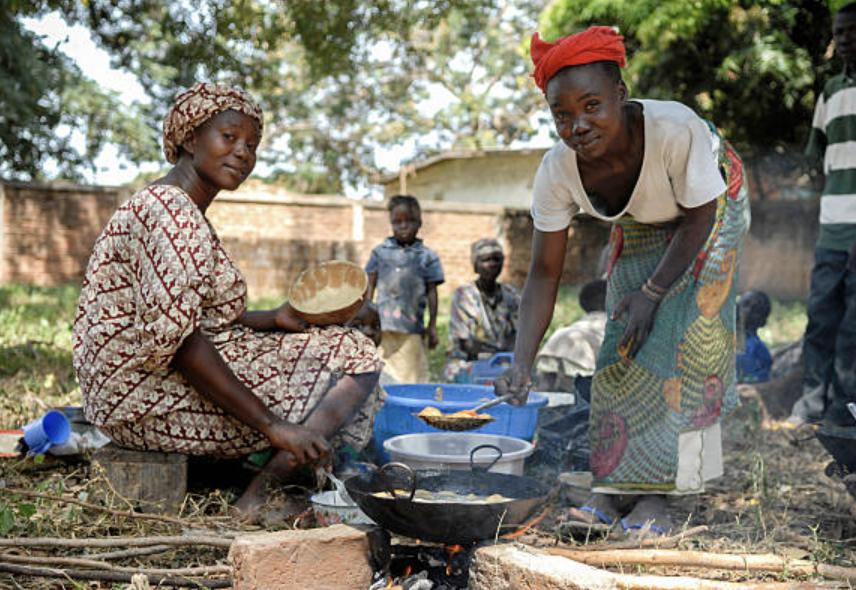
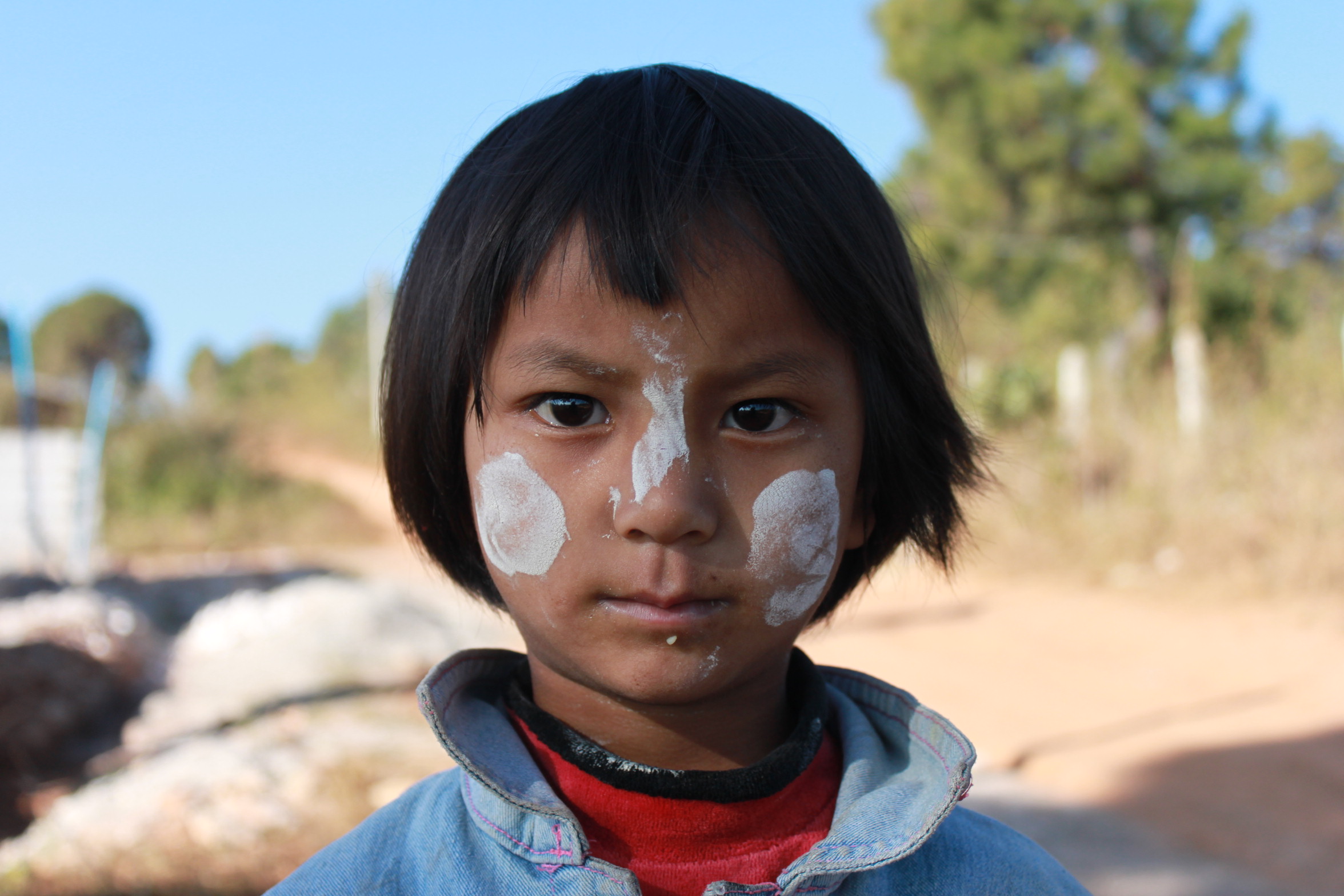
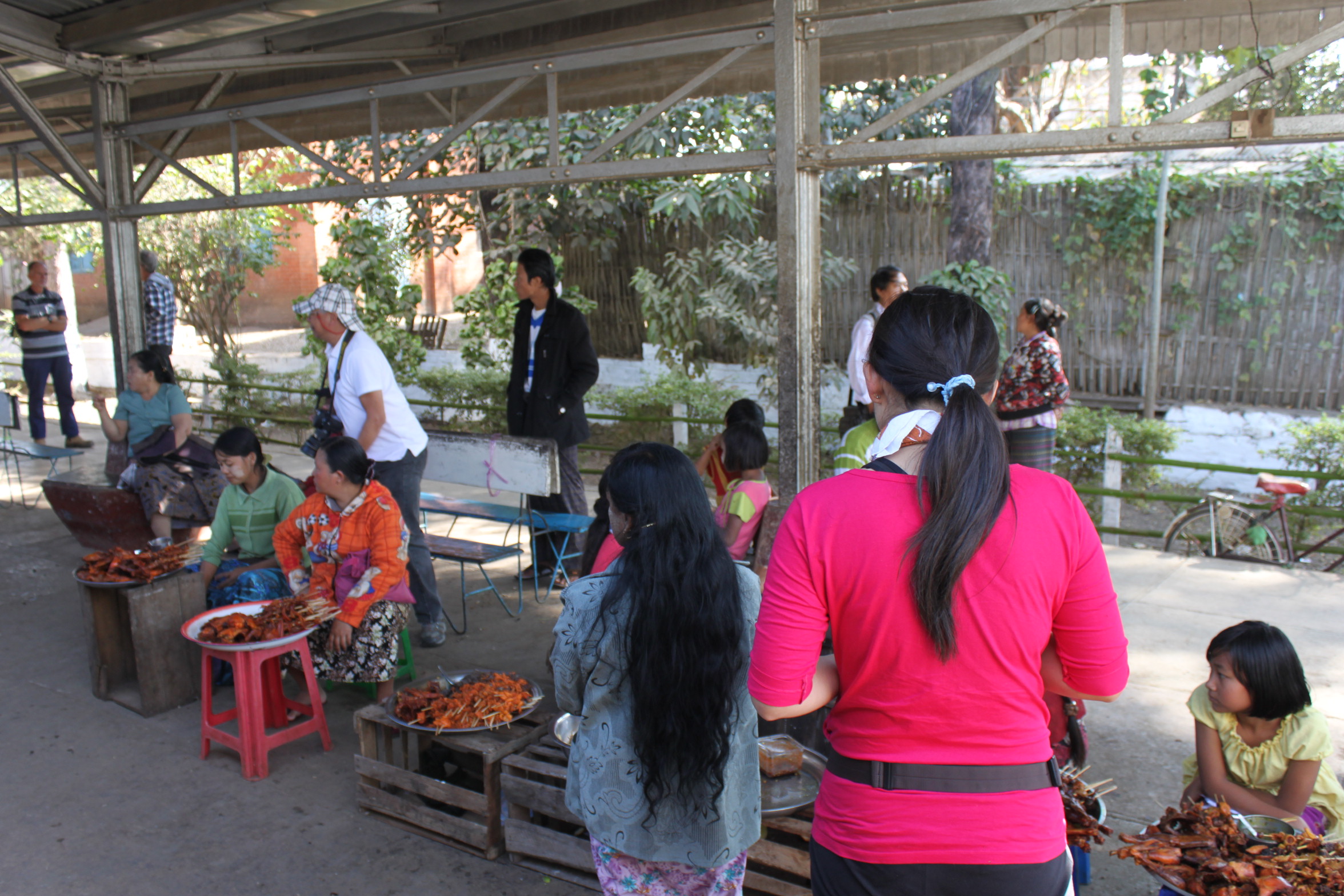
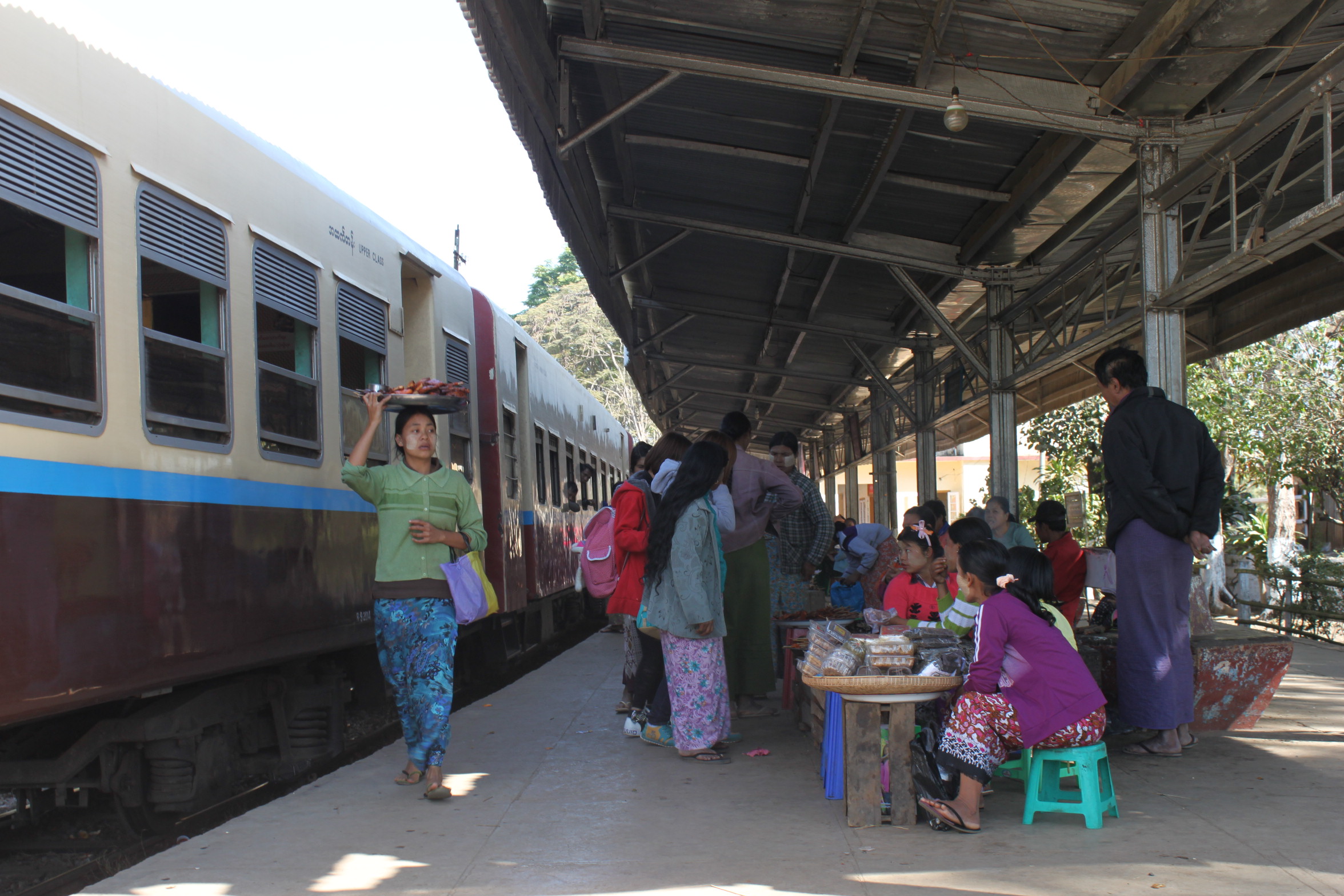
Then, at one station, where we should have stopped only 3 minutes or so, the train came to a complete halt. Many passengers stepped outside. I did as well, my camera ready. On the platform, in the shade, women in colorful skirts, their cheeks painted with the white thanaka paste, were selling their wares: eggs, packages of cookies, grilled chicken, pork and unidentifiable vegetables on skewers. One woman, crouching behind her portable stove, was frying what looked like tiny plump chickpea flour cakes. A half a dozen of those cost 200 kyats, or 25 cents. I ate twelve cakes, savoring each bite, letting it slide down my throat, still hot, very greasy, the most delicious street food, feeling the hunger disappearing.

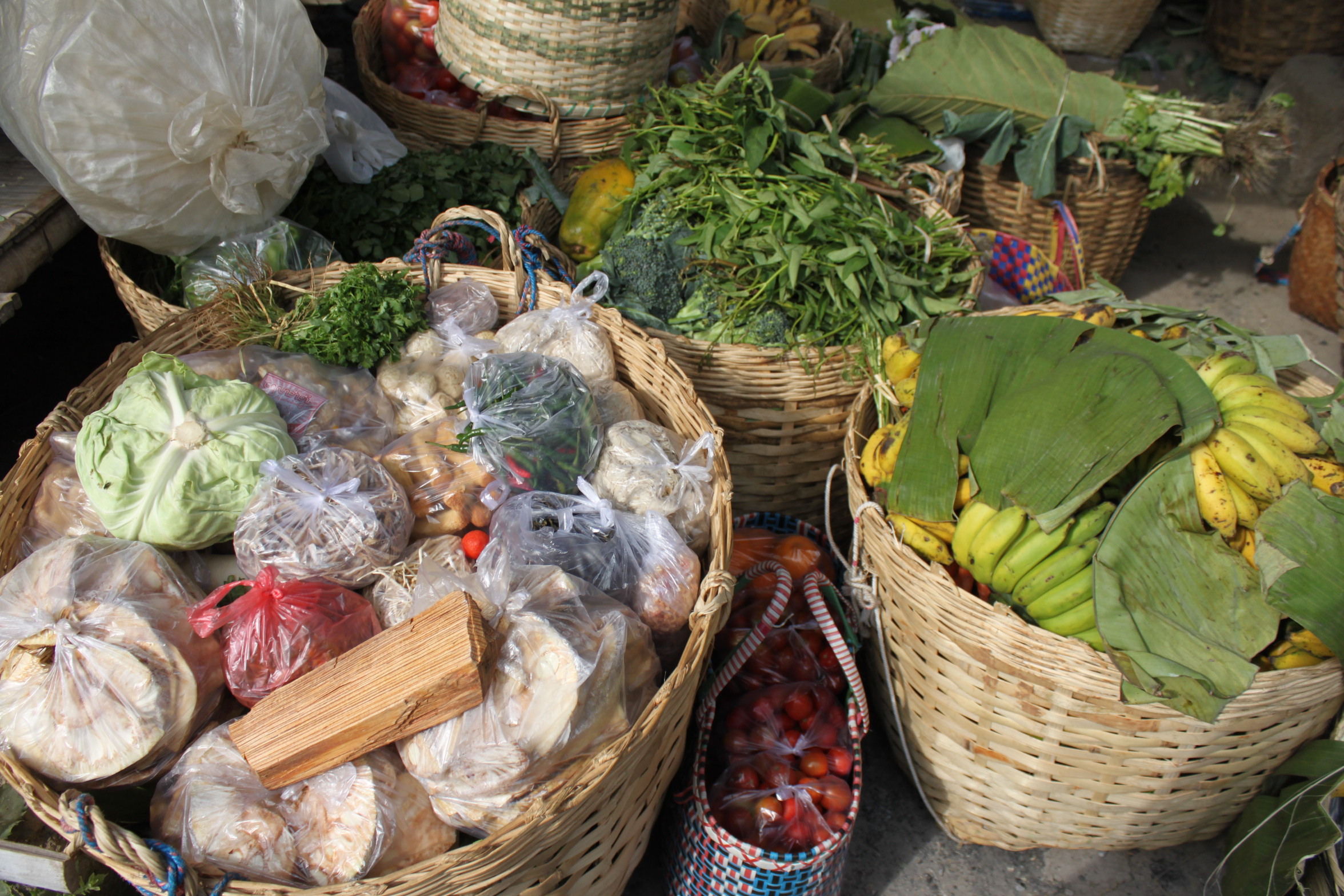
Everywhere you go in Burma you will find a market, big or small, and see street cooks and street vendors, mostly women, squatting next to their baskets and stoves, sometimes behind stalls and tables. For a few hundred kyats, never more, you can buy grilled corn, grilled animal bits, fish balls, spicy roasted nuts, fruit, sweets, flat soy patties, noodles, and of course, these wonderful chickpea cakes.

3Image

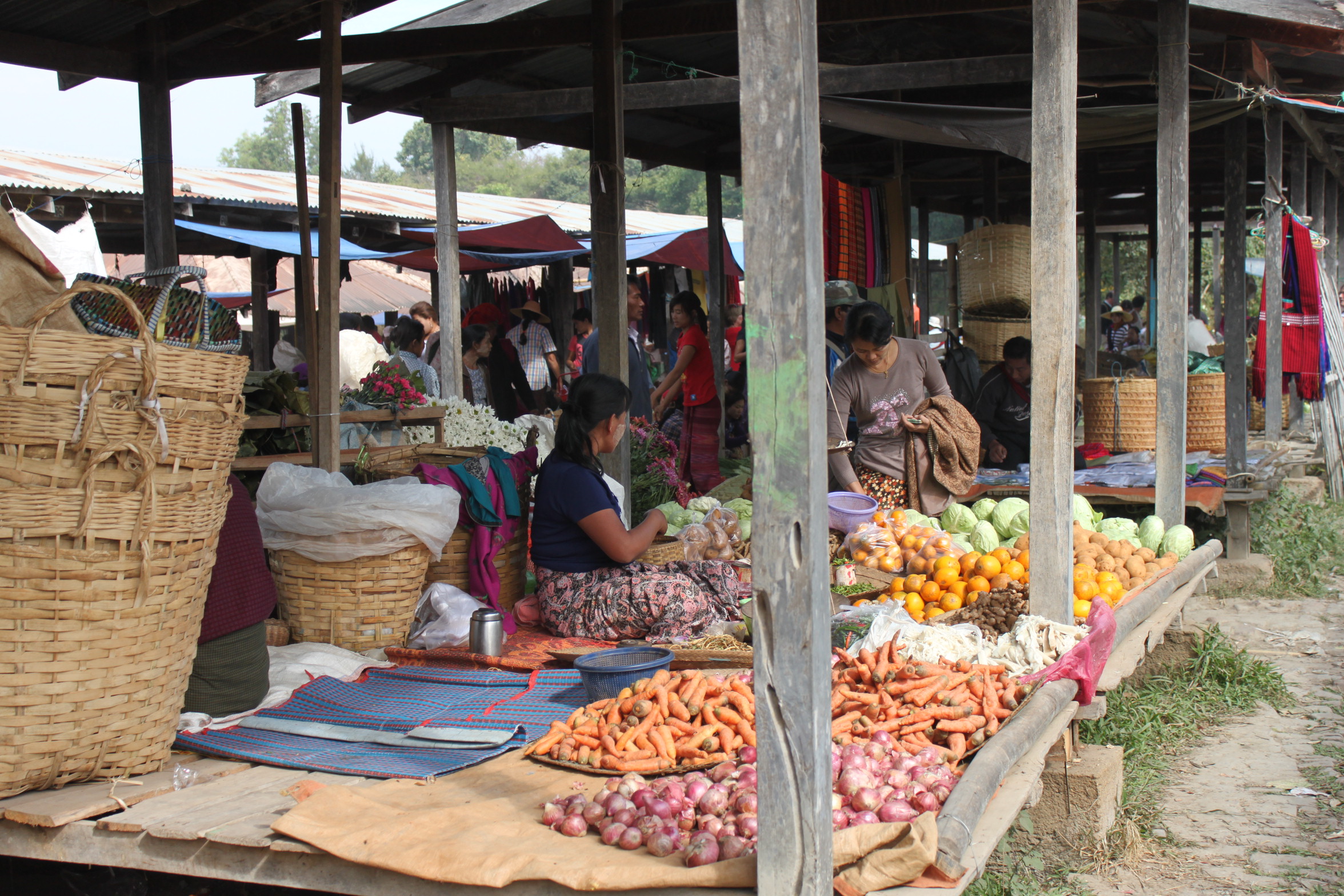
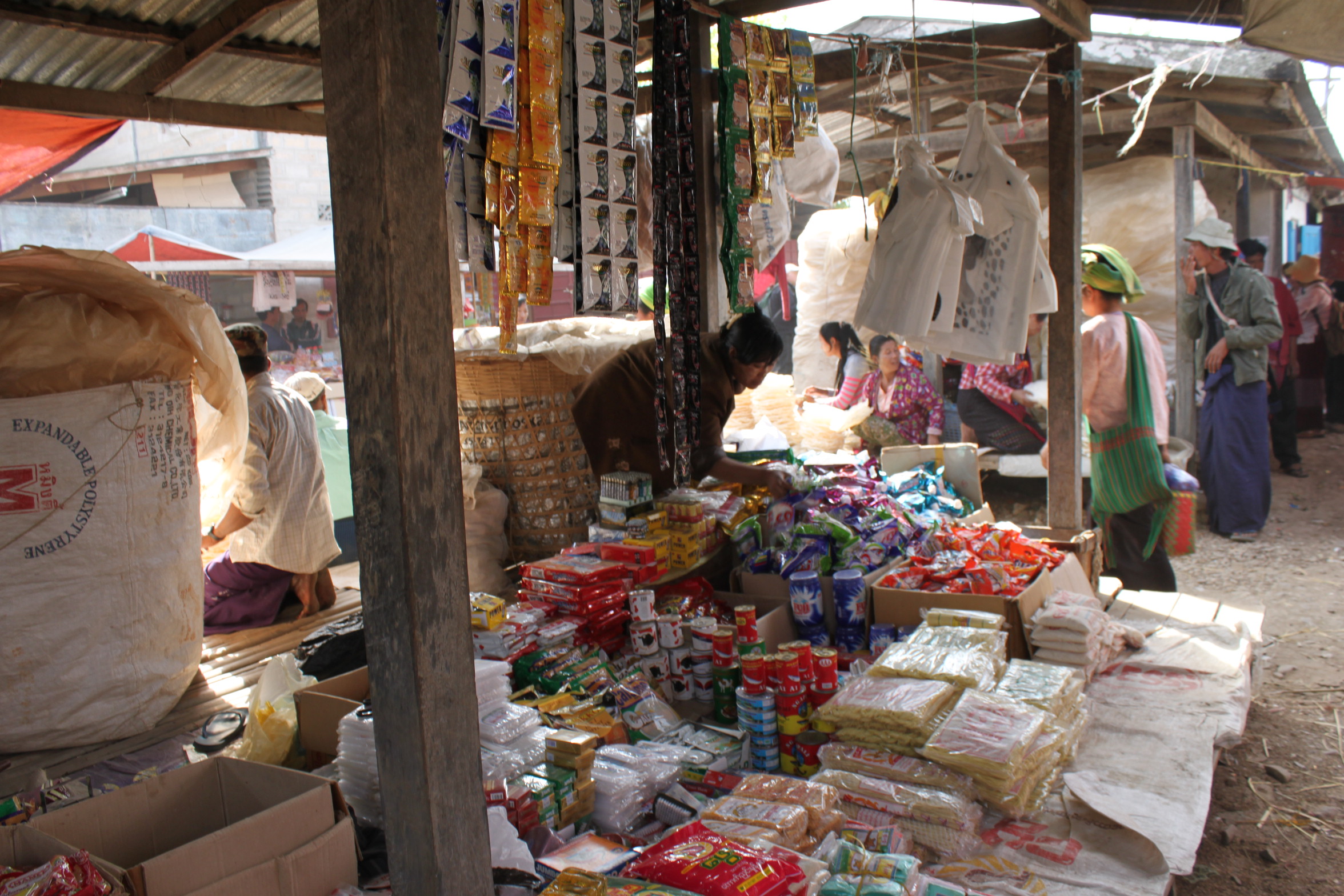
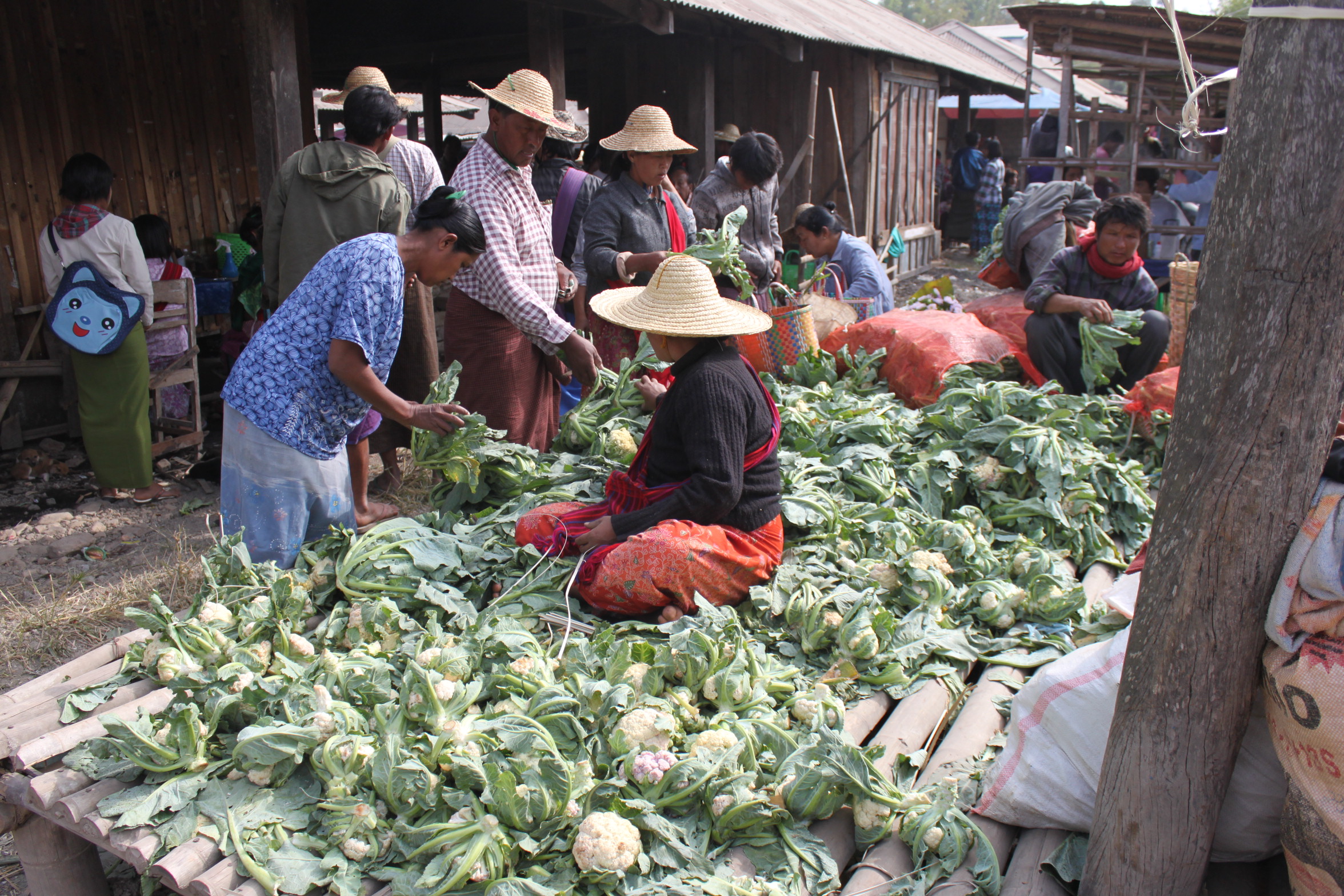
The big markets, such as the ones around Inle Lake, where villagers flock to every few days to buy and sell and socialize, are an experience by themselves. Many villagers reach them by small, motorized boats that are parked, almost piled up, on the lakeshore. The markets are huge and sprawling; I found it easy to get lost in them for a couple of hours, wandering from stall to stall, looking around, and taking photos.

IMG_3270

The vendors aren’t pushy, as they can be in other countries. They sit and chat with their neighbors, arrange and rearrange their products. The women sometimes laugh, sing quietly or cajole their children. There is no rush, no real sense of urgency; things just go by. From early in the morning until the afternoon the market is living.

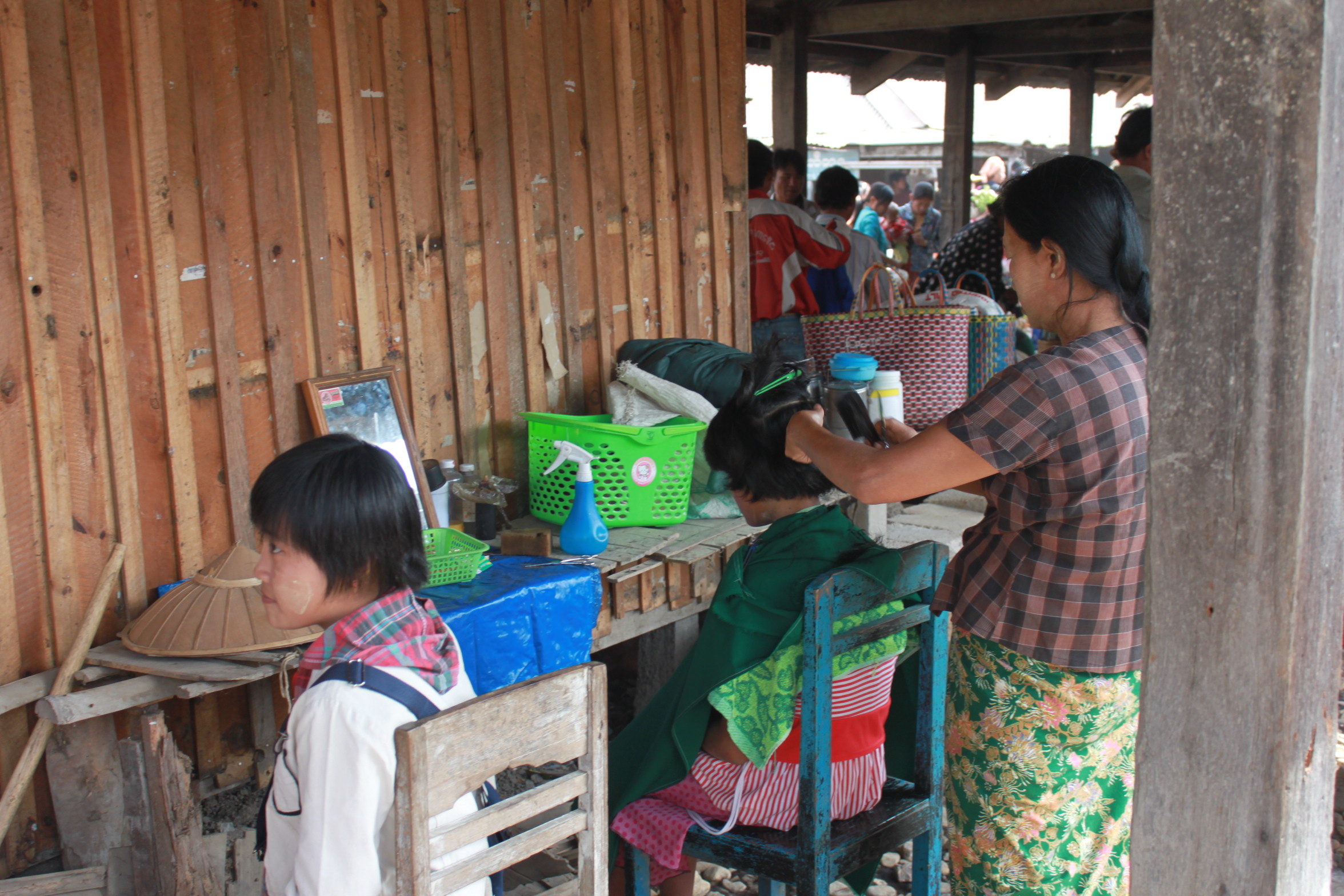
On one side of Nampan market, on the southeast side of Inle Lake, I saw a few hairdressers and barbers doing a brisk trade. The ground was scattered with long black hairs. Normal, I thought, market day is also haircut day.

IMG_3257

Next to the hairdressing section were rows of buffaloes and carts, surrounded by flies, and then several stalls of beautiful, colorful flowers one should buy as offering to the temples. There were stalls with Chinese beauty products, with all sorts of knives, with medicines of unknown origin and expiry date, with mountains of rice and hills of cauliflowers, with baskets of tomatoes and bunches of herbs. And of course, there were food stalls, where one could sit down, take a rest, slowly slurp a bowl-full of hot noodles while watching puppies, chicks and babies play around the tables.

IMG_3264

IMG_3254

Burmese cooking has an undeserved bad reputation. It’s bland and oily, you may hear from disgruntled travelers. To those complaints I have three simple answers: request chili sauce, don’t eat the oil that sits on top of curries, and get inspired before you travel by reading Naomi Duguid’s fantastic book “Burma, Rivers of flavor” You will find in Burma plenty of tasty curries, all sorts of fresh salads including a slightly bitter tea leaf salad that balances well the richness of the curries, stir-fried vegetables, rice, noodles in soups, noodles without soups.

Alongside the chickpea cakes, the noodle soups are my favorite Burmese dishes. I regularly had them for breakfast, but also for lunch. They were such a satisfying, comforting meal, a much nicer way to start the day than with the ubiquitous fried eggs. I particularly loved the ones I had in Hsipaw, in the cold early mornings before going trekking for the day.

There are plenty of variations, as Duguid’s book illustrates. Some of them, called mohinga, are made with fish-based broth. Some are made with chicken and some with chickpea flour, which gives the soup a silky texture.

IMG_3274

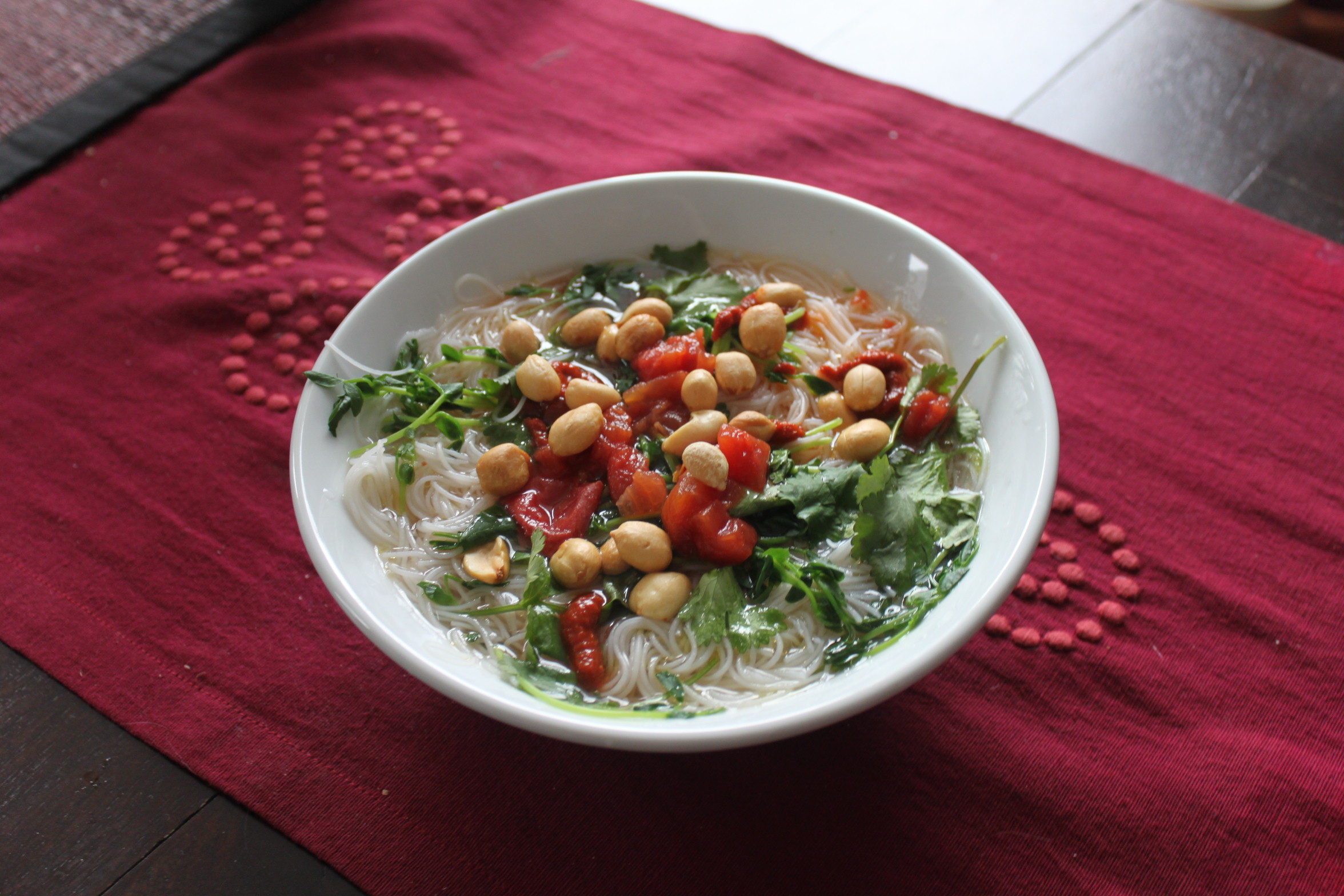
Back at home, I tried to make my own, based on a combination of Duguid’s recipes and the ingredients I could easily find in Canada.

Here’s what I came up with, and what I will eat when nostalgia strikes. Unfortunately though, I haven’t found yet a recipe for the chickpea cakes.

NOSTALGIA NOODLES

(For 1 person)

IMG_3567

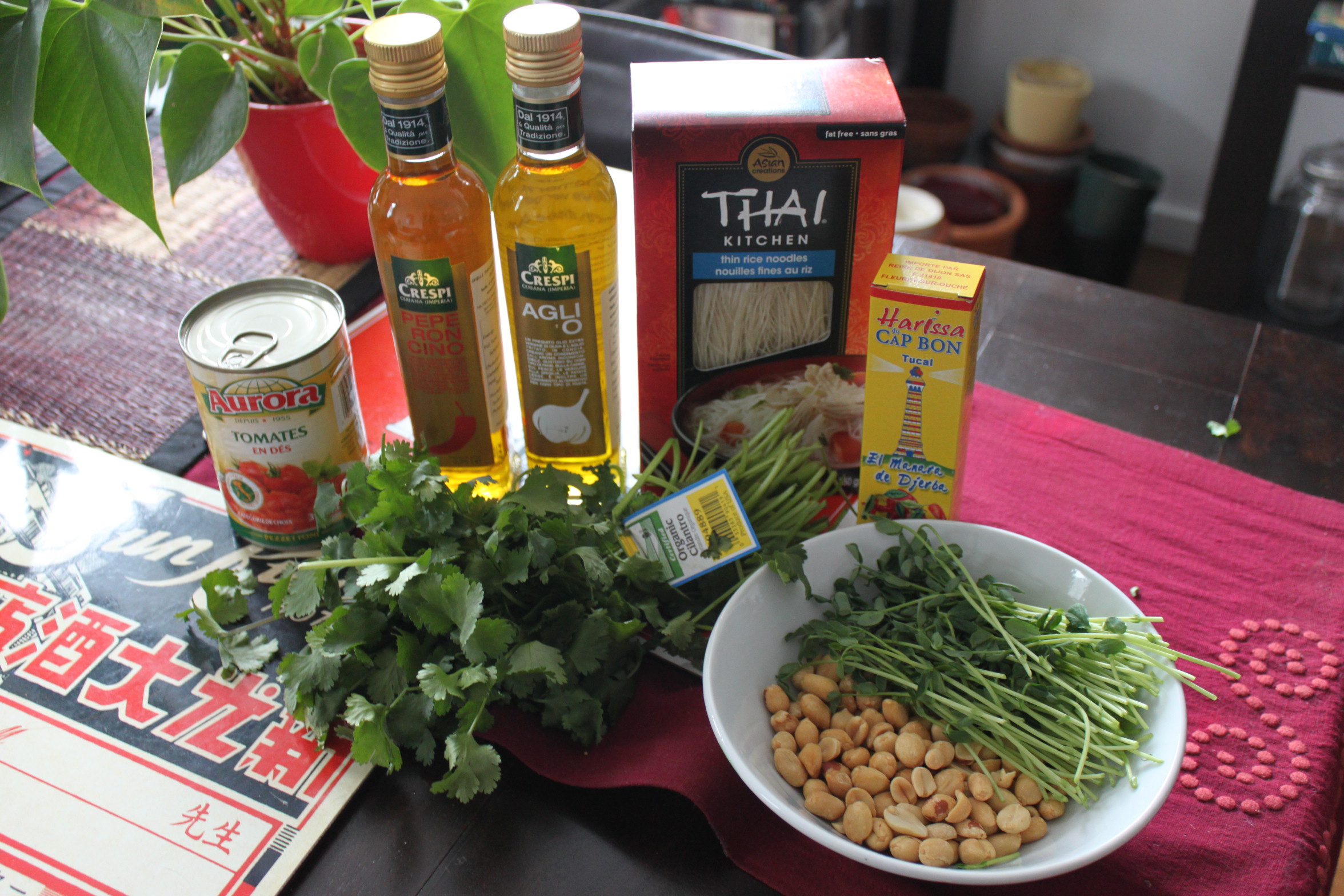
Water, just enough to cook the noodles

Thin rice noodles, fresh or dry

A few pieces of garlic, chopped

A small piece of fresh ginger, chopped coarsely

Garlic oil

Chili oil

(You could make your own, but if you don’t want to, these oils can be bought already prepared at any better supermarket or Italian grocery)

A teaspoon or two of harissa paste (or any similar thick spicy tomato paste)

A handful of roasted peanuts

A small bunch of pea sprouts

Chopped tomatoes, fresh or from a can, a spoonful or two

Two or three dried chilies

Salt

Ground black pepper

Lots of fresh coriander

Put the water, chopped garlic, ginger and salt in a pot. Cook the noodles in the water according to the instructions in the packet. Add the pea sprouts 15 seconds before they are ready. Drain the noodles and pea sprouts while saving just enough water to have the noodles sitting in a soup without being covered with it. Pour a bit of oil over the noodles, according to taste. Add the rest of the ingredients, according to taste. Mix well. Eat while the soup is very hot.

IMG_3571

If you’re eating it for breakfast, do as in Burma and have it with a cup of black tea or sweet instant coffee. For lunch or dinner, pair the soup with a light lager beer.

The 100 mile diet, 1-day challenge, Atwater market, Montréal

A few years ago, Canadian husband and wife team Alisa Smith and J.B. MacKinnon put on their locavore shoes and decided to feed themselves food which they could source within a 100 mile radius from their home.

The couple relied on farmers markets, and local farms for most of their products, and the exercise became well known after the couple wrote about their adventures in the best-selling book : 100-Mile Diet: A Year of Local Eating (or Plenty: One Man, One Woman, and a Raucous Year of Eating Locally).  I hadn’t read it, so down to a popular cook book store I went. The owner laughed at me, “Man, I haven’t even bothered with that one, you just can’t do it over here, I mean can you?”   Tell Mira “NO” and her brain doesn’t quite register; surely I could do this, at least for just one day? I could forage, take out some of those preserves, butter my bread with marrow, skin a few street squirrels Girl Hunter style? Problem Number One – it’s the dead of winter. Problem Number Two – my garden is caked with three feet of snow.  Problem Number Three- whilst my palate has a renewed appetite towards meat over recent years, it rarely extends beyond the big three.

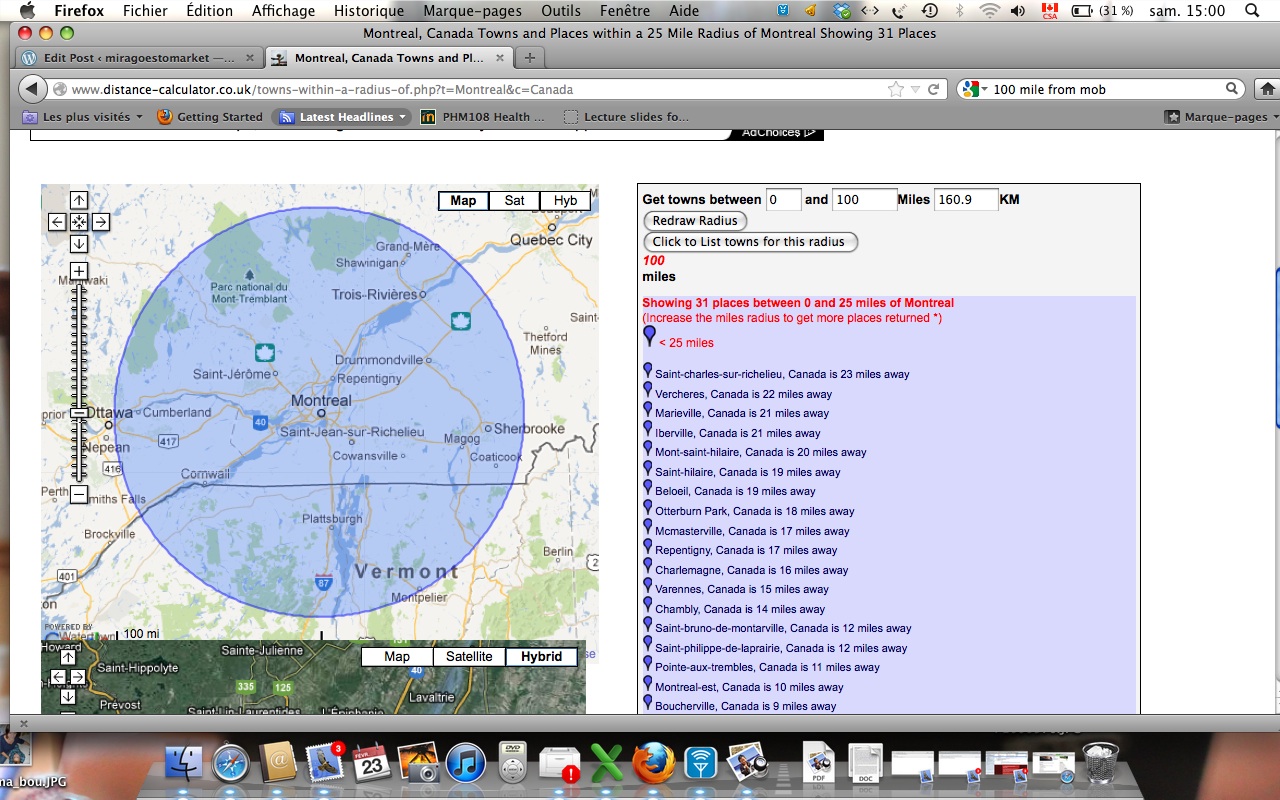
But, I was up for the challenge and decided I’d loca loca my way over to market and see what I could find. Before that, I did some mucking around on the net, and found a couple of tools to help me calculate a 100 mile radius from my house. This tool will provide you with a visual and textual breakdown of towns included in the 100 mile radius.100 mile radius map                                                                                                                                                                                                                                            The Atwater market is smaller than the larger local Jean Talon market, but I like it for this reason alone – its compact size makes shopping easy – you have one large fish store, several specialty butchers, two cheese shopees, and one bakery.  Montreal being close to the St Lawrence river, and the province being abundant in lakes, I am thinking there must be something fishy for me to find for dinner. Tough luck, whilst there’s plenty of the finned variety from Nova Scotia and New Brunswick, the nearest fish did his last laps in Maine.

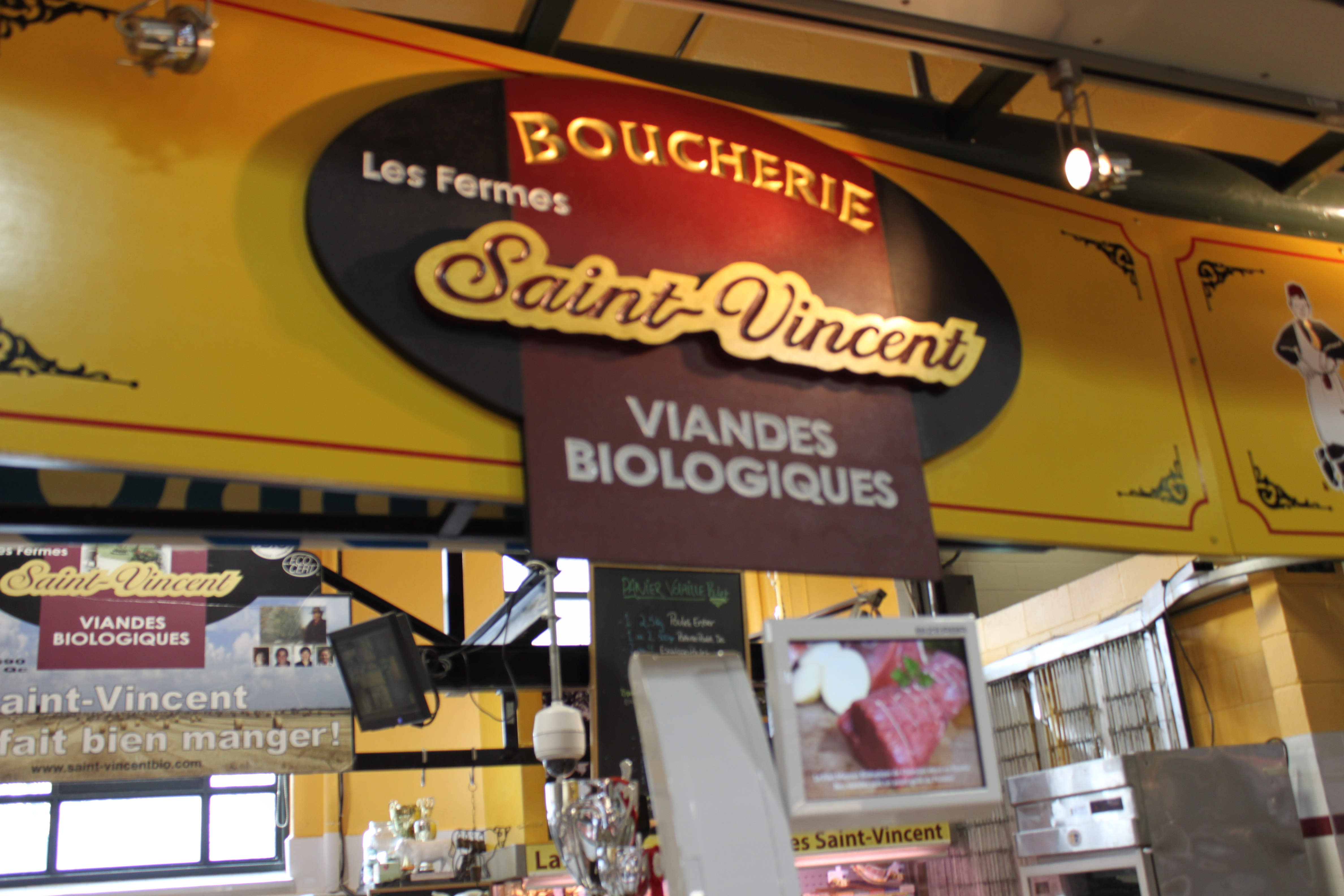
IMG_3520                                                                                                                                                           I keep on and meet a butcher from Saint-Vincent. “Where’s that I say?” It’s in the grid, and I buy fresh eggs (not even in a carton), some pork, lamb and beef mince (for work pot-luck pies) and a little bacon. It’s going well, but this does not complete a meal.  To the vegetable stalls, and whilst there’s loads of vegetables – most of them have accumulated several thousand frequent flier points on their way to market.    I settle on some potatoes, Jerusalem artichokes (for soup), and a kilo of apples and apple juice.  For breakfast I want to make pikelets – yet although I find some locally milled flour, its three times more expensive than what is in the supermarket.   Into the specialty food store, and there’s a proud display of Italian imported pasta, grains  – red rice from China, chickpeas from India, not a single grain from Québec.  IMG_3537

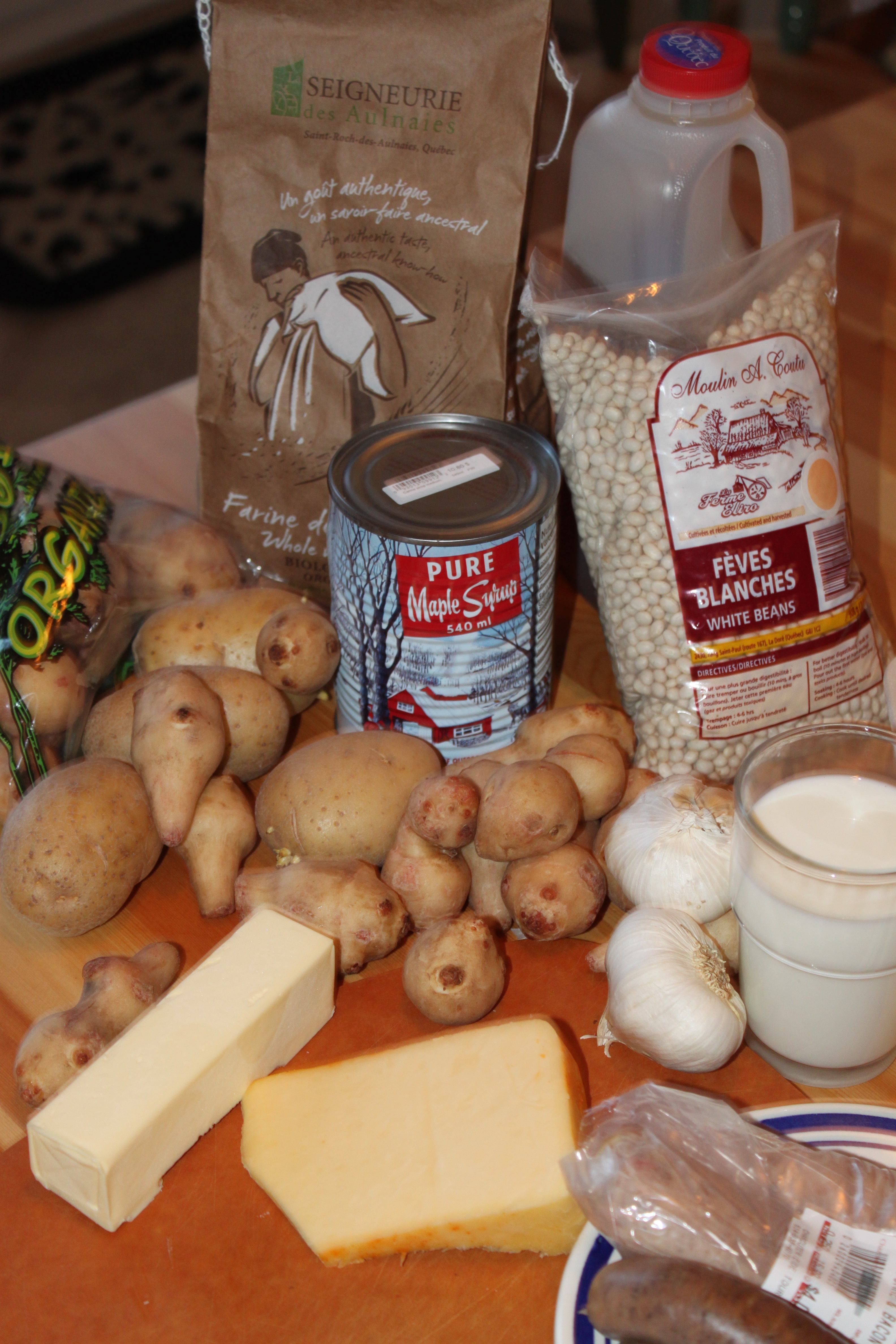
I’m getting stuck, and it looks like asides from a Jerusalem artichoke soup, which I can dress with some rosemary butter made  from the plant I have growing on my kitchen sill, it’s going to be a standard meat and potato dish.   I do yet another trip around the market, and then start thinking about my husband’s forbearers – what did they eat before there was imported chorizo and olive oils on every supermarket shelf? More so what did they do before the local greengrocer was pushed out of his shop by the big brother food corporations?   I then thought of my father-in-law, and on the rare occasion he cooked, he would usually prepare something from his hometown in Northern Quebec. That’s right slow cooked beans in maple syrup! Instead of breakfast, I’d serve the beans for dinner, but what with? Around the corner was my answer, a sausage store using biologically raised meat. I chose deer with apple and maple syrup.  I didn’t dare ask where the deer came from, so excuse me if old Bambi doesn’t fit in the map, but be happy he didn’t have to board a cross-Atlantic flight just to land on my plate. Back home, I unloaded my loot on the table, and figured I’d done a pretty good job.

IMG_3567                                                                                                                                                                       My menu would be:

  • Breakfast: Baby pikelets with apple butter
  • Lunch: Jerusalem artichoke potage with garlic and rosemary butter
  • Dinner:  Slow cooked beans with maple syrup & molasses  and deer sausage with apple.

It wasn’t too tough, but it was basic, with the biggest challenge being a lack of variety amongst the vegetables and grains.  I was happy to have a good selection of root vegetables on hand – including beets, potatoes, the chokes, and I think Quebec farmers do a good job in preserving these through the long winter months, but I wonder whether the local farmers market really is the right place for imported oranges and avocado? I had fun doing this, but seriously speaking, this is no fun and games matter.  As the world’s dependence on petroleum grows and gas prices increase, the food sold in supermarkets, and even some of the food in the market I visited today has travelled up to 1500 miles to get there. Most of the products on supermarket shelves can barely be called food – with something like 80% of packaged food containing two products – soya bean and corn, food that has been so fooled around with, it no longer resemble the crop it once was.

I live in Québec, where it’s especially tough to stay local, the winter is long, and I myself am in no way a purist, yet we can all do better.  Most cities, including Montreal do have community supported agricultural projects where people can sign up for a weekly fruit and veg basket for example.  Also, if you do a bit of research, most farmers would be happy to have you pick up your meat or dairy products from the farm itself – which if you have kids, is a great outing. There is a myriad of locavore online resources to help you plan your meals, and in my experience, preserving, saucing and growing your own is where the real fun lies – not only are you helping preserve scarce farmland, and look after our fragile environment, but you are keeping yourself healthy.  At the end of the day, I felt lighter, healthier and calmer.

IMG_3604

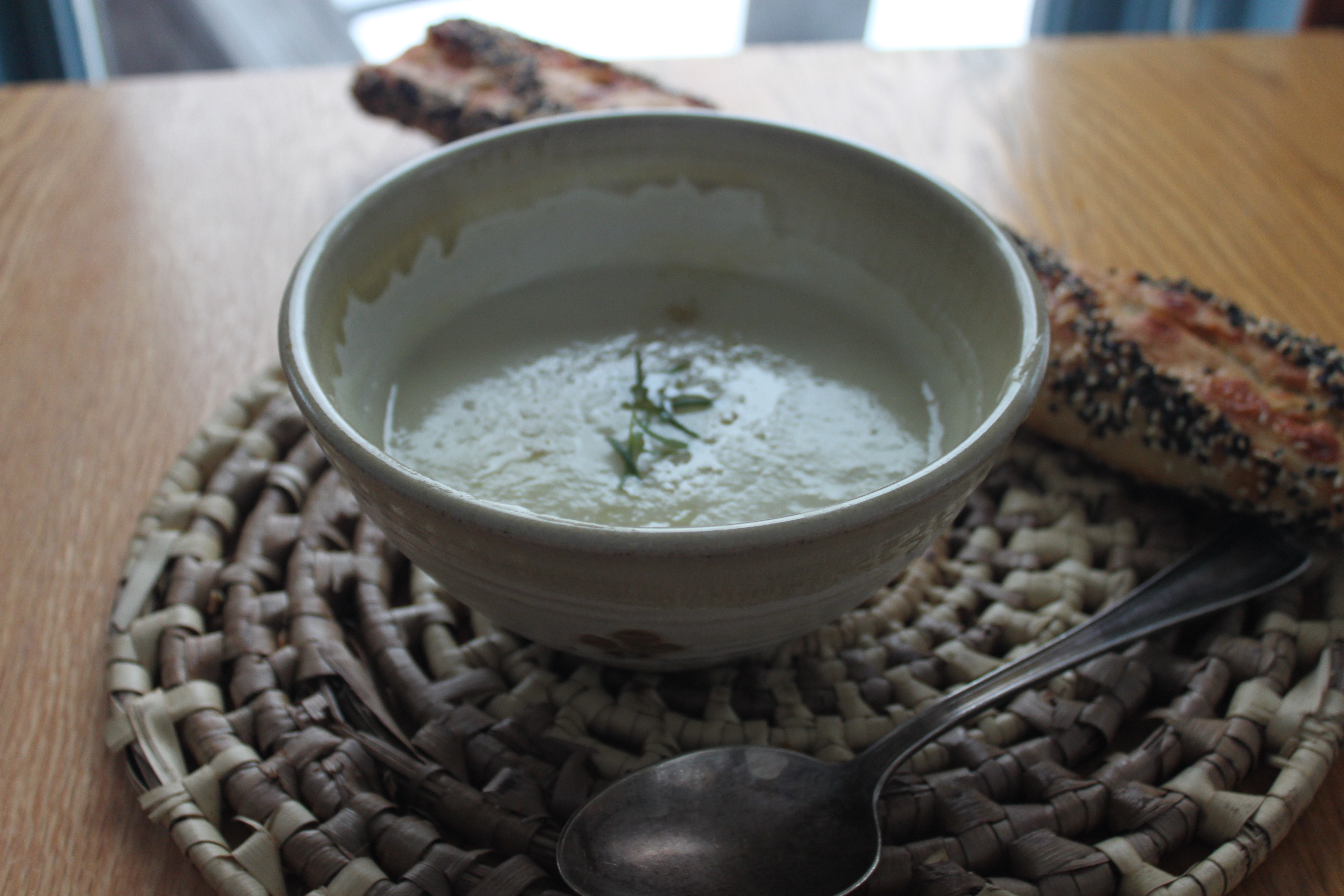
Jerusalem artichoke potage with roasted garlic and rosemary butter dressing.                                                                                                

8-9 Jerusalem artichokes 

2-3 medium-sized potatoes

a liter and a half of vegetable stock

two knobs of butter

Sprig of fresh rosemary

2-3 bay leaves

3 cloves of garlic

Method

Peel and dice the potatoes and Jerusalem artichokes, place in saucepan and cover with vegetable stock. Add in the bay leaves.

Bring to boil, and then simmer until vegetables are cooked through.

Take out the bay leaves, and then purée the vegetables and stock in a blender with a knob of butter.

Put back into saucepan.

Finely dice garlic and rosemary, and then in a small pan, melt the other knob of butter and lightly sauté the garlic and rosemary (1-2 minutes).

Serve soup with the rosemary butter garnish.

For information on Atwater market, visit: http://www.marchespublics-mtl.com/English/Mission/

The Stones tell Stories in the Bohemian and Beautiful Bale, Istria, Croatia

I’ve always been a fringe dweller, seeking out the sacred and surreal, most at ease in the company of fellow misfits, romantic runaways, free thinkers, drawn to dive bars and hidden away cafés, have lived in seven cities, am best of friends with Scientists and Surgeons, as well as poets and petty crooks.   If I could conjure up an ideal place to live, or just somewhere to visit over and over again, it would involve the sea, the sun, music (preferably Jazz), great food, a foreign language, and all of this shrouded in some kind of mystery, magic, something a lot like the town of Bale in Istria, Croatia.

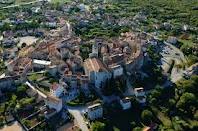
Winding up a stone paved drive, some 140 metres above sea-level, Bale is a small hill town, which is crowned by the baroque St Julian church, only five kilometres from some of the most pristine (and quiet) beaches in Istria, Croatia.

Whenever we travel, my husband usually takes off early in the morning and does his fox-like circumnavigation of where we’re at.  In actual fact, I can thank him for finding many of the markets I have been to, as before I’ve even woken up from my jet-lagged slumber, he would have already scoped out half of his surroundings by bike, boat or foot.  And that’s how we found Kamene Price or  Stone Stories, a groovy treasure of a restaurant/hotel in the middle of this enchanting and bohemian town.

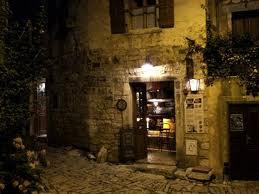
Misha, the chef, an effervescent and unassuming beauty from Dalmatia, poured us a drink and sat down to chat with us against the candle-lit stone wall.  She told us that the owner, a reputable photographer, likes to travel, and through his travels has made a lot of friends from near and far, and well, these friends would often visit him, and so he opened Kamene Price, first to have a place to entertain, but also because he loves to bring like-minded people together, to talk, to eat, to just be. There are poetry readings, theatre nights, and just a few weeks after our trip, Kamene Price also hosts a Jazz festival.  We were tired that night, so headed off early, as we had a long drive back to Italy the next day, yet we promised Misha we would call by before we left.

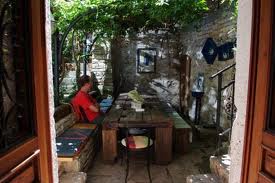
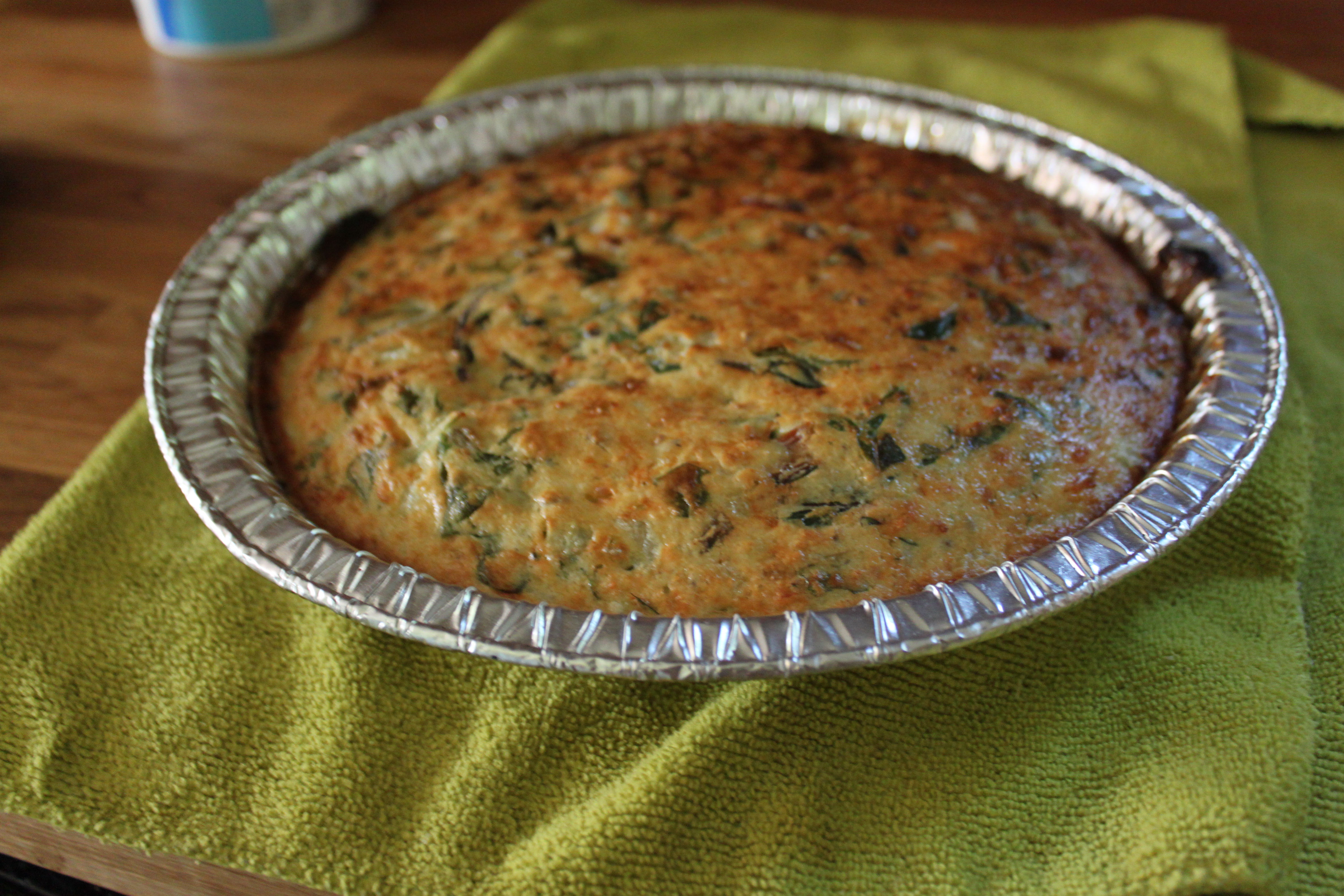
The next day, we stopped in for brunch, and this time in the sun drenched terrace, surrounded by curios, creeping vines and whimsical furniture, I wished for a small moment for  something just like this back home in Montreal. I asked Misha how she decided what to cook for the restaurant. She explained that there was no menu, instead she would head off to the local market each morning, with her favourite cookbook (The Dalmatian Mother’s Cookbook) often in tow, and that would be that.  That day we had a light self-baked swiss chard pie, served with a purée of the most delicately spiced red lentils.  My husband said there couldn’t be a more perfect meal for him. She also cooked up a quick fresh tomato and basil spaghetti for our son, who gladly gobbled it down.  Before we left, we toasted my last glass of rakia in Croatia, this time infused with pungent rose-hip.

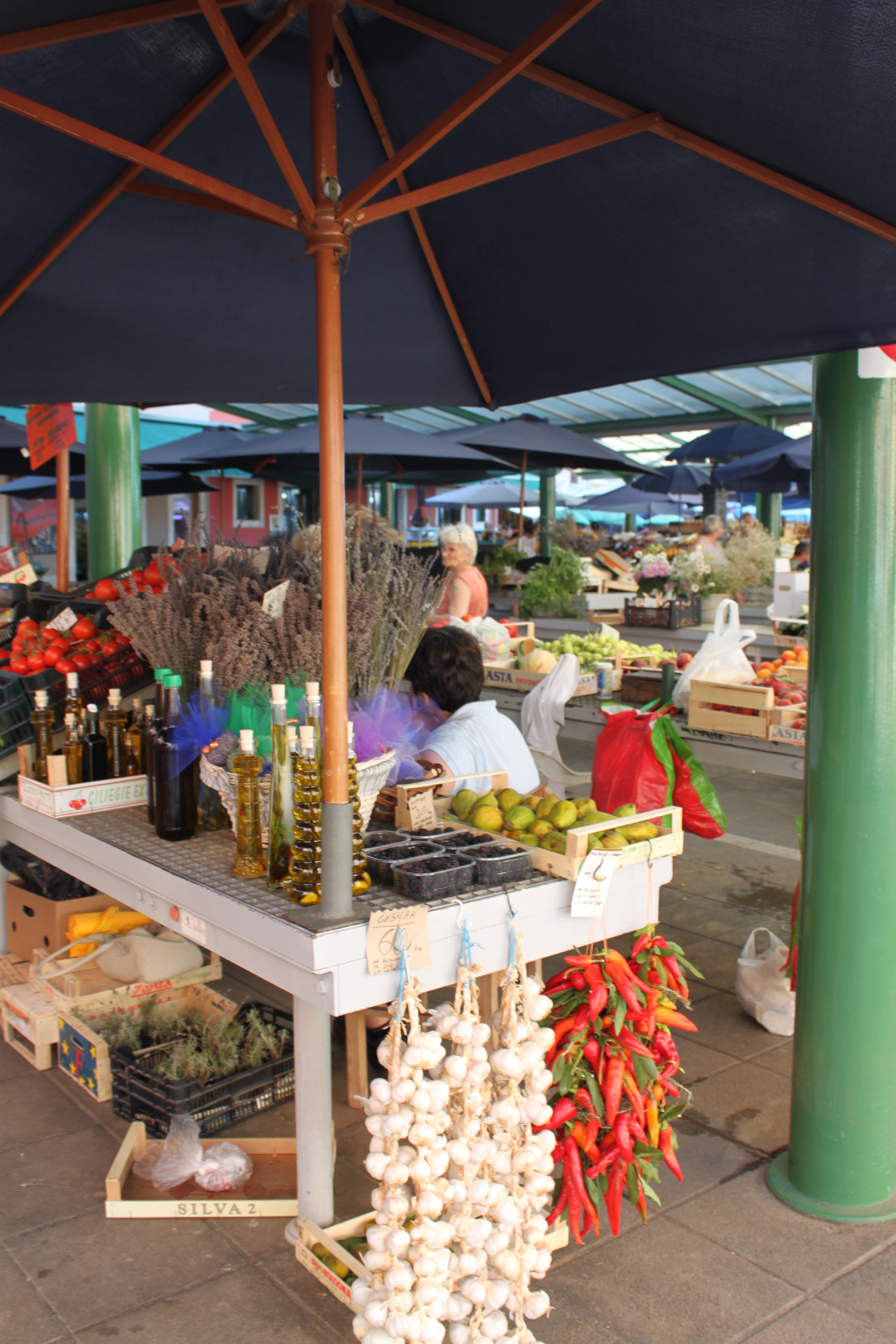
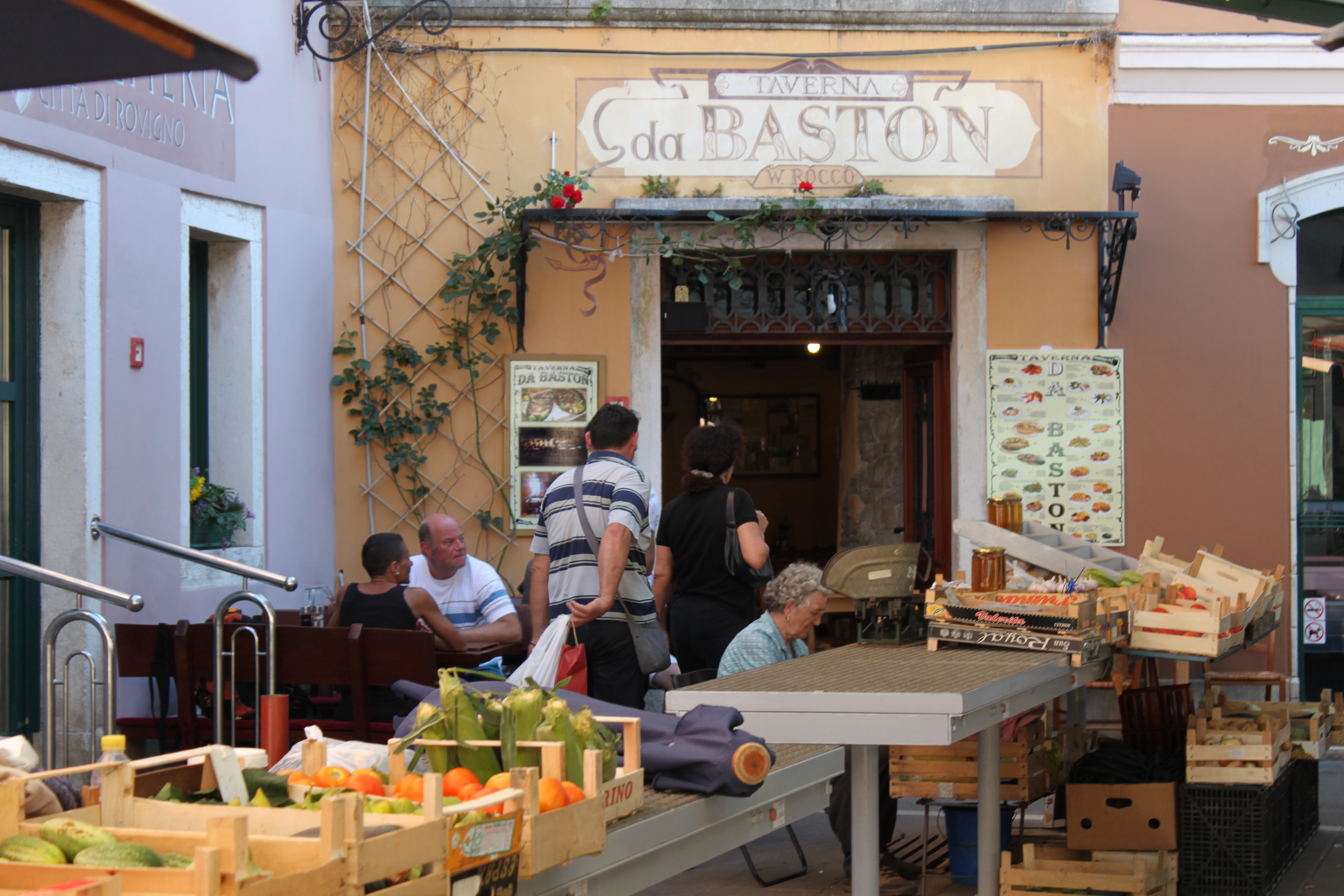
Bale has a small morning market selling fresh fruit and vegetables and fish, yet for a larger market, we ventured into the seaside town of Rovinj in Istria, some seven kilometres away.  Another mesmerizing town (albeit much bigger), the market is situated along the harbour and sports some of the Mediterranean’s finest; olives and olive oils a-plenty, truffle infused products, lavender, peppers, chili, ropes of garlic, the reddest tomatoes, aubergines.

After we said good-bye to Misha, I noticed a sign on the restaurant’s stone wall which wrote of how that legendary free spirit and romantic runaway, Giacomo Casanova had once lived and loved in Bale.   In the opening chapters of his autobiography Histoire de ma Vie (History of my life) he advises his readers that they “will not find all my adventures. I have left out those which would have offended the people who played a part in them …”  yet I bet that in Bale, that if you lean back and put your ear against it’s ancient stone walls, you may just hear a thing or two about that old guy called Casanova.

For further information on Kamene Price, visit their website: http://www.kameneprice.com/

Misha’s swiss chard pie

1 tablespoon olive oil

1 small onion

1 large bunch swiss chard

1 1/2 cups of shredded cheese (e.g. cheddar, parmesan, fontina)

4 eggs

1/2 cup milk

salt and pepper

1 teaspoon of paprika powder

1/2 cup breadcrumbs

1 teaspoon of baking powder

Directions:

  • Pre-heat oven to 375 degrees.
  • Wash and pat dry the swiss chard. Cut off the ends of the stems, and then roughly chop up the chard.
  • Sauté the onion until translucent, and then add the chard, and sauté a few minutes until tender (but not wilted).
  • In a large bowl, whisk in eggs, and then add milk, grated cheese and mix through. Fold in bread crumbs and baking powder.
  • Season with salt and pepper, and the paprika.
  • Pour into a round, lightly oiled baking dish.
  • Bake for up to 45 minutes, or until golden brown and the pie springs back when you touch it.

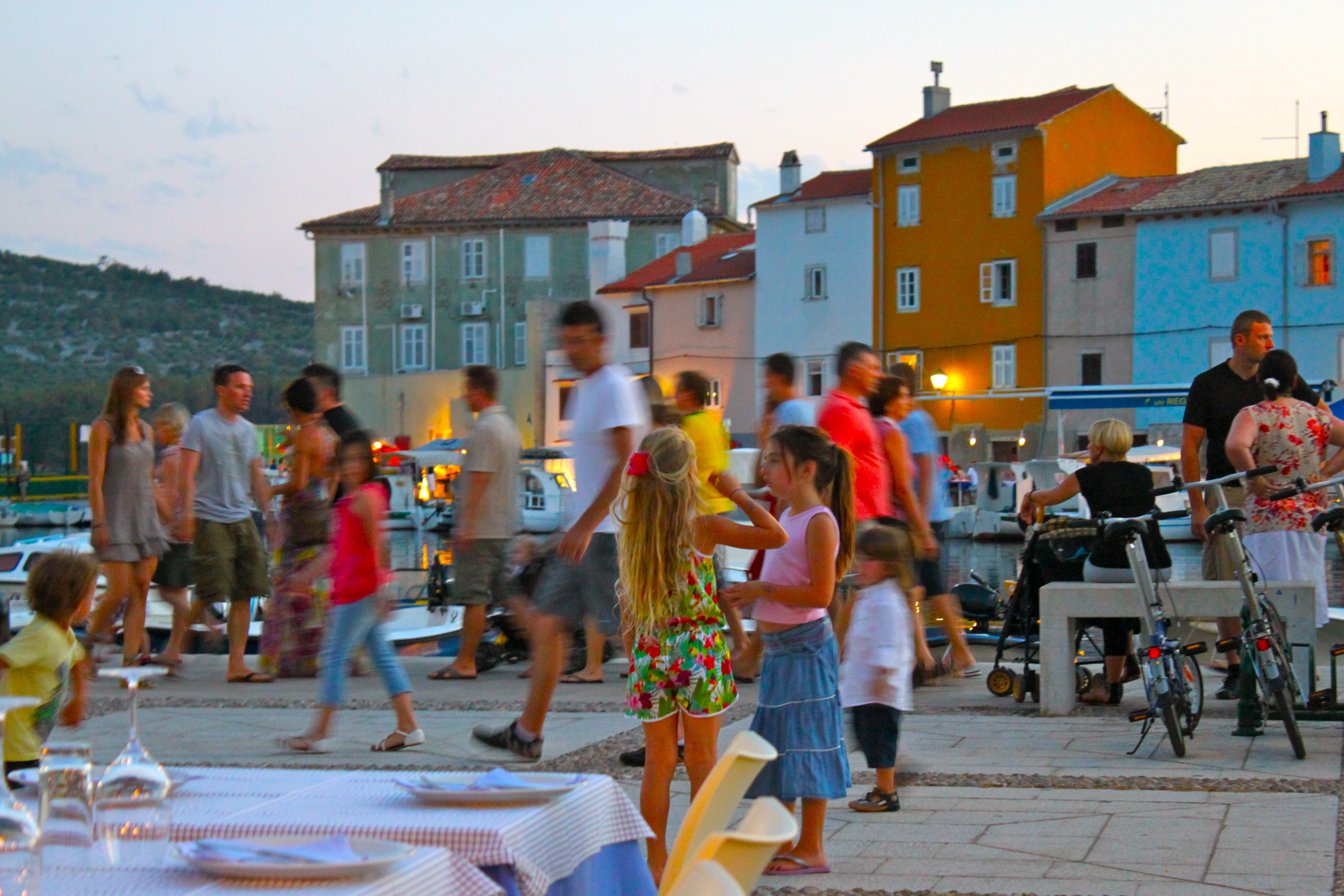
The Poor Man eats well in Croatia, a market island hop, the Croatian islands.

The Poor Man eats well in Croatia, a market island hop, the Croatian islands.

It’s before breakfast and I dive into the clear blue sea, wade out half a mile or so. There are several islands (1100 of them to be exact) in the not too far distance, their craggy, moonlike surface is dotted with pines, wild flowers, even agave trees.  Ahead of me stands a medieval town, where old timers have come out to their windowsills to shake their kitchen tablecloths and inhale the morning seaside air.  A church from the Byzantine times looks down at the many cobbled alleyways, where cafés, restaurants, small stores have been set up amongst ancient portico’s and walls.

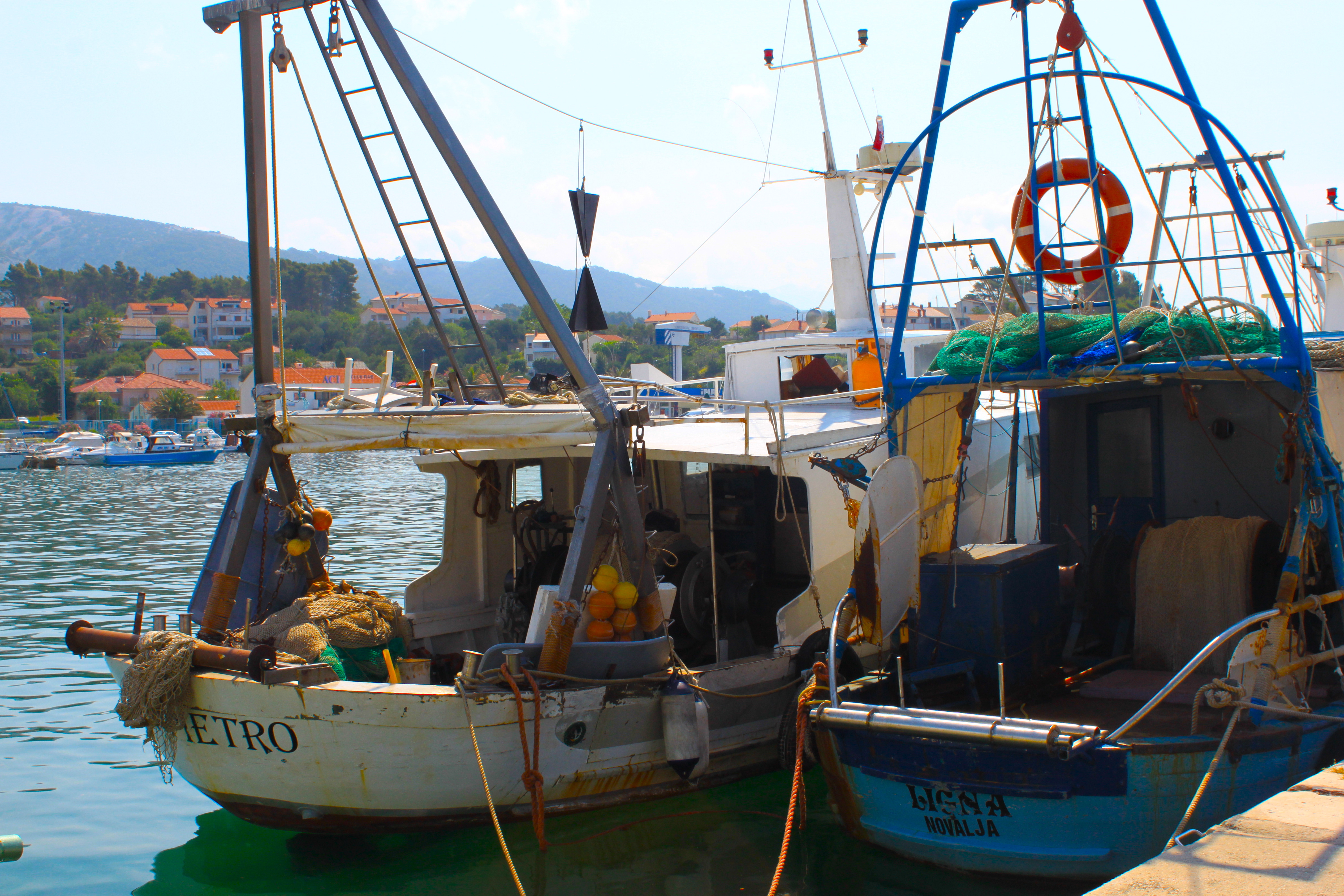
I climb out of the water, dry off and head down to the harbor. Fishermen are beginning to unload their catch of hand harvested mussels (the best way to do it) red mullet, squid, sardines. My new friend, Marco the aspiring Casanova and boat taxi man calls me over, and we spend a few minutes joking around and telling tales of where we’re from and what we’re doing there.

We’re in the Adriatic Sea, in the Croatian Islands to be exact, where the medieval meets the modern and where which I am not surprised to learn that the Romans, Illyrians, Byzantines, Venetians, even the French and Austro-Hungarians have all tried, to get their paws on this bit of island paradise.

I first visited the area when I was a seven year old, and remember a large seaside hotel that was owned by one of my father’s friends. The walls were decorated with taxidermied animals, which kept my brother, and I amused for the afternoon. Platters of grilled meats and freshly caught fish were served, as was a fish stew that the adults marveled over (yet us kids kept away from). The cheese came from the sheep that lived further inland, and the olives were picked from the ancient trees that dotted their orchards.

Back then, tourism was new to this area, and it was mostly people from the Former Yugoslavia, and neighboring Austria and Germany that would mostly vacation here. Now, I hear English, Russian, Dutch, and Italian amongst Croatian. The place has adapted well to the change with various types of accommodation available from luxury hotels, to self-serviced apartments (many in people’s homes), and larger islands have a camping site. Travel is safe, easy, roads are excellent, and island hopping from one island to another via the ferry system (regular, reliable, well priced) is a great way to get around.

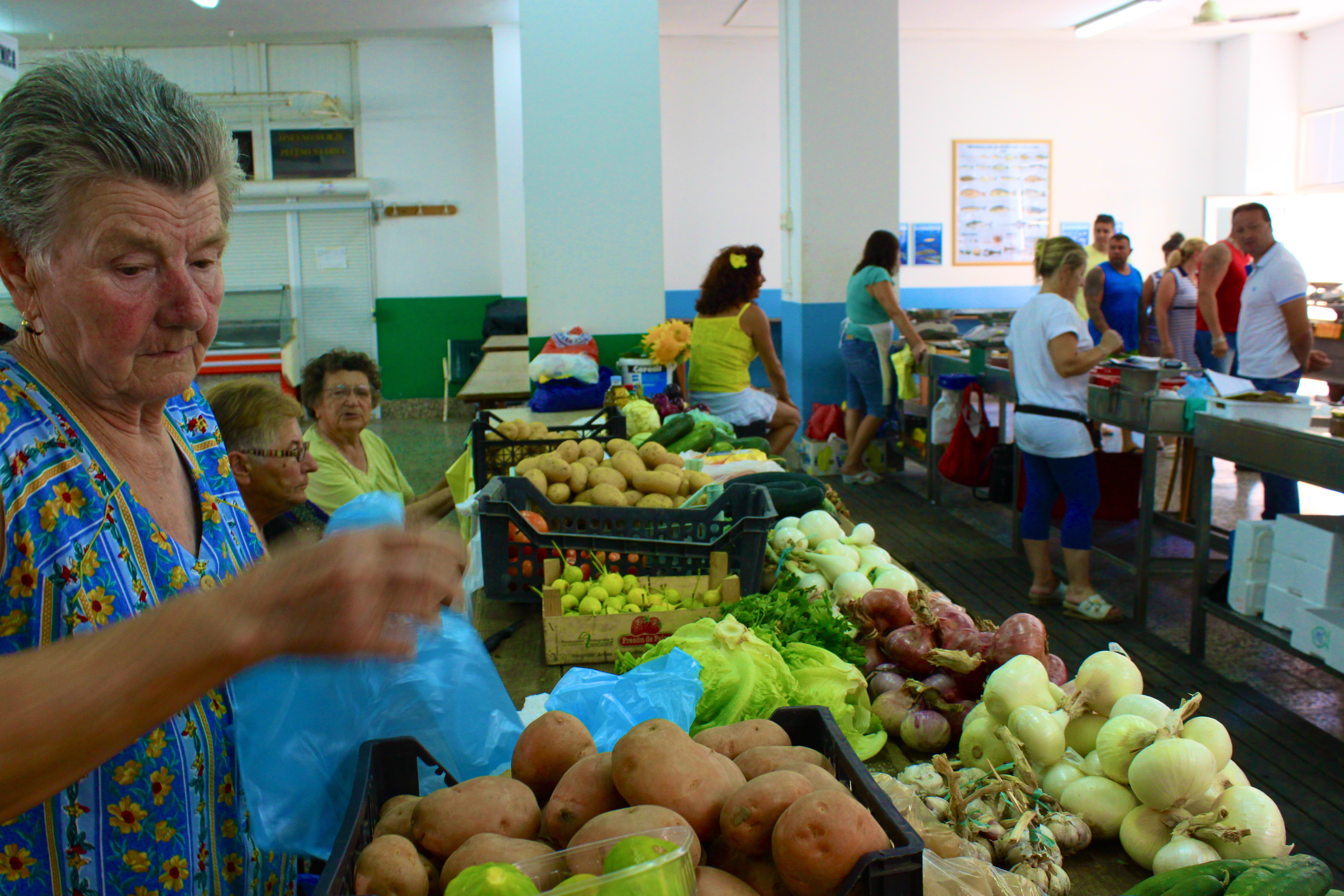
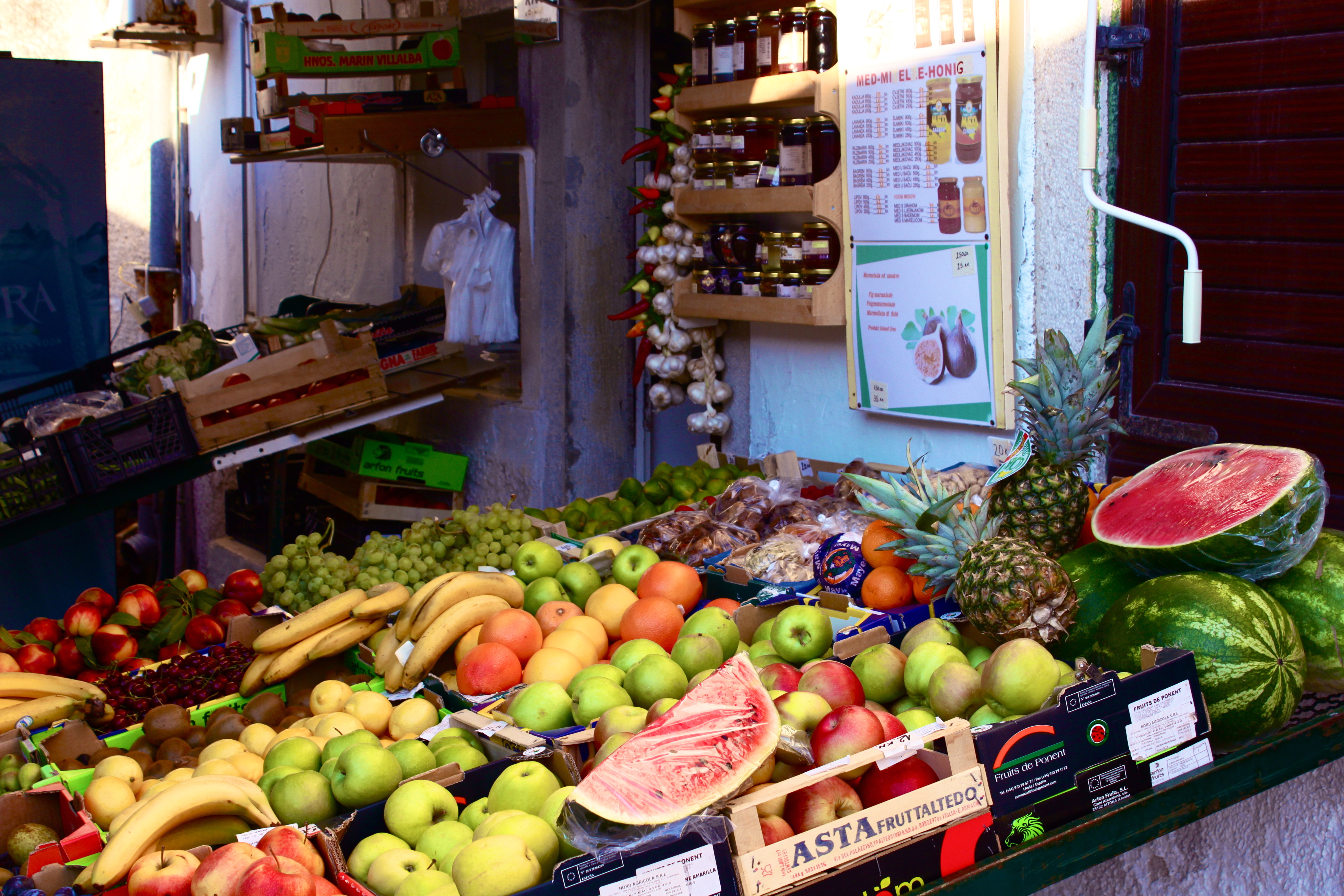
Whilst Croatia has accommodated to the increased tourism, what has changed little (and thankfully so) is their approach to food.  In Rab, just off the Northern Croatian coast, my husband chanced upon the morning market tucked away in a back alley near the old town’s main square. Feisty Baba’s cornered and cajoled me into buying their, tomatoes, the sweetest yellow peppers, figs, bottles of home brewed Rakia.  There was also a large section of freshly caught fish for sale. The produce that was being sold here as well as eaten at the restaurants, came directly from what had been caught that morning, or from the vegetable patches, orchards and vineyards maintained by the islanders themselves.

The food is simple, and can be described as deriving from the cuisine of poverty.  For example, the fish that is typically found at the bottom of a fishermen’s net (and was often thrown away by commercial fishermen or bought by the locals) like squid, anchovies, sardine has inspired many of the local dishes, and today, instead of just the islanders eating this, gourmand’s from near and far can’t get enough of it. Similar to the stew that I sniffed my seven-year old nose at, fish stews (or brodet) and then cheaper cuts of meat such as sweetbreads, tripe are no longer the cuisine of the peasant, but are now widely used, even popular as evidenced on many of the pricier restaurant menus found both along the coastline and even further inland.

Yet from a history of lack, the people here know how to make do. Nothing is wasted, fish and meat alike is marinated, grilled, roasted, bones used for stews, stock.  Stock is then used in bean stews, in other casseroles. Excess fruits and vegetables are dried, preserved (or used for the ubiquitous Rakia) or pickled.

Asides from the morning market, there are also several small outdoor market stalls in Rab open all day long selling fresh fruit and vegetables and, particularly useful for the many self-accommodating tourists.

We take a boat trip around some of the nearer islands, including Krk, and sail into of more private coves where bare-bummed yacht owners play chess, barbecue fish; dive off into the aquamarine never-never.

A narrow, but smaller island lies in the distance,

“What’s that place?” I ask the captain.

‘Oh that’s Cres, small place, nothing happens, don’t go there, it’s a bunch of villagers.”

“Sounds perfect,” I think to myself.

Cres is a small treasure find.  It’s a picturesque, slow-paced and charming place. Like in Rab, Cres has morning markets where one can find freshly caught fish, but also several street markets selling fresh fruit and vegetables late into the night.

We’re near the Italian coast, so approaching olive oil country. Before dinner, I walk into a store to buy some gifts and the owner insists I join him for a Rakia (seems everybody insists I join them for a Rakia).  He then also insists that I return later for him to meet my husband. We do so, and are joined by a merry Slovenian, where more Rakia is taken out.  Why isn’t customer service back home a little more like this, I wonder?

As we move West towards Rovinj in Istria, the landscape, a little of the language as well the food begins to change – Italian is spoken by many people, and the food is spicier, more olive oil is used, and as it’s truffle country, this too is evident in the pasta’s, omelette, sauces. The market in Rovinj is a colorful open air space at the edge of the Old Town, steps away from the large Valdibora Square.

Maneštra or Pasulj

A traditional meal of the Istrian area, Maneštra (a bean or spring corn stew) has been eaten in the region since ancient times, yet a similar soup is eaten across the Baltic, with ingredients changing from place to place. In Istria, the Maneštra, we had was served with white beans and cured sausage, yet here I have relied on my families recipe of Pasulj, a kidney bean soup which can be vegetarian or non, (depending on whether you want to use some smoked bacon). Either way, it’s really healthy, full of fiber, and depending on whether you soak your beans over night, can be made in less than half an hour. A traditional poor man’s meal which tastes like a rich man’s dish.

Ingredients:

1 large or two small cans of red kidney or cannellini beans (or alternatively 2 cups of beans soaked over night)

1 cup of diced carrots

1 large onion chopped finely

4 tablespoons olive oil

2-3 cloves of garlic chopped finally

2-3 bay leaves

1 tablespoon of paprika powder

1-2 tablespoons of tomato paste

1-tablespoon flour

A knuckle sized piece of smoked ham (buy at Balkan specialty stores) or ham hock/ham bone with a little ham left on it (optional)

Method:

If your beans have soaked overnight, rinse these and then season a fresh pot of water, add the beans to it and cook until tender. Stir occasionally and remember to skim off any scum that accumulates on the surface. Drain and then use.

Sauté onions, garlic in olive oil until translucent. Add carrots, and season with salt and pepper, sauté for a few minutes.  Now add beans, mix through and add enough water, allowing for about an inch and half space from the surface.  Add bay leaves and the ham and cook until carrots and ham are cooked through (about 20 minutes) and then stir in tomato paste (optional).

To thicken the soup, in a separate small frying pan, warm 2 tbsp. oil, add the paprika, and mix though, now add the tablespoon of flour and quickly mix through, making sure not to over heat as the flour will crumble, it should resemble a thick paste. Add this to your soup. Season again if necessary. If using the ham, take it out, shred and top each bowl with a little bit.

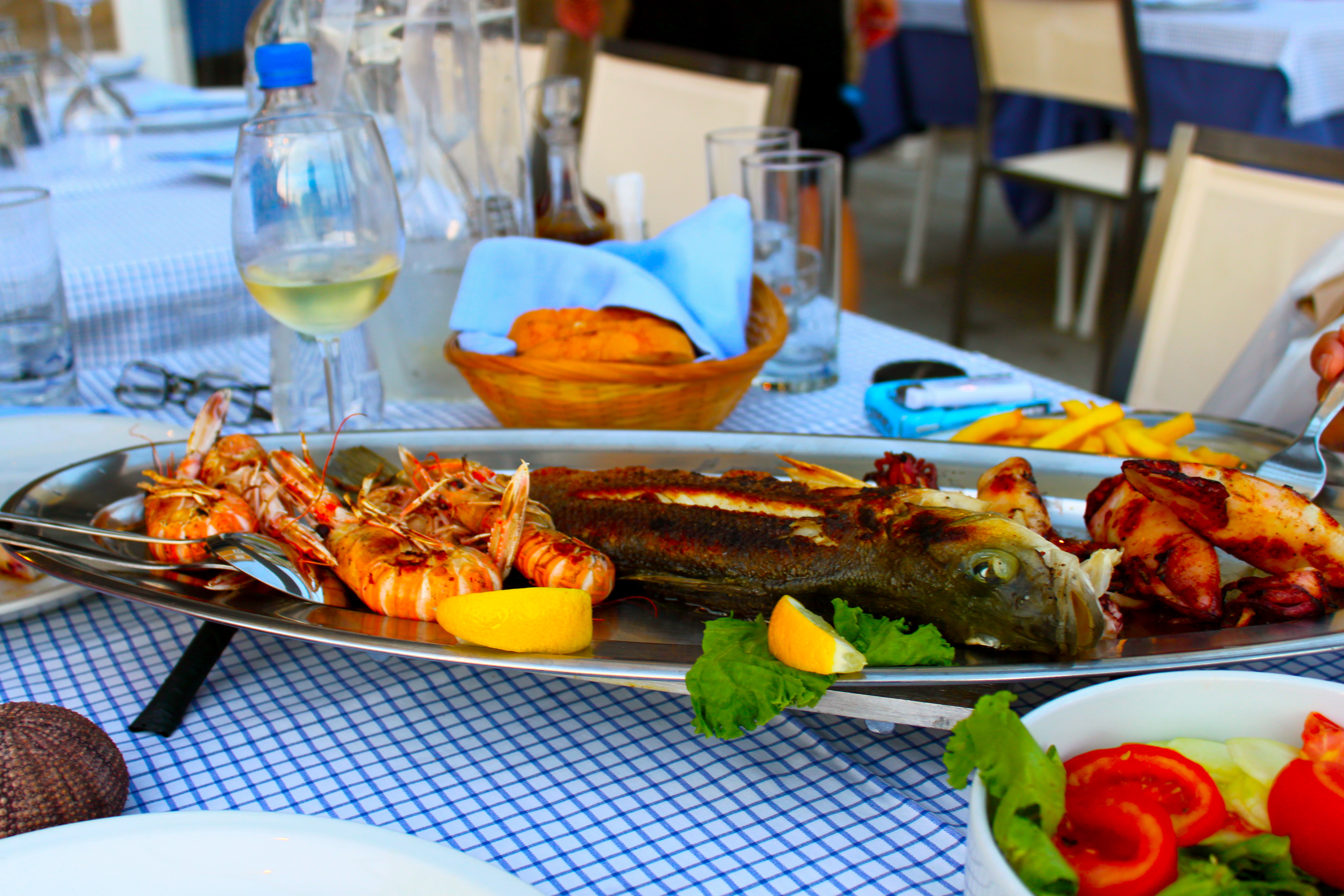
Mixed grill fish

A mixed grilled fish platter is one of the typical menu mainstays in Croatia. Grilling whole fish is easy, delicious and old Nemo looks better whole.  Have your fishmonger, de-bone it and clean out the insides. Rub in a little chopped herbs, garlic and olive oil in the belly, and cover with foil. Place on grill (or under the broiler in a pan, without the foil if you don’t have an outdoor barbeque). Grill under medium heat for about 10 minutes each side, turning over once (for more exact times click here).

Once you have delectably picked the bones clean, keep them and the fish head to make a stock.

To grill prawns, scallops and squid, rub them with a little olive oil, season with salt and pepper and grill for about 2-3 minutes on each side. Season with lemon.

For sardines, have your fish monger clean them for you, or alternatively with a small knife, split them open belly side up, carefully clean out their insides, season with salt and pepper (do not chop off their heads – that’s the best bit). With some paper towel dipped in olive oil, wipe down the grill and fire it up to medium heat. Grill your sardines a few minutes on each side. Season with more lemon juice, or a little olive oil infused with minced garlic and chili.

Arrange all of this on a platter, serve with quartered lemon wedges, open up couple of bottles of cold pivo (beer) or crisp white wine.  Finish with a shot Rakia, go to sleep, dream of sailors and mermaids.

Izvolte i Prijatno!

Mamma still makes spaghetti, the markets of Rome, Italy

Mamma still makes spaghetti, the markets of Rome, Italy 

There are no chairs left, so I order a macchiato, and stand at the counter. I join a small group of older market stand owners, mostly men, who never having grown up drinking water, are fighting off the afternoon heat with a glass of cold white wine.  It’s the end of the day, so produce is being sold off at lower prices, covered or packed up. There are two slot machines at the side of the counter, and whilst back home in North America, the image of a woman alone, standing at a bar and playing pokies could be seen as tacky, not here. As if confirming this, my husband and son walk in, and exclaim in unison ‘what are you doing?’

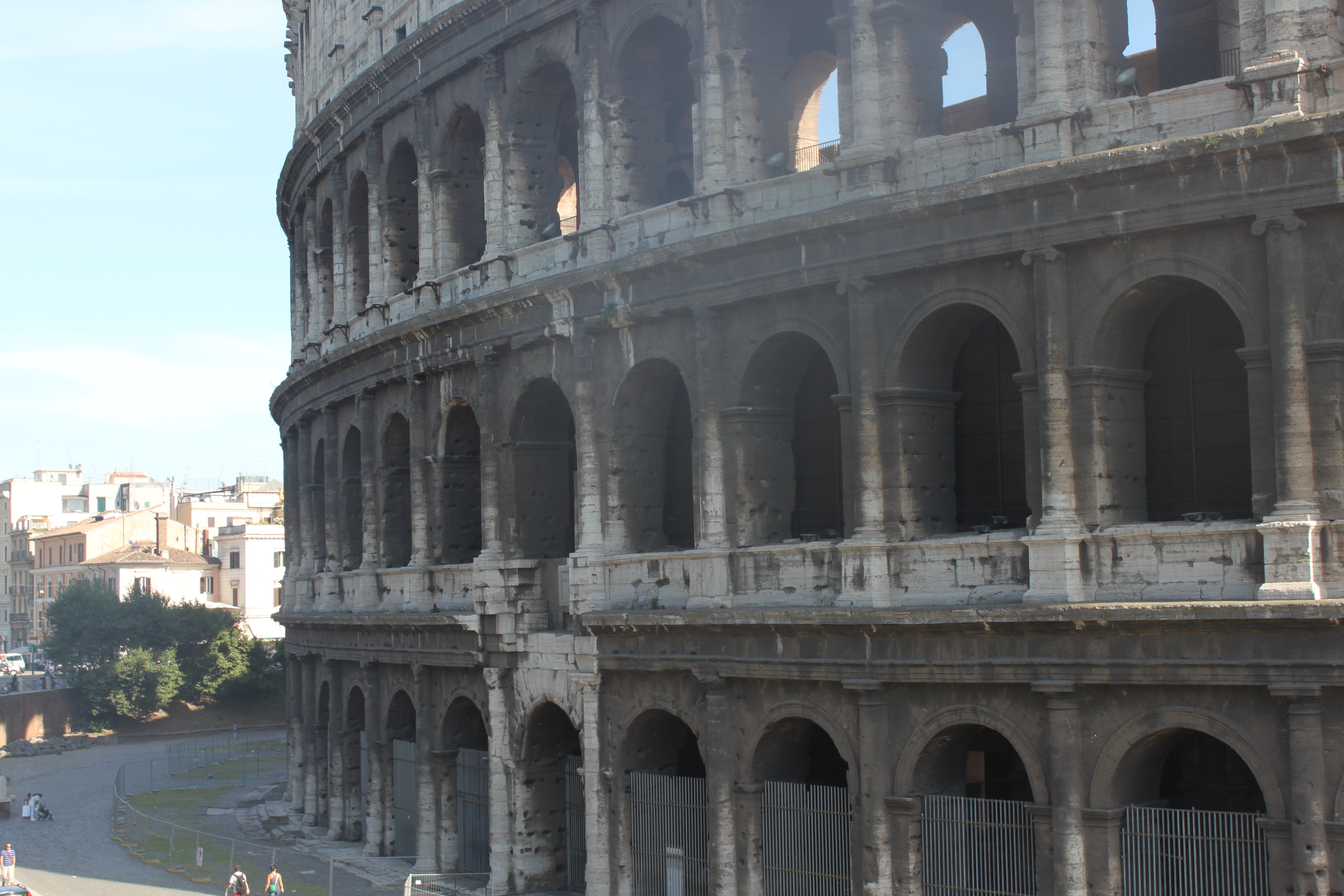
The Colloseum

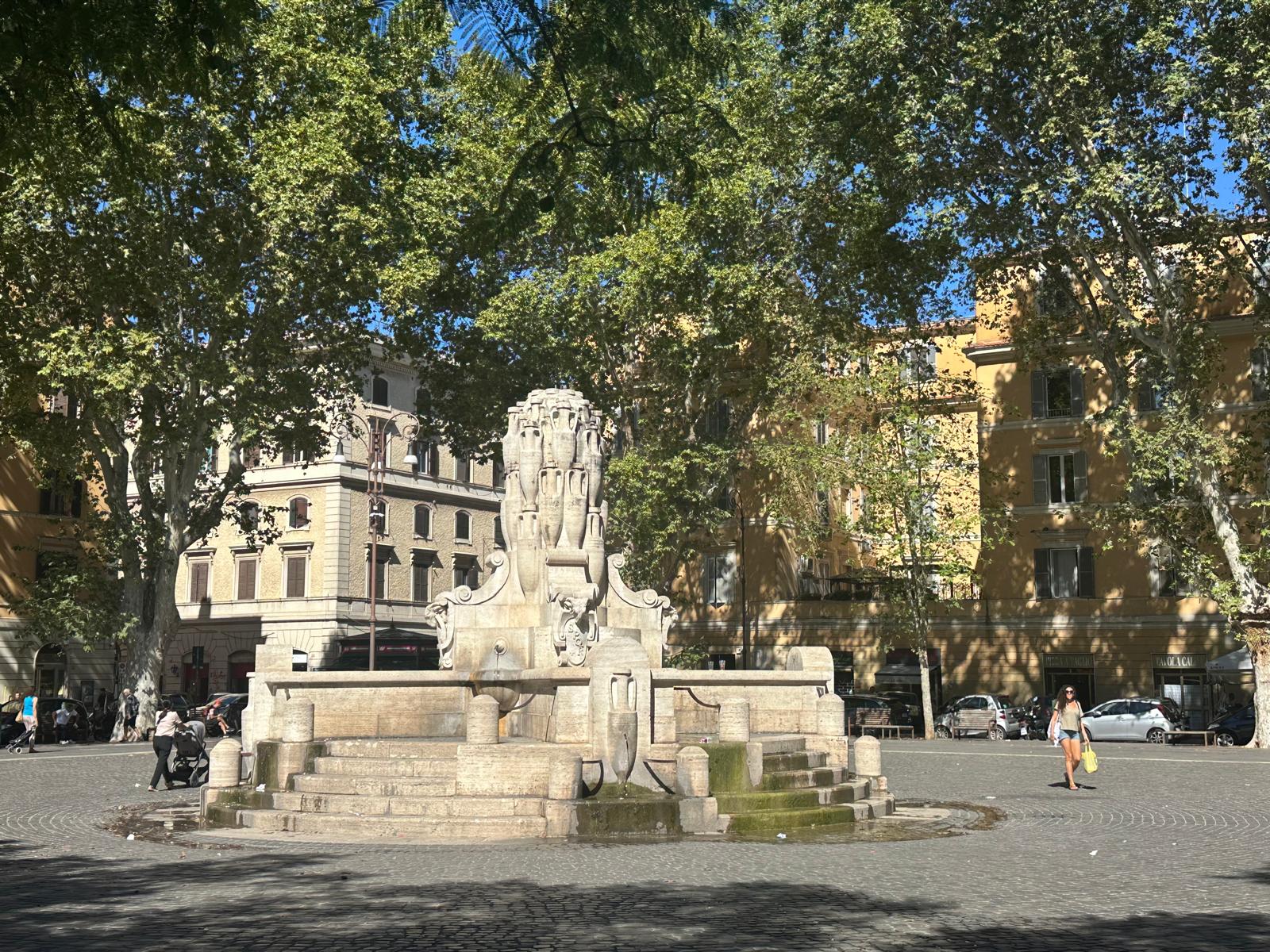
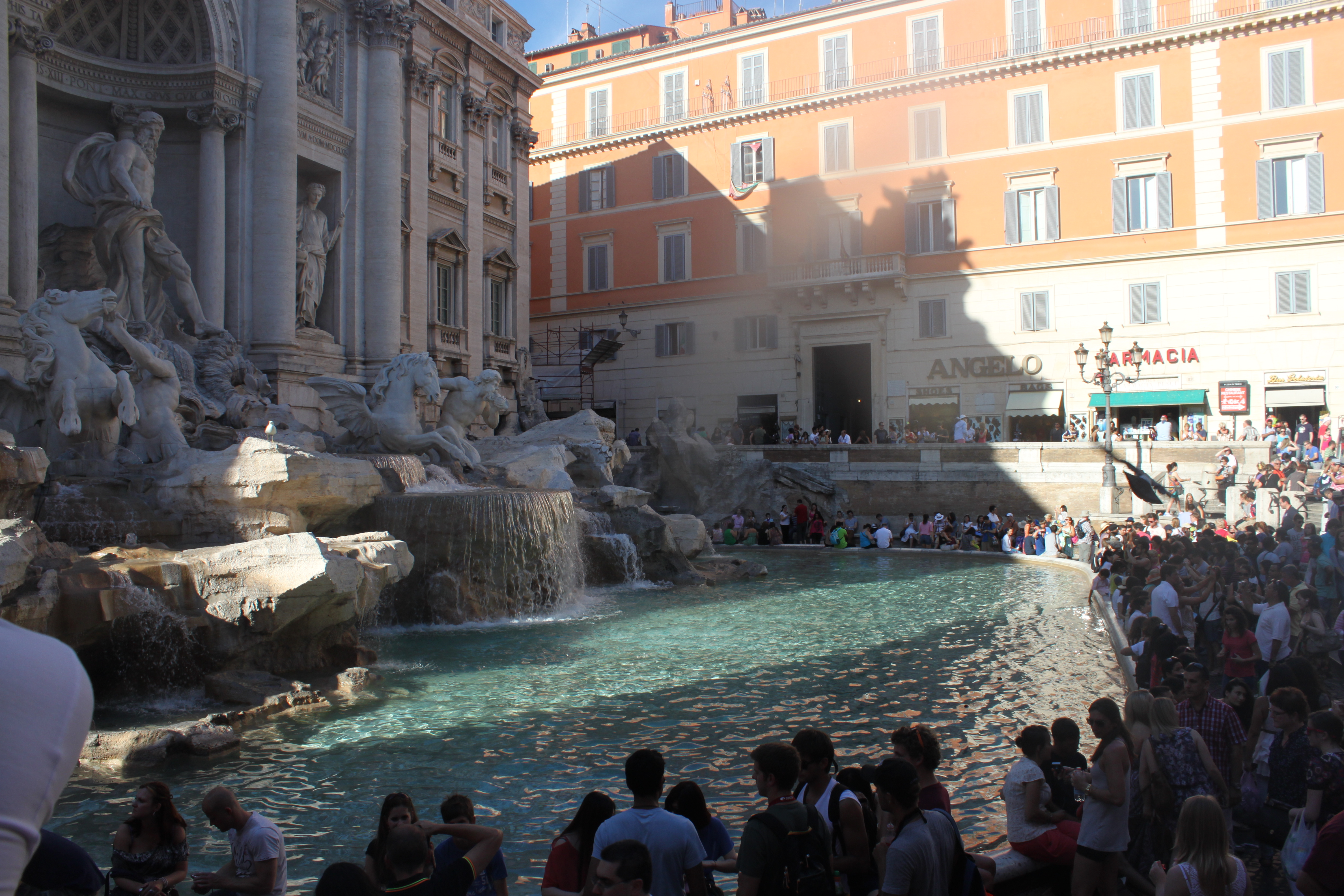
Local Roman sight: Fontana di Trevi

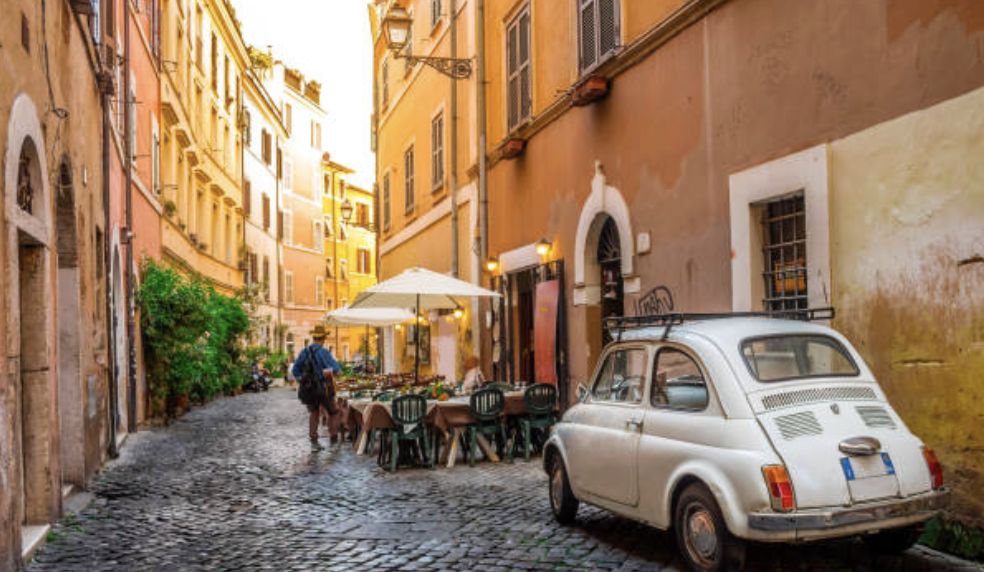
This it Italy, the land of La Dolce Vita (or The Sweet Life), where men aren’t afraid to openly tell a woman she is beautiful, where women old and young still look like ladies, where mamma (not the Pope) is revered, and spaghetti and pizza are not treated like the carbohydrate anti-Christ, but are prepared with a simple finesse and eaten with gusto by all.

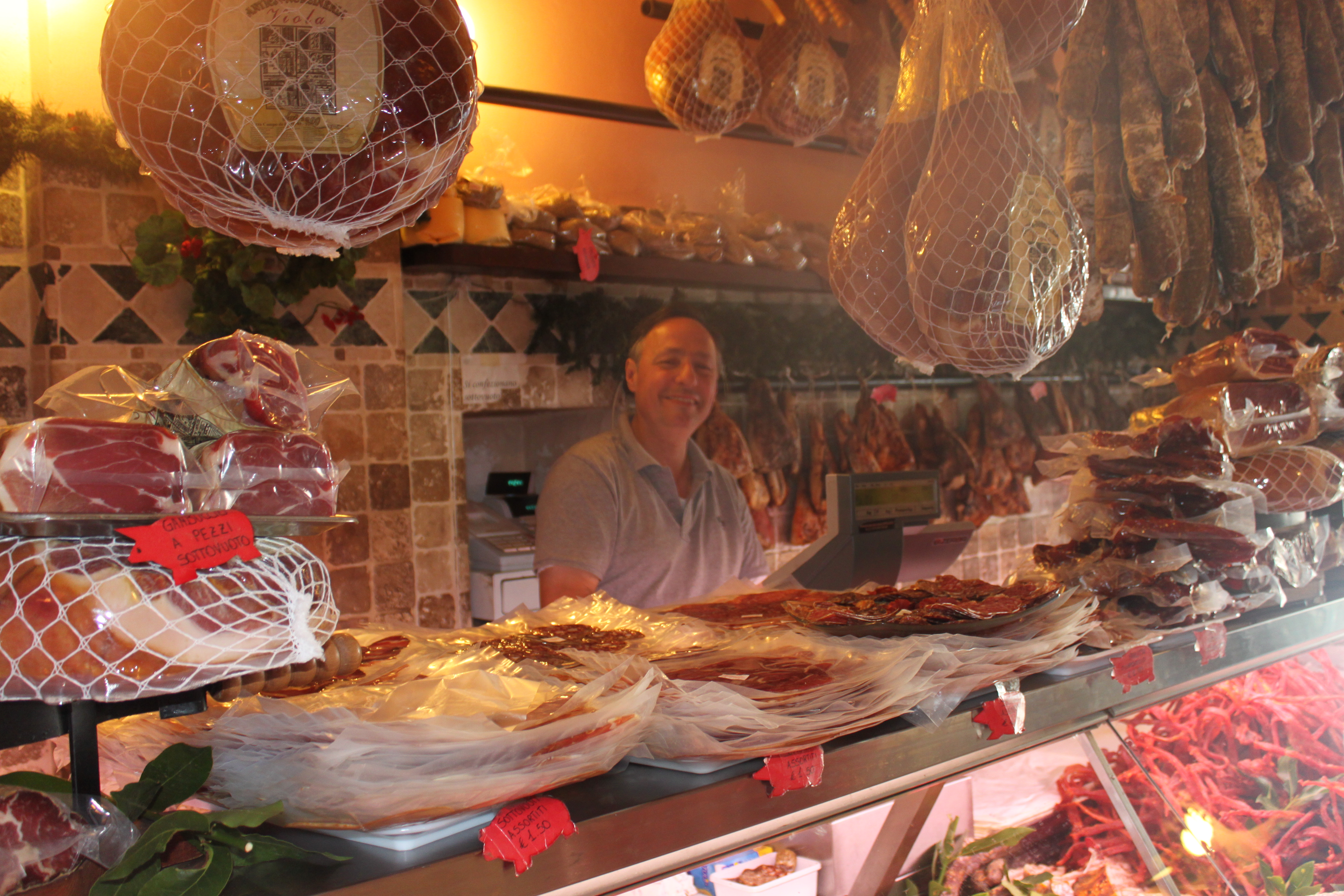
Mercato Trionfale is down the road from the Vatican City, a large under-cover space where you can find everything you need for the Italian kitchen.  I spent a full morning in there, and as we were on the move on an almost daily basis, picnic supplies such as buffalo mozzarella, home-cured sausages, hams, freshly baked bread and fruits of the season such as figs, the juiciest grapes, peaches, quickly made their way in my shopping bags.  What was particularly refreshing about this place, was that as prices were low, the market was full of the average Signor and Signora, as well as students, and nearby office workers stopping in to do their daily grocery shopping. Refreshing as I find that many Western markets are becoming so over-priced, and attract only a certain type of moneyed market goer, making the actual idea of a market- a common place of trade and commerce unaffordable to most people.  Refreshing also, as I found the markets of Rome sold some of the best produce I had eaten anywhere, but sold without the airs and graces that seem to cropping up in many farmers’ markets stalls.

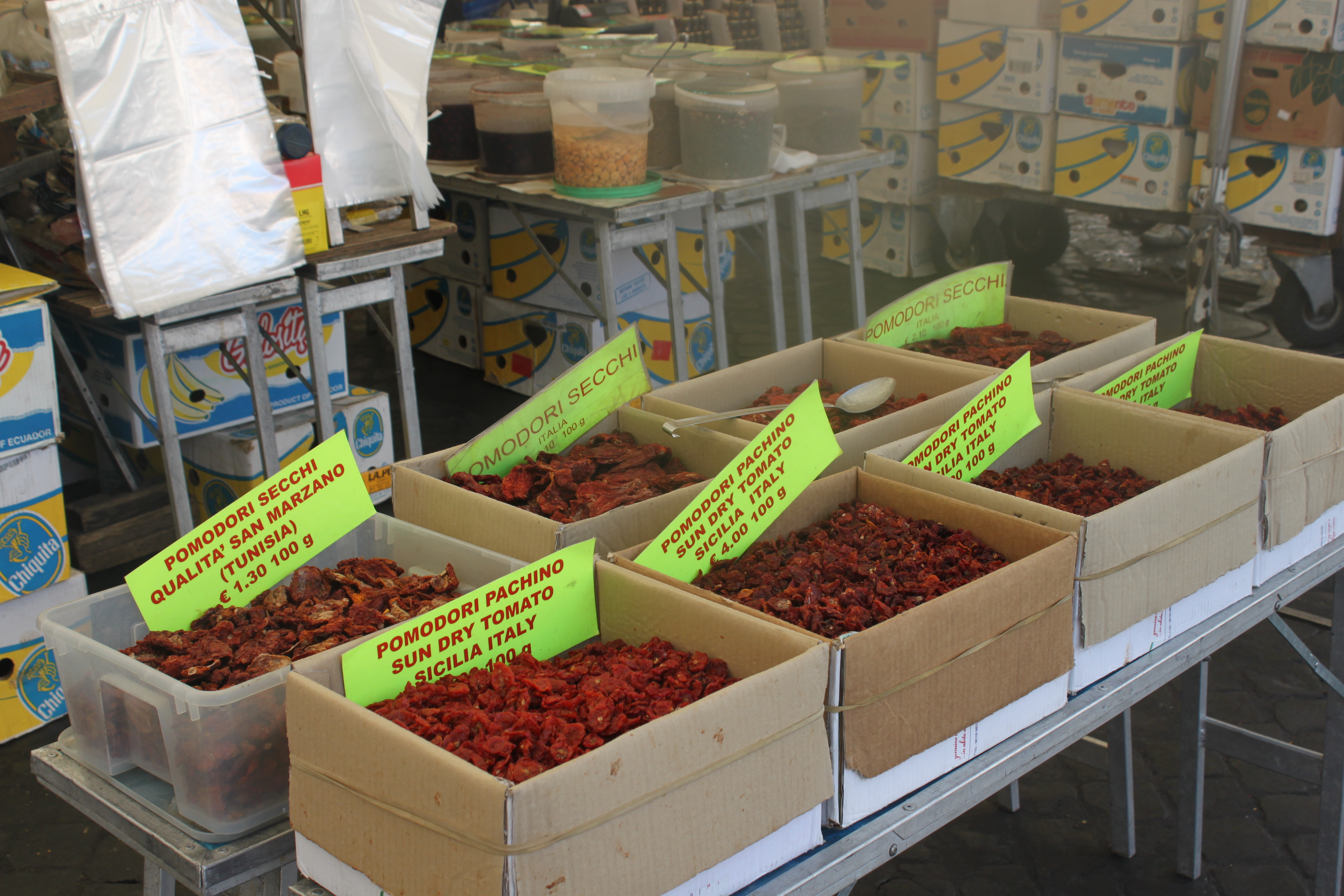
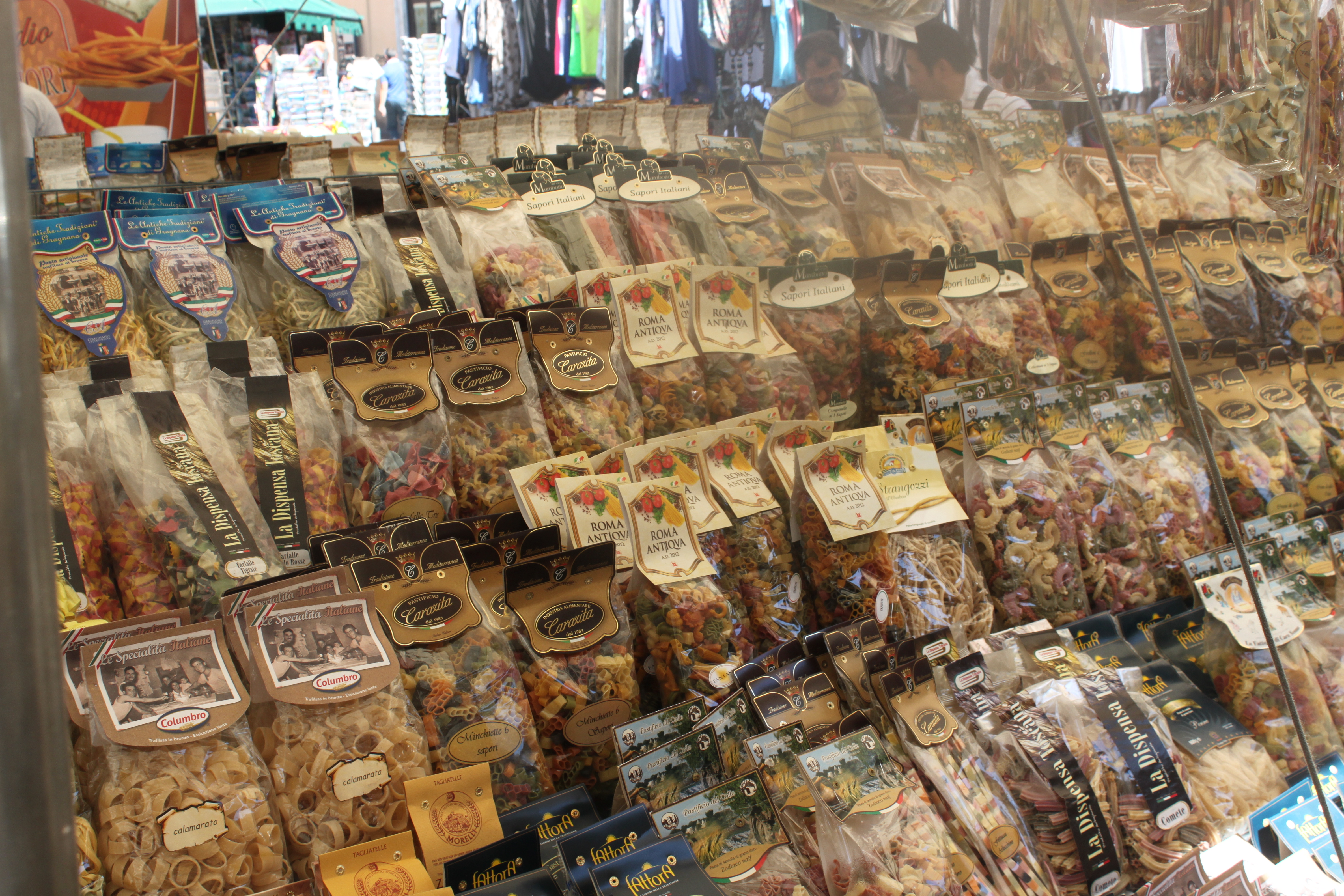
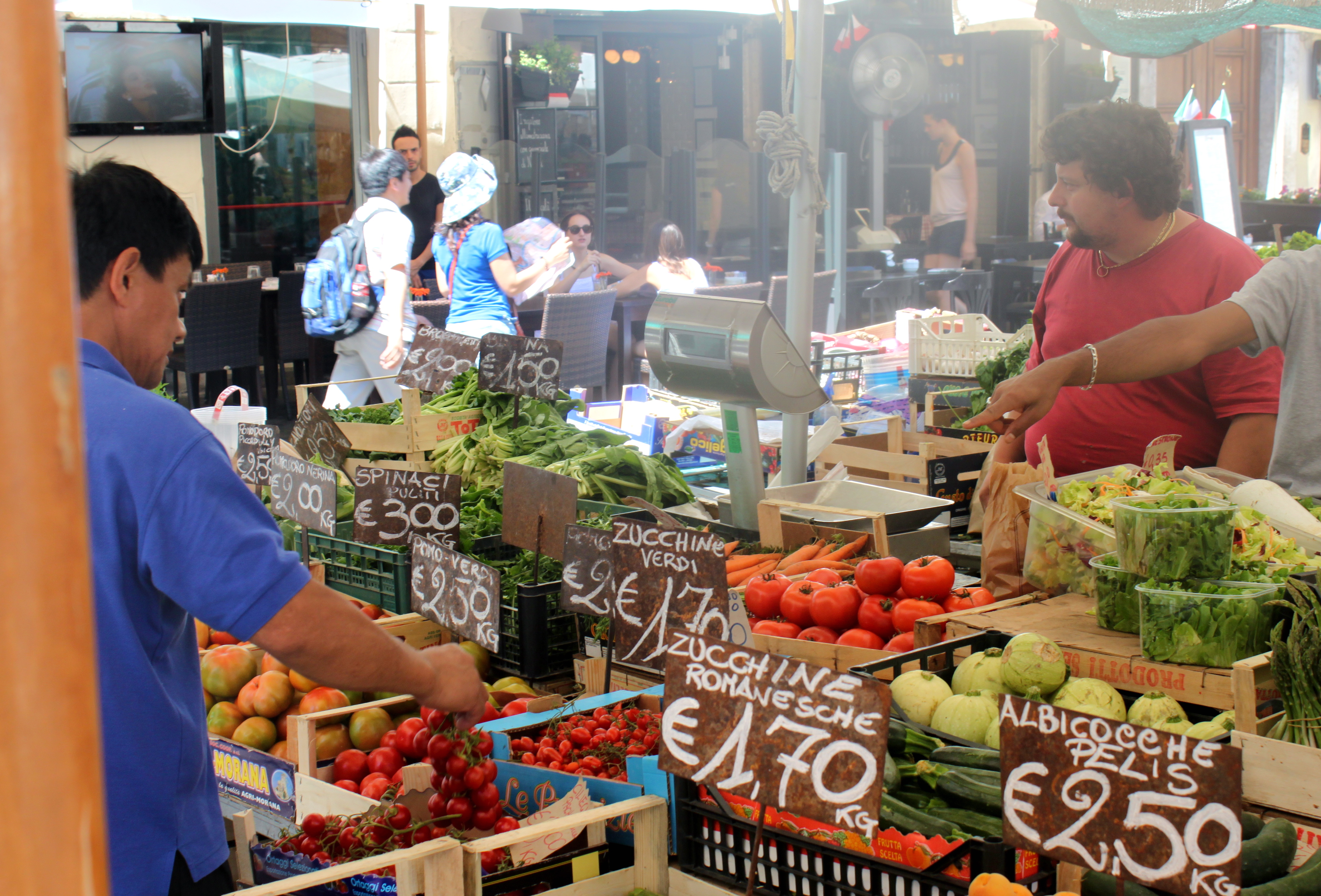
Across town, I go to Campo Dei Fiori located in the Piazza di Campo de Fiori, Rome. The square is bordered by a number of small grocery stalls and a couple of restaurants and cafés.  A great looking place, yet obviously orientated towards tourists; pasta, spices and olive oils were being sold alongside souvenirs.

Sitting down to a restaurant meal in Rome is an enlightening experience.  Firstly, nobody raises an eyebrow about children being brought along; restaurant tables all over Rome are full of kids and their parents, and often their uncles and aunties, their cousins, grandparents, and on several occasions, we counted four generations dining together. I made a point to see whether the Italian food as we know it best in the Western world, i.e. Pizza and Spaghetti are as common as they are back home.

Pasta anybody?

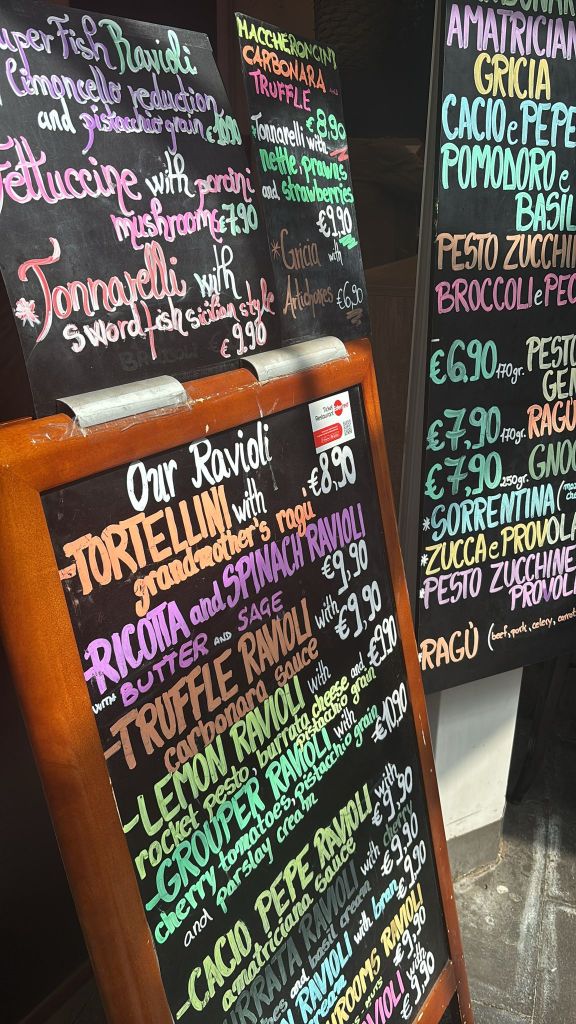
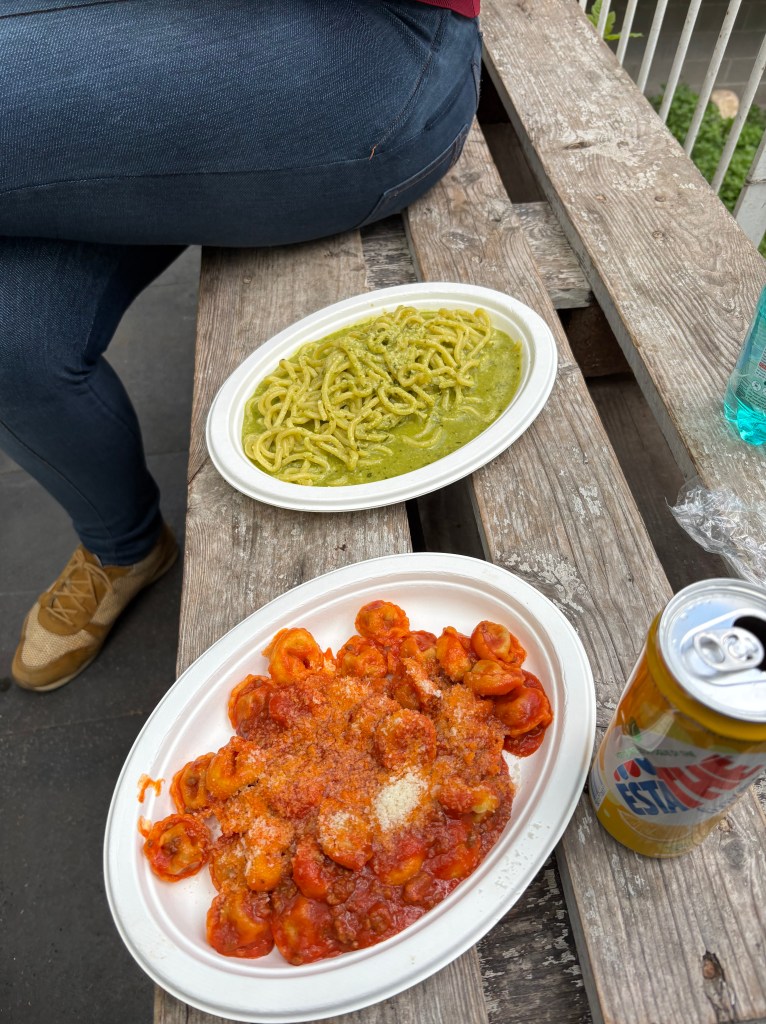
Listening to dietary warnings, about empty calories and weight gain, I cut down on the pasta and rice intake years ago, so was pleasantly surprised to see young and old still tucking into plates of spaghetti and slices of pizza at every sit down. What was different was the simplicity of these meals, spaghetti with a simple pesto or tomato sauce, cooked al dente and in the very best olive oil. Then there was the lightest gnocchi which I had once with octopus, another time with a bolognese sauce which my seven year old swapped with me for his burger (without the bun!).

In actual fact, pasta is eaten at every meal. A typical Italian dinner will start with an appetizer such as a plate of antipasto to share, or a vegetarian option (my favourites were zucchini flowers with ricotta or fried potato croquettes). This is then followed by the ‘first course’ which is typically pasta, and if you’re still game, the ‘second course’ is either a meat or fish dish with a side. As for pizza (we must have had at least one a day) –  the lightest crusts, the freshest, simplest toppings, as opposed to the culturally unrecognisable, super-sized ‘pies’ which have you running for the alka seltzer (and the couch!).

Keeping these things in mind, it doesn’t surprise me that the Slow Food Movement had its origins in Italy.  The Italian plate respects the Slow Food Movement’s three-pronged approach of being Good, Clean and Fair. Whilst this approach extends beyond gastronomy to agriculture and food production; the very fact that the everyday Roman benefits from accessible prices for food, that Italians are protecting their national gastronomic heritage, and produce is both seasonally abundant and fresh gives testimony that whilst the Italians prefer to keep to their gastronomic origins (as opposed to opting for a more multicultural diet) they are doing something very right.

Back in Canada, and still having unpacked, we go out for a quick meal at a ‘family restaurant’. The place is advertising a new kid’s meal, ‘Spaghetti Coockooricko’ a strange hodgepodge of egg noodles, peas, chicken fillet, swimming in a béchamel type sauce.  I think back to my last meal in Rome, a simple spaghetti pomodoro (Spaghetti with tomato sauce), and consider that even though I may not be in Rome anymore, I’m going to continue to do as the Romans.

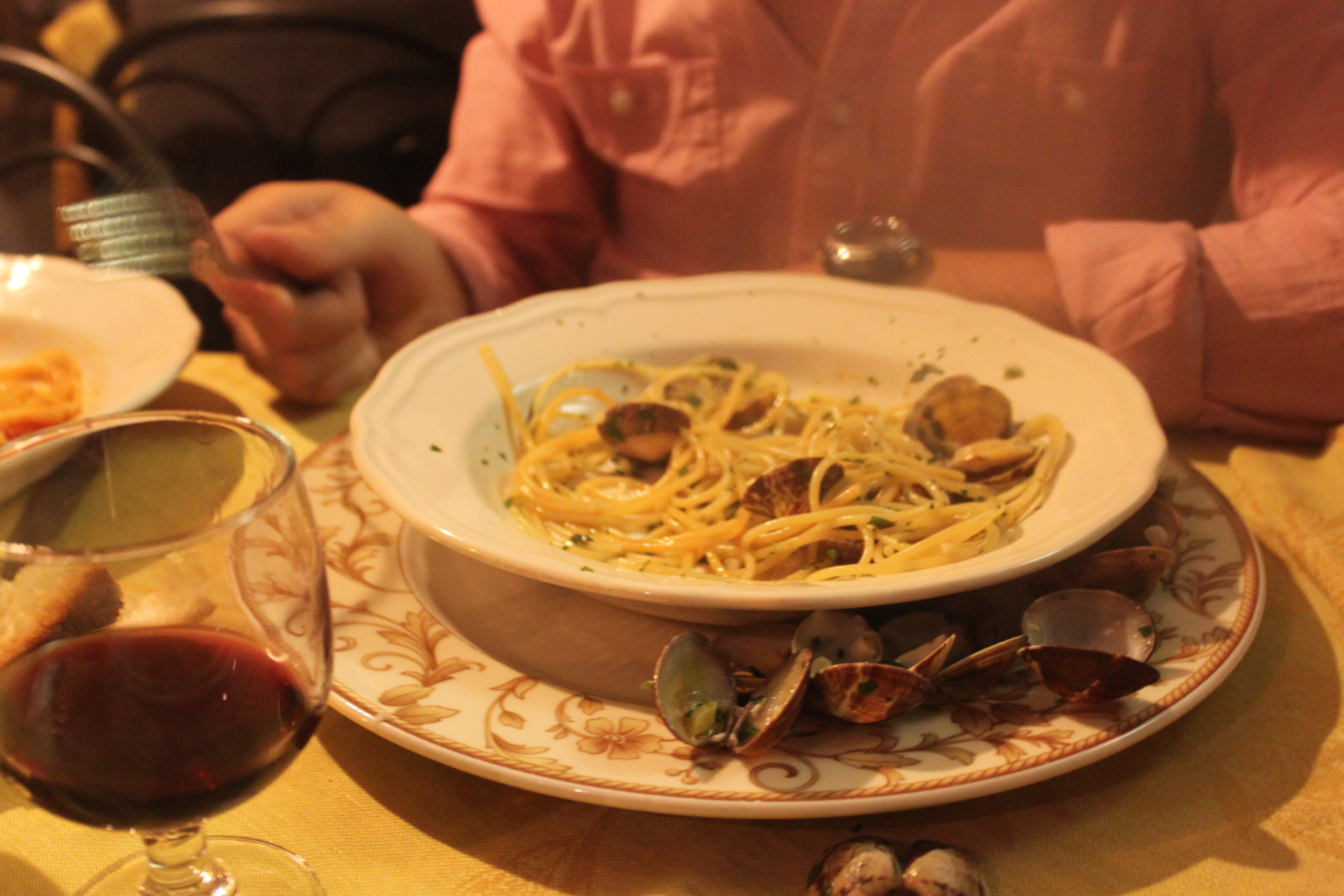
Spaghetti Vongole (spaghetti with fresh clams)

Spaghetti Vongole

One of my favourite meals was a simple spaghetti with clams, or Spaghetti Vongole.  Whilst he is obviously not Italian, Jamie Oliver’s passion for all things Italian are well known, so I have included his recipe here.  If you don’t like clams, skip them and just add more tomatoes.

Buon Appetito!

Click here a full list of markets in Rome