About mira goes to market

When I was seven, my parents took my Australian-born brother and I for a holiday to visit their native former Yugoslavia. On a visit to my mother's village near Sarajevo, I experienced what is now one of my most treasured memories. In the town's night market, gypsies called us over to their wagons for a tea-cup reading. Scarf clad babbas sold us piping hot gibanica or cheese pie, whilst at the same pinching my cheeks and flirting with my good looking father. I was entranced. What was this magical place? Could I come back again? Have we got one of these back home? Now years later and working as a humanitarian aid worker, I have travelled and continue to travel the world, yet no matter what country I may visit, I make it a point to stop in the town's market. To me, the market is more than just a place to sell food, it's the heartbeat of the city, a virtual story of the town's history, culture and state of development. A market can quickly tell you what is going on. I'm sharing my stories from markets near and far. Enjoy.

Mira goes to market is nominated for Versatile Bloggers Award!

I have a confession. I almost ditched this blog a few weeks ago.  Not because I didn’t enjoy doing it, I actually love doing this, but the big WHAT FOR question started to crop up after about the fifth or sixth post. Staring a blog can be a solitary pursuit; it’s quite a bit of work which pays nothing, and when friends coyly admit,

“Ah your blog! Well, yes. It’s great, it was about tomatoes right?”

“That was the first one back in September, there’s been five or so since.”

“Oh!! Well, you know, um, well like, I plan to read it, but it must get lost in my newsfeed.”

Not that I get upset about friends not reading my blogs, I actually really like catching them out with the SPRUNG card, but I figured, if I silently stop blogging, nobody would really notice that miragoestomarket has gone.   But as it turns out, the other week I got stopped in the Chinese grocers by an acquaintance who had shared a recent post of mine and who was told by several persons “They love the way you write.”  Then there are the faithful followers who never fail to comment, share or write back to me personally, to them I am really grateful. Most recently, I began to exchange with other bloggers from all around the world, which has probably been the most rewarding thing about it all. Today, one of these bloggers, Acorn in my Kitchen nominated me for WordPress.com Versatile blogger award.

Image

I found Acorn in my Kitchen only just recently, after having seen a link to a video on the markets in Madrid posted on his blog.  He also has some of the most exquisite recipes I have seen on a food blog. Thank you Acorn, I am really very touched.  When nominated for the Versatile Blogger Award, bloggers must follow certain rules including:

If you are nominated, you’ve been awarded the Versatile Blogger award.

Thank the person who gave you this award. Include a link to their blog. Next, select 15 blogs/bloggers that you’ve recently discovered or follow regularly, and nominate bloggers for the Versatile Blogger Award. Include a link!

Finally, say 7 things about yourself.

Here are my fabulous 15:

  1. A Writers Larder
  2. The American Way of Eating
  3. Lamingtons and Lasagna
  4. Big Hungry Gnomes
  5. For the love of beans
  6. Afternoondlite
  7. CharityChic
  8. Bread and Molasses
  9. Kiss my Spatula
  10. The Wunderlust Gene
  11. Food to Glow
  12. Cook Eat Live Vegetarian
  13. Food Safari
  14. Australian Food Blogs
  15. Semiswede

7 Facts about myself

  1. I write about markets around the world, and although I have visited several on four continents of the globe, my favorite is still the Adelaide Central Market, back home in Australia.
  2. I love eating Octopus. My friend Dina’s mum who originated from the Greek Island of Kos, first made it for me.  Dina was one of the first people who taught me how to cook.
  3. I learnt to read with The Secret Garden.
  4. I once left $10 in a poor man’s jacket.  I hope he wore it again.
  5. Another person who taught me to cook was my Great Aunt Bosa.  She was a cantankerous old Serbian woman who convinced me that I would be eaten by the Baba Roga if I didn’t behave. Sometimes, she’d serve me chocolate peppermints and blackcurrant syrup with a little homemade wine.
  6. I love the beach. I miss the beach. One day, I will live near the beach again.
  7. I am disturbed by houses that contain neither books nor music.

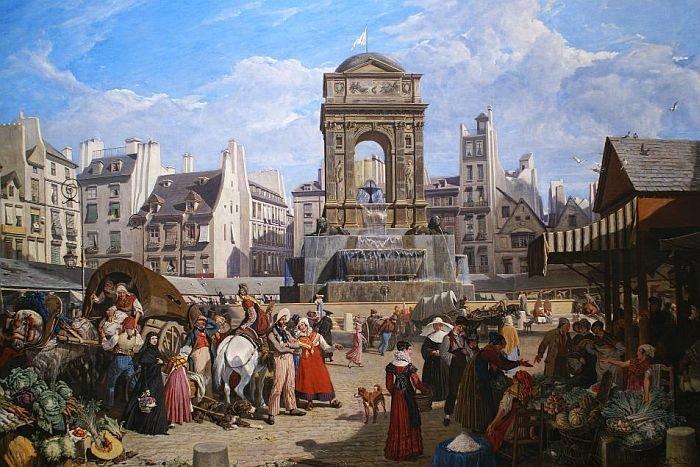
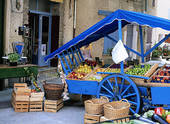
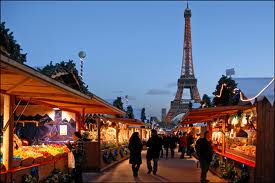
Marché volants de Paris, The Roving Food markets of Paris, France

Marché volants de Paris, the Roving Food markets of Paris, France

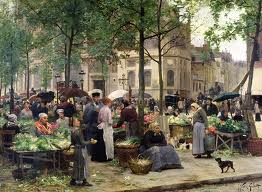
“Claude clapped his hands at the sight. He found something extravagant, crazy and sublime in all the jaunty vegetables.  He insisted that they were absolutely not dead but, after being pulled from the earth the day before, were awaiting the next sunrise to make their farewells from the cobblestones of Les Halles. He also claimed to hear in the market the death rattle of all the little gardens on the outskirts of the city.” The Belly of Paris, Emile Zola.

The Square in front of Les Halles, Victor Gabriel Gilbert

Zola’s novel was set in and around the legendary Parisian market, Les Halles in the late 1850’s, and so vividly evokes the old Paris market place, that as I turned the book’s pages, I was sure I could smell the pungent aroma of aging cheeses, hear the chop of the butcher’s cleaver, taste the newly picked strawberries.

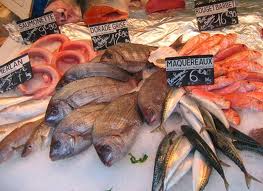
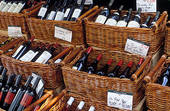
Back in the day, one fifth of Paris relied on Les Halles for their weekly grocery shopping, yet the market, which was in need of major repairs closed in the 1970’s. There’s a common saying in France, that “You can buy almost anything in Paris, without going into a store.” and today, Paris still enjoys a vibrant market culture, with some 75 neighbourmarkets spread across the 101 or so arrondissement (or administrative districts).  Open on different days throughout the week (Check here for the complete list ), vendors set up their open-air stands selling fresh fruits and vegetables, cheeses, fish, meat, as well as wine and flowers.   The market places are also a great place to kick back and relax, and many of the larger markets, such as the Rue Cler market, are surrounded by cafés and restaurants, where you can watch the market world go by.

Les fraises de Bretagne?


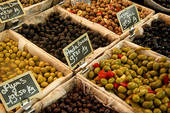
Olives et encore des olives.

France is known as the gastronomic capital of the world, and it is no surprise when considering how important the market is in a daily Frenchman’s life.  The bulk of the produce sold at the markets directly come from French farms.  France has a diverse climate and benefits from both vast expanses of agricultural land as well as the sea’s bounty to both the North and South. France is also very proud of its regional cuisine, from the fragrant herbs of coastal Provence, the richer, slow cooked stews of Bretagne and the spicier, Spanish influenced dishes from the Basque, cuisine is respective of it’s home terrain.

Unlike in other countries, a French farmer or fisherman is a revered profession, as the French place a high degree of importance and emphasis on their national produce. Whilst of course the country is experiencing pressures from the increase in industrial farming, there is protection for farmers and France is currently the largest beneficiary of farming related subsidies from the European Union.

French cuisine varies according to the season. Now with the start of spring, shellfish are becoming more and more common in market stalls, and oysters are in abundance.  In summer, the markets come alive with fresh fruit and vegetables, and by September, when the hunting season begins, game of all different kind, including pheasant, partridge, rabbit, duck are taken home from the markets and then dressed up and feasted on like a prize.

Everybody has a take on why the French enjoy some of the world’s finest cuisine. In my own point of view, I think it’s largely  because the French treat food simply – they respect ingredients, they use what they have on hand and keep to what they know best (and they do this fabulously well).  Neither are the French fond of trends – whilst they’ve adapted to the times and the passing of haute cuisine has been replaced by the healthier, lighter nouvelle cuisine, you are not going to find complex, deconstructed, unpronounceable menus. But you will always find the juiciest stake, the flakiest pastry, the freshest salad, and you will rarely be served a bad wine, the wine will suit the meal and the wine will be affordable – it’s a must!

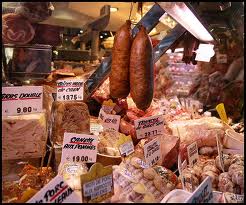
I’ve been to Paris almost annually and sometimes biannually since moving to North America and asides from feeling guilty over eating way too many chocolat éclair, I’ve never been disappointed with anything I ate.  My favourite time of the day is l’heure de l’apéritif, which is essentially happy hour, and was spent at one of the many outdoor bistros in Paris and usually includes a shared platter of charcuteries ( a selection of patés, cured meats and hams, some pickles), which always goes well with a refreshing glass or two of either Kir or white wine.

So in honour of the apéritif, and the advance of the Northern Spring, I went down to our local market and put together a small selection of charcuteries for a dinner party we had last weekend. Included was some  Jambon de Paris (Parisian ham), an Ostrich and maple syrup paté, Saucisson (cured sausage), some Chorizo, a bowl of cornichons (tiny gherkins) and of course a baguette. As it turned out, by the time I came out with a glass of Chablis, the eight kids we had over had practically eaten it all up, so back to the kitchen I went for top ups. Bon Appétit!

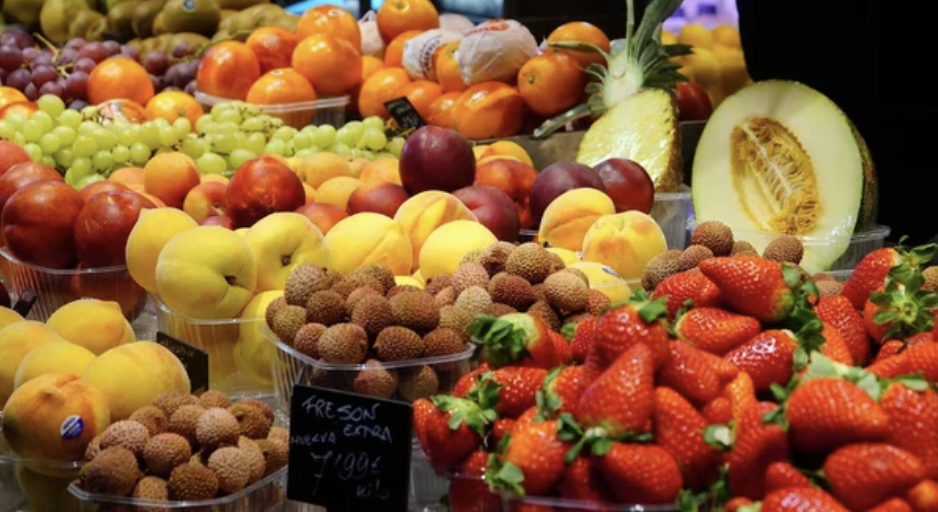
Inside Barcelona’s Most Famous Market, La Boqueria market, Barcelona, Spain.

The first thing I remember about La Boqueria is the colour.

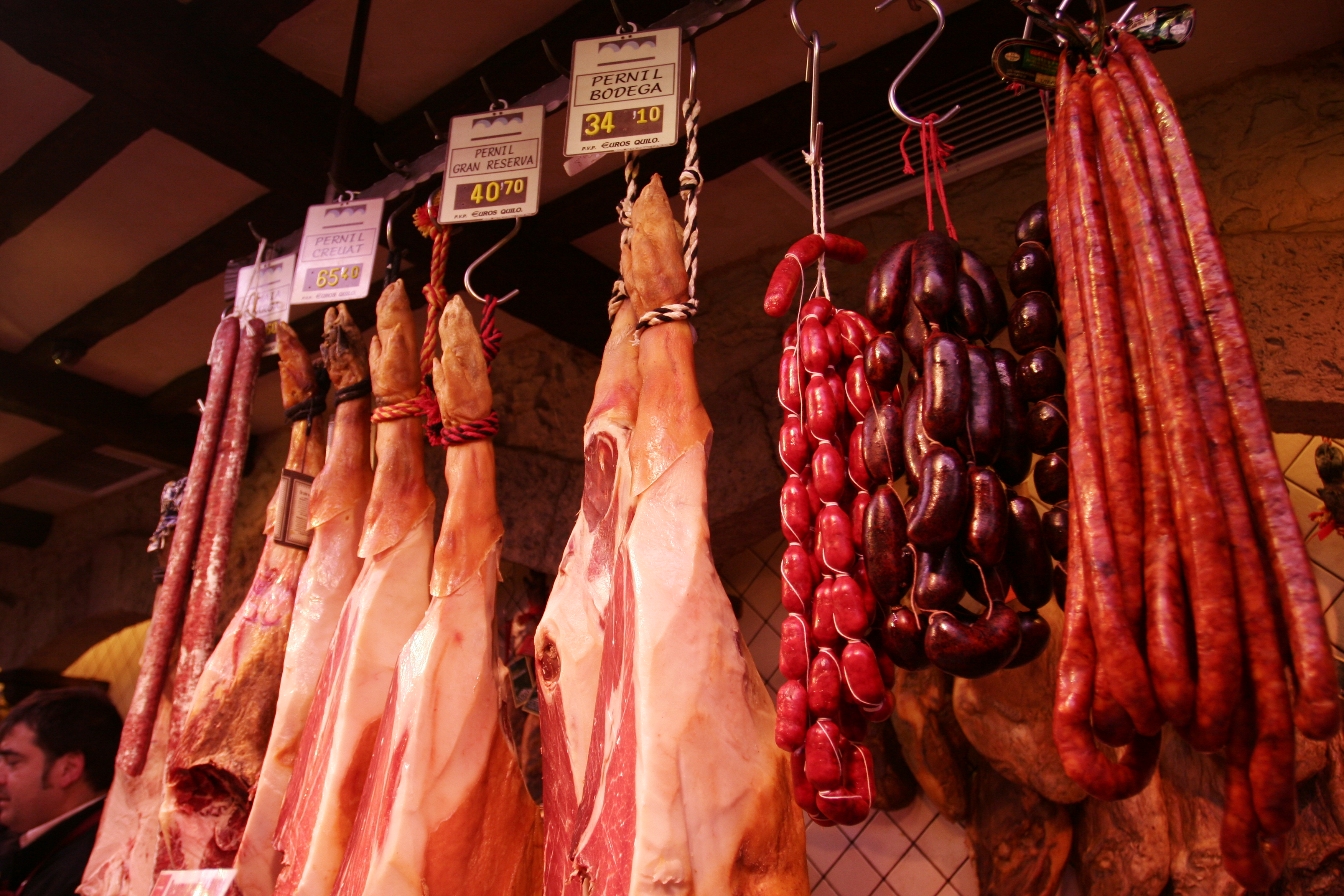
Rows of freshly pressed fruit juices in shades of orange, ruby, emerald and gold. Mounds of cherries spilled from baskets, peppers shone under the market lights and strings of deep-red jamón hung from the rafters like decorations. Even now, years later, when I think of Barcelona, it is often those colours that return first.

Then came the sounds.

Not the loud, chaotic noise of a market fighting for attention, but a steady rhythm. Coffee cups meeting saucers. Vendors greeting regular customers. The splash of calamari hitting a hot plancha. The sizzle of garlic and olive oil. Knives moving through fish and vegetables. Conversations rising and falling in Catalan and Spanish.

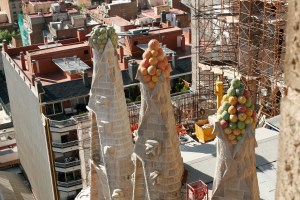
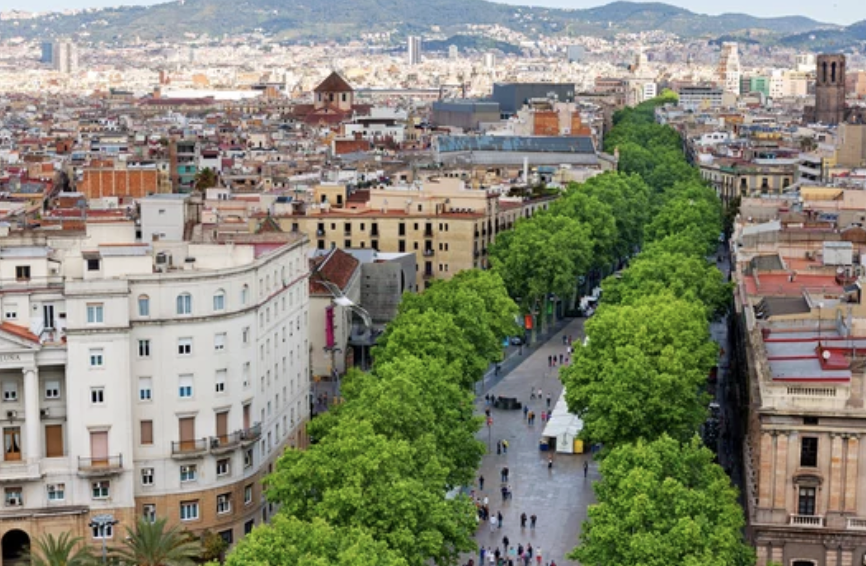
Described as the sexy sister to the more subdued, yet elegant, Madrid, Barcelona greets you fitted out in Gaudi’s finest. She’s flirty, in your face, and a little sauvage. The capital of Catalonia, she rests her head in the mountains, yet her feet dangle in the Mediterranean. Visitors arrive for Gaudí’s extraordinary architecture, the beaches, the Gothic Quarter and the city’s unmistakable Mediterranean energy. Yet for me, Barcelona has always been a city best understood through its food, and nowhere captures that spirit quite like La Boqueria.

Located just off Las Ramblas, La Boqueria has been feeding Barcelona in one form or another for more than eight centuries. Long before the market acquired its distinctive iron roof and stained-glass entrance, traders were gathering here outside the old city walls, selling meat, livestock and produce to travellers arriving at the city gates. Records suggest market activity on the site dates back to at least 1217, when vendors set up simple stalls beyond the protection and taxation of the medieval city.

Over the centuries, the market evolved alongside Barcelona itself. What began as an informal gathering of traders eventually became an established municipal market, finding a permanent home in 1840 on the site of the former Convent of Sant Josep. The elegant iron roof that now shelters shoppers arrived in 1914, giving La Boqueria much of the appearance it retains today.

That tension between market and attraction has become one of La Boqueria’s defining challenges. Today, Barcelona is investing heavily to ensure the market remains a functioning food hub rather than simply a backdrop for photographs. A major renovation of the fish hall is underway, new technologies are being introduced to help manage overcrowding, and the market has joined efforts to seek UNESCO Intangible Cultural Heritage recognition. The goal is simple: preserve the market’s soul while ensuring it remains relevant for future generations.

Perhaps that is because La Boqueria’s true value lies not in its architecture, nor even in its history, but in its continued role as a place where Barcelona comes to eat. Every turn of a market aisle revealed something new. Mountains of shellfish. Glossy olives. Fresh cheeses. Sausages coiled into long loops. And everywhere, the famous Iberian jamón, hanging overhead like edible chandeliers. More than once I found myself wondering how much of it I could realistically smuggle through Canadian customs.

Barcelona itself seems built around the pleasures of eating. Cafés, bars and restaurants spill onto pavements, conversations linger over coffee, and long lunches are treated as a necessity rather than a luxury. Catalan cuisine combines the bounty of the Mediterranean with a deep respect for local produce. Seafood, vegetables, cured meats, olive oil and wine all feature prominently, creating food that is often simple but rarely ordinary.

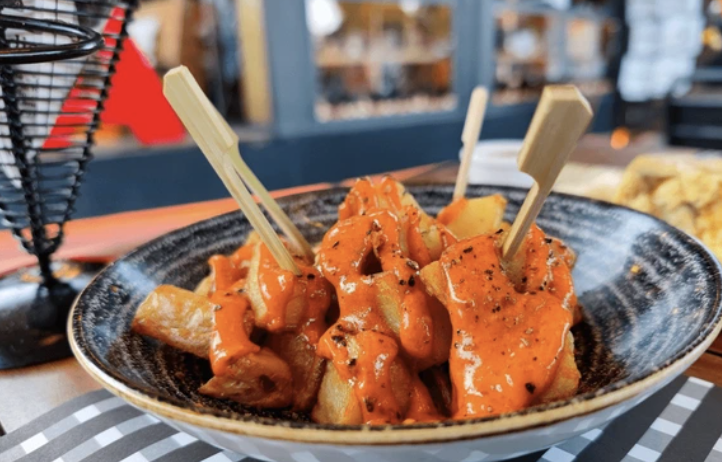
What I love most about Catalan food is that it belongs to everyone. I watched children happily munching on cod fritters, families sharing plates of patatas bravas, construction workers ordering sandwiches filled with Iberian ham sitting alongside elegantly dressed women having a glass of wine and sharing a plate of Trampo de Mar (Grilled Scarlet Prawns / Gambas Rojas). Good food here did not seem reserved for special occasions – it is simply part of daily life.

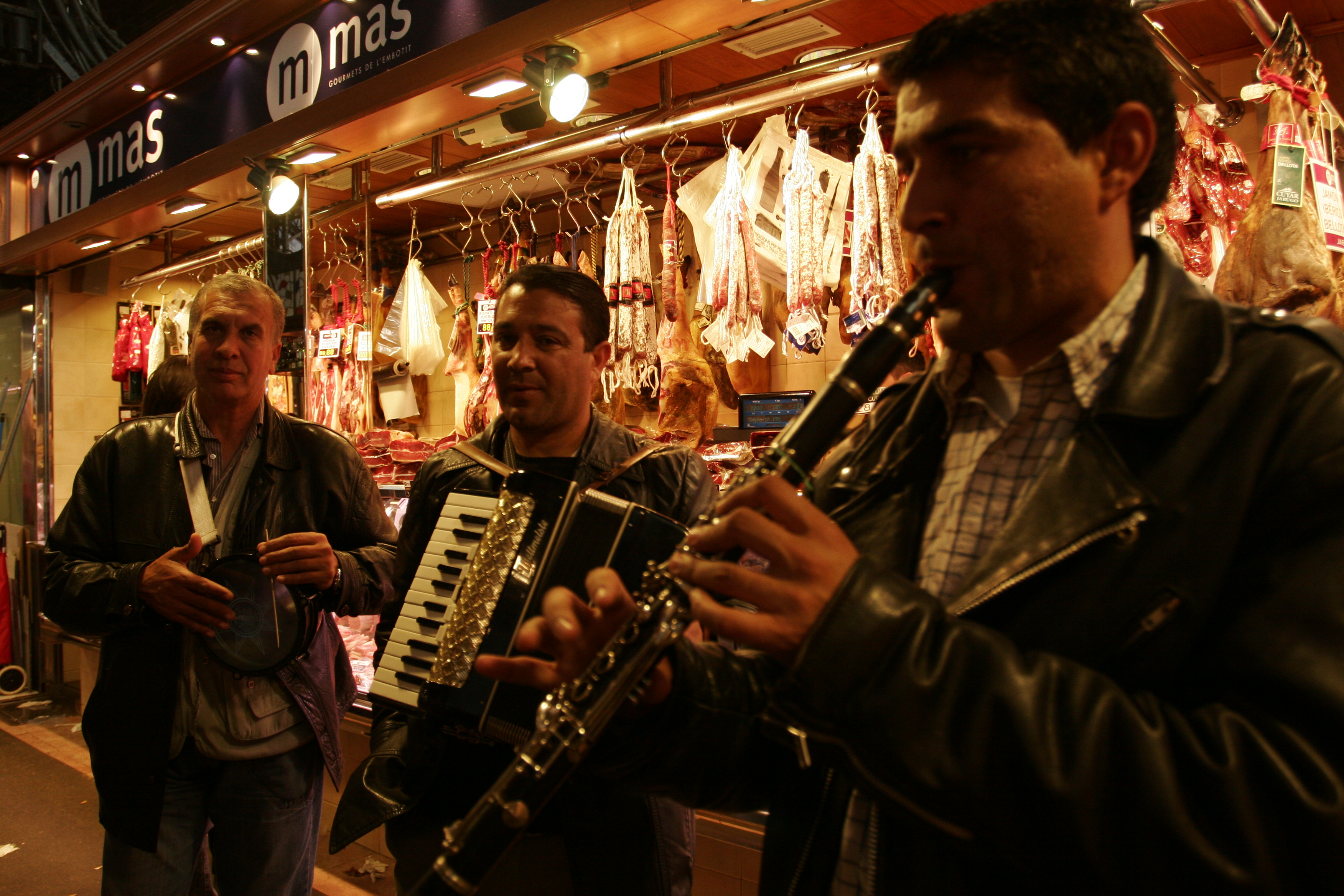
Market music

I went to Barcelona three or four times in the span of a few years. On my first visit to La Boqueria, my friend and colleague Natalie, and I, did as the local and squeezed onto stools at one of the market’s counter restaurants and ordered lunch. We watched as calamari a la plancha, cod fritters with spicy aioli and freshly grilled sardines were prepared right in front of us. The cooks worked quickly and confidently, moving between the grill and customers with practiced ease. It was impossible not to be drawn into the theatre of it all.

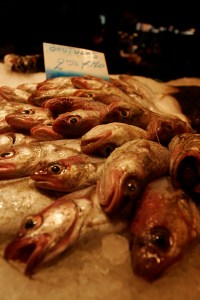
A special mention must be made of the seafood. For centuries, fishermen have worked the Mediterranean waters off Barcelona’s coast, and fish remains central to both the local economy and the Catalan table. The market’s fish hall is a celebration of that heritage, showcasing everything from sardines and anchovies to squid, prawns and octopus.

I ate all sorts of things in Barcelona, but it is often the simplest dishes that stay with me longest.

Perhaps that is because Barcelona’s food culture is not built around exclusivity. The city’s best meals are often the most accessible ones: a plate shared among friends, something eaten standing at a market counter, or a tapa enjoyed with a glass of cava while watching the world go by.

Of all the dishes I brought home from Barcelona, none has appeared on my table more often than patatas bravas. Found everywhere from neighbourhood bars to market counters, patatas bravas are one of Spain’s great comfort foods. Crisp potatoes, roasted until golden, are served with a smoky, slightly spicy sauce and often accompanied by aioli. Like many of the best dishes in Catalonia, the ingredients are humble, but when prepared well, the result is irresistible.

Over the years I have made countless versions of patatas bravas, each one transporting me back to La Boqueria. 

This is the version I make at home.

Patatas Bravas (or bad-tempered potatoes)

Ingredients:

  • 3 tablespoons of butter
  • 4-5 large potatoes, peeled, and cut to 1-inch cubes
  • 4 cloves garlic,whole, skins left on
  • Salt and freshly ground black pepper
  • 3-4 bay leaves
  • 1 1/2 tablespoons Spanish paprika
  • 1/2 cup  Ketchup or chilli sauce
  • 1/2 cup (4 fl. oz) mayonnaise
  • 1 cup olive oil for frying

Method:

Cut up your potatoes into one inch pieces, pat dry and then season with salt, black pepper and the paprika. In a large skillet, melt your butter and and heat the olive oil and then then fry the potatoes for 3-4 minutes, ensuring to turn over on each side. This process will make the potatoes crispy, but will not necessarily cook them through. Turn down the heat, add the bay leaves and garlic, put the fry pan lid on and then keep cooking until potatoes are done inside. Stir occasionally to ensure they don’t go soggy.

Patatas bravas, depending on where you eat them in Spain, they are either served with a tomato puree-type sauce on top of them, and/or with an aoili. These are the simplest methods I have found.

Quick Salsa Brava

  • 2-3 tbsp tomato paste or passata.
  • 1 tsp smoked paprika
  • Pinch chilli flakes
  • 1 tbsp olive oil
  • 1 tbsp water

Mix together and warm gently.

Cheat’s Aioli

  • 4 tbsp good-quality mayonnaise
  • 1 small garlic clove, finely grated
  • 1 tsp lemon juice

Mix together and refrigerate until needed.

To Serve

Pile the hot potatoes onto a platter, drizzle with the salsa brava, then spoon over the aioli. Finish with a little extra smoked paprika if desired.

For more information on Boqueria, visit the market website at:

http://www.boqueria.info/


Getting over the Juju with Groundnut Stew, Kenema town market, Sierra Leone

Getting over the Juju with some West African Groundnut Stew

“Gail, please tell your young friend to quieten down until she leaves this country, otherwise she could get herself into trouble, very big trouble.”

The warning came from Sister Teresa who ran the local orphanage, about a ten minutes drive from our guest house, which I had been sharing with Gail, a very attractive American woman in her fifties, Heidi a cranky Dutch Doctor and my boss, Amir another Doctor who was on his first mission out of his native Bangladesh. I had caught typhoid, and had spent three days in bed alternating from excruciating stomach pain, slipping in and out of consciousness and battling fever, yet Sister Teresa wasn’t convinced it was typhoid, she had told Gail that I had been purposely poisoned, or worse still that I had the Juju – a spell cast over me.

It was March 2003, and we were stationed in Kenema, a small mining town, a bumpy seven-hours drive out of Freetown, the capital of Sierra Leone.   I had arrived there in the middle of the first scale up efforts of post-war assistance and would be developing a small health-financing scheme in Kenema’s district hospital and health centres. My scheme meant that by charging patients a small fee, the health centre staff could be able to afford to take home a salary, purchase much needed supplies and equipment as well as put a little aside to be able to exempt the poorest of the poor from paying.  Health staff in developing countries earn very little. For example in Sierra Leone, a Nurse would earn on average of $20-$30/month, yet would often not see this money for several months at a time. To supplement their income, they would operate their own private clinics, work additional jobs or ask patients to pay them directly – the fee ranging from the reasonable to the ridiculous. This of course caused even further problems, and prevented the very poor from seeking medical treatment. On top of that, it’s a common fact, that developing country government administrators like to take their cut, so my NGO’s attempts to put some type of transparency into the system, wasn’t exactly welcome news to the powers that be.

It was my first time in Africa, and the feeling I got from flying over the Saharan desert was the same as that initial feeling I experienced when I first stood in the grounds of a remote Cambodian hospital, three years earlier. That almost out-of-body, BIG feeling which I can best describe as a state of grace, or having found your “path”.   It hadn’t been an easy few months for me, after two years of living in Asia, I had moved to Québec to be with Philippe, yet although I had applied for residency status, almost a year later nothing had been settled and I was getting antsy just playing house. We had also recently married. Although I certainly raised a few eyebrows amongst family and friends for practically abandoning my new groom at the altar, the stress of moving to Canada and waiting for permission to start life again had taken its toll, so to Africa I went.

In 2004, Kenema was a dirty, dusty, arse end-of-the-world type of place.  A diamond mining town; yet the jewels must have gone out as fast as they came in, as I never saw any evidence of those shiny, hard numbers.  It was a year after the war, but it was still relatively dangerous, with regular shootings and robberies; the nearby base for the UN peace keeping force, UNAMSIL, a close reminder that things could still get ugly.

For entertainment we had CNN and on Saturday nights, the mostly Pakistani UNAMSIL contingent would put on an open-air barbeque at their base to which they would invite us. We were spoiled with tandoori chicken, naan bread, pakora, dahl, vegetable curry, beef curry, lamb curry, kofta, korma, you name it – but next to nothing was sourced locally, UNAMSIL having to import the bulk of it, as the war had ripped the majority of the local farmers of their livelihoods, not to mention their tools and other supplies needed to start growing. As a result, there was little food about and little to go around.

Gossip constitutes an important part of daily entertainment in an aid workers life. There’s gossip about the staff you are working with, staff you share house with, staff who are working in the house for you, staff working for other NGO’s and even staff you may have known in other missions, who happen to know staff who you are working with now!

Depending on what was going in terms of work, there was anywhere up to 6 staff sharing our guesthouse, with occasional capital base staff visiting. Yet for most of the time, it was usually the two Doctors (who didn’t get along), Gail and myself who lived there. Jo, an Australian who I had worked with in Cambodia had told me about the job, as she had been the Base Manager, but having been offered a temporary position with the UN in Freetown, she left shortly after I had arrived. Heidi was brilliant, yet she was completely overwhelmed.  Running the largest paediatric clinic in the country, with a mostly untrained health team, few resources and an increasing caseload of Lassa fever (a strange viral disease), Heidi didn’t stop.  She also barely ever smiled and looked like she would collapse at any moment. Our boss was also overwhelmed; yet it was more of case of not having a monkey’s clue about what he was supposed to do.  When I caught typhoid, I had spent two or so months in the country, and had not seen him in either the hospital, or any of the many health centres and he had yet to visit the refugee camps where he was supposed to supervise various activities.  Although this drove us crazy, we were way too busy to do much about it.

After work, Gail and I would usually ask the driver to stop off at the local Lebanese store who sold a few Western staples like chocolate, some cheese, cigarettes, (and also surprisingly good Chateau wine for cheap). We would then walk over to the market to see if they had any fresh salad vegetables, perhaps an avocado, even some limes.  Anything to add a little spice or variety to the dinner that awaited us later. We’d also go back to this market on weekends, and had befriended a number of tailors and had started to outfit ourselves in beautiful and bright Gara tie-die outfits, until we realised that a white lady can never hope to achieve what a black lady can with tie-die.
Kenema market, Sierra Leone

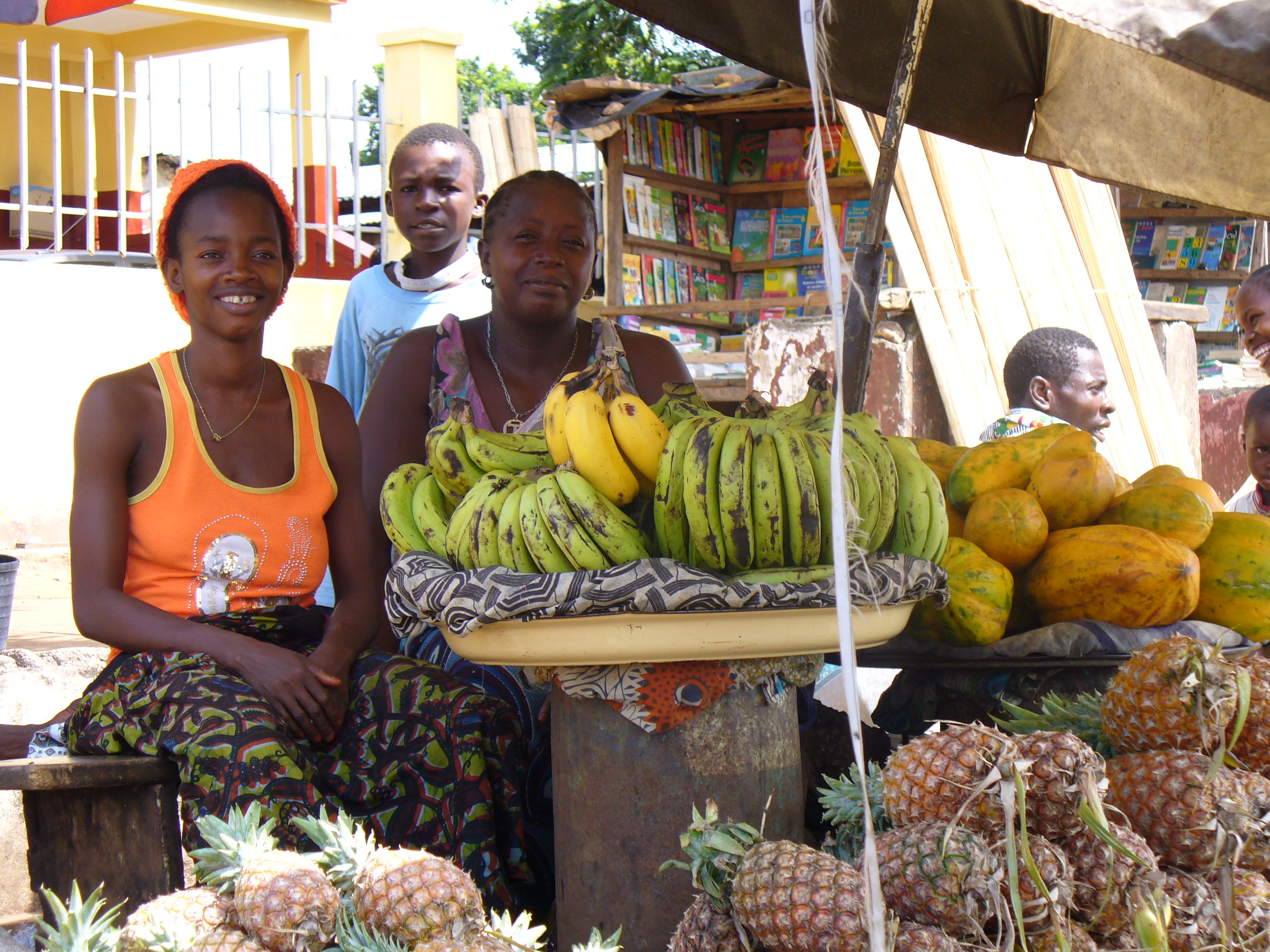
Kenema Town’s market weaves its way in and around a number of streets in the centre of town.  There must have been several hundred stall owners, most of them selling used clothes and shoes that had been sent over by Westerners thinking this would help.  There were also a couple of tailors who had set up shop in the market, and then on the market outskirts were the food stalls.   This was depressing.  For some five months, we lived on a staple diet of fried plantain, cheap packet spaghetti and tomato paste, bony river fish, occasionally some skinny looking chicken and rice, all usually accompanied with a salad of limp lettuce and barely ripe tomato. Gail would be beside herself when she found some cilantro.  There was always pineapple, some small onions, but little else. It was a sorry state of affairs.

Whilst I made do with the lack of variety in my diet, whilst recovering from typhoid I had developed an intense craving for – you guessed it – the mother of all healing foods – chicken noodle soup.

Heidi had found me unconscious in bed after I had returned from the office with severe stomach cramping about three days earlier, and had nursed me day and night, calling in the local blood Doctor to run some tests, and watching over me like I hawk, afraid that the seven hours drive would be too much for me.  Looking after me was one of the only times I saw her features soften and her take on a gentler edge.  She called in Solomon, our cook to see if he could pull together some soup. He did, and about twenty minutes later he came into the bedroom with a piping hot bowl that did resemble chicken soup – but it turned out to be a few cubes of chicken stock and a bit of powdered milk.  Too exhausted to try to explain, I had a few mouthfuls and lay back down.

“I know what you need.” said Heidi. She left the room and I could hear her talking on the phone in Krio to somebody.  Her voice was light, so I figured it must be Abdul, her husband, a local Sierra Leonean who she met and then almost lost during the war.

The next day was a weekend day, so having no house staff working; we were left to our own devices to cook.   Heidi set off early to meet Abdul, who came in from the next town where he ran a local NGO, and the two of them set off to the market.  I must have fallen back asleep, but when I awoke a few hours later, the house was perfumed by a smell that could only mean good.  I got out of bed and walked down to the kitchen to find  the two of them were busy at work.

“Mira!”  Abdul bellowed and came over and gave me a sweaty hug.

He was one of the cheeriest guys I had ever met. Always enthusiastic, always smiling, and for the second time I had known Heidi she was smiling.  With Abdul around, Heidi transformed.

“What’s all this?” I asked.  There was a huge pile of what looked a dark type of peanut butter, and then cubed bits of meat being sautéed with onions and tomatoes.  There was also a large slab of a brown substance, which turned out to be groundnut paste, which is essentially a peanut paste.

“It’s groundnut stew – we are making it for you, it’s sure to make you better.”

It did. For the next two days, it was all I ate, and I slowly recovered.

Two days before I was to implement the health financing scheme to the entire health district, and a week before most of the national NGO staff were to be laid off as most of our programs were finishing, our office was attacked by ten armed men, who assaulted the guards, tying one up and then ransacked the place. Shortly afterwards, Gail, my boss and I were advised to evacuate Kenema. Heidi having left for vacation with Abdul a few days earlier.

Four months later I returned to Kenema with another NGO, yet made it a point to visit my old office and guesthouse. Solomon was still there, and we spent a few minutes running through a few new recipes. The NGO was now run by a guy called David S who I heard was later sacked for alcoholism.  The health-financing scheme had never been implemented, with most of the printed materials held in a storage room, yet the computers purchased for the hospital administration to manage the project had strangely disappeared. Lassa Fever claimed the lives of the Chief Medical Doctor who was working tirelessly to maintain the virus; his young daughter also caught it and died.  Several nurses died from Lassa, not to mention the countless number of children who were unable to be saved.

Gail works for an NGO in Vermont these days, we visit each other a couple of times a year and have remained fast friends. Heidi and Abdul continue to run their medical NGO in Bo, Sierra Leone. Jo works for the World Food Programme. Amir went back to Bangladesh.  I don’t think he ever-found work for an International NGO again, at least I haven’t heard his name in the NGO gossip channels. Most recently, one of our HQ offices fired a guy for gross incompetence and misconduct. The news travelled from base to mission and finally to HQ.  His name was David S.

Groundnut stew

Ingredients

  • 1 pound of cubed beef for stewing (or alternatively chicken pieces)
  • 1/2 cup peanut butter (fresh is best, grind your own at good health stores)
  • 2 medium sized yellow onions
  • bit of coconut, olive or grape seed oil for cooking
  • 2-3 red chillies
  • 1 litre of stock (chicken or vegetable)
  • 5-6 large ripe tomatoes, or 1 large can of tomatoes
  • 2 sweet potatoes
  • pinch of ginger
  • teaspoon of salt, a flash of black pepper
  • rice to accompany (brown is always better for you)
Method:
In a heavy-based saucepan, sauté the onions in the oil, and then add the meat and continue to sauté until lightly browned. Season with salt and pepper.
Now de-seed the chillies and add the ginger and peanut paste, and add the stock. Mix through, and cook on low heat for one hour and then add the diced sweet potatoes and cook until they are done.
Optional: you may want to replace the sweet potato with okra beans. If so, add 1 cup of okra at the end, and cook for about five or so minutes or until done.
For vegies, remove the meat and add a couple of cups of cabbage, keep the sweet potato as well as okra.
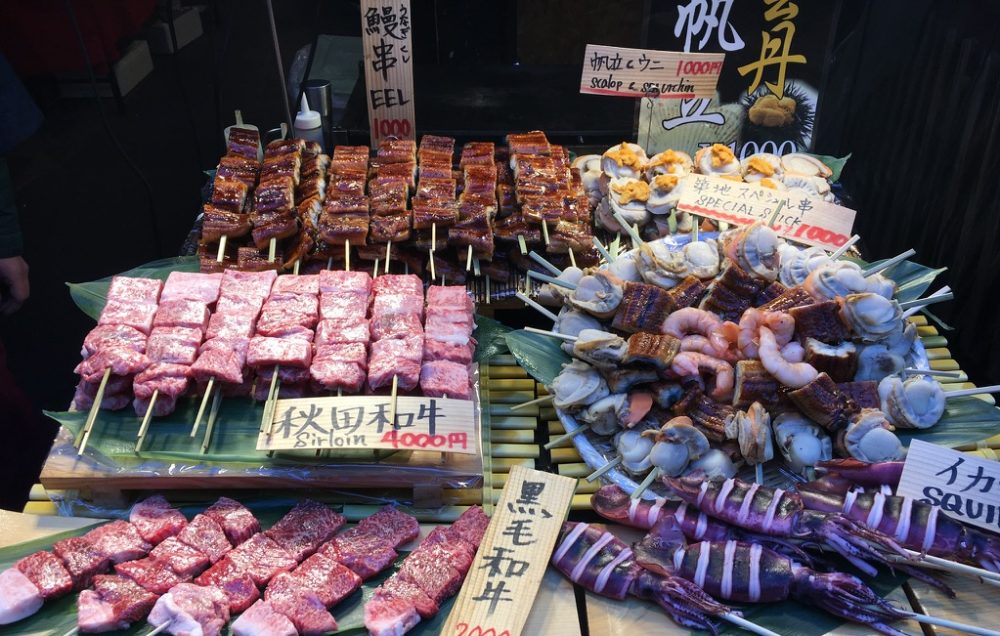
Serve with steamed rice.

Love and a hot red chilli. Boeung Keng Kang Market, Cambodia

In 2001, I left my native Australia and embarked on a career in International Development.  My first country mission was in Cambodia, where I was to spend a year. Renting the upper level apartment from a Cambodian family, I did most of my food shopping in a little market in the Boeung Keng Kang district.  On weekends, when I had more time, I would hop on a moto-dop and venture out to the Russian or “Psar Toul Tom Poung” market, which is a great place for souvenirs, silk, designer seconds as well as bootlegged CD’s and DVD’s.   Saturday afternoons was often spent choosing a new outfit for the night ahead and recharging from the night before with either a freshly squeezed green orange juice or icy cold coffee with condensed milk.

Half way into my year in Cambodia, myself, my house mate Gunnar, Greta, a teacher I had recently be-friended,  as well as an old neighbour from Australia, decided to make our way to Vietnam, with the plan of travelling up the Vietnamese coast, and hoping to spend New Years Eve in Halong Bay.

The journey up the coast is material for yet another type of blog, yet in brief, Gunnar left us half way up the coast, and by the end of the trip, three had become a quick crowd.  On top of that, I had caught a cold, so the charms of the good-looking French Canadian guy on the fishing boat that I met on the trip back to the mainland were almost wasted on me. Needless to say, he was eager, and a week later he turned up on my doorstep in Phnom Penh when I had returned to Cambodia.

Philippe certainly was interesting, and there was no doubt that we got along, but I still wasn’t sure. When he offered to make lunch one day and asked where to get ingredients, I gave him directions to what is the crazy maze of the Boeung Keng Kang Market. I also told him to seek out my favourite vendor, Huyen a gentle Vietnamese woman, who usually set up shop in a small space in front of the sewing machinists and in between the rambunctious pineapple sellers.  I then left for work, quite sure he would never find Huyen. When I returned for lunch, he served me succulent pork medallions, sautéed mustard greens and baby carrots bathed in honey and ginger. On my kitchen bench lay a bouquet of mixed oriental herbs, with Huyen’s signature red chilli tucked in the middle.  After that, I asked him to stay, and well, ten years later, the rest is history.

A shorter, French version of this article appeared in Readers Digest Canada. 

http://styledevie.ca.msn.com/amour-sexualite/selection-galeriedephotos.aspx?cp-documentid=27999738&page=1