For years, this blog sat quietly in a forgotten corner of the internet.
It wasn’t because I stopped traveling. Quite the opposite. My work and personal life carried me across countries and continents at a pace that left little room for reflection. There were stories everywhere, yet somewhere along the way, I stopped writing them down.
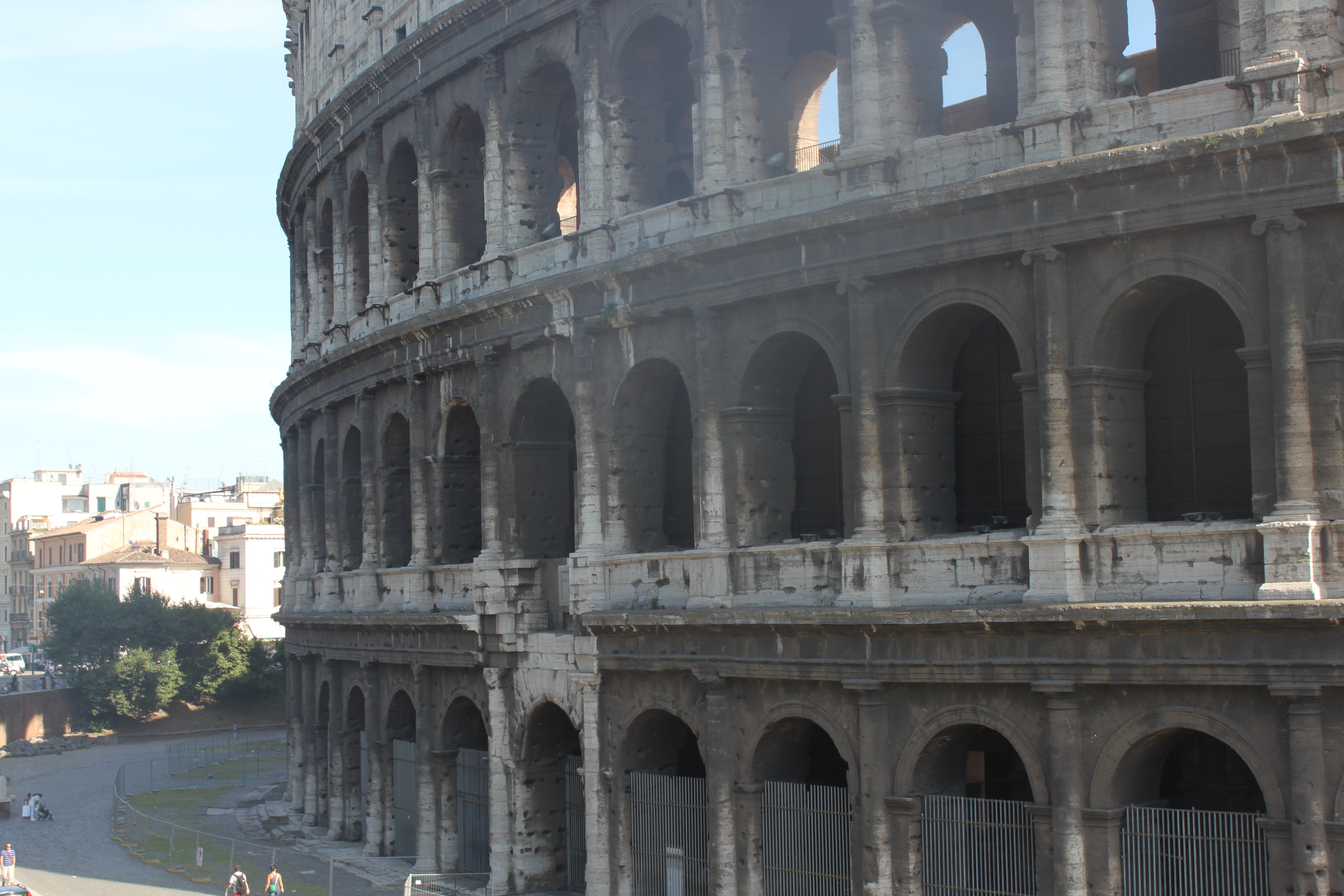
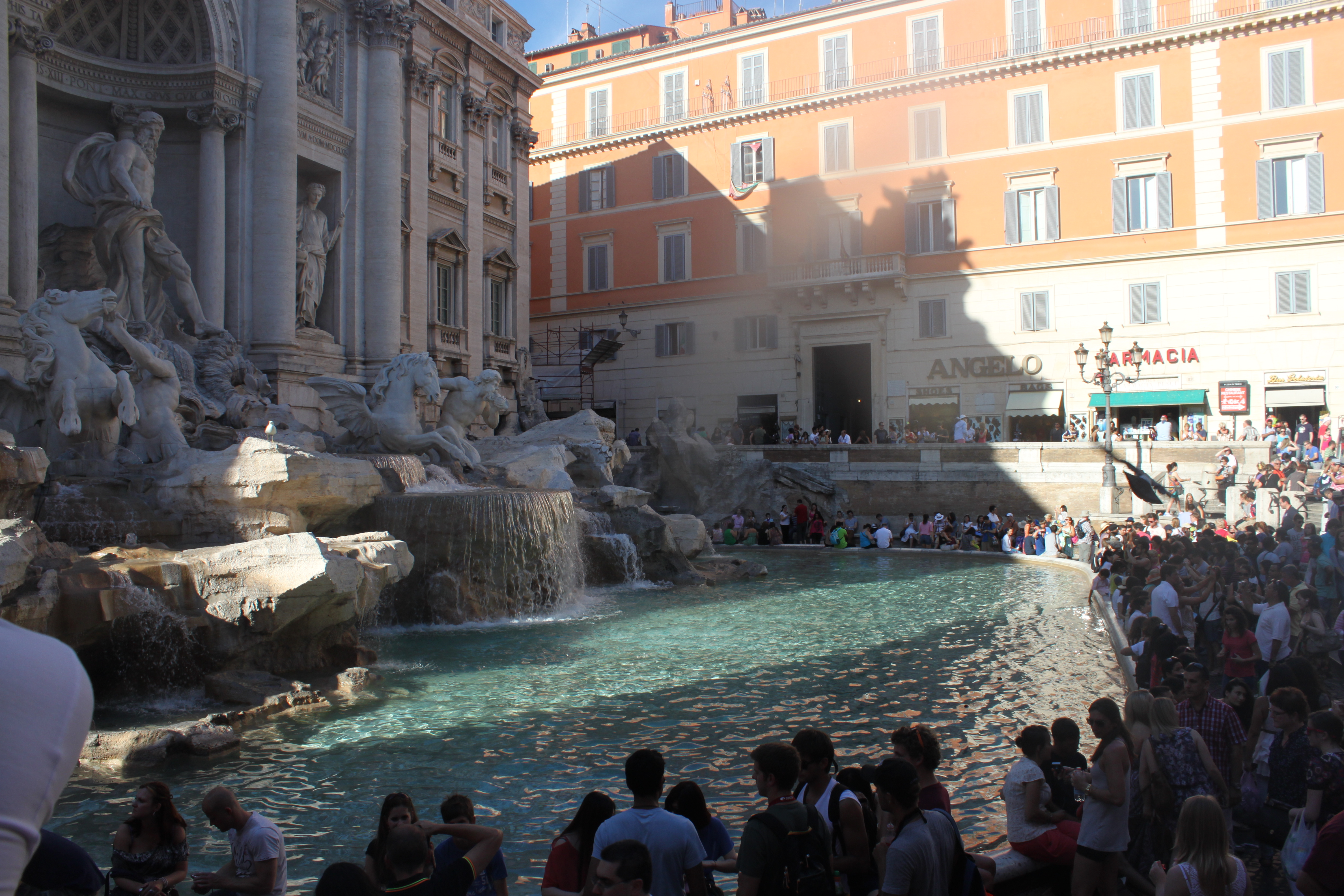
Now, as my life shifts again, I have found myself revisiting old photographs. Again and again, my thoughts drift back to the months I spent living in Rome. Not to the Colosseum or the Vatican. Instead, my mind returns to two distinct markets. One taught me about Italy; the other reminded me of the wider world. And between them, they helped a foreign city feel like home.
Hera picked me up from Fiumicino Airport.
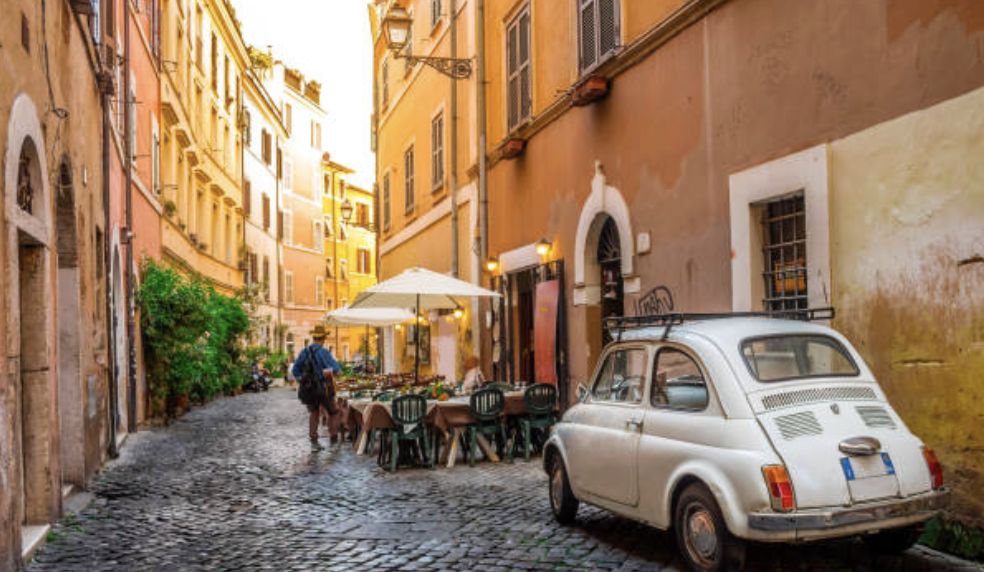
We had worked together years earlier in Montreal. Now living in Rome, we had seen each other the year before after not crossing paths for over a decade. Neither of us expected that we would soon be living in the same city.
Then one day, I sent her a message: “Guess what? I’m moving to Rome.”
For the second time in our lives, we found ourselves sharing a city.
This is what happens, I think, when you spend much of your life away from the place you were born. Those of us who leave our homelands somehow pick up quickly where we left of. We build friendships across continents, lose sight of each other for years, and then unexpectedly reappear in the same place at the same time, sometimes finding more of a community in our transplanted lives than where we permanently reside.
My new home was in Testaccio, Rome.
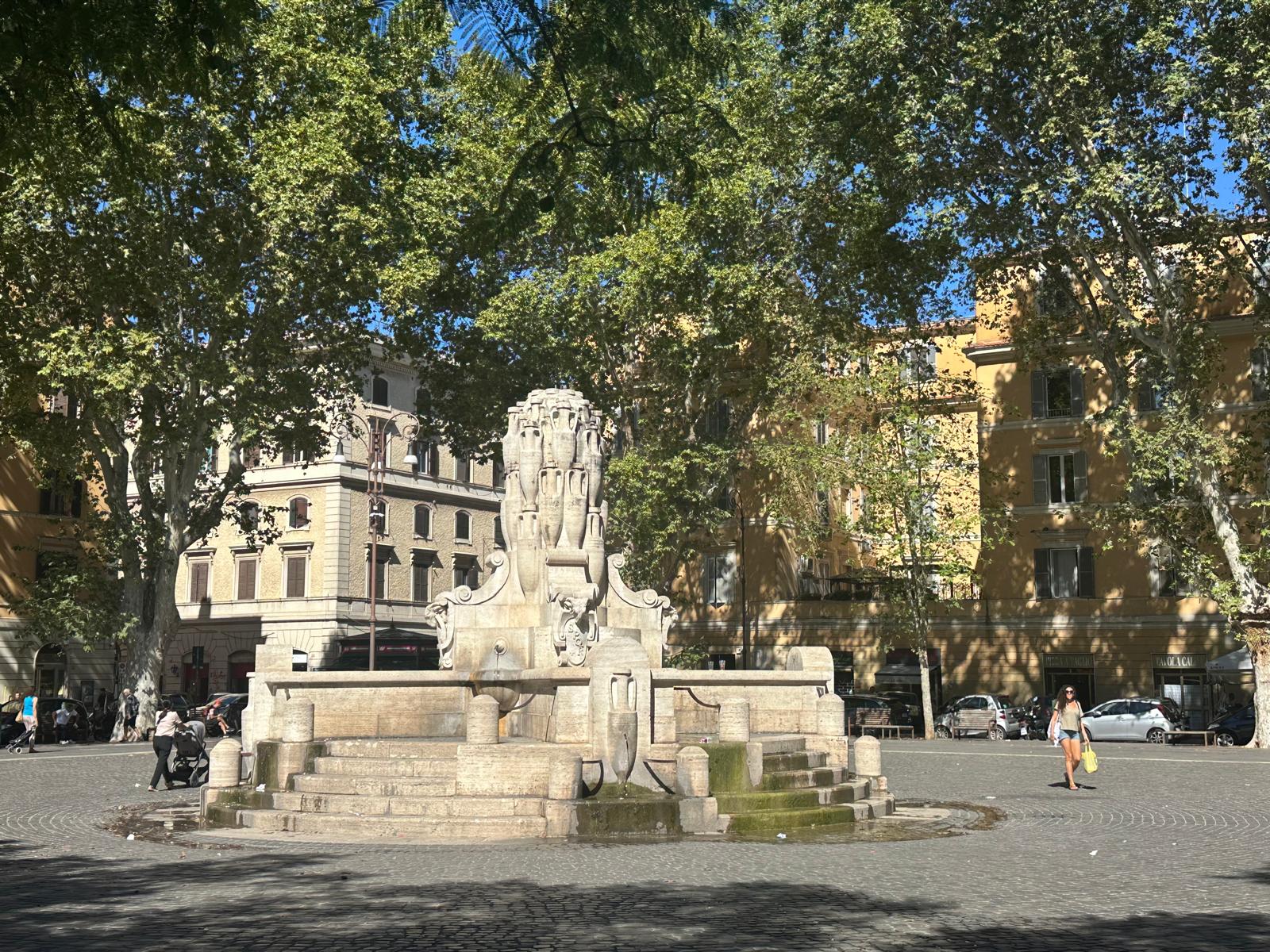
Testaccio is vibrant working neighbourhood just across the Tiber and best known for Monte Testaccio, a hill built from millions of discarded clay amphorae that once carried olive oil throughout the Roman Empire. Yet what captivated me was not its ancient history, but its daily life.
Every evening around five o’clock, the neighbourhood came alive. People of all ages gathered in the square. Teenagers lingered over gelato. Elderly locals sat on benches with their pet dogs exchanging news. Friends and colleagues met up to share pizza, spritz and conversation. It felt like the very embodiment of la dolce vita.
At the heart of it all sat Mercato Testaccio.
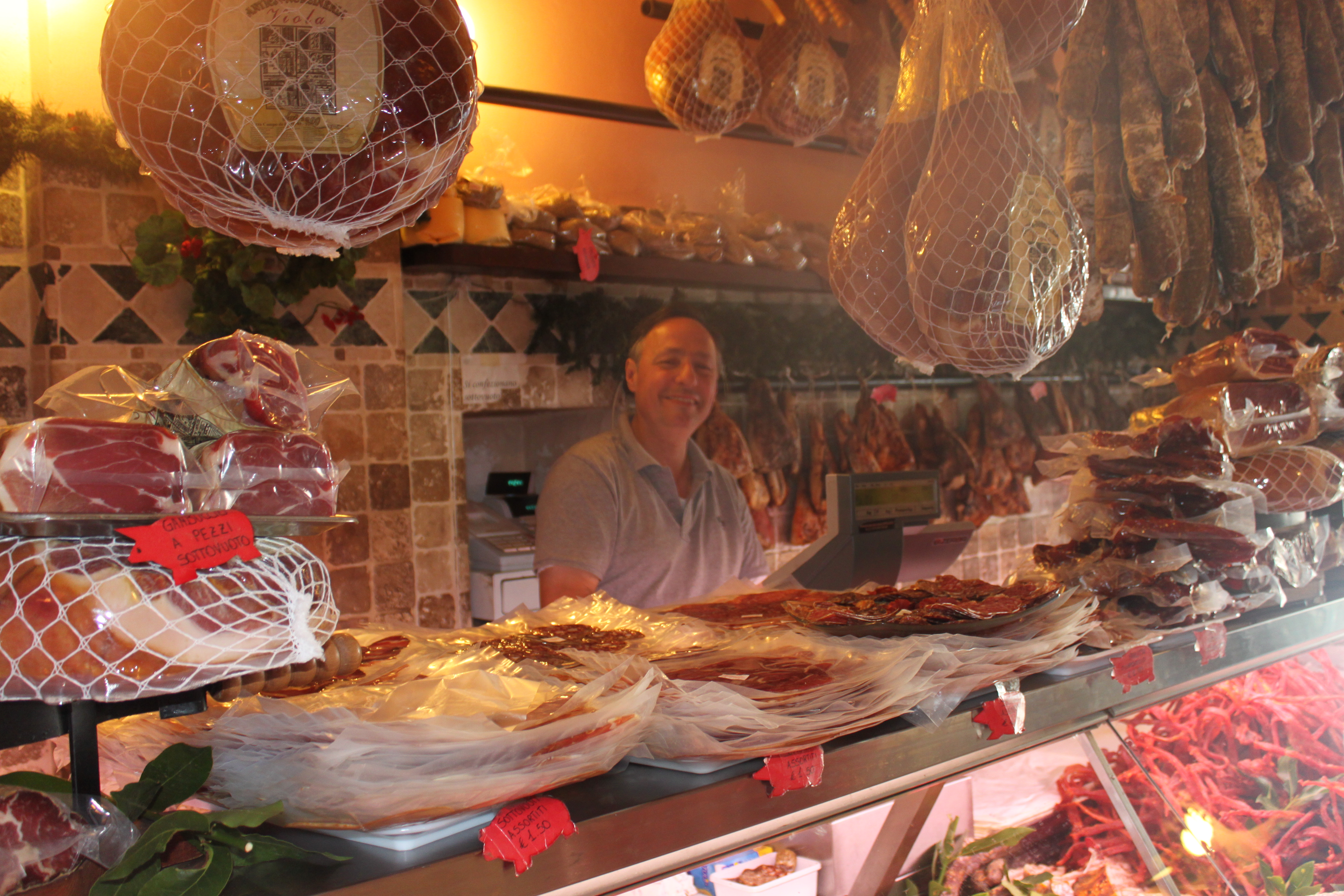
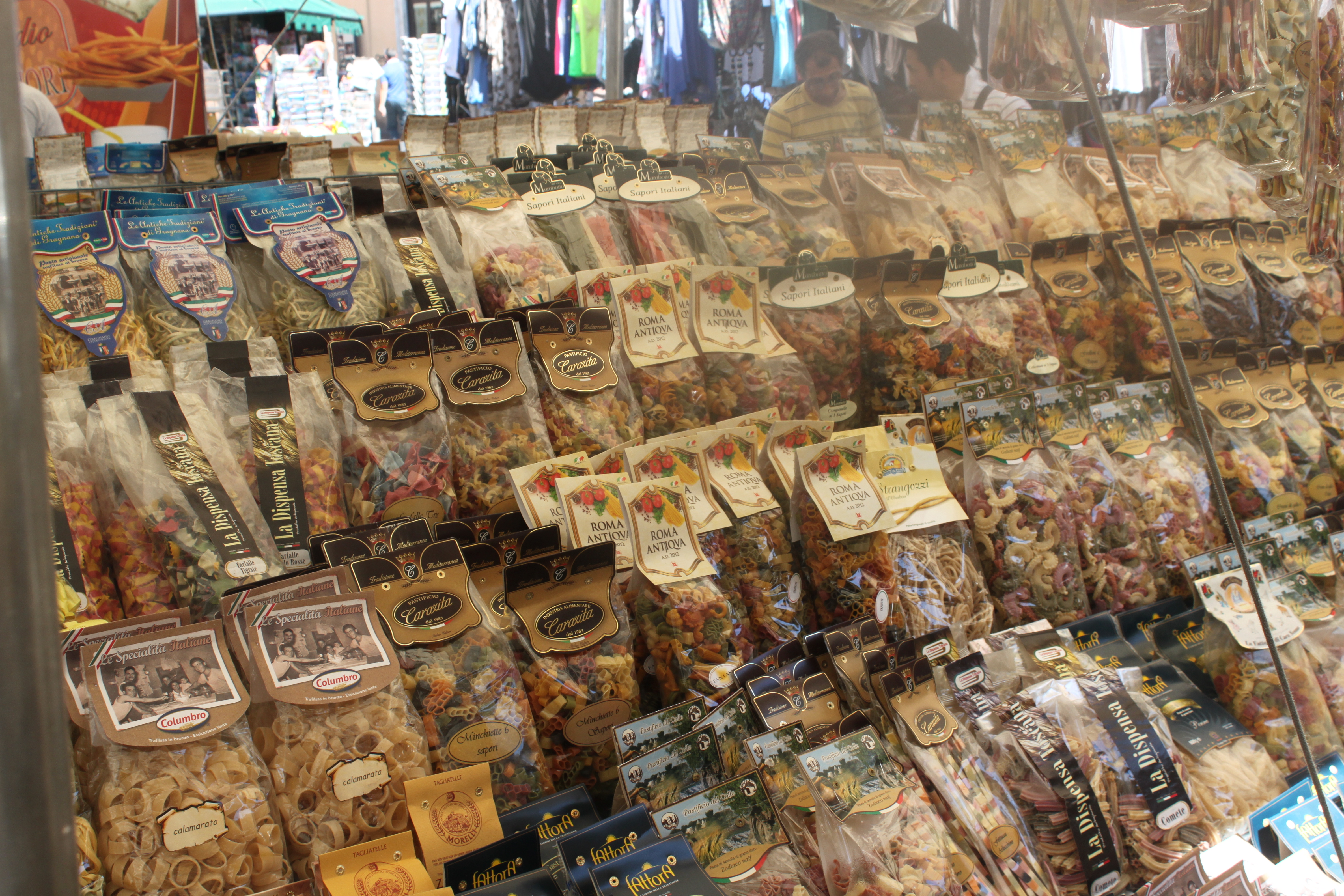
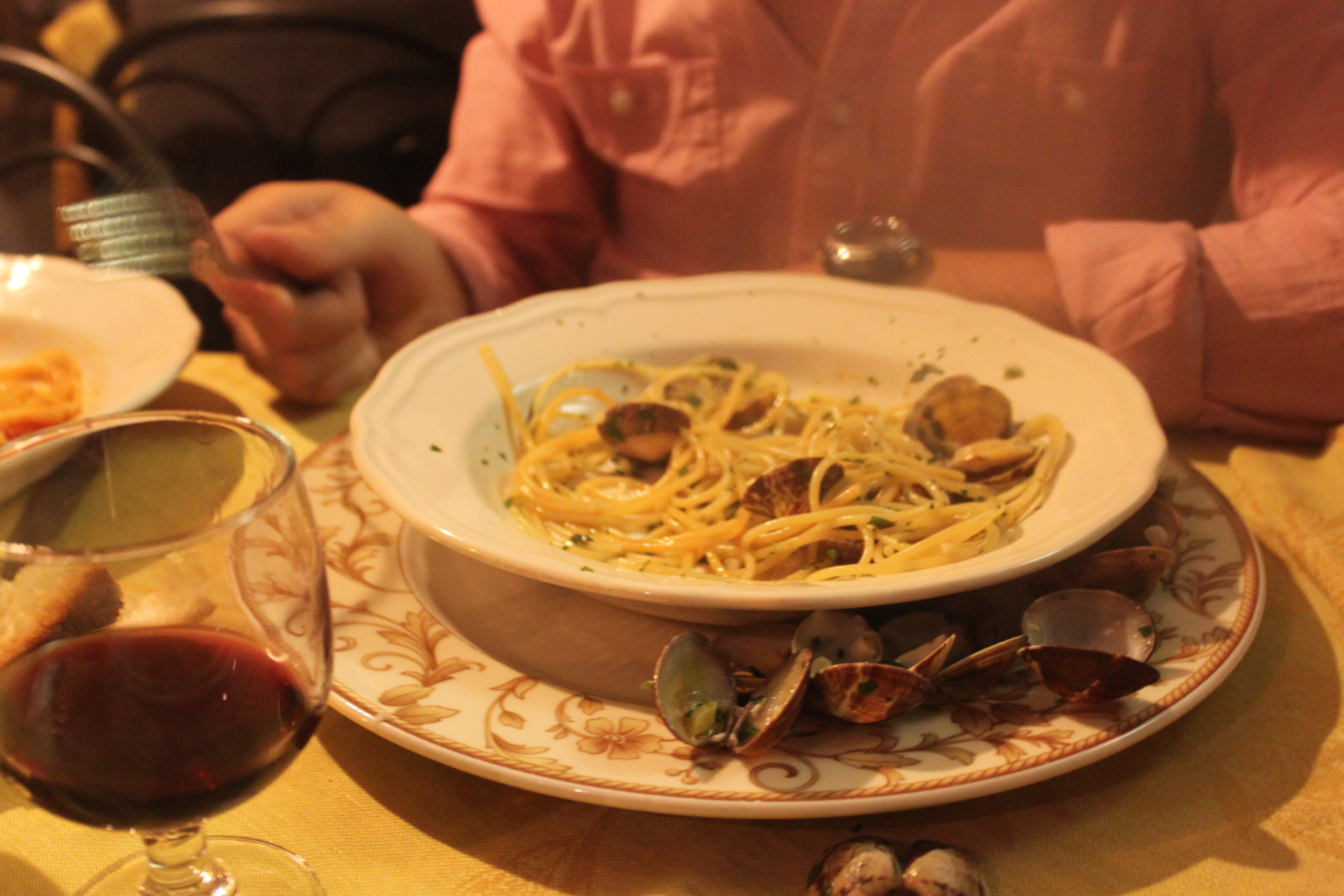
On that first day, Hera insisted she take me there so I could familiarize myself with the area. We bought fresh, handmade pasta and sat together in the market square to eat. Before leaving, she insisted I stock my empty kitchen with the essentials: so I chose burrata, prosciutto, good bread, olives, tomatoes, and peaches.
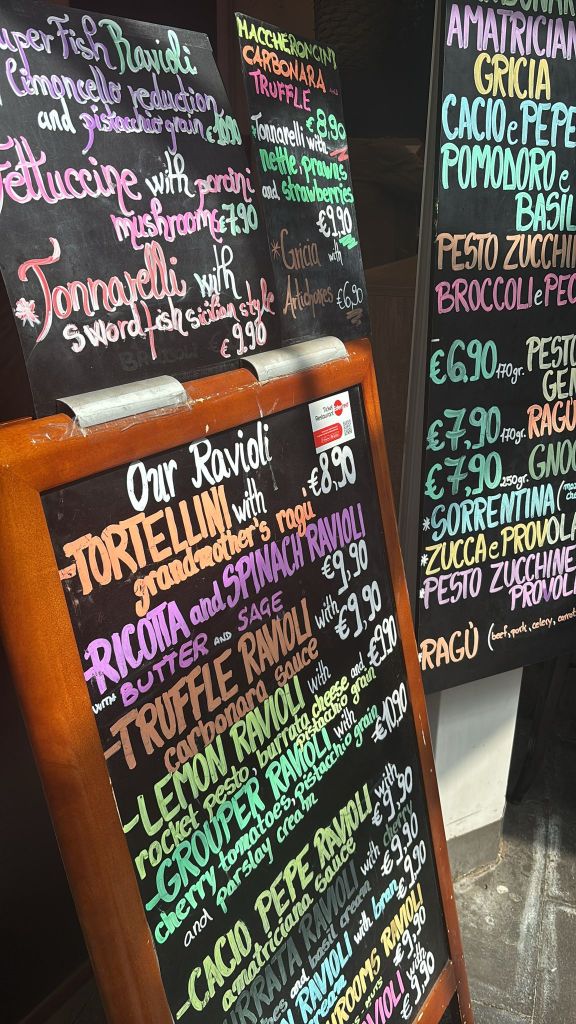
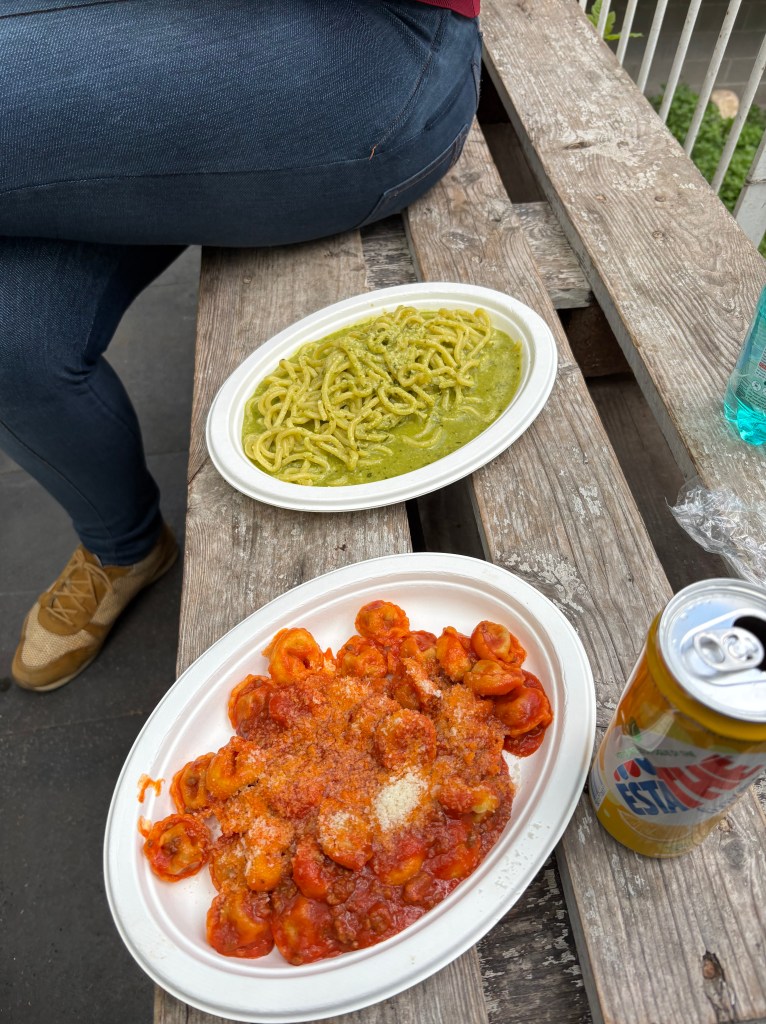
That evening, alone in my apartment, I unpacked my groceries and sat on the floor to eat. I sent a message back to my girfriend’s in Australia, sharing how I felt like the character Julia Roberts played in Eat Pray Love on her very first night – sitting alone on the floor of her apartment, nervous but excited, eating her first meal in the country. The irony was so similar to the choices I had made. My family was thousands of kilometres away, but somehow the market, the food, and an old friend had already made Rome feel a little less foreign.
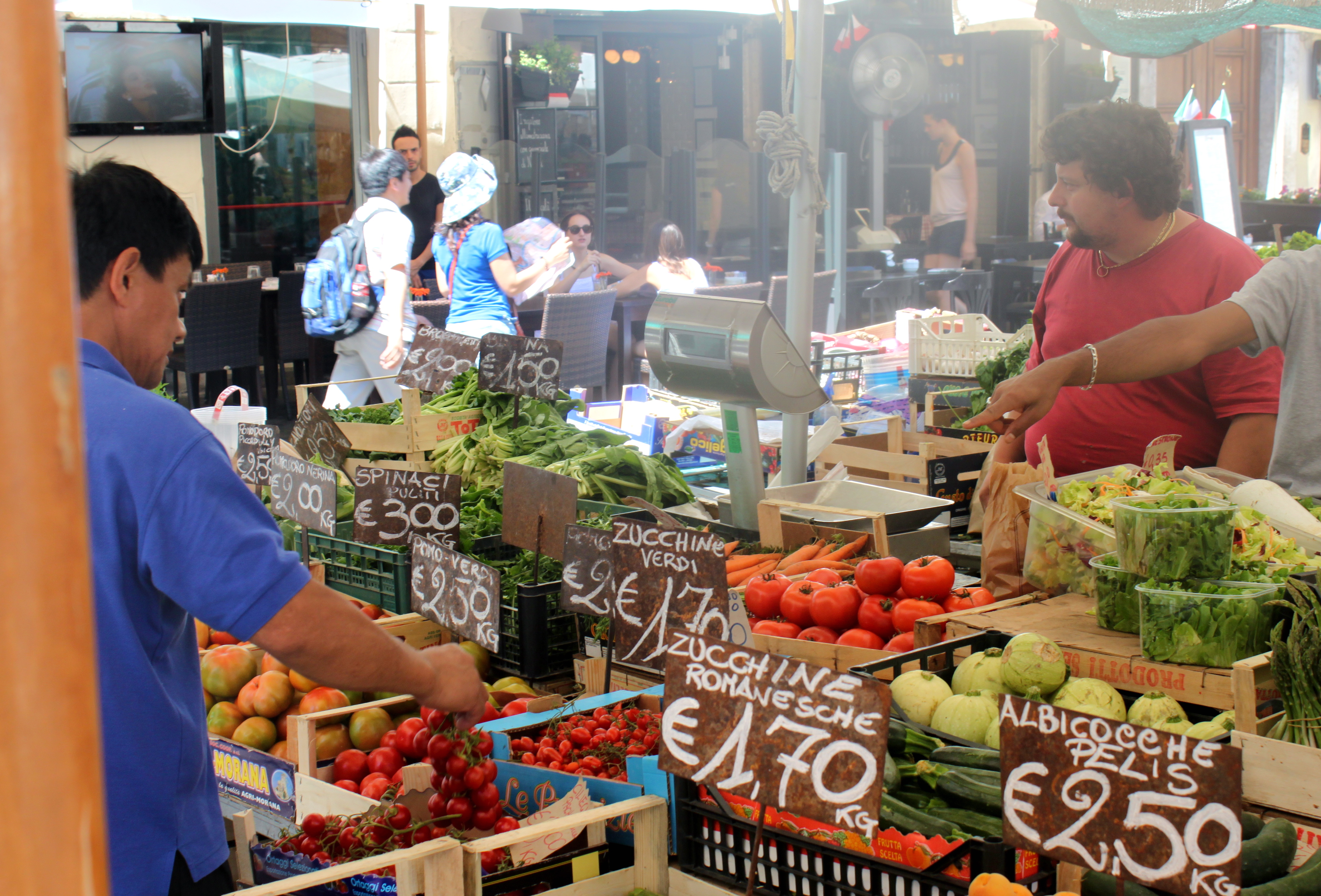
Every Friday, I worked from home and would take an hour for lunch to wander through the market’s aisles, comparing notes with colleagues who also lived in the neighbourhood. We debated who made the best pizza al taglio, where to find the freshest mortadella, which stall served the best pasta, and where to linger over a leisurely lunch. The market quickly became part of the rhythm of my week and my introduction to everyday Roman life. Like everywhere I have lived, I soon got to know many of the store owners, they would suggest things to try, pop something extra in your bag, and when I had no small change, they would wave a hand and say, prossima volta, next time.
As much as I embraced Roman life, I had grown up in Australia and had resided in Montreal, Canada for many years – two of the world’s most multicultural countries. I was accustomed to markets and supermarket aisles lined with ingredients from every corner of the globe, and neighbourhoods where dozens of cuisines coexisted side by side.
Italy is fiercely proud of its food culture, and rightly so. Yet after a few weeks, I found myself craving spice, exotic vegetables, and the flavours of places far beyond the Mediterranean.
When I wanted Italy, I went to Testaccio. But when I wanted the world, I went to Mercato Esquilino.
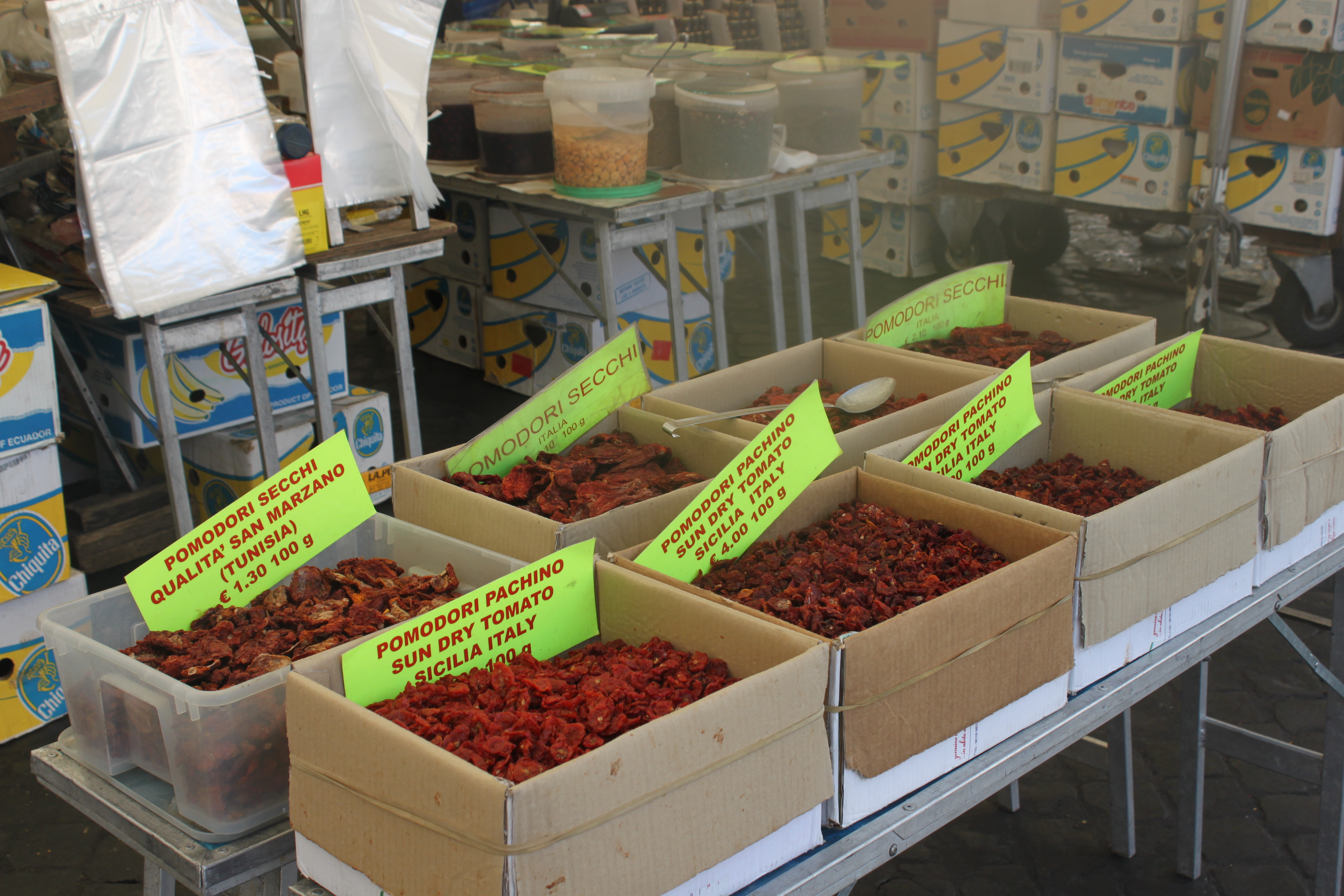
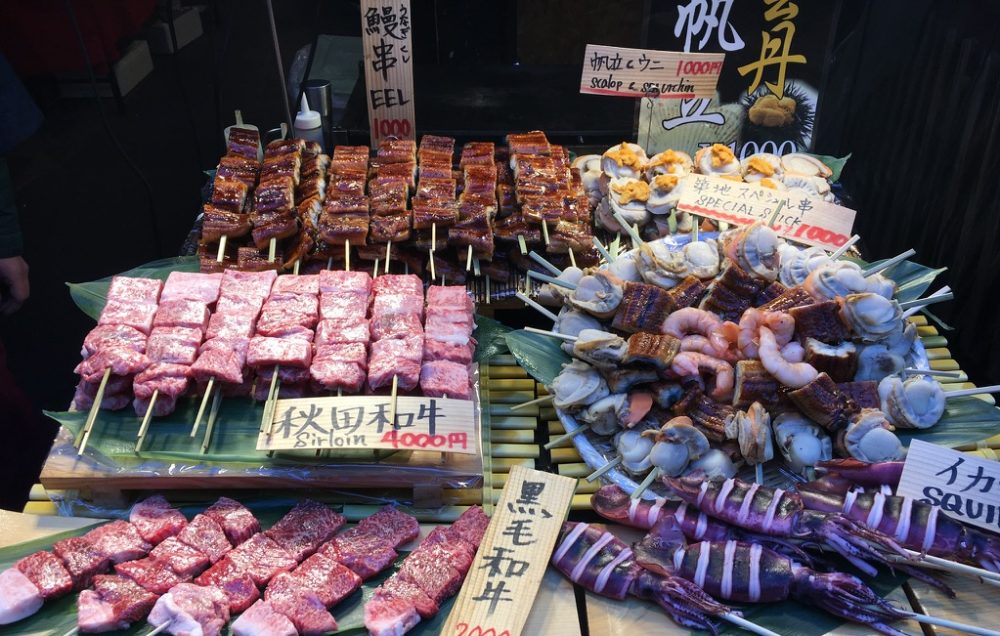
Located just beyond Termini Station, Rome’s main transport hub, Mercato Esquilino felt like a different city altogether. The polished familiarity of Testaccio gave way to something more chaotic, more multilingual, and more global. Here I could find daikon (my favourite vegetable) – alongside Asian greens, chilies from across continents, spices I recognized from years of travel, and ingredients that reminded me of homes both real and temporary.
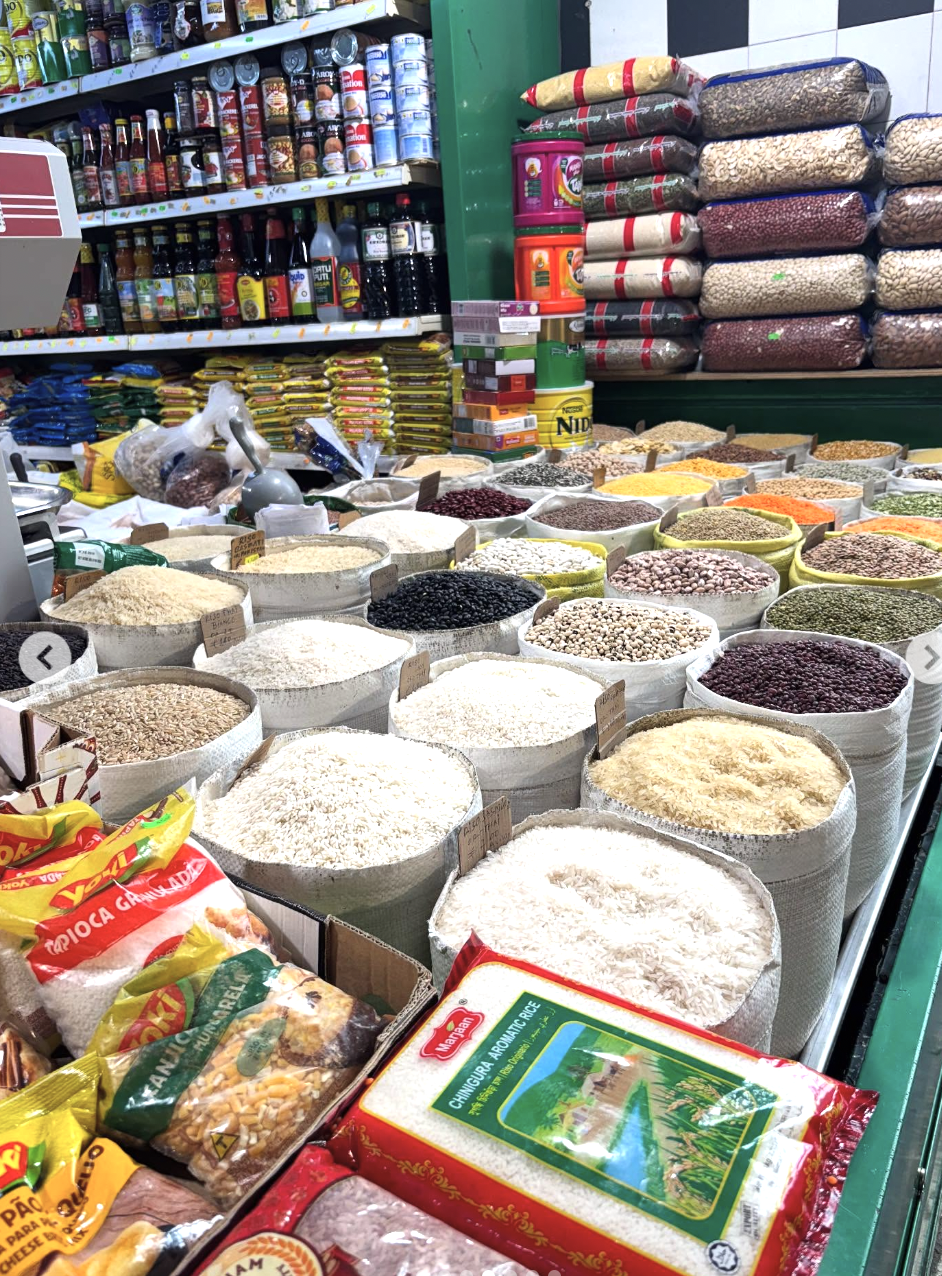
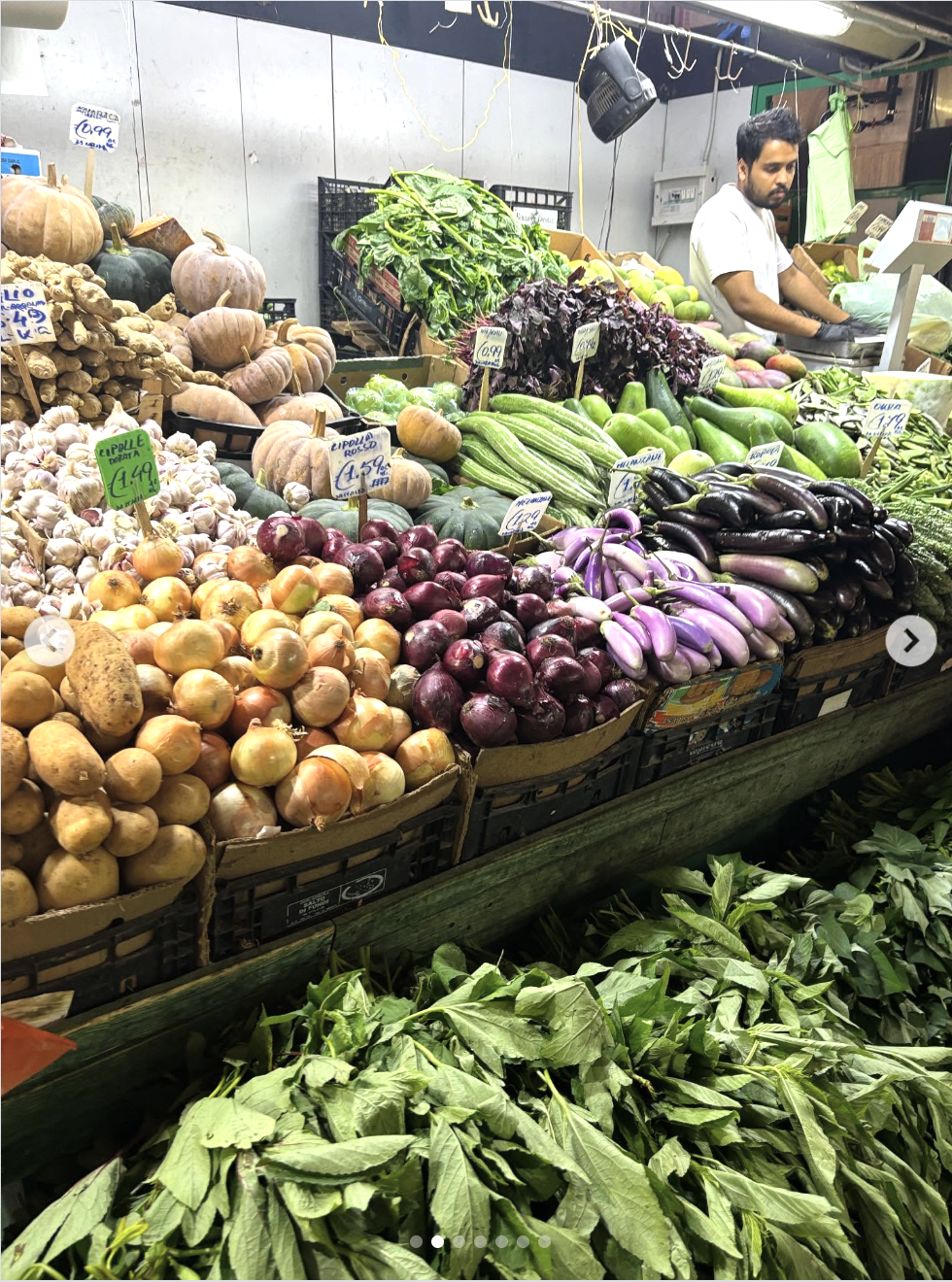
Mercato Esquilino is not the Rome that appears on postcards. It was something altogether different: a reminder that modern Rome, like so many great cities, has been shaped by people, ingredients, and influences arriving from elsewhere.
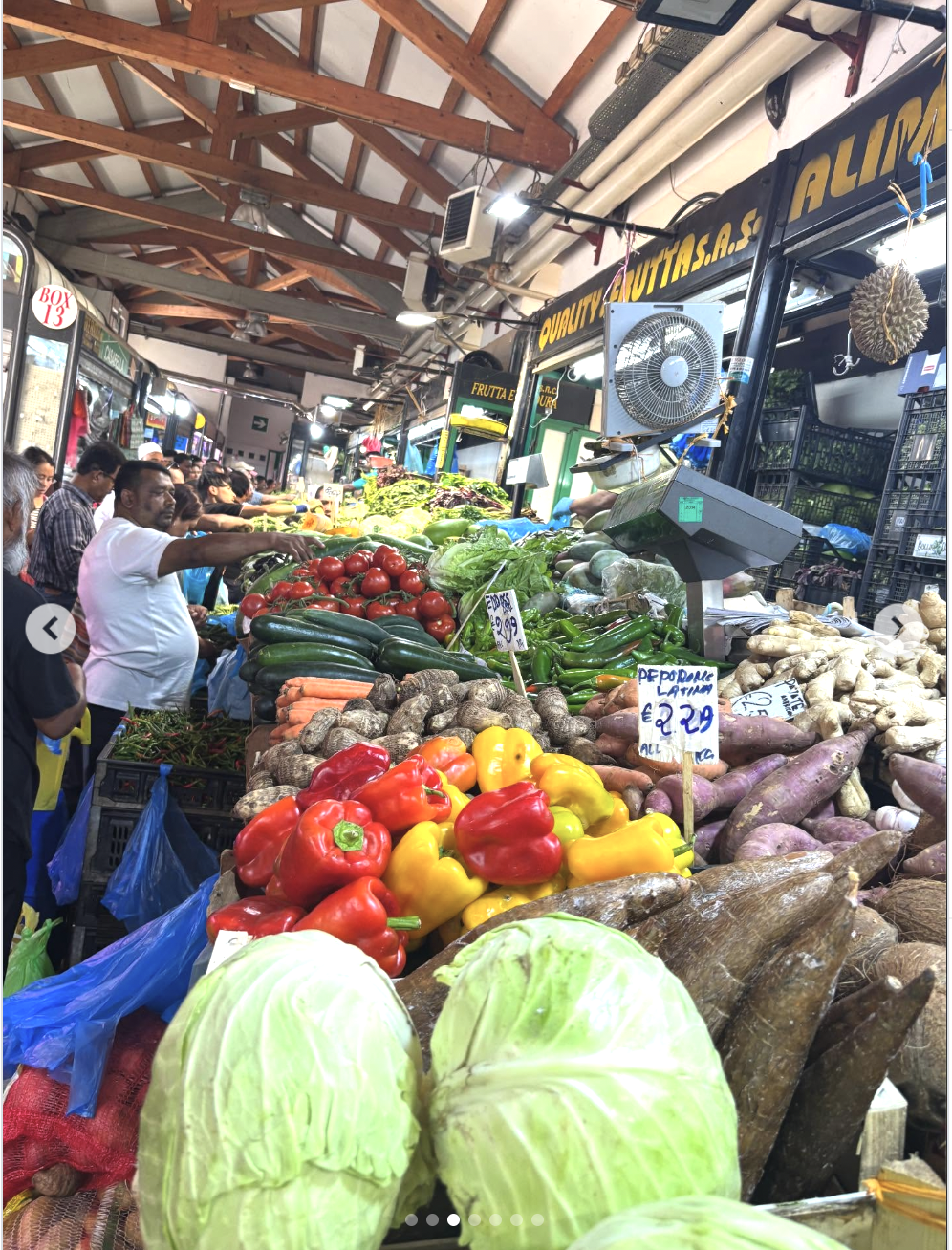
The first thing you noticed was the noise. Vendors called out to customers. Conversations unfolded in dozens of languages.
One afternoon, my family called from Australia while I was shopping.
“Where are you?” they asked.
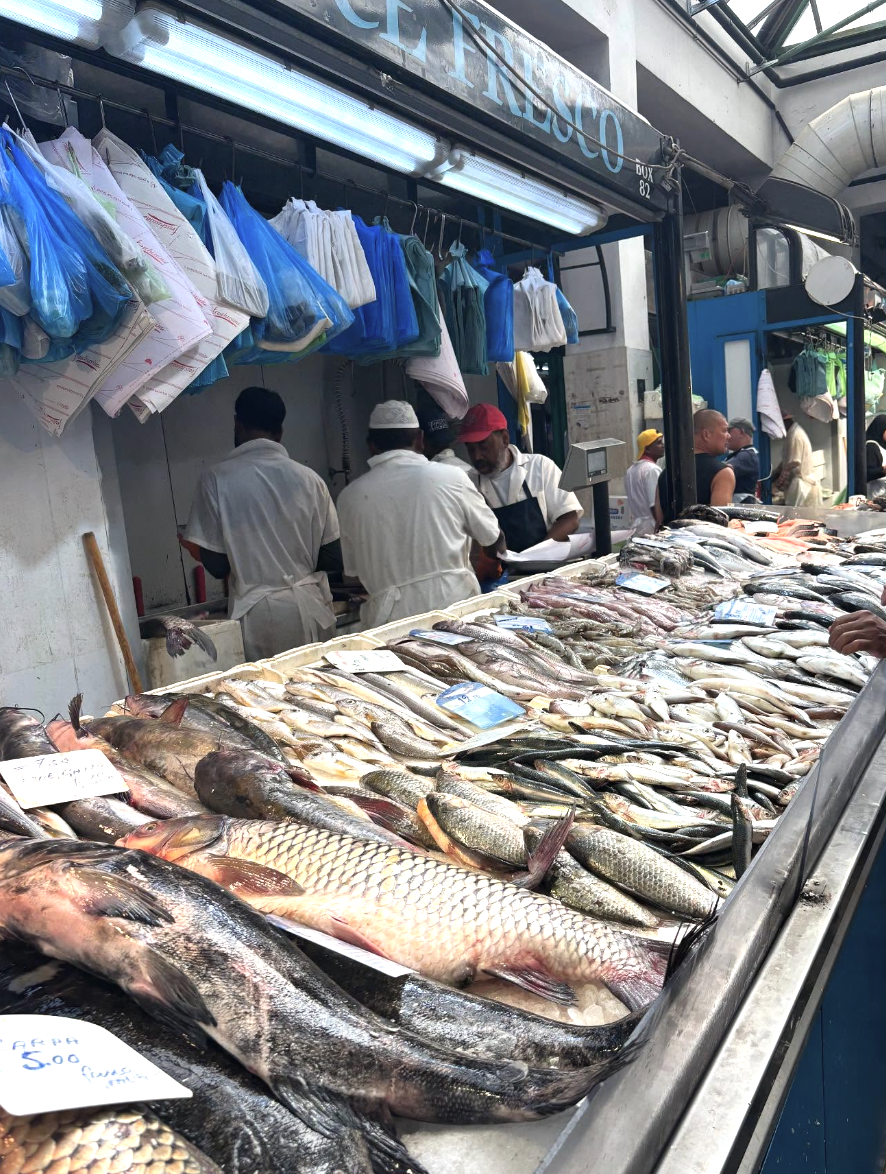
I turned the phone camera on so they could see: the shouting vendors, the bustle, the rows and rows of whole fish on ice. It was the sound of a market that felt almost unchanged from another era. For a moment, they were transported there with me.
I rarely arrived with a strict shopping list. More often, I came searching for ingredients that I was missing, craving. The Bangladeshi shopkeepers soon began to recognize me.
“How do you know this stuff?” one asked, laughing as I filled a basket with ingredients that most of their Italian customers ignored.
Today, as summer begins to arrive in Canada, I find myself thinking about those Friday afternoons in Rome. About Testaccio and Esquilino. About old friends who somehow find each other again in distant cities. About market vendors who knew exactly what I was looking for before I asked, and the simple pleasure of wandering home with a bag full of ingredients and no particular plan.
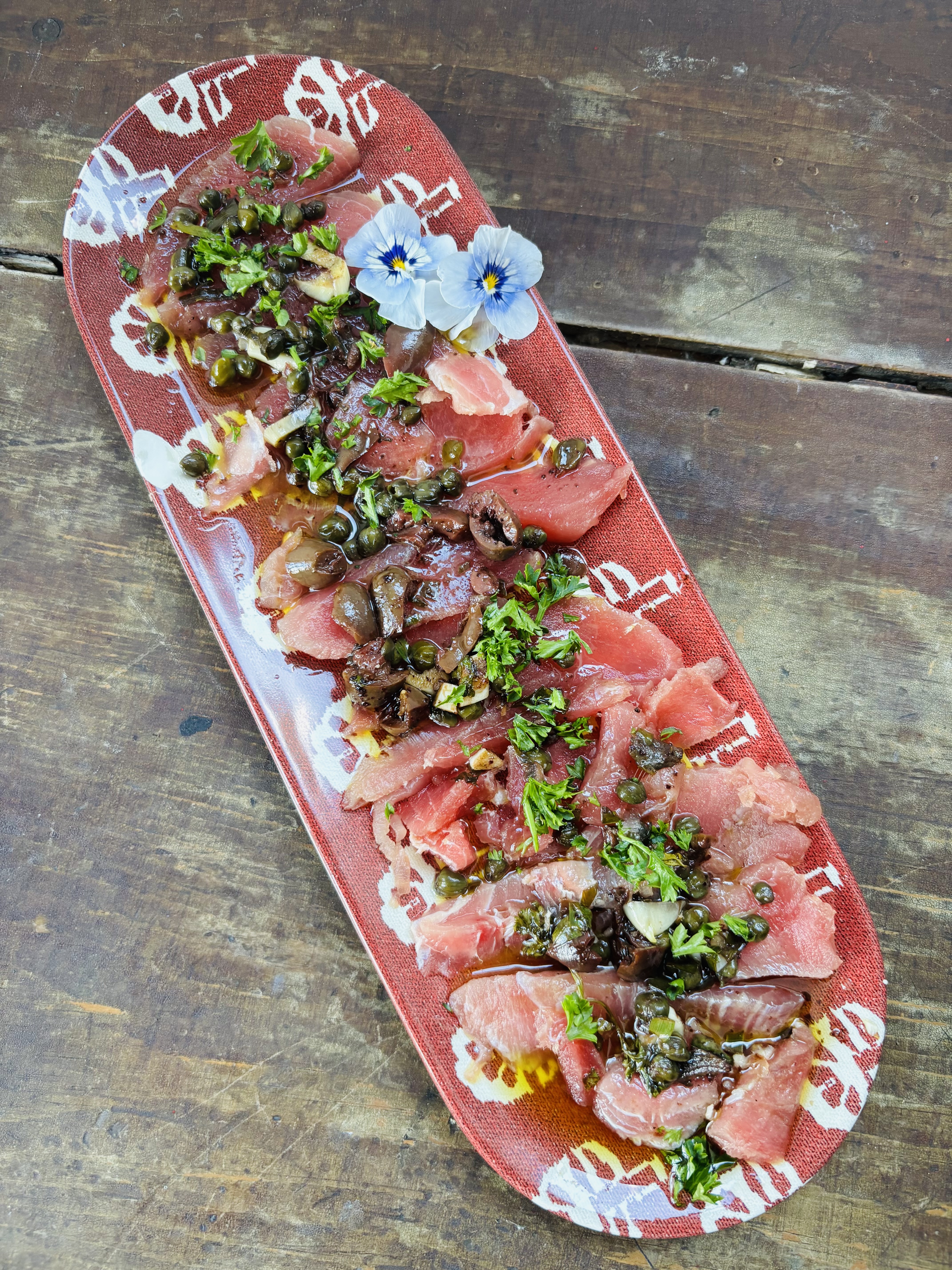
I’ve been back in Canada for a while, but some tastes just follow you home. Case in point: tuna carpaccio. I originally stole this recipe from Gennaro Contaldo, who famously mentored a young Jamie Oliver years ago – and it became a staple of my time in Rome. Although I’ve made it for years, it has a renewed focus for me lately thanks to two game-changers: amazing fresh, salt-brined capers from the market, and the addition of sumac. Fresh tuna, good olive oil, balsamic, sautéed garlic, and fresh herbs are your must haves.
So as I sign off today, and hopefully not for as long as last time – I’ll leave you with this small reminder that sometimes the best souvenirs aren’t things at all, but flavours, friendships, and the places that brought them together.
Tuna Carpaccio
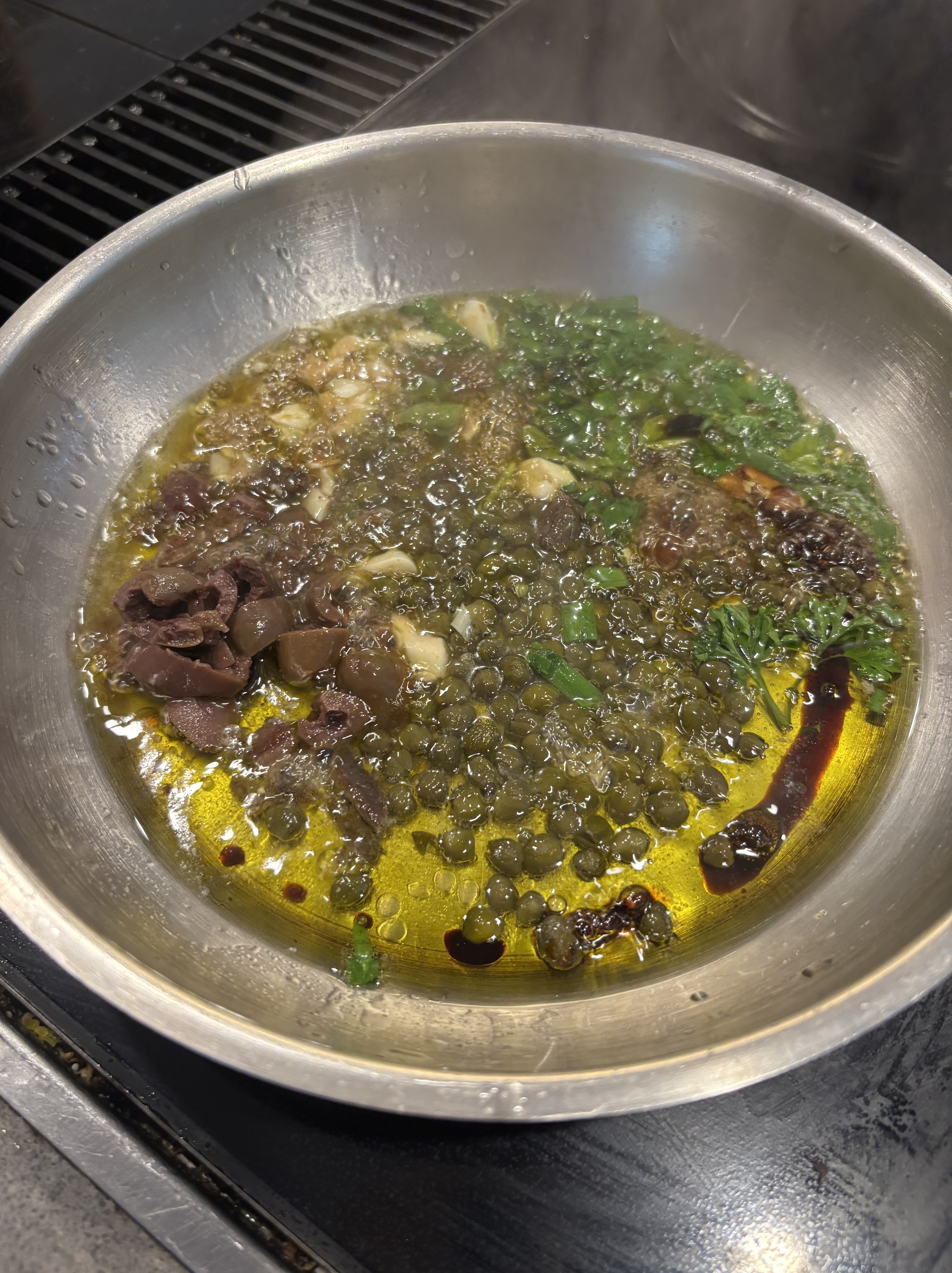
Ingredients: A steak of sushi-grade tuna, handful of olives and another of capers, or either-or. About half a cup of olive oil, some splashes of balsamic, a few cloves of garlic smashed (do not finely chop) and some herbs of your fancy, some sumac.
How to: In a small pan, gently heat up some garlic, capers, olives and half of your herbs. Add a few splashes of balsamic vinegar. Heat on low for about five minutes, stirring. You do not want your garlic crispy.
To slice tuna for carpaccio, freeze the fish for about 15 minutes so it is firm and easy to handle. Do not keep the fish in the fridge if you are not using immediately, it must be kept frozen. Use a razor-sharp knife to cut paper-thin, translucent slices across the grain using one smooth pulling motion. If you want the pieces even thinner, place plastic wrap over the slices and gently flatten them with the back of a spoon. Arrange the tuna on a plate (chilled preferable), and then spoon your mixture over it, garnish and sprinkle with more sumac or a few chilli flakes.
Bon Appetito.