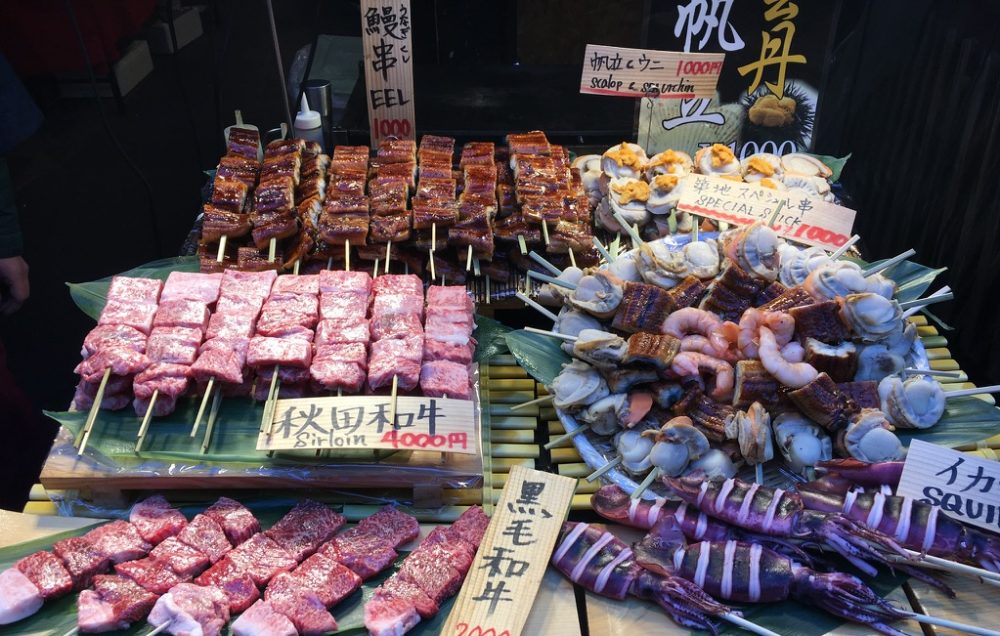
Nostalgia noodles, the markets of Burma by guest blogger Tihana.

Aside

NOSTALGIA NOODLES by Guest Blogger, Tihana

I met Tihana about seven years ago in a writing class.  She wrote about ghosts from the Orient and characters who practiced Kung Fu and supped on shark soup. When her latest travel adventure took her to Burma, a country at the top of my future travel list, I made her promise to blog for me.  Nostalgia Noodles takes us on a hungry train ride from Mandalay through breathtaking hills and valleys and on to Hsipaw, North East of Mandalay.   The train built by the British was designed to improve trade to this Northern State, once under British rule.  All on board!

I had been on the train since 4 am that day and had only had a boiled egg and a piece of white bread for breakfast.  There hadn’t been very much to buy at the Mandalay train station asides from some packets of wet tissues and water bottles with broken seals.Image
 The train journey to Hsipaw was supposed to take about 11 or 12 hours, more or less, rather more than less, actually, because trains in Burma are notoriously unreliable.

I had bought an Upper Class ticket, thinking that perhaps tea would be served, or some sweets, or even lunch. It wasn’t the case though, and the only notable advantage of paying 8 USD instead of 4 USD for the Ordinary Class was the access to cushioned seats.

The other passengers in the carriage were mostly foreigners. A friendly Australian traveler shared a mandarin orange with me. Her husband was commenting about the terribly sweet instant coffee they serve in Burma, the only type one seems to find there. From the window, I was looking at the hills and fields, chicken running around shacks, children running around cats and dogs, all bathed in the yellow light of the January sun. The scenery was enchanting. However, I was getting hungry and was slowly chewing the acidic little mandarin, hoping for a proper meal soon.
IMG_2407

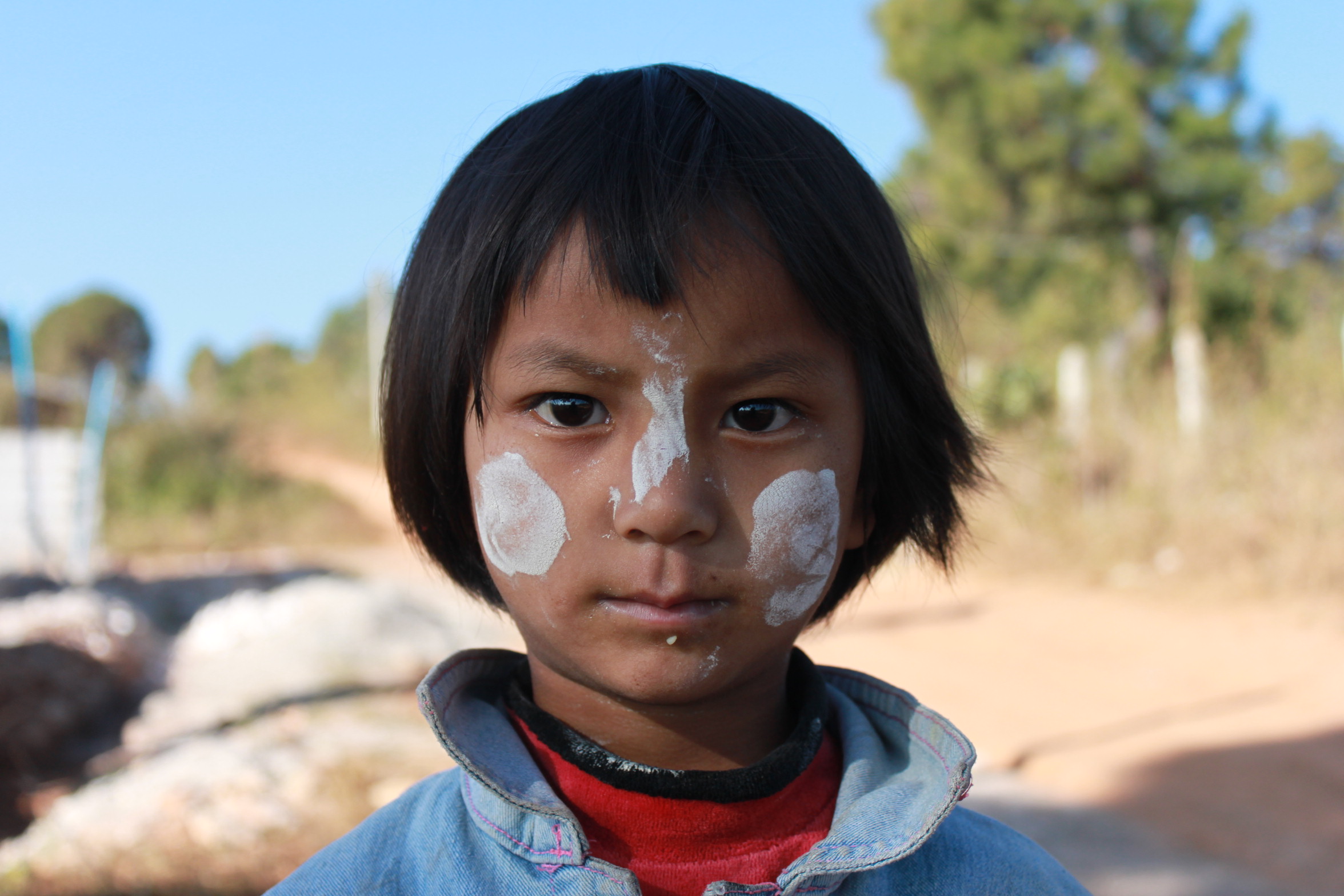
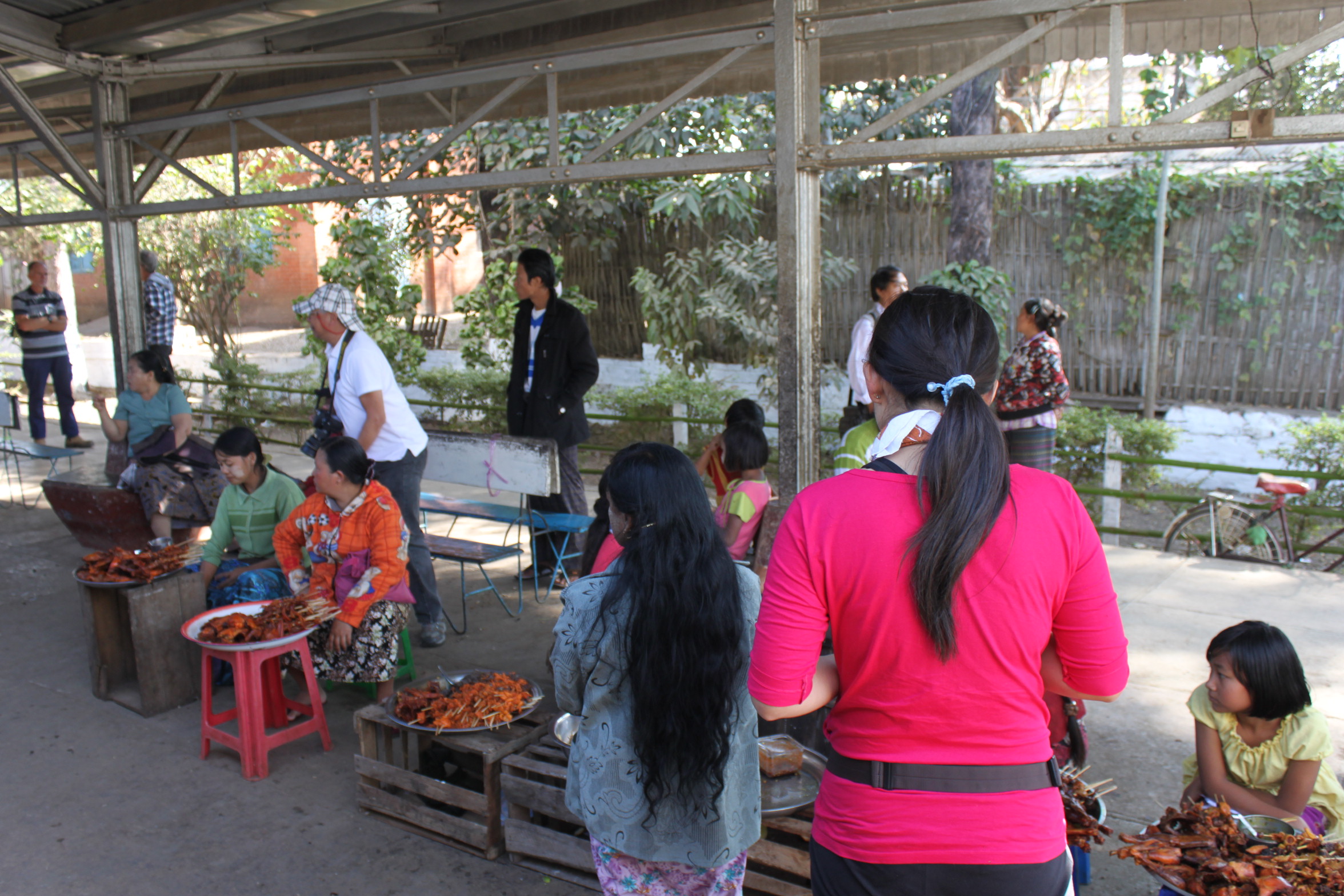
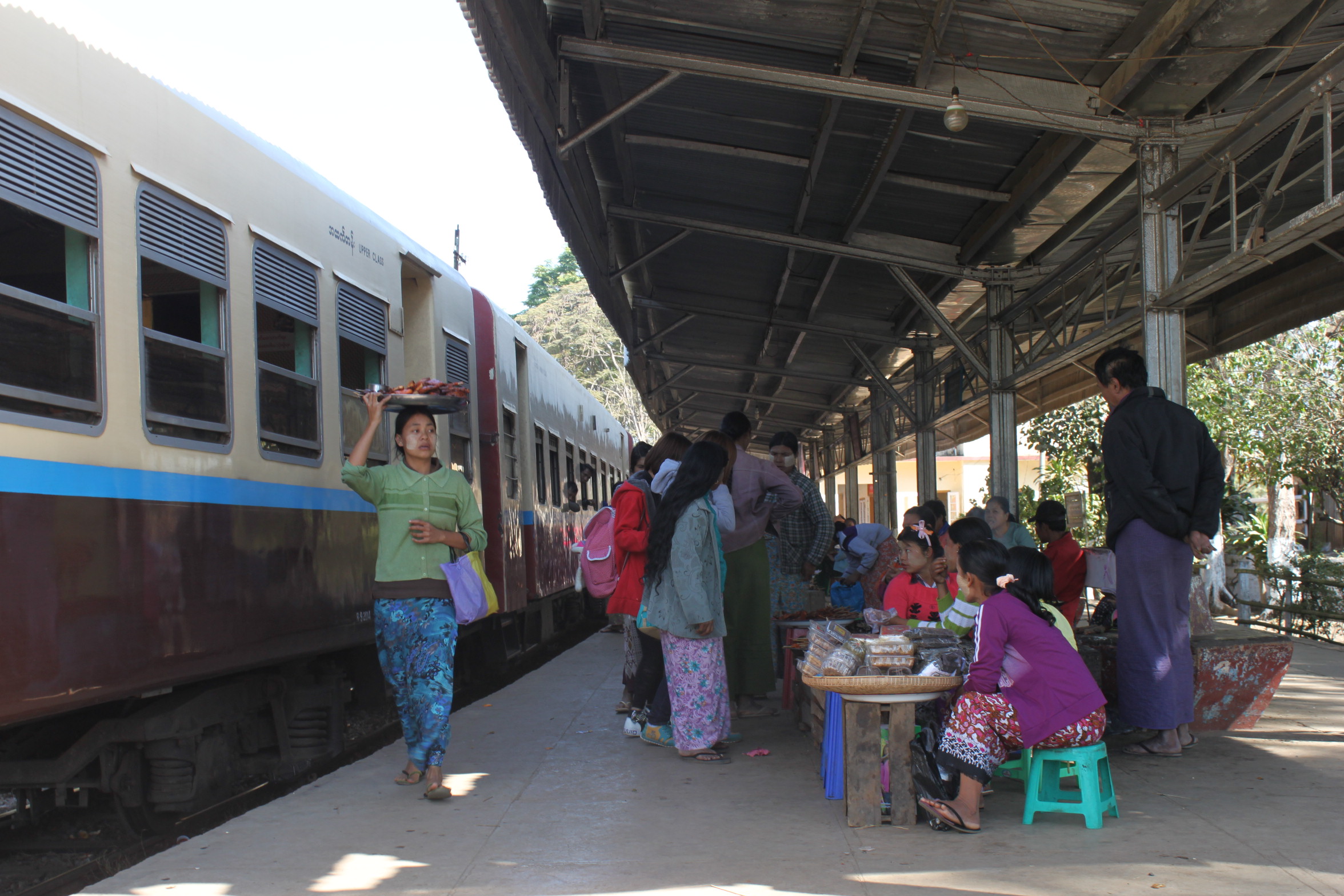
Then, at one station, where we should have stopped only 3 minutes or so, the train came to a complete halt. Many passengers stepped outside. I did as well, my camera ready. On the platform, in the shade, women in colorful skirts, their cheeks painted with the white thanaka paste, were selling their wares: eggs, packages of cookies, grilled chicken, pork and unidentifiable vegetables on skewers. One woman, crouching behind her portable stove, was frying what looked like tiny plump chickpea flour cakes. A half a dozen of those cost 200 kyats, or 25 cents. I ate twelve cakes, savoring each bite, letting it slide down my throat, still hot, very greasy, the most delicious street food, feeling the hunger disappearing.

Everywhere you go in Burma you will find a market, big or small, and see street cooks and street vendors, mostly women, squatting next to their baskets and stoves, sometimes behind stalls and tables. For a few hundred kyats, never more, you can buy grilled corn, grilled animal bits, fish balls, spicy roasted nuts, fruit, sweets, flat soy patties, noodles, and of course, these wonderful chickpea cakes.

3Image
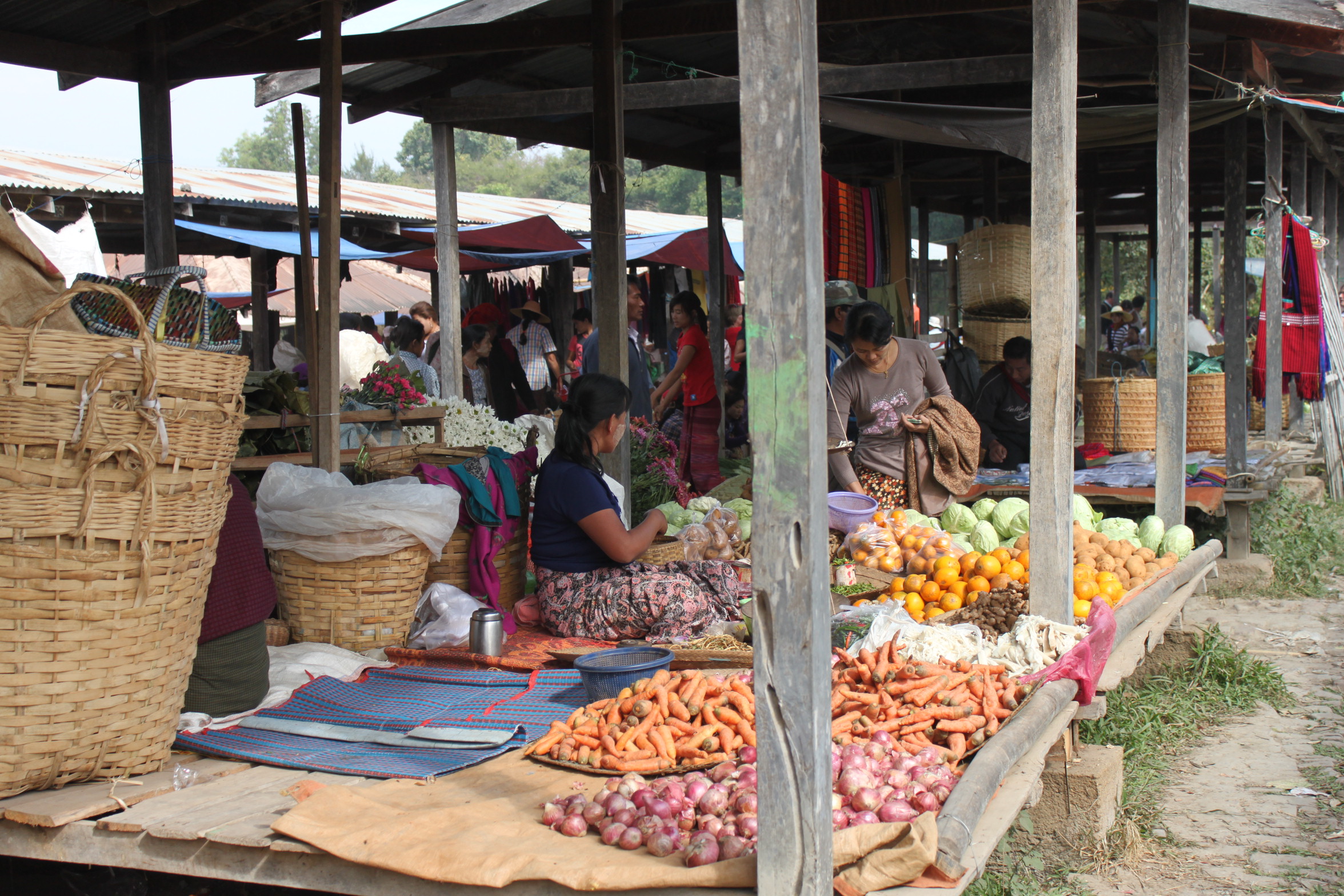
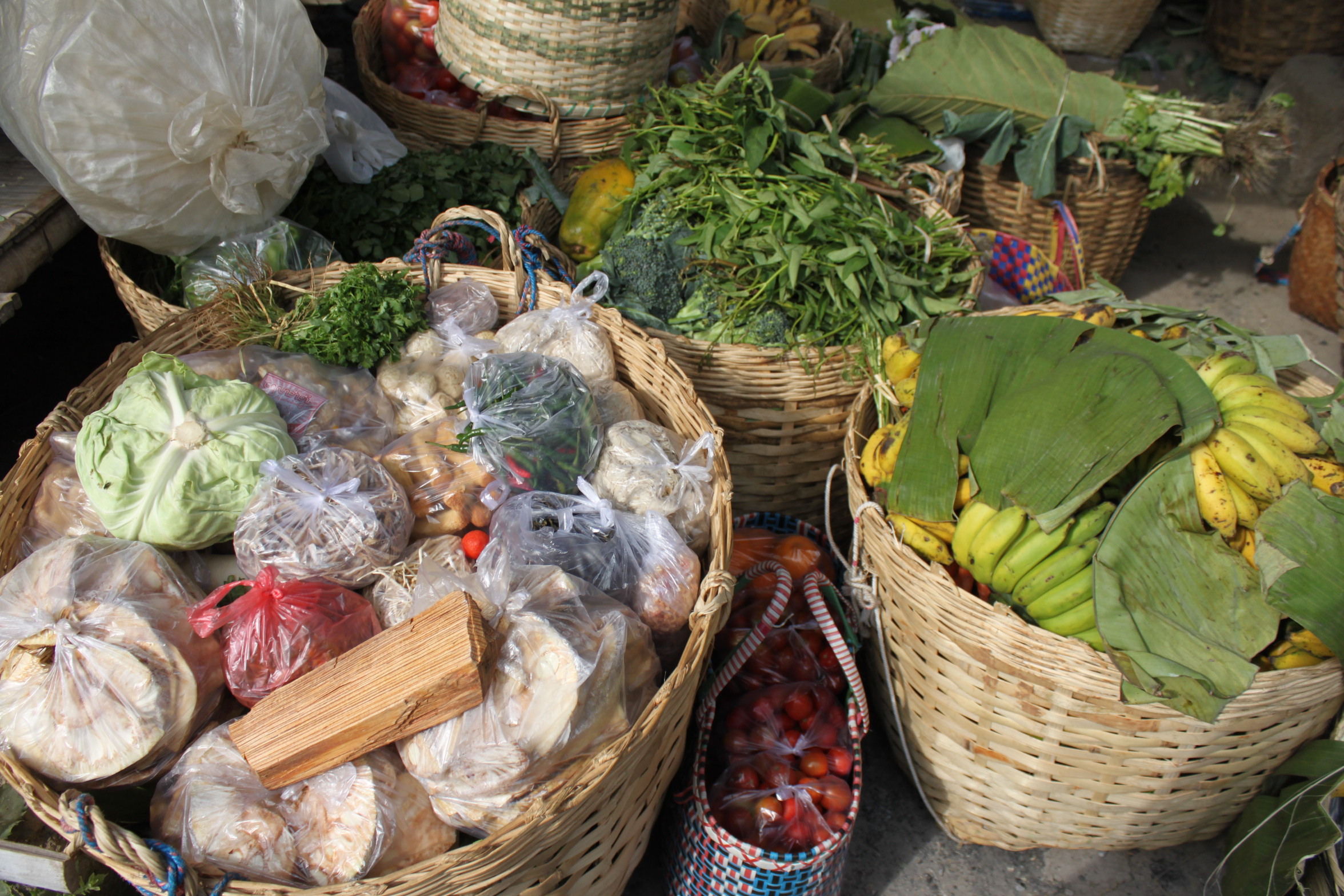
The big markets, such as the ones around Inle Lake, where villagers flock to every few days to buy and sell and socialize, are an experience by themselves. Many villagers reach them by small, motorized boats that are parked, almost piled up, on the lakeshore. The markets are huge and sprawling; I found it easy to get lost in them for a couple of hours, wandering from stall to stall, looking around, and taking photos.
IMG_3270

The vendors aren’t pushy, as they can be in other countries. They sit and chat with their neighbors, arrange and rearrange their products. The women sometimes laugh, sing quietly or cajole their children. There is no rush, no real sense of urgency; things just go by. From early in the morning until the afternoon the market is living.

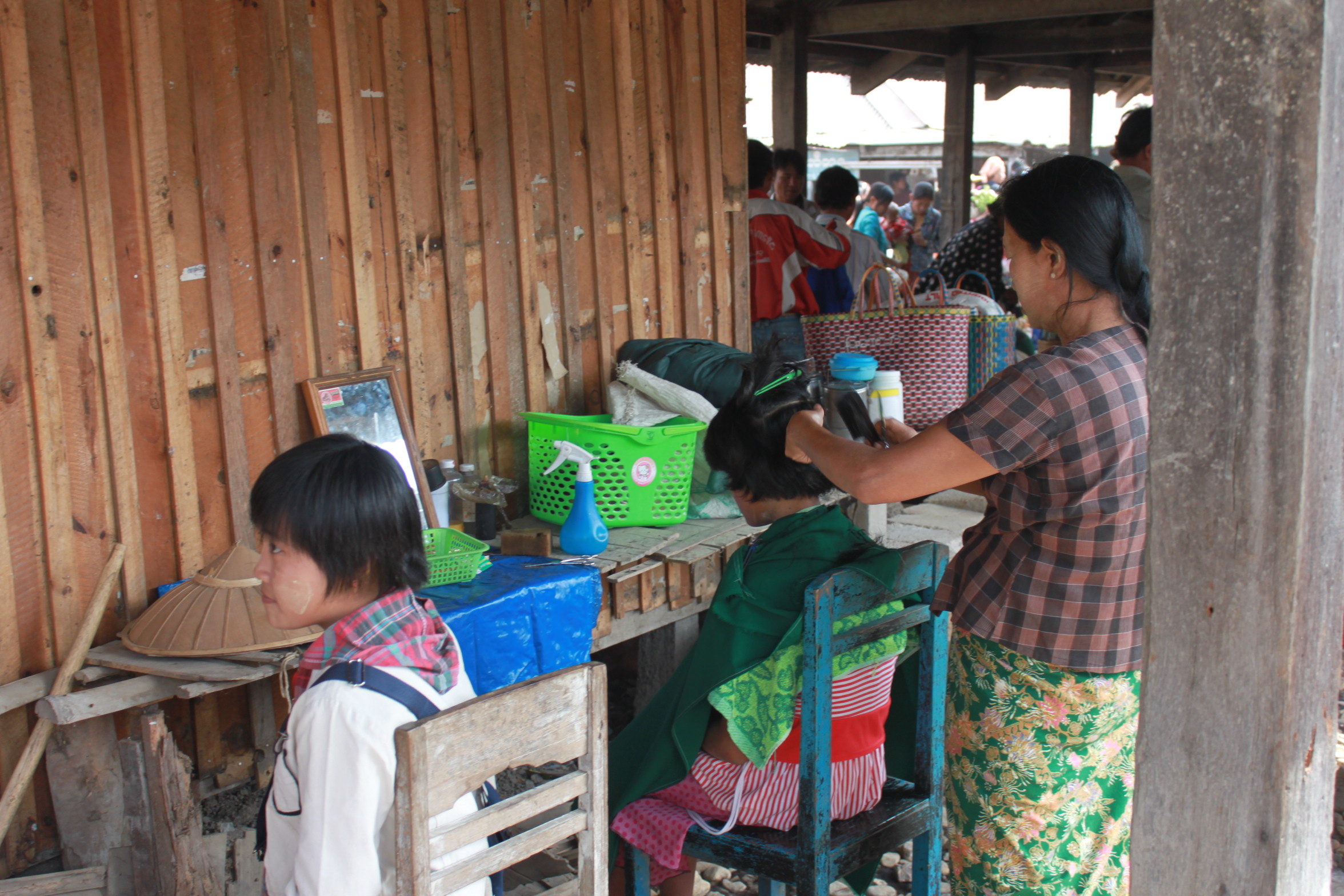
On one side of Nampan market, on the southeast side of Inle Lake, I saw a few hairdressers and barbers doing a brisk trade. The ground was scattered with long black hairs. Normal, I thought, market day is also haircut day.
IMG_3257

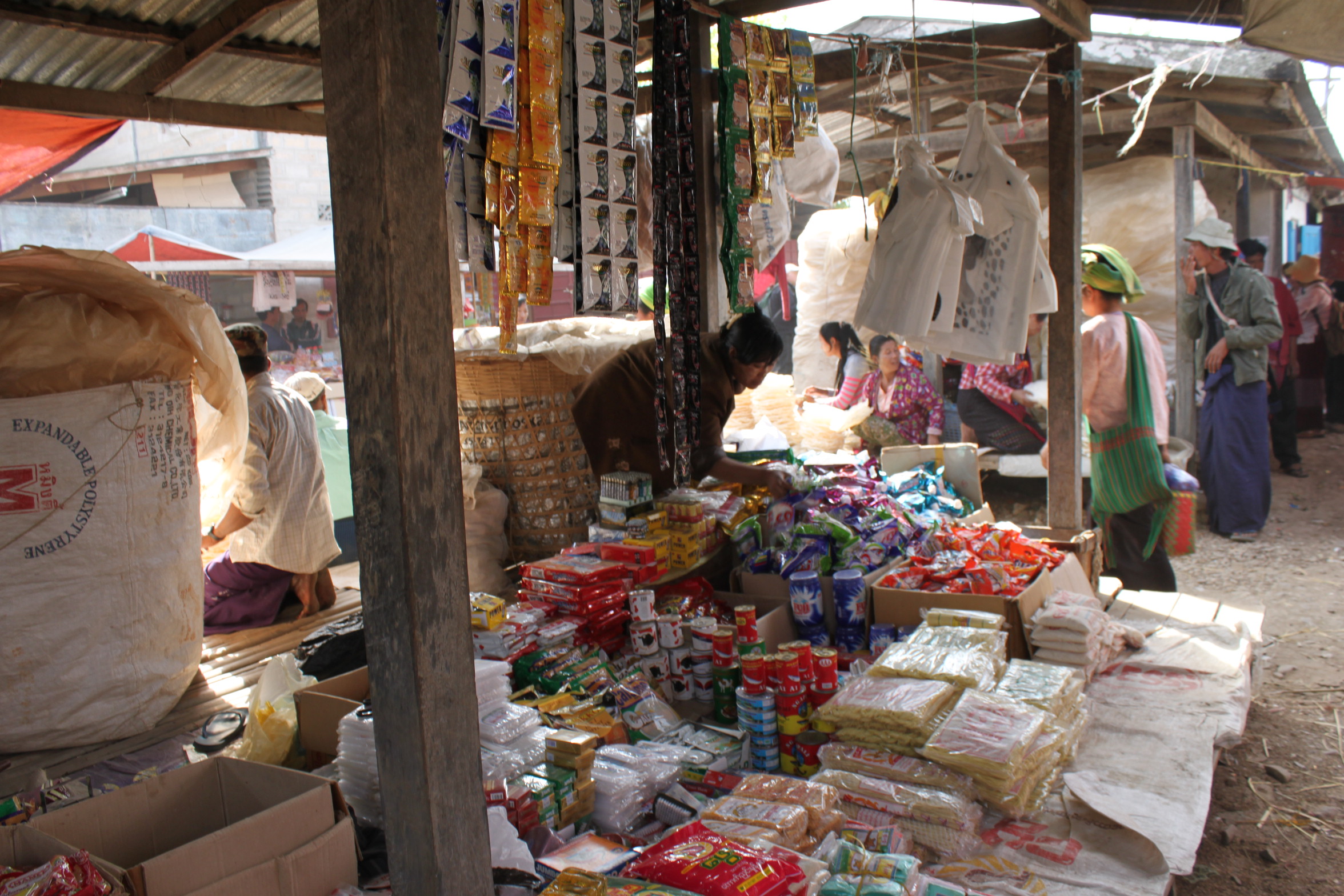
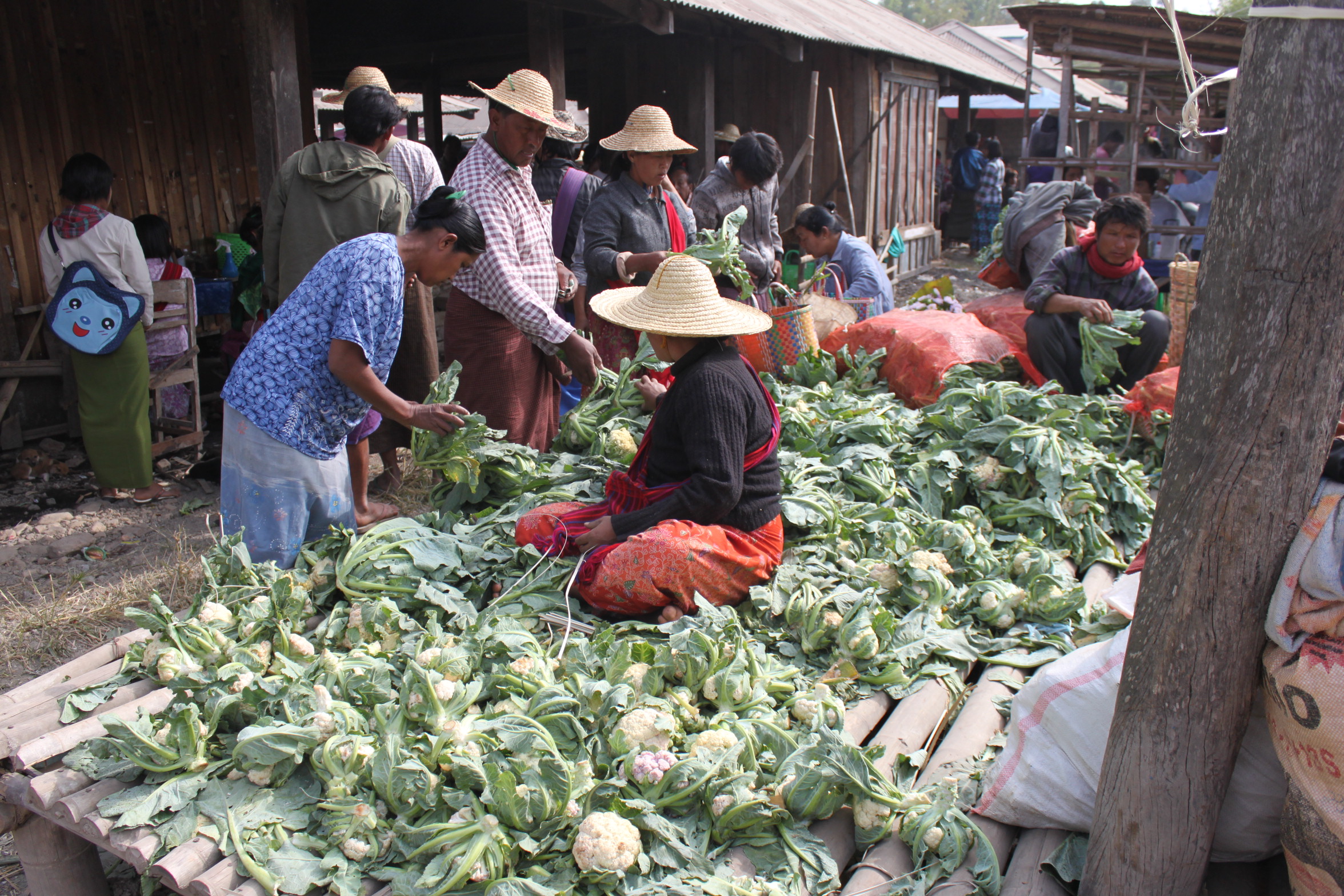
Next to the hairdressing section were rows of buffaloes and carts, surrounded by flies, and then several stalls of beautiful, colorful flowers one should buy as offering to the temples. There were stalls with Chinese beauty products, with all sorts of knives, with medicines of unknown origin and expiry date, with mountains of rice and hills of cauliflowers, with baskets of tomatoes and bunches of herbs. And of course, there were food stalls, where one could sit down, take a rest, slowly slurp a bowl-full of hot noodles while watching puppies, chicks and babies play around the tables.
IMG_3264

IMG_3254

Burmese cooking has an undeserved bad reputation. It’s bland and oily, you may hear from disgruntled travelers. To those complaints I have three simple answers: request chili sauce, don’t eat the oil that sits on top of curries, and get inspired before you travel by reading Naomi Duguid’s fantastic book “Burma, Rivers of flavor” You will find in Burma plenty of tasty curries, all sorts of fresh salads including a slightly bitter tea leaf salad that balances well the richness of the curries, stir-fried vegetables, rice, noodles in soups, noodles without soups.

Alongside the chickpea cakes, the noodle soups are my favorite Burmese dishes. I regularly had them for breakfast, but also for lunch. They were such a satisfying, comforting meal, a much nicer way to start the day than with the ubiquitous fried eggs. I particularly loved the ones I had in Hsipaw, in the cold early mornings before going trekking for the day.

There are plenty of variations, as Duguid’s book illustrates. Some of them, called mohinga, are made with fish-based broth. Some are made with chicken and some with chickpea flour, which gives the soup a silky texture.
IMG_3274

Back at home, I tried to make my own, based on a combination of Duguid’s recipes and the ingredients I could easily find in Canada.

Here’s what I came up with, and what I will eat when nostalgia strikes. Unfortunately though, I haven’t found yet a recipe for the chickpea cakes.

NOSTALGIA NOODLES

(For 1 person)
IMG_3567

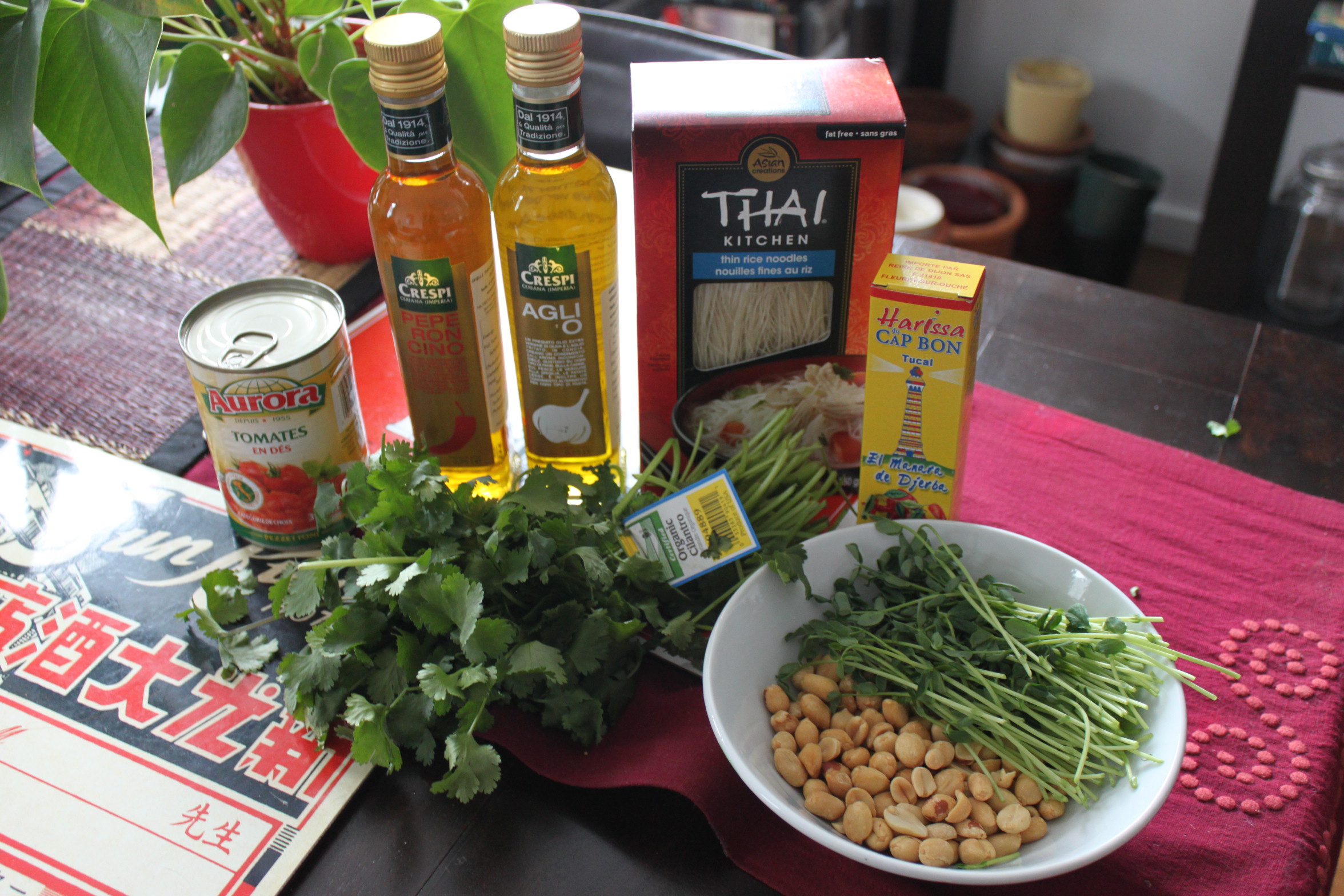
Water, just enough to cook the noodles

Thin rice noodles, fresh or dry

A few pieces of garlic, chopped

A small piece of fresh ginger, chopped coarsely

Garlic oil

Chili oil

(You could make your own, but if you don’t want to, these oils can be bought already prepared at any better supermarket or Italian grocery)

A teaspoon or two of harissa paste (or any similar thick spicy tomato paste)

A handful of roasted peanuts

A small bunch of pea sprouts

Chopped tomatoes, fresh or from a can, a spoonful or two

Two or three dried chilies

Salt

Ground black pepper

Lots of fresh coriander

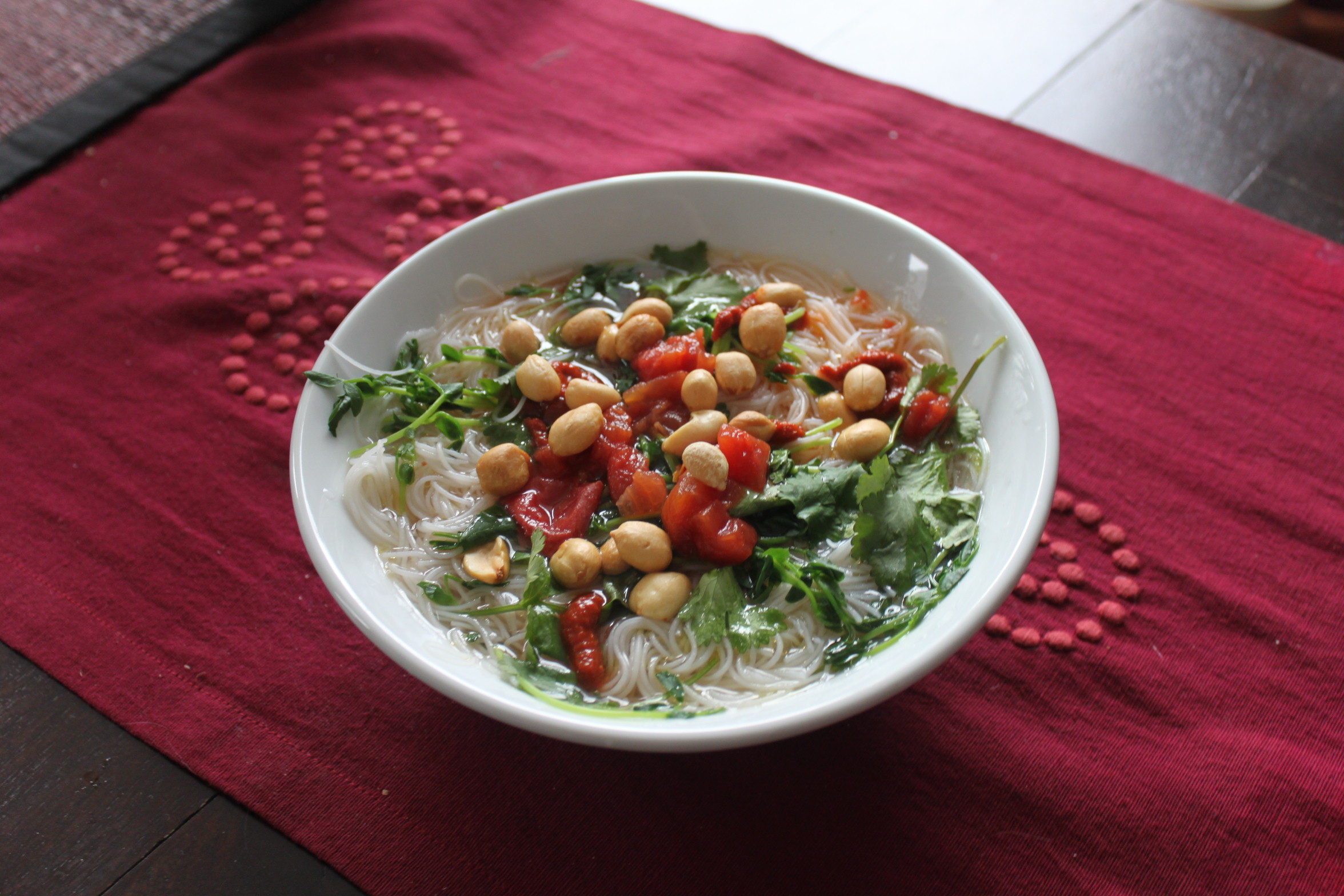
Put the water, chopped garlic, ginger and salt in a pot. Cook the noodles in the water according to the instructions in the packet. Add the pea sprouts 15 seconds before they are ready. Drain the noodles and pea sprouts while saving just enough water to have the noodles sitting in a soup without being covered with it. Pour a bit of oil over the noodles, according to taste. Add the rest of the ingredients, according to taste. Mix well. Eat while the soup is very hot.
IMG_3571

If you’re eating it for breakfast, do as in Burma and have it with a cup of black tea or sweet instant coffee. For lunch or dinner, pair the soup with a light lager beer.

I Heart New York, Greenmarket Farmers Market, Union Square, New York

Aside

I Heart New York, Greenmarket Farmers Markets, Union Square, New York                                                                                                                                           A strange dream woke me up in the middle of the night, and unable to get back to sleep again, I uncharacteristically got up, got ready and was out of bed earlier than I had in months.  I had a good reason – two hours to kill before leaving New York.

New-York-World-Wallpaper-2187-400x600

The last few days had been equally as sleepless; I was on the back-end of an extremely tumultuous work contract at my old employer; a humanitarian agency which had asked me to return and lead some careful re-positioning, restructuring, fund finding. I had hesitated, as I had begun a new life, with new dreams, with new adventures on the horizon – yet feeling an overwhelming sense of responsibility, I went back. Now when it was almost over, I began to realise, that sometimes as humanitarians, our work becomes so immersed in day-to-day administration, in meeting board and donor expectations that our overall mandate of saving lives, seems like a separate universe away.  So it’s inevitable that we lose our drive, become disconnected, even begin to think that the fight is futile, that really we are not doing much at all, and dare I say it, saving not lives, but our own jobs. By the end of my mandate, I also began to be very tired, anxious even. My Doctor told me that I was exhausted, yet a friend, a new mum, who called in-between feedings, said “This is not just tiredness my friend, you are heartsick.” Others may think she was speaking baloney, but I had to agree with her, I was mourning the loss of the life I had created and loved, the life that I believed in.

The author Tom Wolfe one said that “One belongs to New York instantly, one belongs to it as much in five minutes as in five years.” and as I set out amongst the people, crowned by the skyline that reached the clouds, the moving cars, past the food stalls selling everything your belly could possible rumble for,  I felt different, alive, despite the lack of sleep, I had renewed energy (perhaps in part to the spicy Korean breakfast I’d just had), but I really think it was just New York, pulling me in, lifting me up, giving me what I needed, reaching my heart’s desire.

IMG_3456Image

Down at Union Square, where on other occasions, I have sat and watched rappers perform, where my seven year old had once played a game of chess during a balmy summer evening, now the tree-lined square was transformed into an open air market. During winter, the market is open during Monday, Wednesdays and Friday and Saturdays from 8 am to 6pm. The initial Greenmarket Program (now Grow NYC) had set the market up with the aim of allowing regional small-holder farmers with a place to sell their products.   Back in the late seventies when the markets first started, legend goes that the original seven farmers had sold what they had by mid-day, yet these days the Grow NYC initiative has grown to the largest market network in the country, with some 54 markets, and over 230 family farms and fishermen participating.images-1

Not just a place to set up shop,  the Grow NYC has far-reaching benefits for both agriculture, community and even citizen health. By providing a space for farmers to sell their produce, the scheme is contributing to the revitalisation of rural communities, and by providing access to freshly grown, healthy, mostly organic food to inner-city residents is of course keeping people out from what I feel has now become our biggest threat to public health – the supermarket!  The market allows the use of  EBT/Food Stamp,  has a compost collection scheme where New Yorker’s can drop off their vegetable scraps for communal composting. There are projects that support new farmer development, schemes for community rain water harvesting, and even projects that encourage crop diversity – important in ensuring the long-term longevity of our soil.  As I walked around, I realised that the people at GrowNYC were doing on an urban scale, what we who work in humanitarian aid try to do on a global scale, providing access to affordable, nutritious and safe food to ensure an active and healthy lifestyle. I was very impressed, actually more than impressed, it confirmed what I had been feeling for quite some time – that we working in aid often use our titles and position to separate ourselves from everybody else, yet people can be humanitarians outside the NGO or UN system; humanitarianism can start and end with the individual, and does not have to rely on difficult-to-maintain charters and principles and the assurance of ongoing donor funding to be able to do our work – humanitarianism is about caring, about doing what we love, and in this case, loving our city, and the people who live there.

images

It was a blustery winter’s day, and I spoke to the administrator on site, who told me that rain or shine, sleet or snow, they were out there and we both agreed there was something special about keeping a market open to the elements.

Image

IMG_3431

As the wind picked up, and my time ran out, the scent and steam from the numerous stands selling hot apple cider drew me forward, and armed with cider, and some freshly baked apple cider doughnuts, I left New York smiling, feeling good, knowing exactly what to do, my heart refilling.

IMG_3439

Apple Cider Doughnuts.

For those of us non-Americans, Apple Cider should not be confused with the fizzy, or even alcoholic apple drink. In the States, cider refers to the drink which is made from early-harvest apples which are slightly more acidic, yet with lower sugar content, so the juice is slightly tangier from normal apple juice. Using cider means a denser, yet moister donut.  For those of you who do not have access to apple cider, a good quality apple juice can be used.

I looked far and wide for a recipe, but kept coming back to Deb Perelman’s from Smitten Kitchen, (whose blog and book I use regularly), and I think it’s fitting, given she is a New Yorker. The recipe (taken directly from her blog) makes 18 – which gives a lot of doughnuts, so I planned them in time for a party my seven year old was going to, (otherwise I dread how many I would have eaten myself).   I forgot to buy buttermilk, so used normal milk and they turned out just as good. I also didn’t use a glaze, only the sugar and cinnamon mix which was light and perfect.

Ingredient’s

1 cup apple cider
3 1/2 cups flour, plus additional for the work surface
2 teaspoons baking powder
1 teaspoon baking soda
1/2 teaspoon ground cinnamon
1/2 teaspoon salt
1/8 teaspoon ground nutmeg
4 tablespoons (1/2 stick or 2 ounces) butter, at room temperature
1 cup granulated sugar
2 large eggs
1/2 cup buttermilk
Vegetable oil or shortening (see my explanation in the post) for frying

Toppings (optional)
Glaze (1 cup confectioners’ sugar + 2 tablespoons apple cider)
Cinnamon sugar (1 cup granulated sugar + 1 1/2 tablespoons cinnamon)

Make the doughnuts: In a saucepan over medium or medium-low heat, gently reduce the apple cider to about 1/4 cup, 20 to 30 minutes. Set aside to cool.

Meanwhile, in a bowl, combine the flour, baking powder and soda, cinnamon, salt and nutmeg. Set aside.

Using an electric mixer on medium speed (with the paddle attachment, if using a standing mixer) beat the butter and granulated sugar until the mixture is smooth. Add the eggs, one at a time, and continue to beat until the eggs are completely incorporated. Use a spatula to scrape down the sides of the bowl occasionally. Reduce the speed to low and gradually add the reduced apple cider and the buttermilk, mixing just until combined. Add the flour mixture and continue to mix just until the dough comes together.

IMG_3472 Line two baking sheets with parchment or wax paper and sprinkle them generously with flour. Turn the dough onto one of the sheets and sprinkle the top with flour. Flatten the dough with your hands until it is about 1/2 inch thick. Use more flour if the dough is still wet. Transfer the dough to the freezer until it is slightly hardened, about 20 minutes. Pull the dough out of the freezer. Using a 3-inch or 3 1/2-inch doughnut cutter — or a 3 1/2-inch round cutter for the outer shape and a 1-inch round cutter for the hole — cut out doughnut shapes. Place the cut doughnuts and doughnut holes onto the second sheet pan. Refrigerate the doughnuts for 20 to 30 minutes. (You may re-roll the scraps of dough, refrigerate them briefly and cut additional doughnuts from the dough.)

Add enough oil or shortening to a deep-sided pan to measure a depth of about 3 inches. Attach a candy thermometer to the side of the pan and heat over medium heat until the oil reaches 350°F*. Have ready a plate lined with several thicknesses of paper towels.

Make your toppings (if using): While the cut doughnut shapes are in the refrigerator, make the glaze by whisking together the confectioners’ sugar and the cider until the mixture is smooth; make the cinnamon sugar by mixing the two together. Set aside.

Fry and top the doughnuts: Carefully add a few doughnuts to the oil, being careful not to crowd the pan, and fry until golden brown, about 60 seconds. Turn the doughnuts over and fry until the other side is golden, 30 to 60 seconds. Drain on paper towels for a minute after the doughnuts are fried. Dip the top of the warm doughnuts into the glaze or cinnamon sugar mixture (if using) and serve immediately.IMG_3506

For more information about Green Street market, http://www.grownyc.org/greenmarket/

Union Square Address:  1 Union Sq W
(between 16th St & 17th St)
New York, NY 10003
Neighbourhoods: Union Square, Flatiron